Tips and tricks

Rain Dance

(Originally posted: June 23, 2020)

It’s hot. Really hot…and dry too. Unless of course you have been hit with the torrential rains that tend to go hand-in-hand with the pop-up thunderstorms spawned by this weather. In any case, these driving rains are better at washing away a garden rather than watering it! So the issue of dryness remains…

In my garden, the latest heat wave is beginning to take it’s toll on my plants. Thirsty mature trees slurp up the moisture from the lowly ‘riff raff’ below (i.e. my perennials!) and the sun makes short work of baking other areas of the yard. We have reached the point on our property where supplemental irrigation is necessary.

Oh how we could really use some rain right now! (Photo credit: Pete Nowicki on Unsplash)

Now I should start by saying that gardens need water- but it is the quality of the watering that counts as opposed to the number of times the garden is watered on a weekly basis. In general, a mature garden (as opposed to one that has been recently planted) needs about an inch of water a week. Sure, some plants are thirstier than others (and these plants often display their displeasure for the dry conditions with a little wilting tantrum) but this ‘inch a week’ guideline is one to keep in the back of the mind throughout the growing season- even if it is a very general guideline.

So with this in mind, here are some tips to effectively water a garden:

  • Water in the morning. Grab that morning coffee and enjoy the zen that watering a garden can bring. Morning irrigation sessions allow the foliage of the plants to dry out as the day progresses. Many plant diseases require moisture to spread and/or to successfully infect a plant. Reducing the ‘leaf wetness period’ can go a long way in reducing the incidence of disease. Watering in the morning also conserves water- less water will be lost to evaporation (which is a problem when watering midday- the hottest part of the day).

  • Use the ‘shower’ setting on your hand-held sprayer for watering garden plants (the ‘soaker’ setting is great for planters). I find these settings create the least amount of mist (mist just gets lost to the air and is ultimately a waste of precious water). Keep this point in mind when choosing a sprinkler setting too.

  • One deep watering is far better than many shallow waterings. This strategy encourages deep rooting and ensures that ample moisture has been provided to the plants (rather than chronically underwatering them)

  • Water around perennials and small shrubs and don’t forget to water out to the drip line of larger plants (The drip line is the point on the ground to which the farthest reaching branches of the tree/shrub extend. It is out near the drip line where a large proportion of the feeder roots of trees exist and these are the key to taking up moisture.)

  • Water the ground not the leaves- afterall, it is the roots that take up the water. This is not possible with a regular sprinkler but if hand watering, you have control over this- exercise that power!

  • Do not water flowers…unless you like blemishes; water droplets resting on some flowers can magnify the sun and cause brown blemishes on the petals as a result. This is not a given, but it is certainly a consideration.
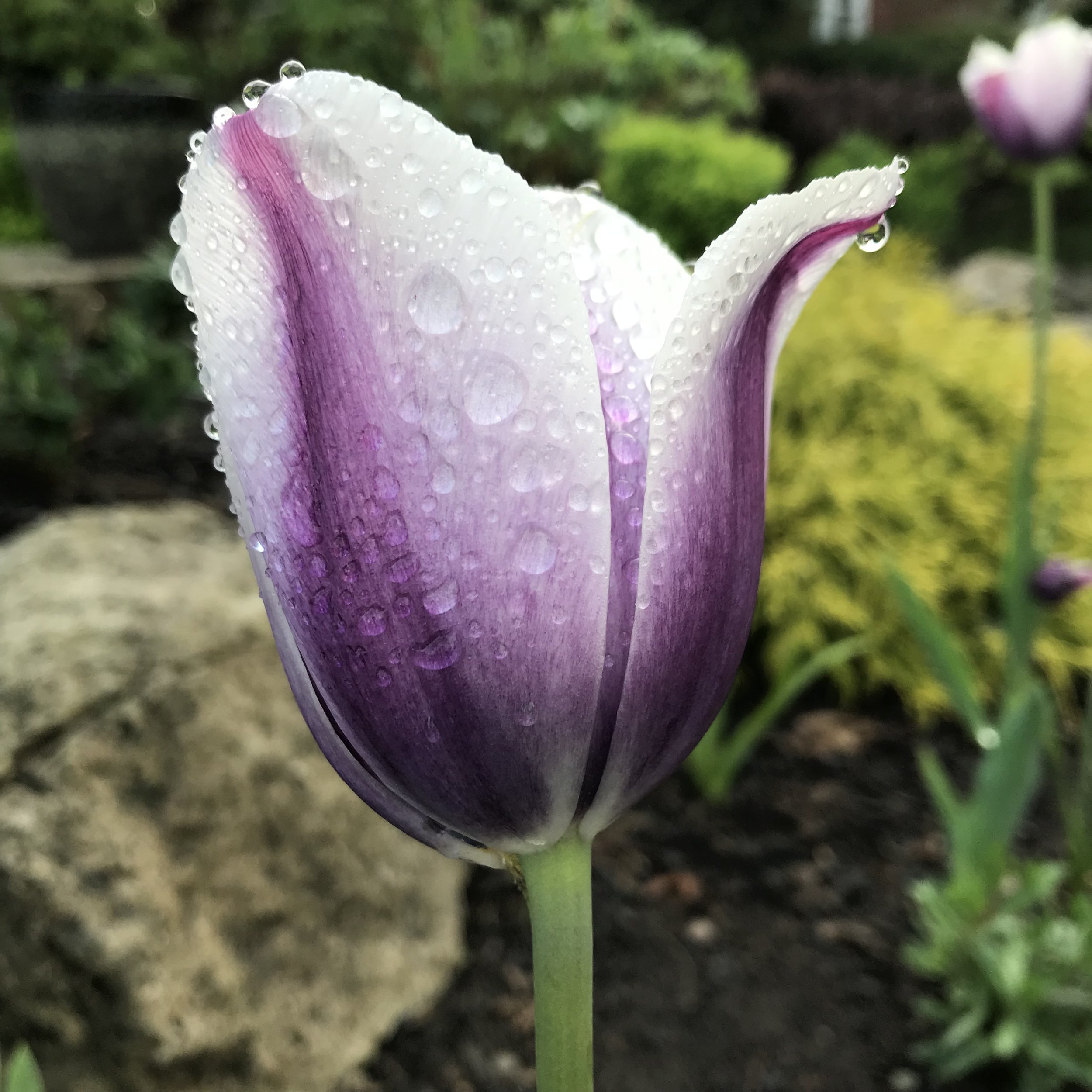
  • Keep a keen eye on planters. As you’ve likely already noticed- pots dry out fast! The smaller the planter, the quicker it dries out. Additionally, porous planters (such as coco fibre lined baskets, fibre pots or terra cotta) also dry out quicker than non porous ones such as ceramic, fibreglass or plastic. Check on pots throughout the day- they will normally require daily watering, but on really hot days or windy days (when the air essentially sucks the moisture out of the plants and, in turn out of the soil), they could require more than one watering.

Pots lined with materials such as coco fibre dry out quickly; it is not unusual for them to require two waterings a day!

  • Water in stages, especially if a planter or part of the garden has dried out. If the soil is dry, it takes time to absorb the water (in a garden, you will often see most of the initial water running off extremely dry soil). To avoid wasting water and ensure the soil is actually absorbing the moisture, water an area or pot briefly, move on to another location/pot, followed by another; rotate through your planters or garden until the plants have received a good soaking.

Final note: At the time of writing this, we were in the midst of a dry spell and heat wave. The forecast calls for the heat and humidity to break today with the arrival of a cold front. (Phew!) Looks like I am saved from some watering chores for now. Instead, I will do a rain dance!
Turn your 'Pruning Eyes' On!

(Originally posted: April 13, 2020)

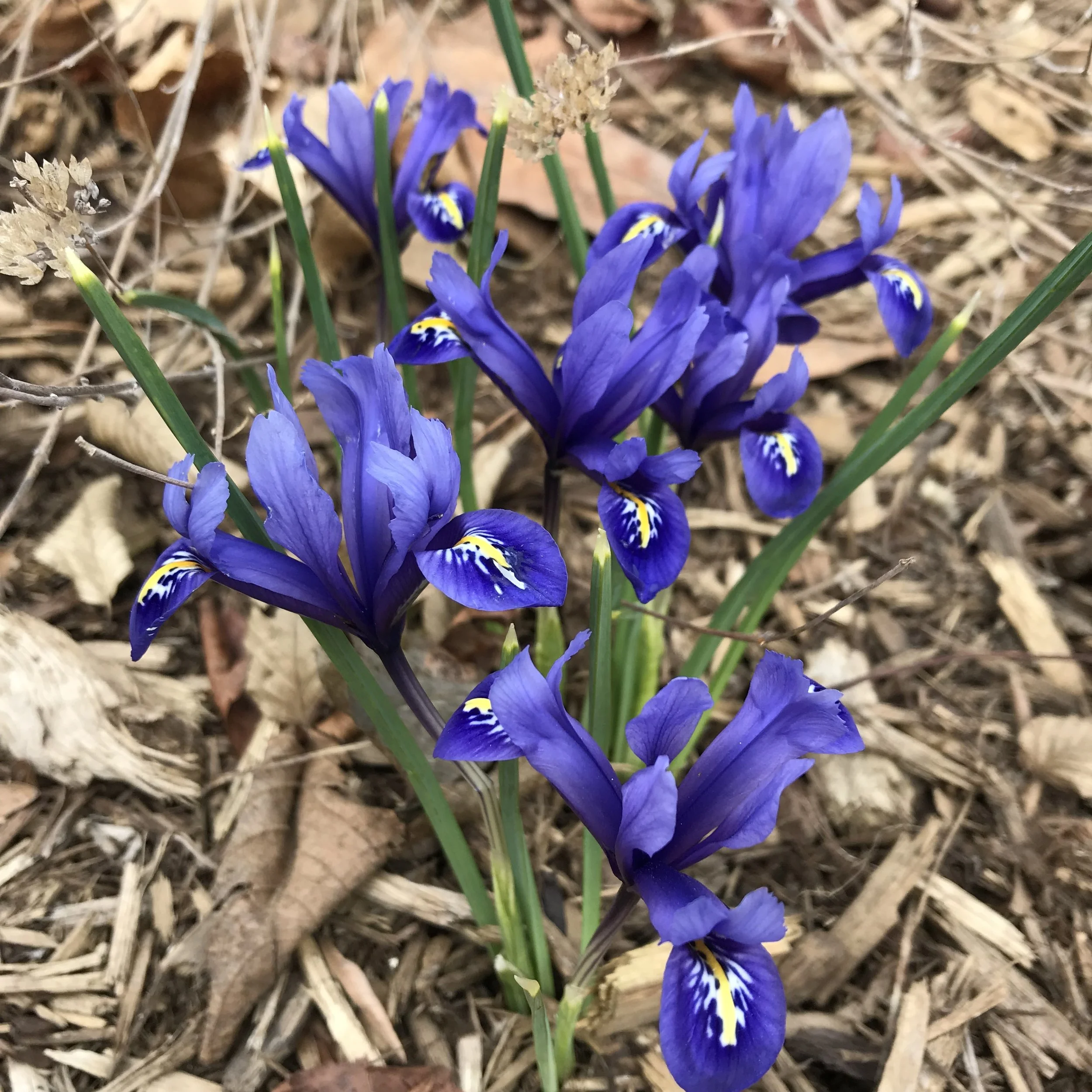
So… it’s spring; a strange spring, but spring nonetheless. At a time like this when our whole world has been shaken up, it is nice to see the ‘rebirth’ that comes from soaking rains, longer days, and a higher sun.

Hello little lovelies- it is so nice to see you again!

From a gardening perspective, April is typically a month that starts off slow yet builds to a flurry of activity by the end. While winter and spring play a rousing game of ‘tug-o-war’ for much of the month, I tend to focus on prepping plants for the growing season while the weather is highly changeable (first half of the month) and then conduct my detailed spring cleanups closer to the end of the month when spring is beginning to win it’s battle for seasonal supremacy. By keeping the gardens ‘tucked in’ a little longer, the plants (especially more tender ones) remain protected from any crazy weather events that Mother Nature should decide to throw at us.

(Now I will come clean and admit that I threw this timeline completely out the window in my own garden this year, because let’s face it- we are dealing with a LOT of ‘at home’ time and I am not getting my full garden fix from working in other people’s gardens!)

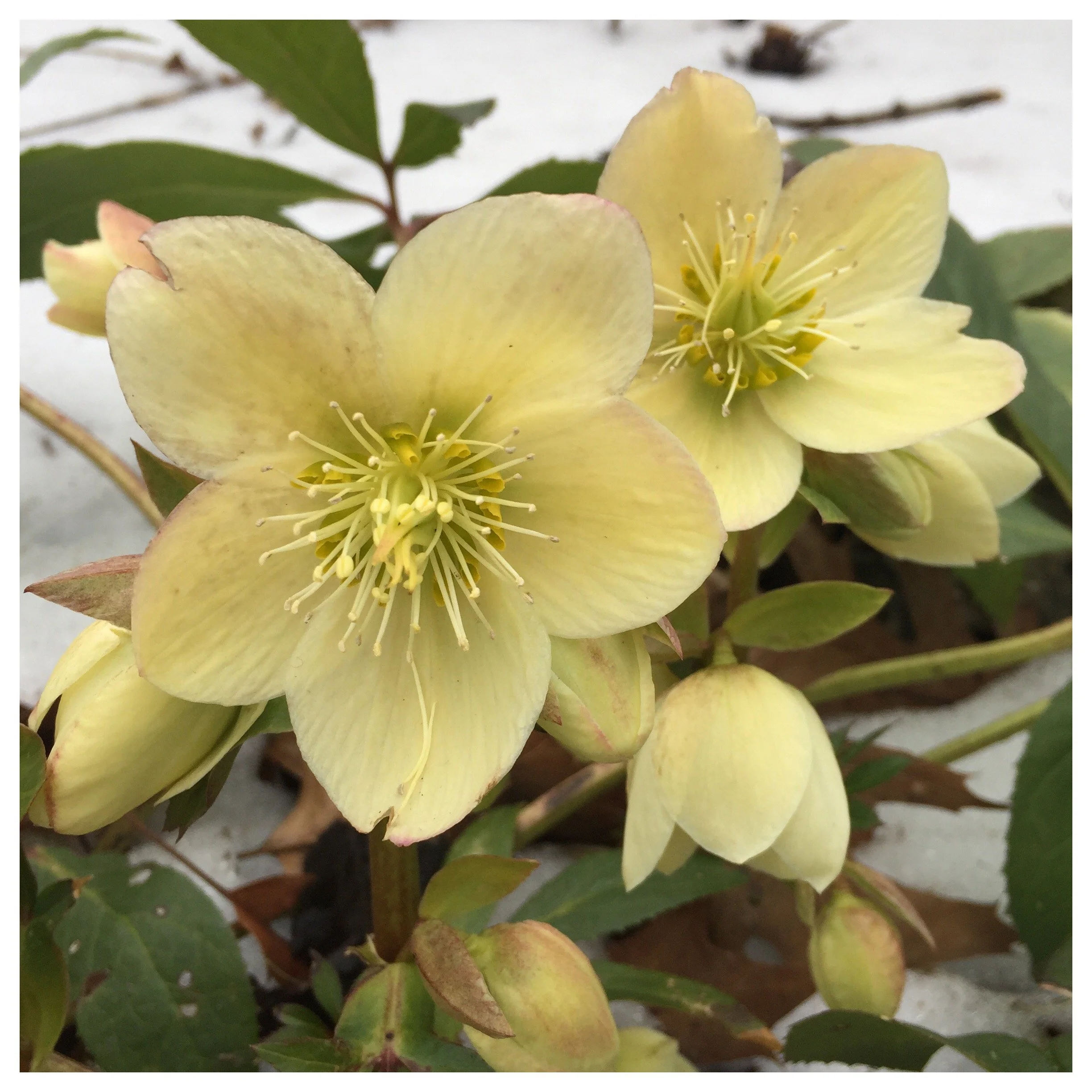
A Helleborus sp. laughing in the face of a late season snowfall.

PRUNING, PRUNING and MORE PRUNING

With all that said, in theory, my first gardening visits of the season involve A LOT of pruning (which ends up being a little hard on hands that haven’t seen the secateurs all winter…). In this post, I am going to focus on the easy stuff: herbaceous perennials and a few basic maintenance pruning techniques for woody plants.

Pruning of Herbaceous Perennials

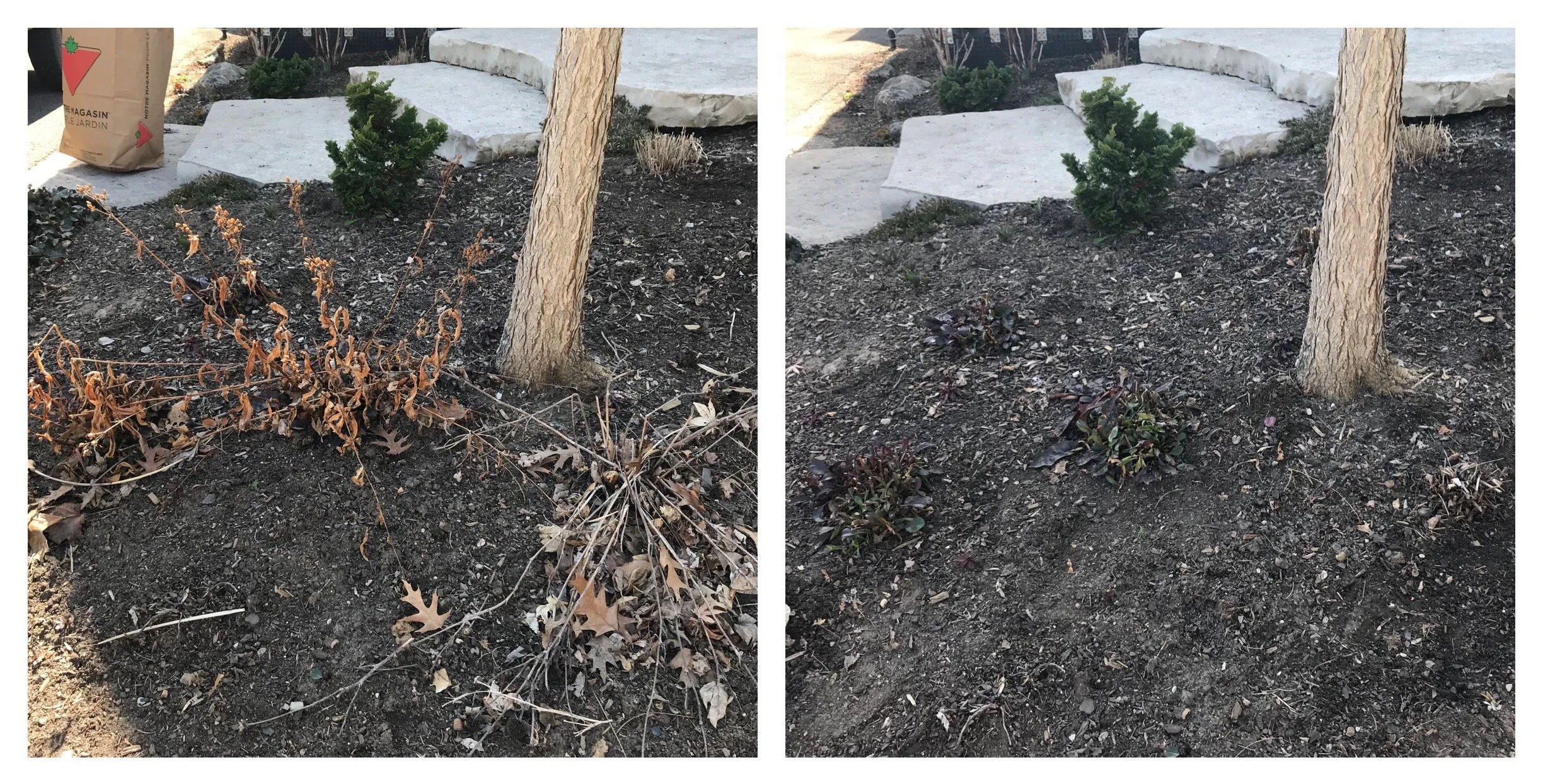
Remember all those perennials we left up over the winter for winter-interest or for wildlife value? (See my fall post “Perennials: to chop or not?” if you need to jog your memory!) These herbaceous perennials all died to the ground or to a clump of ‘live’ leaves at the base of the plant (the basal foliage) in the fall. Well the time has come to cut all that dead stuff down while making sure to not cut off any of the basal foliage or new growth emerging from the ground. It’s an easy and gratifying task- not only does it tidy-up the garden substantially, but it often reveals new growth that is starting to push it’s way into the world. (Be sure to whisper ‘hello’!)

Perennials that are ready to be pruned down to make way for new growth- all the dead stuff goes!

Pruning Woody Plants- Basic Maintenance Pruning

I also do a lot of pruning on trees and shrubs, afterall it is the perfect time for pruning for a couple different reasons. First of all, and generally speaking, disease pressure is low during the dormant season and into early spring (and this is a good thing since every pruning cut we make is an opportunity for disease organisms to enter and infect our plants). Secondly we are able to actually see all the branches sans leaves- this certainly helps in identifying what branches to leave in tact and what to prune out.

As we wander through our gardens, secateurs in hand, it is important to keep in mind the types of branches that can and should be pruned out: dead, diseased and damaged branches (the three d’s), crossing branches, and finally water sprouts and suckers. Let’s looks at each of these undesirables:

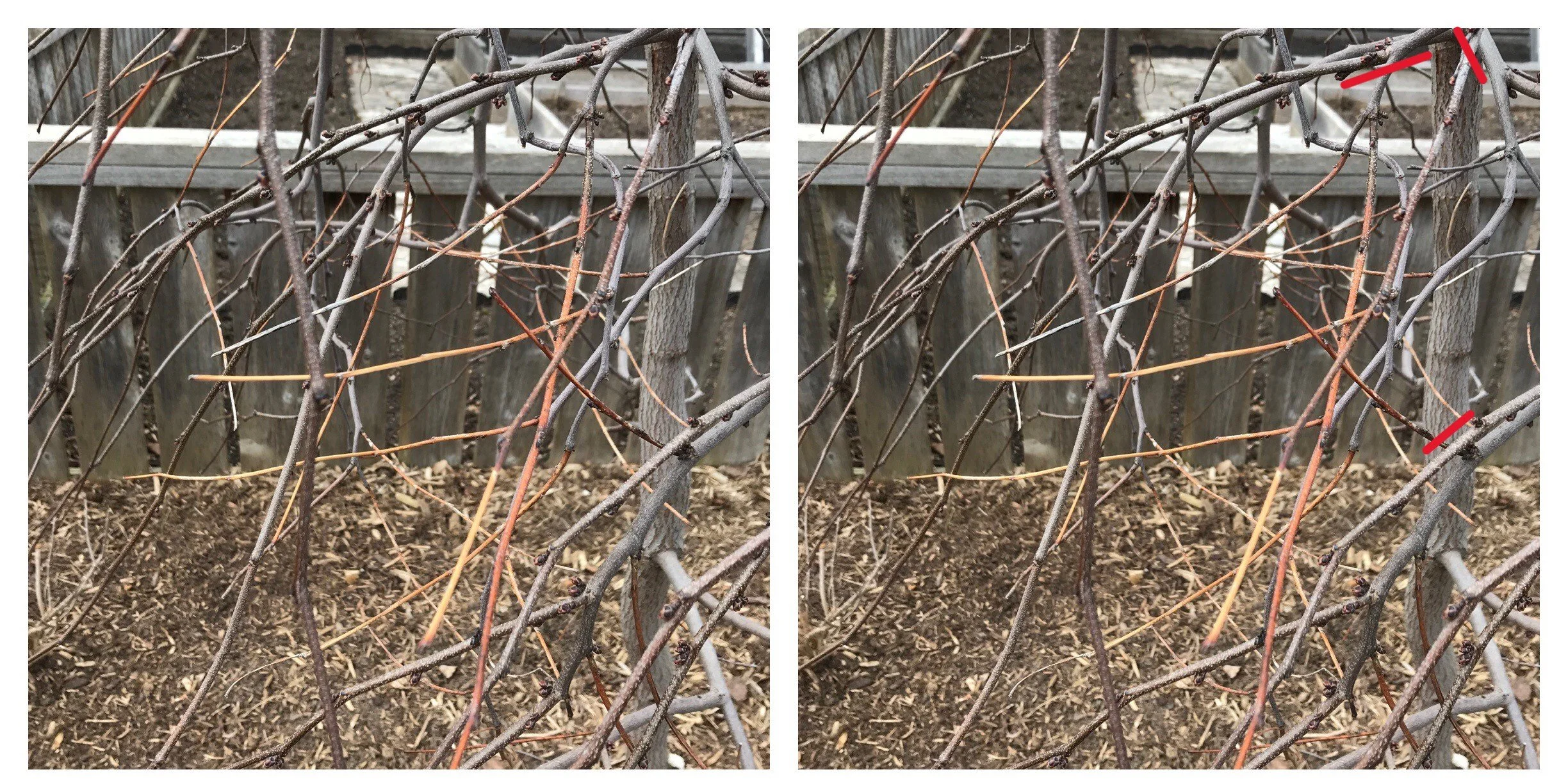
DEAD branches are not only unsightly but they can attract insect and disease issues; they can also build up over time and overcrowd a shrub and therefore need to be removed.

Dead branches and branches experiencing dieback on a weeping Cercis canadensis (redbud) are quite obvious due to their different colour. They need to be removed by cutting them back to a healthy branch. A few pruning points are shown in the photo on the right.

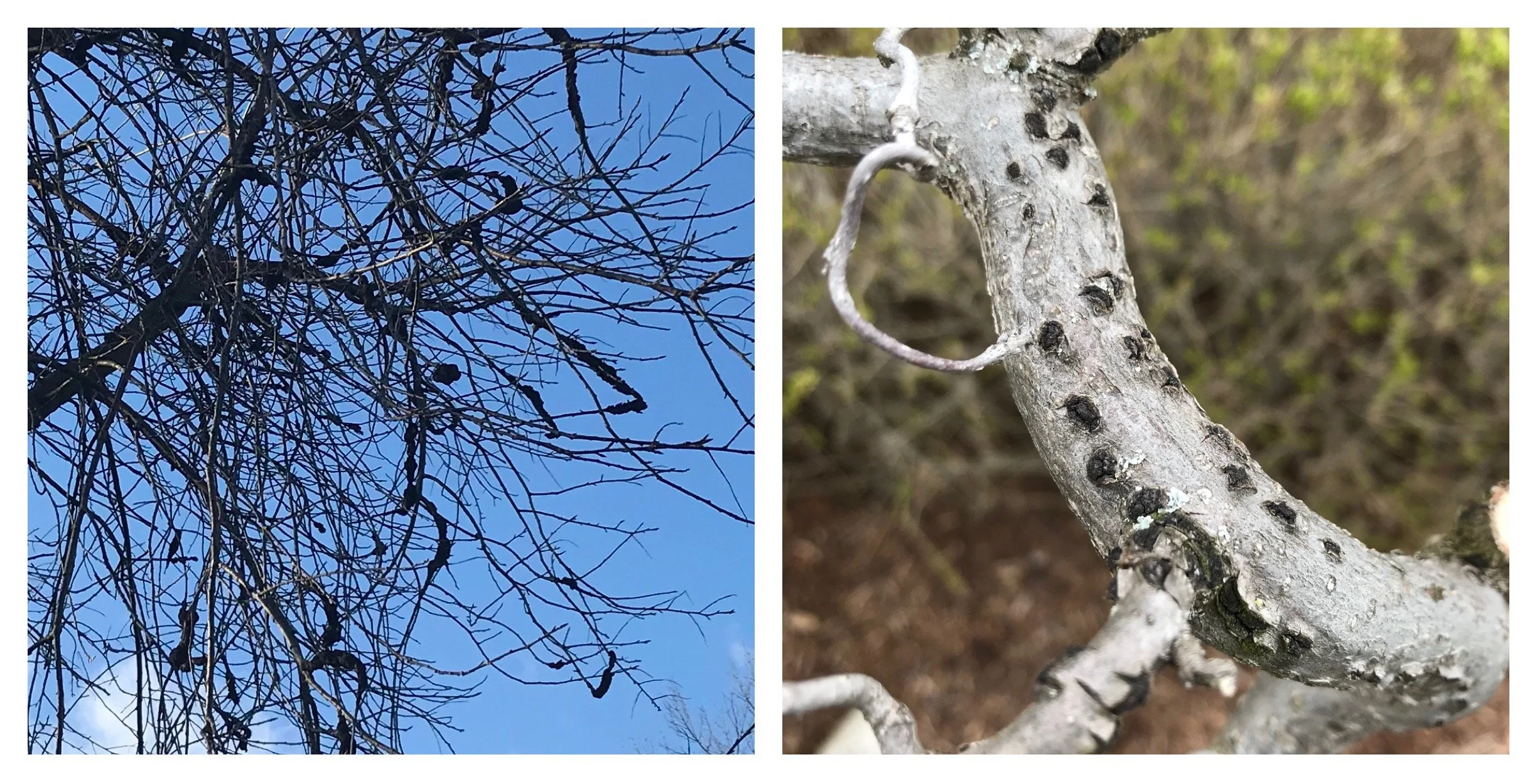
DISEASED branches should always be removed to prevent the disease from further progressing within the plant and to prevent the plant from being a source of infection to neighbouring susceptible plants (afterall, it’s hard for plants to practice social distancing).

It is important to look for evidence of disease on your trees and shrubs such as the black knot galls on the chokecherry (Prunus virginiana) in the photo on the left, or the stromata/fruiting structures depicted on the corkscrew hazel (Corylus avellana ‘Contorta’) on the right. While these are two diseases that are next to impossible to control, the infected branches should still be pruned out.

DAMAGED branches (such as ones that snapped over the winter, or were nibbled-on by animals) should be pruned back to undamaged tissue. A plant can heal a clean cut much better than a jagged one!

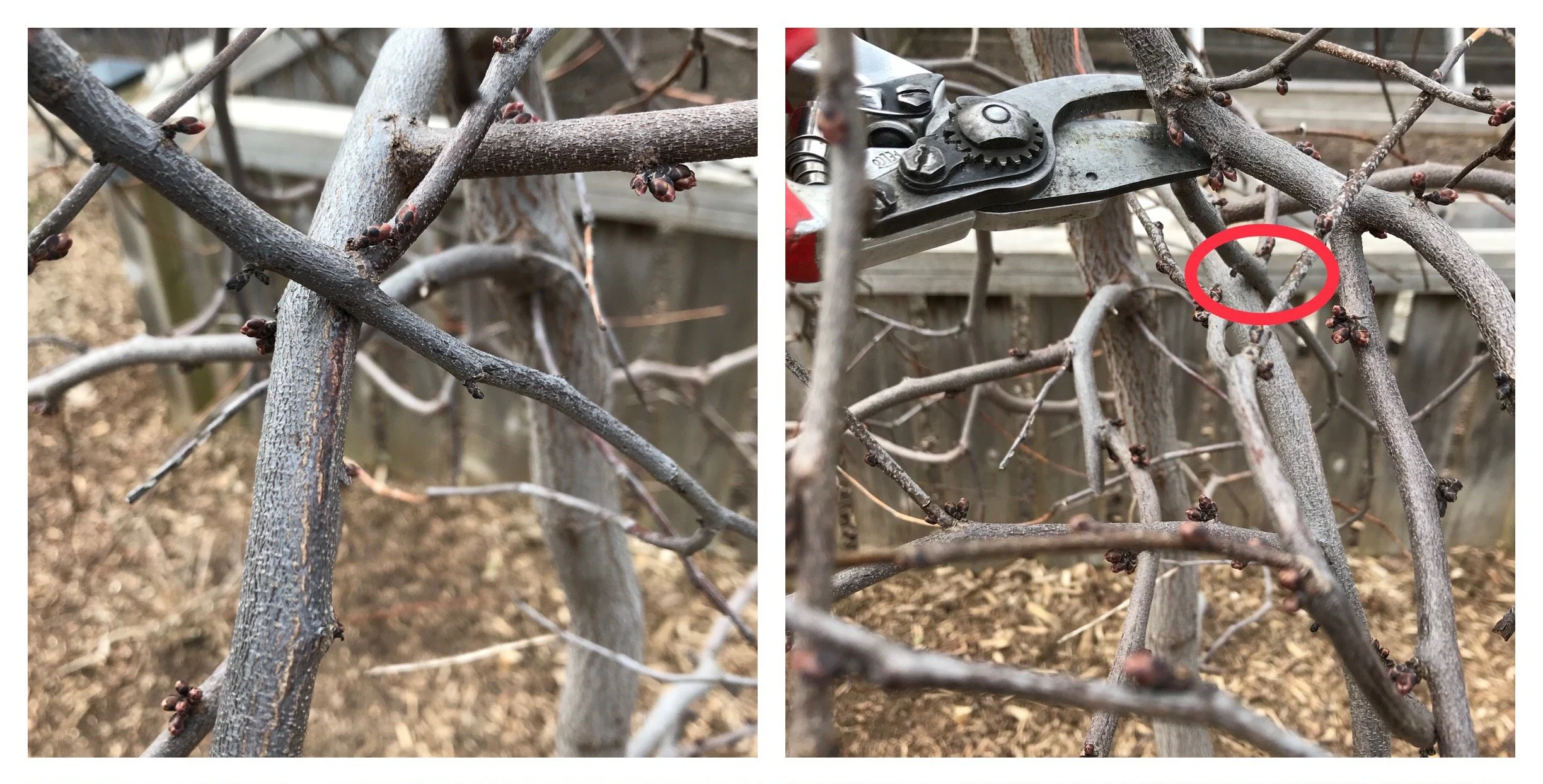
CROSSED branches that rub against one another cause damage to both branches through abrasion. One branch (usually the smaller, weaker one) should be pruned out by following it back to where it connects with another branch and cutting it at that location.

Crossed branches (left) cause damage to the branches through rubbing/abrasion. One of the branches should be removed by cutting it back to a point where it connects to another branch (right); red circle shows the location of the crossed branches.

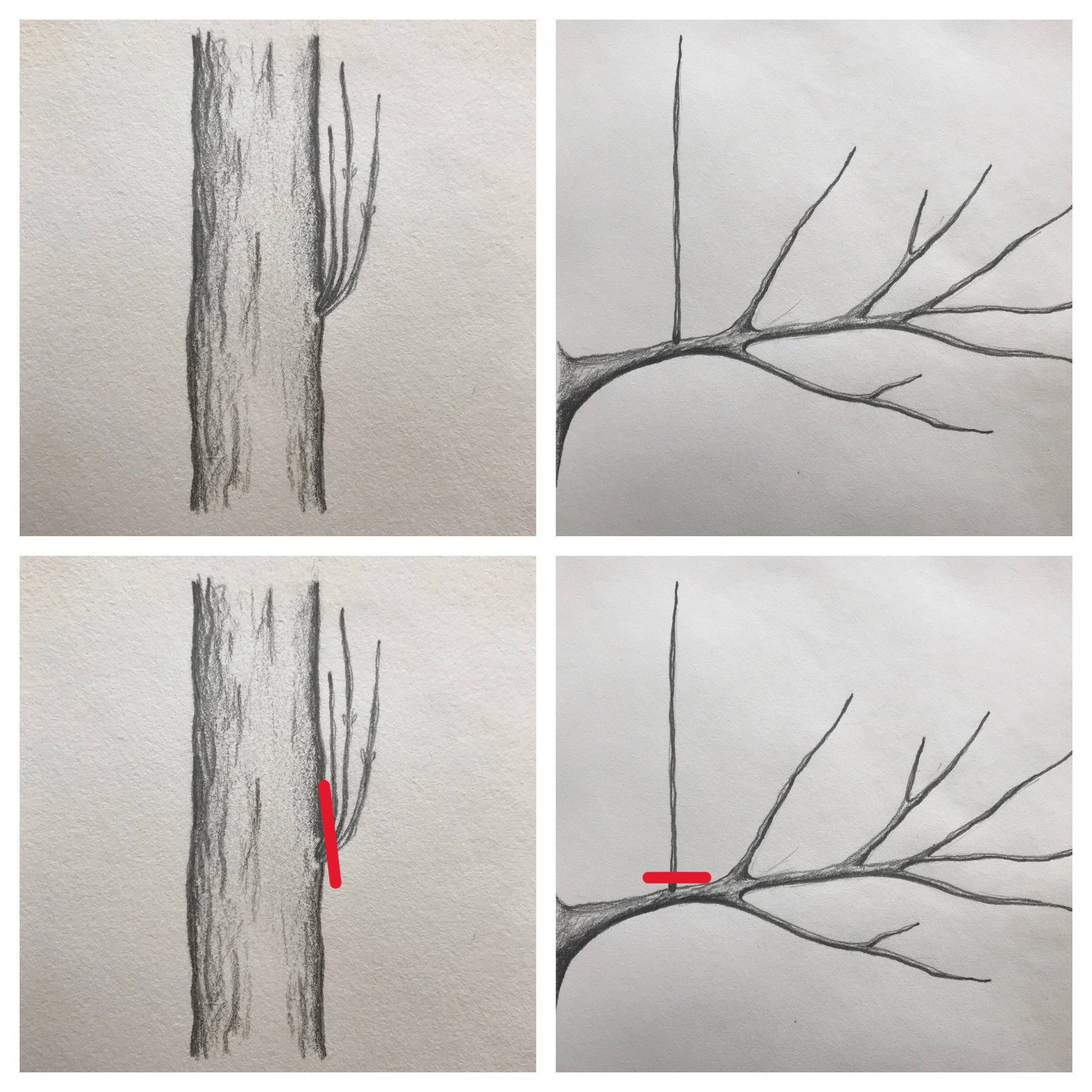
WATER SPROUTS are really fast growing shoots that grow out of dormant buds on branches and trunks of trees and shrubs. They typically grow straight up, so they tend to stick out like a sore thumb against the normal branching habit of the plant. Their fast growth is not ‘quality’ growth- these shoots are more prone to insect and disease attack plus their attachment points to trees/shrubs are also weaker than the attachment points of ‘proper’ branches. For these reasons, water sprouts should be removed.

Water sprouts emerging from the trunk of a tree (top left) and from a branch (top right) and the corresponding locations of the pruning cuts to be made to eliminate the water sprouts (red lines in bottom pictures).

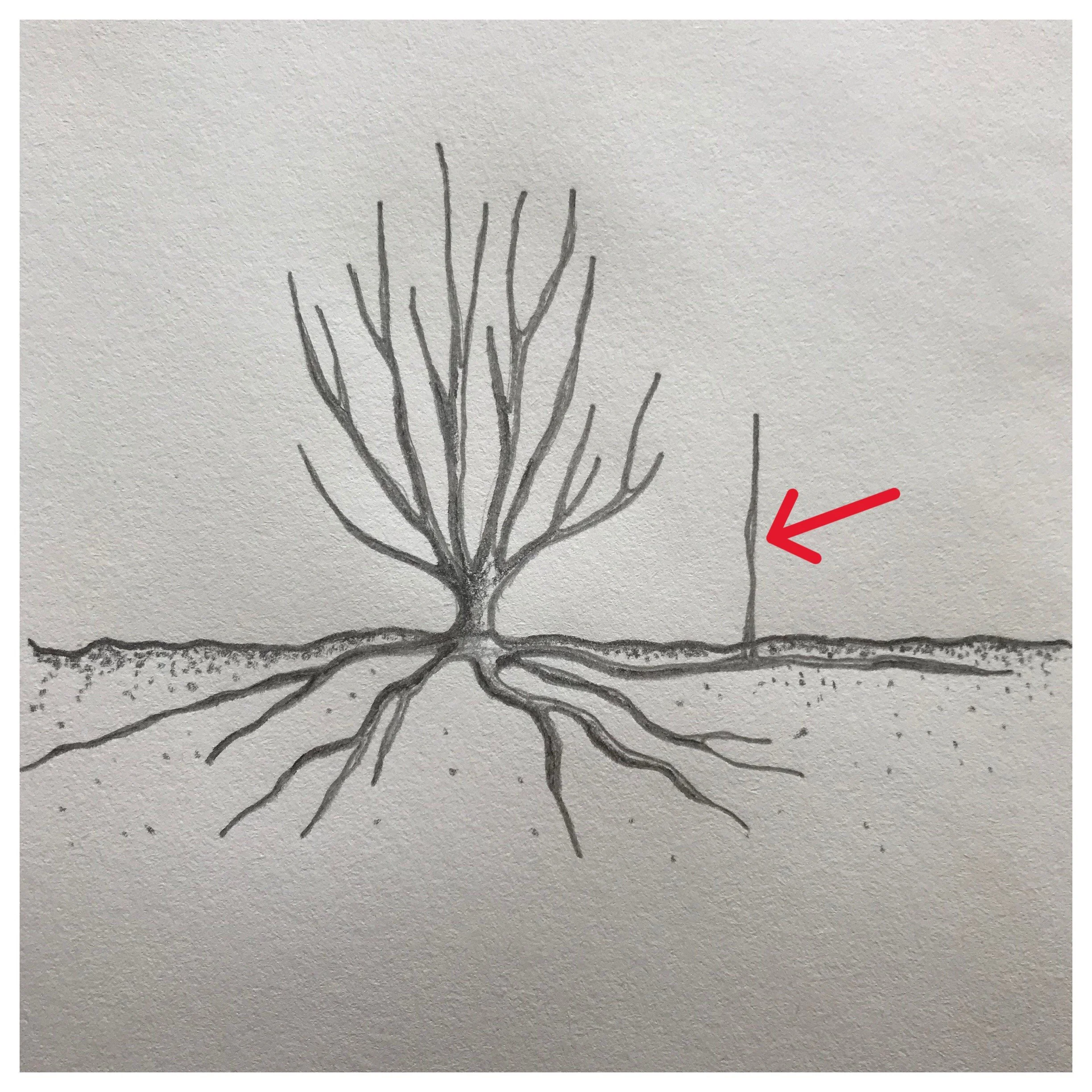
SUCKERS are vigorous sprouts (similar to water sprouts) that arise from the root system of a woody plant. Unless you are growing a plant for the purpose of naturalization or soil stabilization (where suckering is an acceptable, even welcomed plant characteristic), suckers should be removed with a sharp pull sideways or a snip as close to their point of origin as possible.

Diagram of a shrub with a sucker originating from it’s root system (as indicated by red arrow).

While our trees and shrubs are bare, it is the perfect opportunity to look for all these issues in our plants. It is important to note that we are not pruning for size reduction of our trees and shrubs (we will start this discussion in the next post) we are only removing ‘undesirable branches’ at this point.

A Few Important Pruning Tips

Before I close off this long-winded post, I want to leave you with a few things to keep in mind when pruning:

  • Always use sharp tools (again, clean cuts heal better than jagged ones)

  • Prune on a dry day: water is a great transporter of disease-causing organisms, there is no need to expose pruning wounds to potential sources of disease

  • Sanitize your pruners often! Especially after every cut into dead or diseased wood to prevent the spread of disease to other parts of the plant or to other plants in the garden. I use rubbing alcohol (applied with a bingo dabber) or disinfectant wipes

  • Always cut back into healthy wood (at least 15 centimetres/ 6 inches away from the dead/diseased tissue that you are removing) and cut back to either a bud or where the ‘offending branch’ connects to another branch.

So get your ‘pruning eyes’ on, your ‘pruning hands’ ready and get to work! Happy snipping!

Fall Clean-ups: Detailing

(Originally posted: November 29, 2019)

With the majority of the leaves down, fall clean-up is becoming less about ‘just getting leaves to the curb’ (or the compost pile or the leaf mulcher) and more about making the garden look tidy heading into the winter. Whether you prefer to strip your beds of leaves (with the plan to add lots of compost next year) or keep the leaves in place over the winter so that they can break down and add nutrients and organic matter to the soil, there are a few key tips that can ‘up the tidy factor’ in your fall garden (and protect your plants in the process).

Free your Plants!

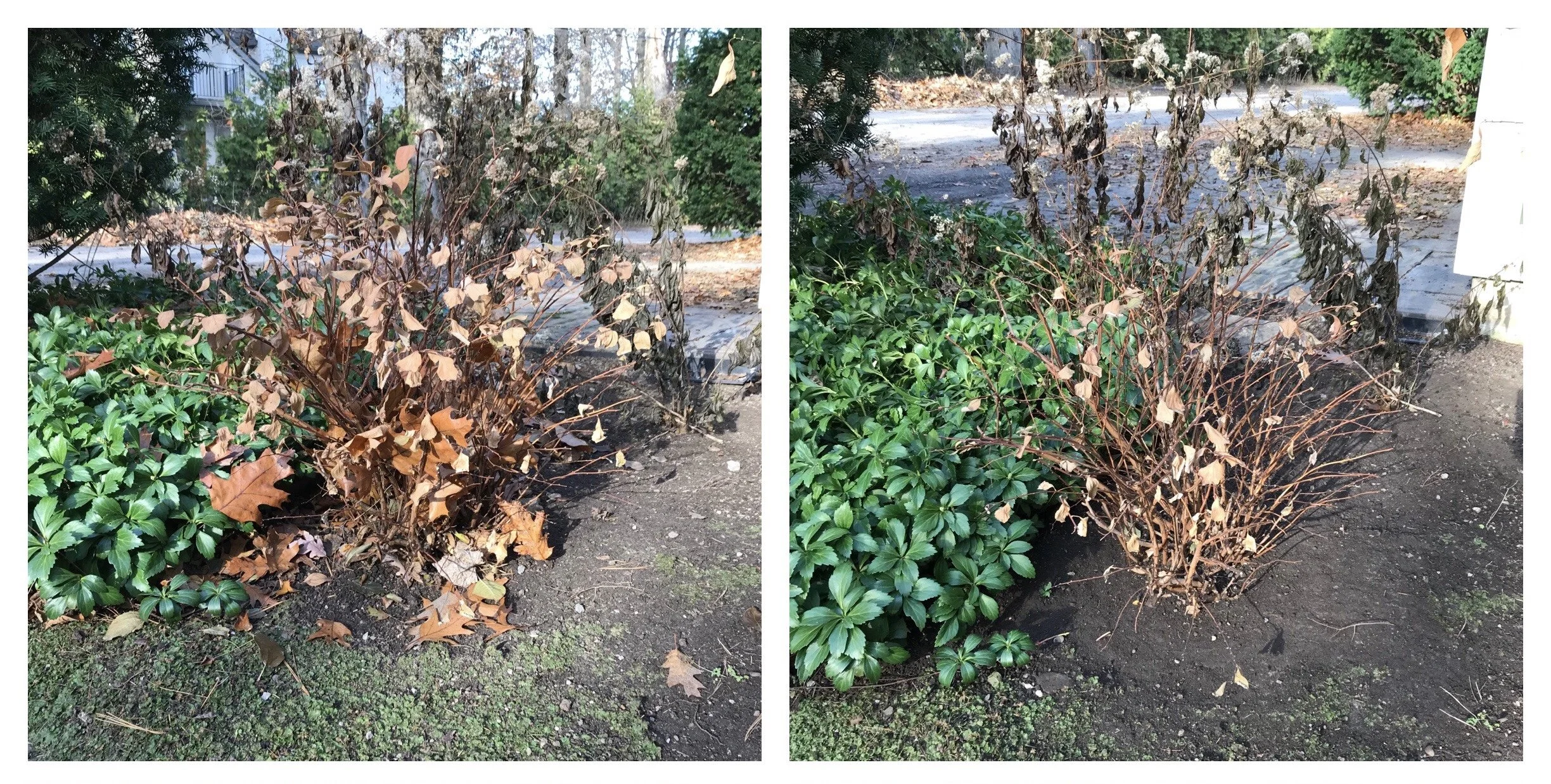
When leaves from large trees fall, they cover the garden. (Thanks ‘Captain Obvious’!) During fall clean-up, these leaves are usually raked or blown out of the beds. What often gets neglected are all the leaves that have been captured by the branches of smaller trees and shrubs in the garden. Sure these plants look dead at this time of year, but they don’t have to look like debris traps! While it may seem tedious, picking out the leaves that have been trapped within the branches of your specimen trees/shrubs or even perennials, will greatly improve the overall tidiness of your garden.

A Spiraea betulifolia (birch leaf spirea) that has been effective at trapping leaves (left) and the same shrub with the oak leaves removed (right).

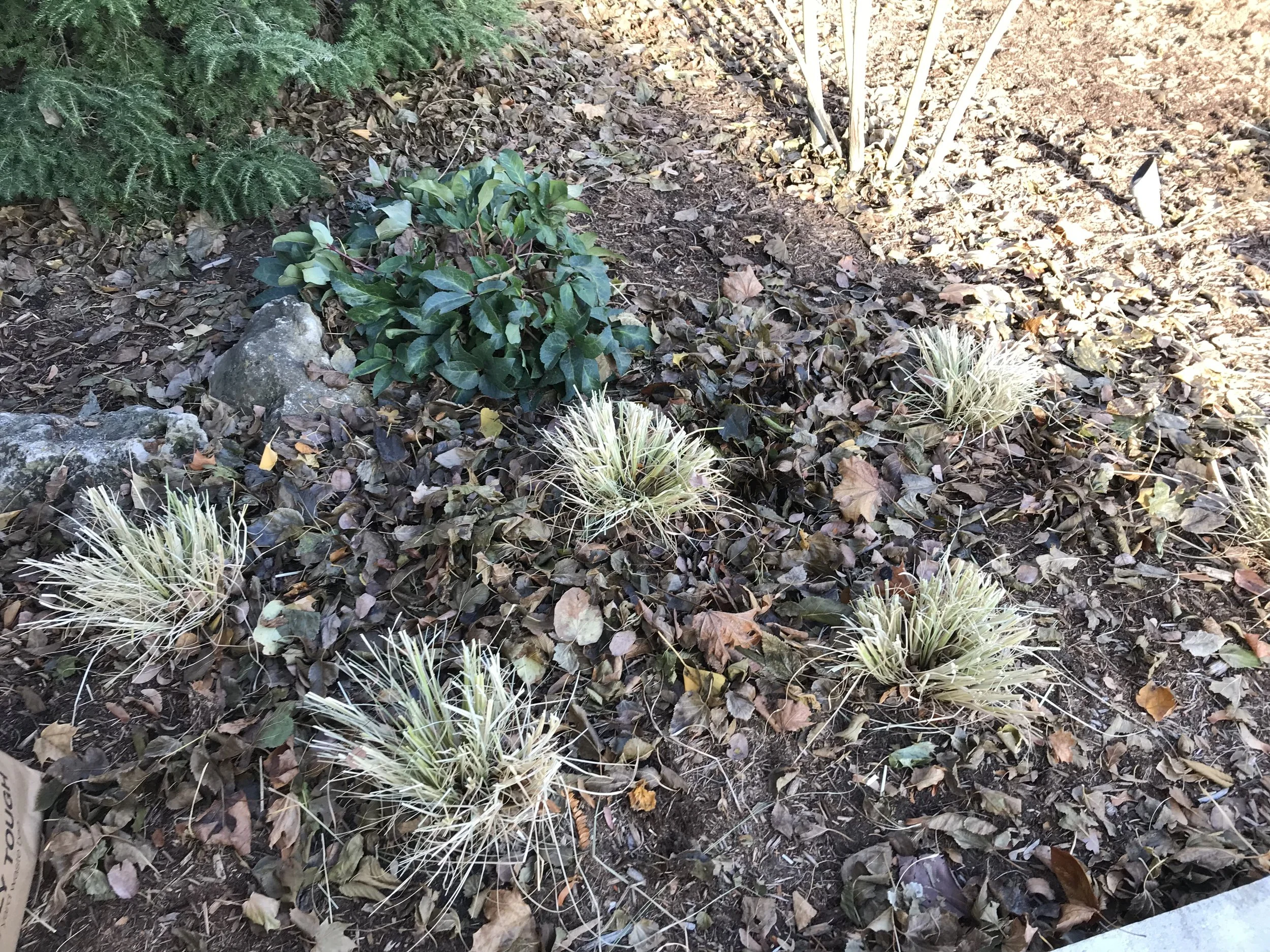
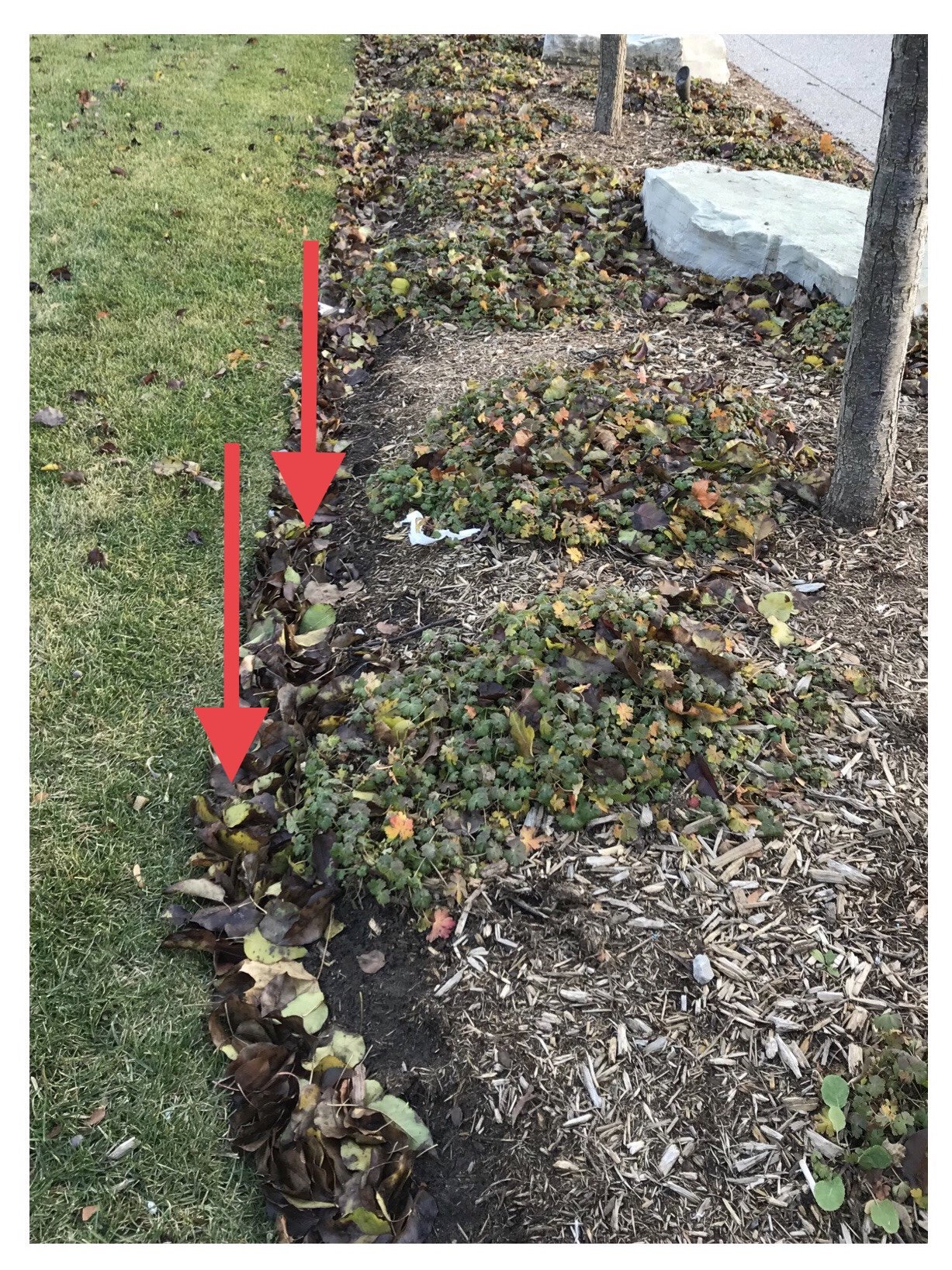
Leaves are left on this garden bed but they have been brushed off the clumps of [cut down] grass- this provides a little definition to the plantings and ‘ups the tidy factor’ despite the leaves remaining on the rest of the garden.

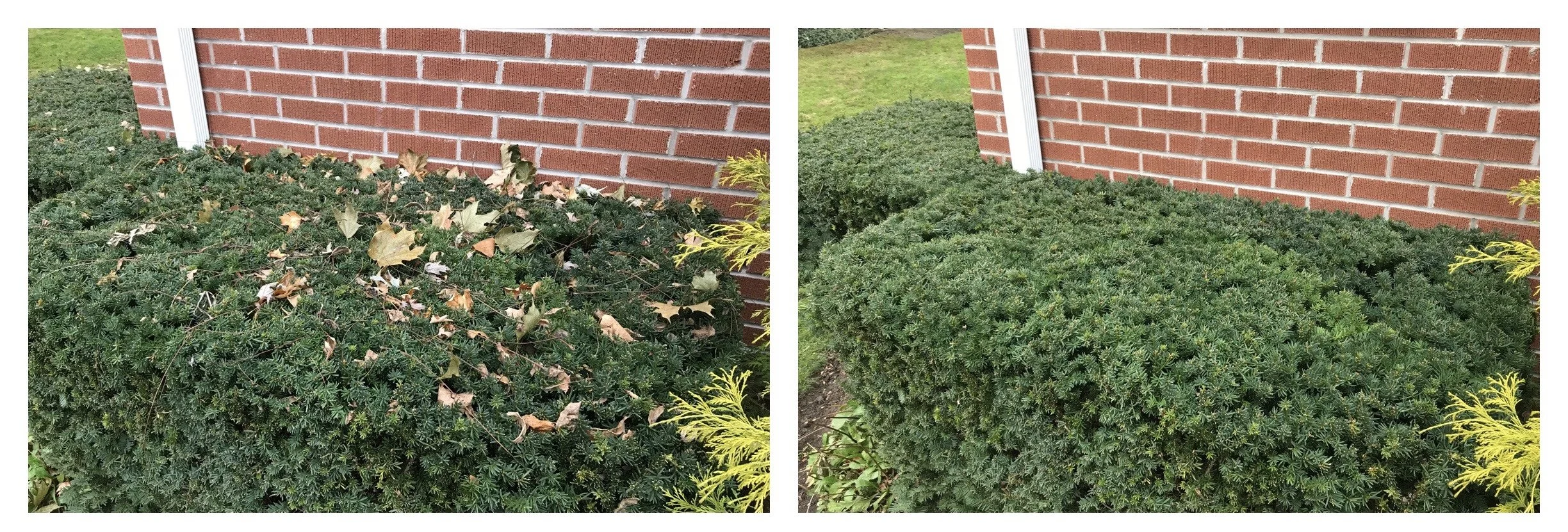
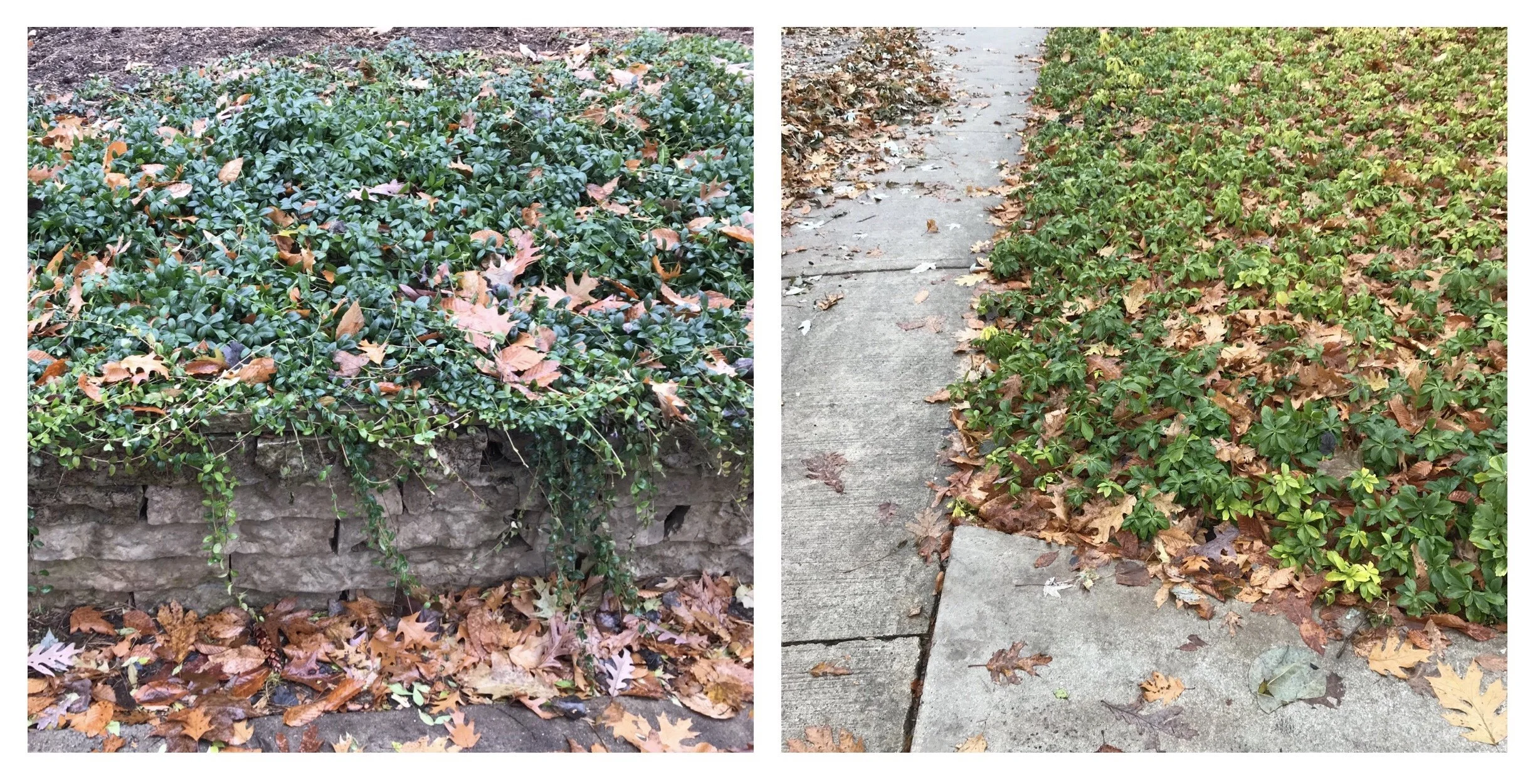
Picking out leaves becomes even more important when dealing with evergreen trees, shrubs, as well as groundcovers and other perennials. While leaves resting on the top of hedges or within the canopy of evergreens is really noticeable and unsightly, a build-up of fallen leaves can form thick mats on the evergreen needles/leaves which can smother/kill them. In the spring you can be left with a patchy-looking shrub or even a dead patch of groundcover. So, in the case of evergreens, it is not only aesthetically important to remove leaf litter (from on top of and within the plants), it is also important in maintaining plant health.

Leaves settled on top of a Taxus (yew) hedge (left) not only looks untidy but the leaves are not good for the yew foliage. Removing the leaves (right) is an easy fix.

A fair amount of leaf litter resting on top of Vinca minor (periwinkle) on the left and Pachysandra terminalis (Japanese spurge) on the right; leaves should not be allowed to pile up on evergreen groundcovers such as these.

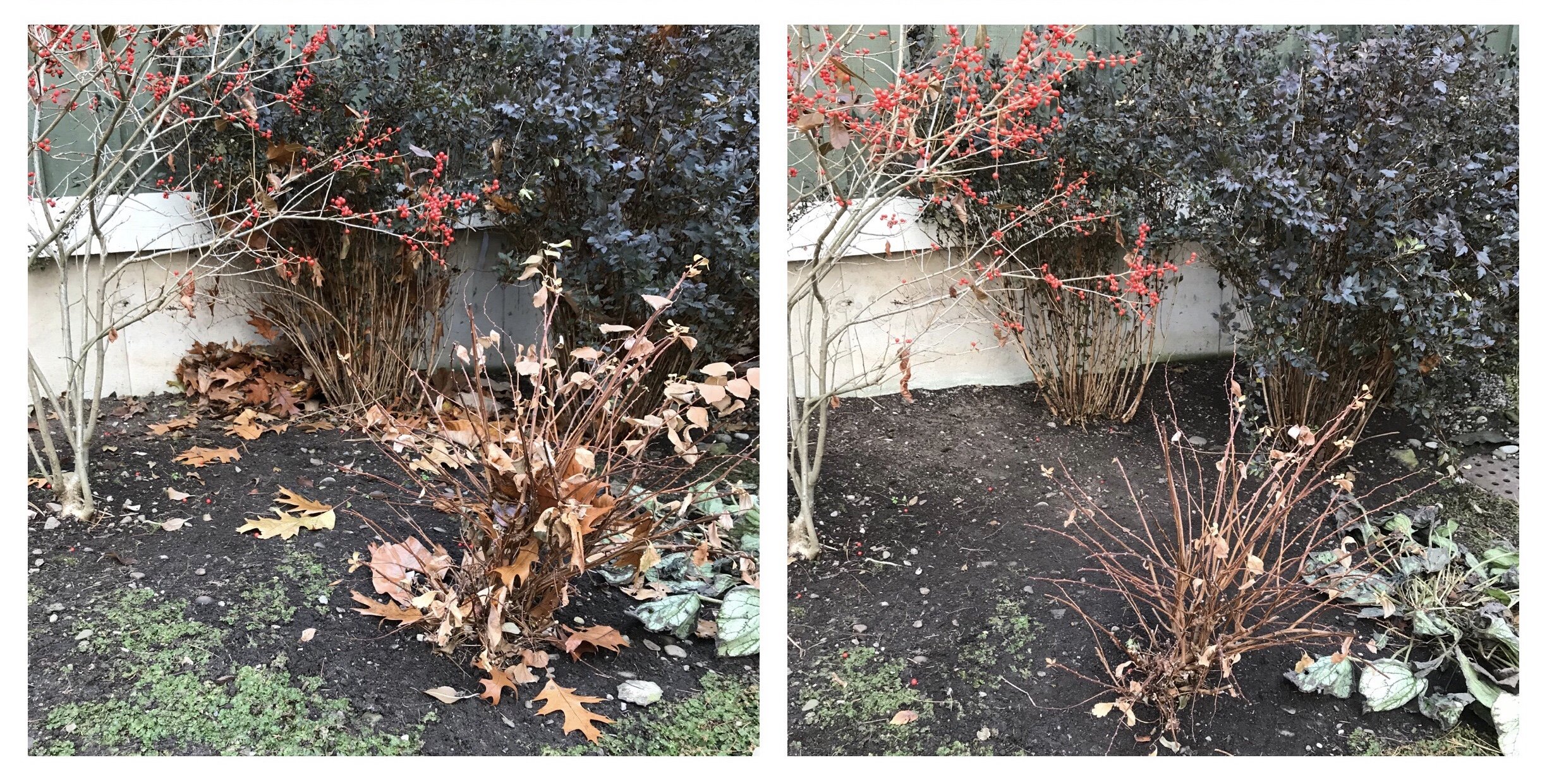
Now that we have dealt with the top portion of our trees and shrubs, we will now shift our gaze and look beneath them. Leaf blowers are notorious for blowing leaves into the base of shrubs and firmly lodging them in place. Yes, the garden bed may look tidy and uniform (with the mulch and top soil completely stripped away… ‘leaf blower rant’ to follow in a future post!) but the shrubs look like they are being swallowed by leaves! Enter another tedious task with big a payback… picking out leaves from the base of your plants. This task is guaranteed to restore some definition to your plantings but it also serves another purpose. A pile-up of leaves at the base of plants can act like a really cozy and inviting home for rodents over the winter months; rodents that can nibble on and therefore damage your plants. In an effort to not lay out the red carpet for rodents, I try to keep the base of my trees, shrubs, and even perennial clumps free of leaf build-up.

Leaves caught up in branches and around the base of some shrubs (left) and the same shrubs with leaves removed.

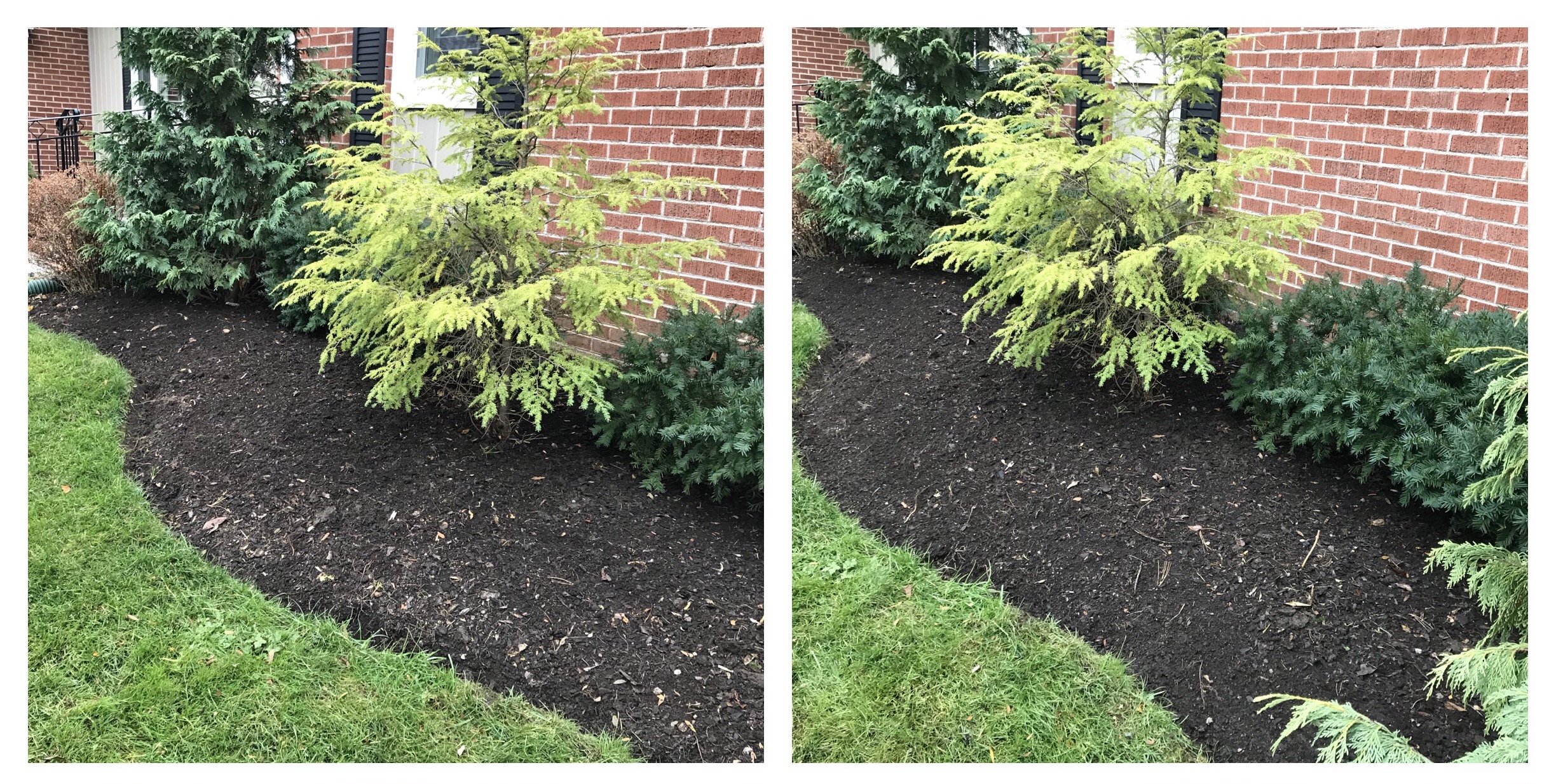
A Taxus x media (yew) hedge showing one section with leaves caught in branches and beneath the plants, and another section where the leaves have been ‘picked out’.

Edge

With less plant material in the garden now, the edges of our garden beds become much more prominent- which means bad edges tend to stand out like a sore thumb! A quick pass with the garden edger can ‘crisp-up’ the lines again, and give the garden a tidier look. I will also rake the turf following along the edge of a garden bed to remove any mulch that has decided to take heed of the notion that ‘the grass is greener on the other side’. To further enhance the edge of beds (ones with a surface of bare soil or fine mulch), I will take a rake and do a light pass along the front of the garden bed to give it a nice uniform look. In general, regardless of the amount of debris you leave on the garden bed, if you can keep the edge of the bed tidy, you will improve the overall appearance of the garden.

Fluff the Mulch

If you like cleaning leaves out your beds and you happen to have a layer of mulch on your gardens, now is the perfect time to turn or ‘fluff up’ the mulch- one final refresher before the snow flies!

And there you have it! These tips may seem minor and of low priority given the fact that the gardening season is coming to a close, but if you live in an area that does not receive reliable snowfall, then chances are you could be looking at your garden ‘as is’ for a fairly long time! These are all tasks that are often overlooked during fall clean-ups (by homeowners and professionals alike!) and I find that to complete a fall clean-up that really stands out… the tidiness is in the details.