(Originally posted May 2, 2022)
Hello?!? Is anybody out there? Remember me? I am not offended if you don’t. It’s been quite a while since my last post. As much as I love writing about gardens, this is a side project for me; I do it strictly for fun and sometimes the fun things get put on hold when life gets busy. With that said, I am back and still planning on writing, so if you are willing to continue following my blog, then I am thrilled to have you along for the ride!
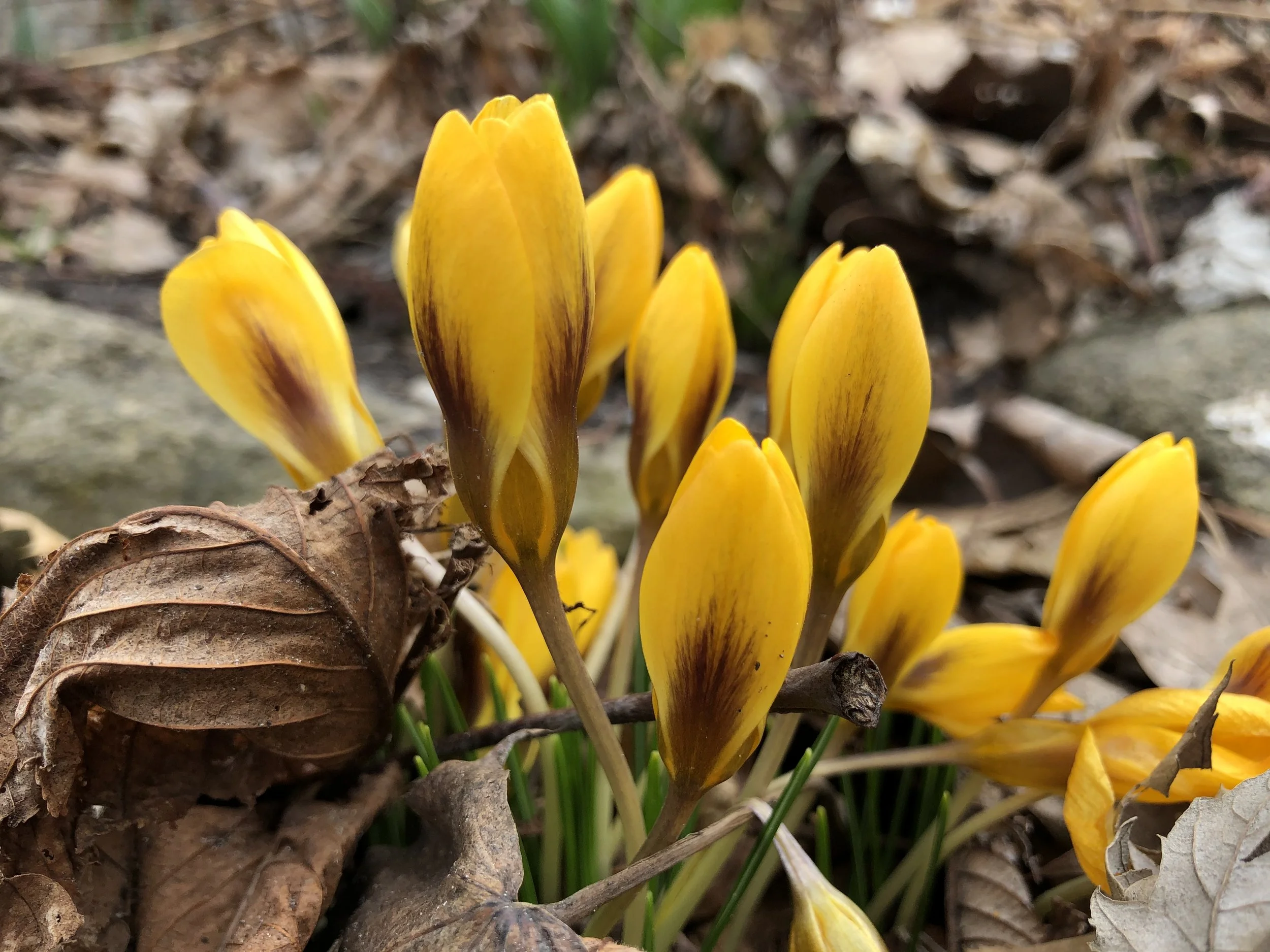
It’s hard to believe we are at the start of another growing season. Yay! Spring is here!
Spring. It’s an aptly named season when you really think about it: new life is ‘spring’ing forth from the earth after a long winter slumber, the sun is putting an extra ‘spring’ in our step as we gleefully skip along while the sun’s rays kiss our vitamin D deficient bodies, and we all ‘spring’ into gardening action at the first hint of a warm day. (At what other time of year does 10 degrees Celsius feel balmy??)
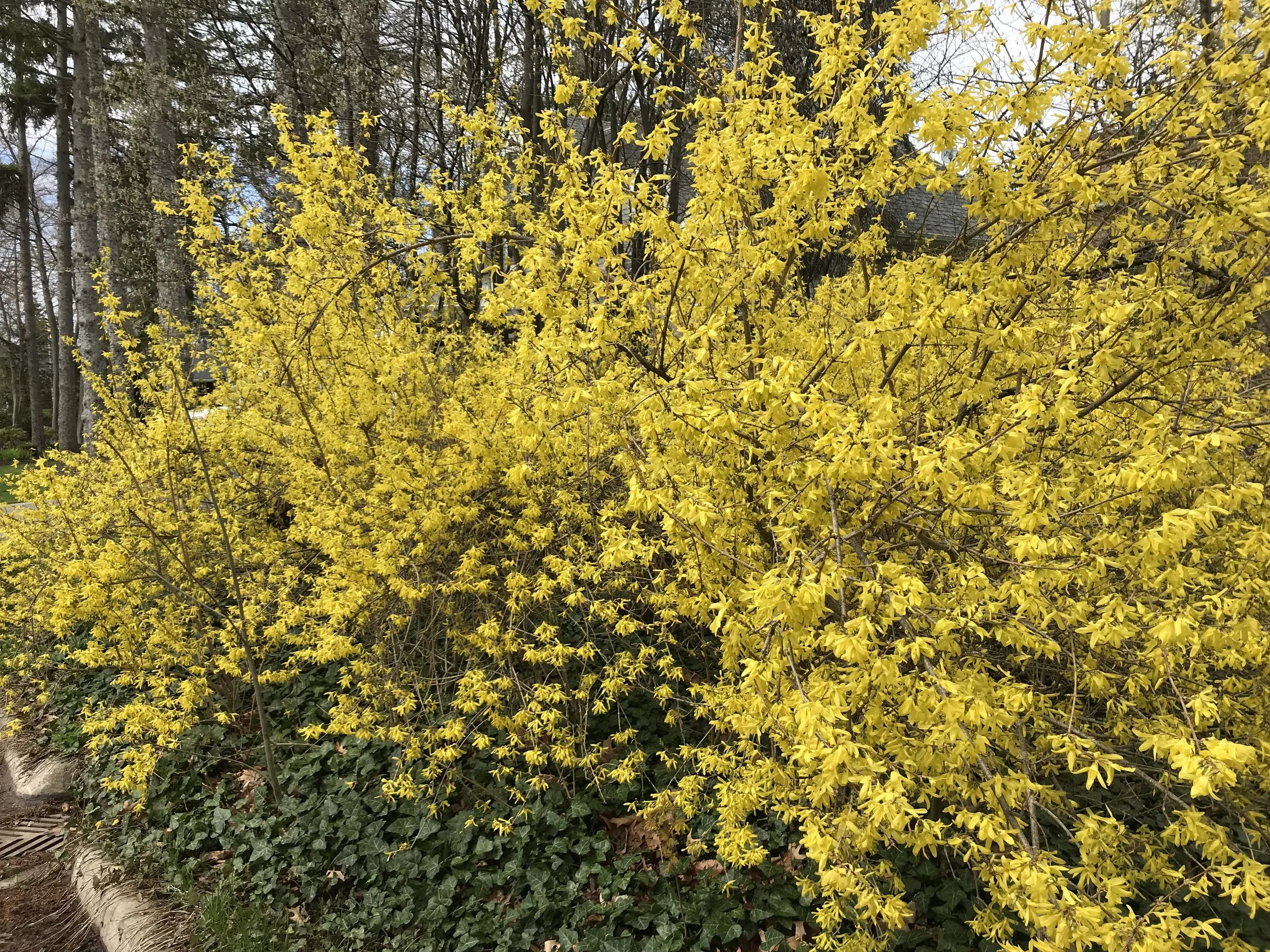
Forsythia spp.- a sure sign of spring.
Garage/shed doors are thrown open; gloves, hand tools and rakes come out (Ug. Did I really put those away in that condition?) and we get to work. Our desire to usher out winter and welcome spring is all consuming. With all that pent-up gardening enthusiasm we often get overly zealous with our spring tasks, so it is easy to get ahead of ourselves... which leads me to two main gardening mistakes that we tend to make in early spring:
Cleaning up the garden too soon
Mulching too soon
Lets look at each of these in turn…
Premature Garden Clean-up
So the equinox has come and gone, warmer weather has made an appearance… oh wait… now it’s gone… now it’s back again… and now it’s snowing?!? Ah yes, spring is an indecisive season. For this reason, it is best to refrain from cleaning out the yard on those first few warm days because severe weather can follow soon after. All the leaves on the beds, and standing herbaceous perennial foliage, can buffer garden plants (and soils) from harsh temperature swings and wild weather. Additionally, all the old flower stalks, perennial stems, and leaves in the garden are valuable overwintering sites for beneficial insects. Leaving everything in place for a little longer allows these beneficial organisms to emerge, enabling them to play a valuable role within the garden ecosystem in the months ahead.
Despite the benefits of all the ‘dead stuff’ in the garden, if you feel you must clean up a little, focus on areas where leaves have piled up over the winter months and make sure these leaf piles are not smothering evergreen foliage or perennials below. I usually do this ‘preliminary leaf clean-up’ within the first two weeks of April and then do a more thorough tidy-up (which includes cutting back herbaceous perennials) sometime between the middle to the end of April.
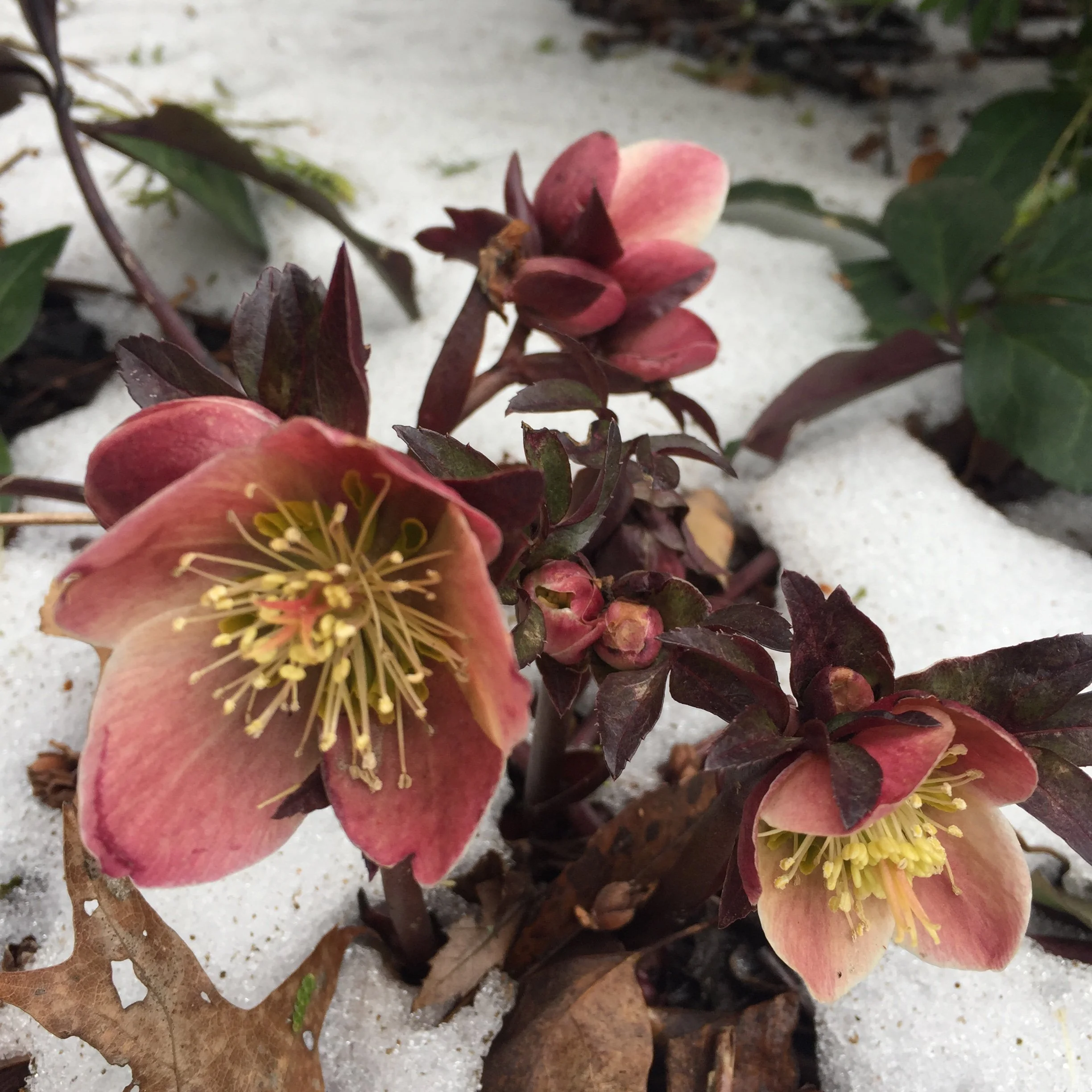
April snow is often cursed but not overly not unusual in these parts. It’s one of the reasons we need to temper our enthusiasm and hold off on spring clean-up until later in the month.
Mulching too Soon
No question about it, mulch on a garden looks great. (With the exception of red mulch…just don’t do it. Seriously.) Aside from aesthetics, mulch is valuable in many other ways but it’s useful properties make it more of a garden liability when it is applied too early in the season.
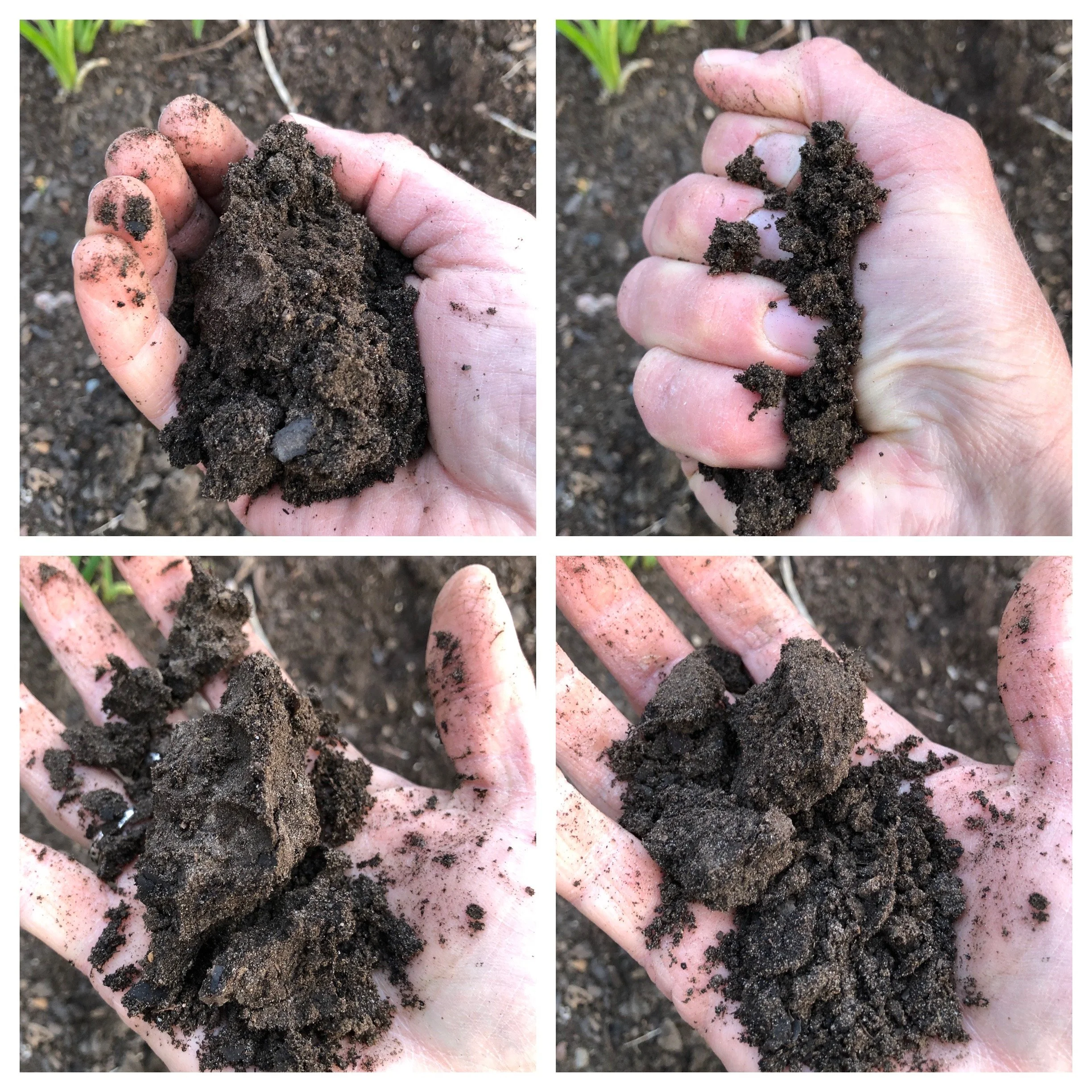
For example, mulch has an uncanny ability to prevent the evaporation of water from the soil. This is fantastic during the dog days of summer when rainfall can be scarce, but during the spring when rain is in abundance, we are often dealing with overly saturated soils. Depending on your soil texture, it can take a fair amount of time for soil moisture levels to decrease (clay soils take much longer to dry out than sandy soils). Putting mulch on saturated soil will prolong the length of time it takes for garden soil to dry out. In the meantime, some plants can suffer in the waterlogged conditions and some may rot away.
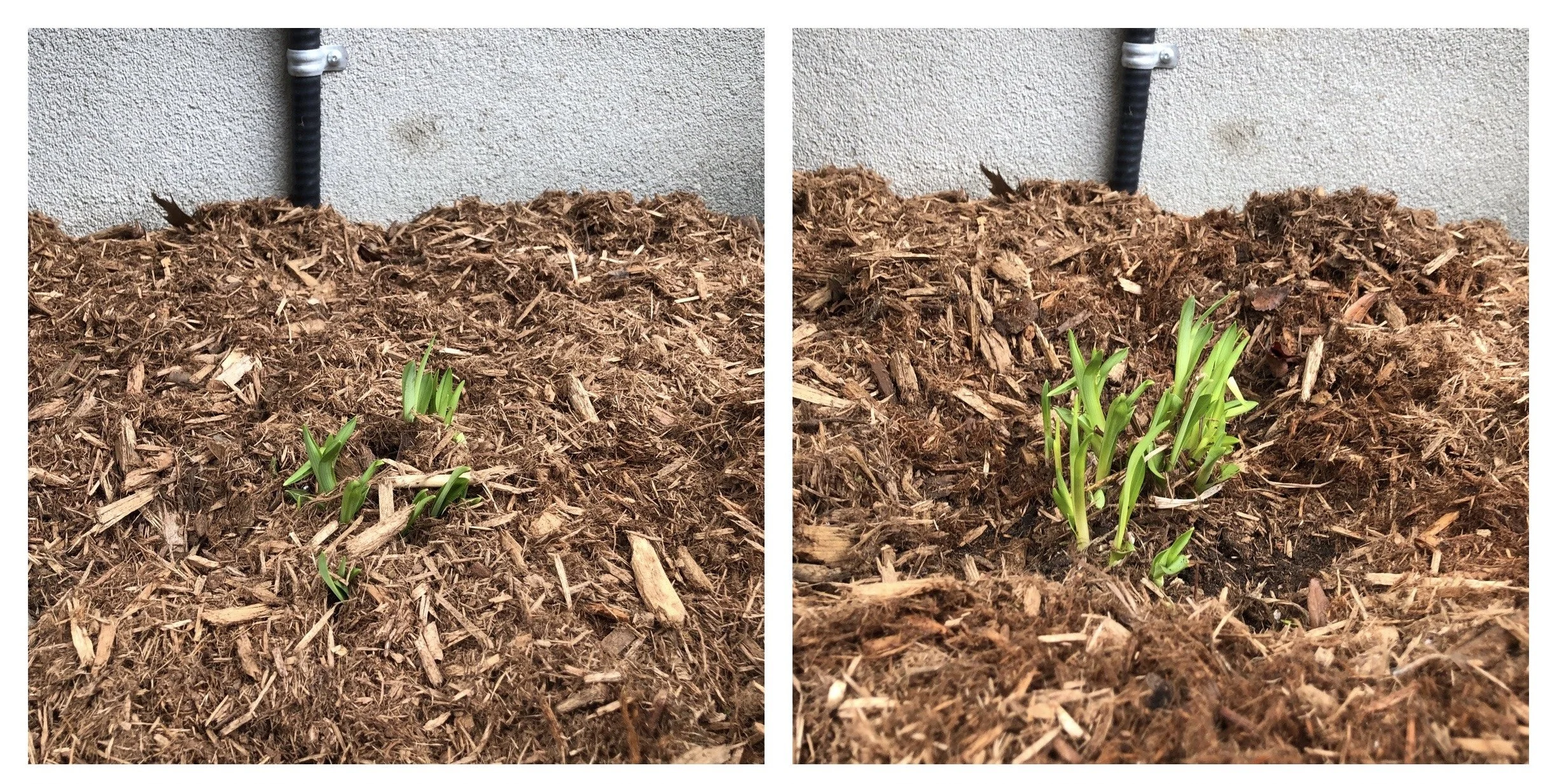
Mulch is also amazing at blocking sunlight. It is the main reason why it is able to suppress weeds- a thick layer of mulch blocks the light that plants need to grow, and that weed seeds need to germinate. Now take that same mulch and put it over top of perennials just starting to emerge, and you’ve got yourself a problem. I see this issue quite often on properties where landscape crews (who do not know the placement of garden plants that have yet to ‘wake up’) mulch too early in the season and inadvertently cover up (and sometimes smother) garden plants. Whoops.
A Hosta mulched-over by a landscape crew. Luckily this one had already emerged and was freed from the thick mulch blanket. Remember- mulch does not get put over top of plants, it goes around them! It’s hard to apply it properly if you can’t see the plants.
Another benefit of mulch is it’s ability to moderate soil temperatures. This is great for preventing freeze/thaw events during the winter (which can be detrimental to plants) however, if a thick layer of mulch is applied too early in the spring, it can slow the warming up of garden soils- which can negatively impact plant growth.
Finally, mulching should occur after amendment/fertilizer applications are complete (if this is necessary based on soil tests). Mulching before amendments have been applied essentially closes the window to applying amendments and fertilizers directly to the soil where it is needed. Fertilizing early is not an option because plants need to be actively growing to make use of the applied nutrients. If they can’t, the nutrients may be washed out of the soil before they even serve a purpose and nutrient loss can have negative effects within the surrounding environment. This is overly simplified and highly dependent on what is actually getting applied to the garden, but I think you get my point: amendments first, mulch next, but not too early!
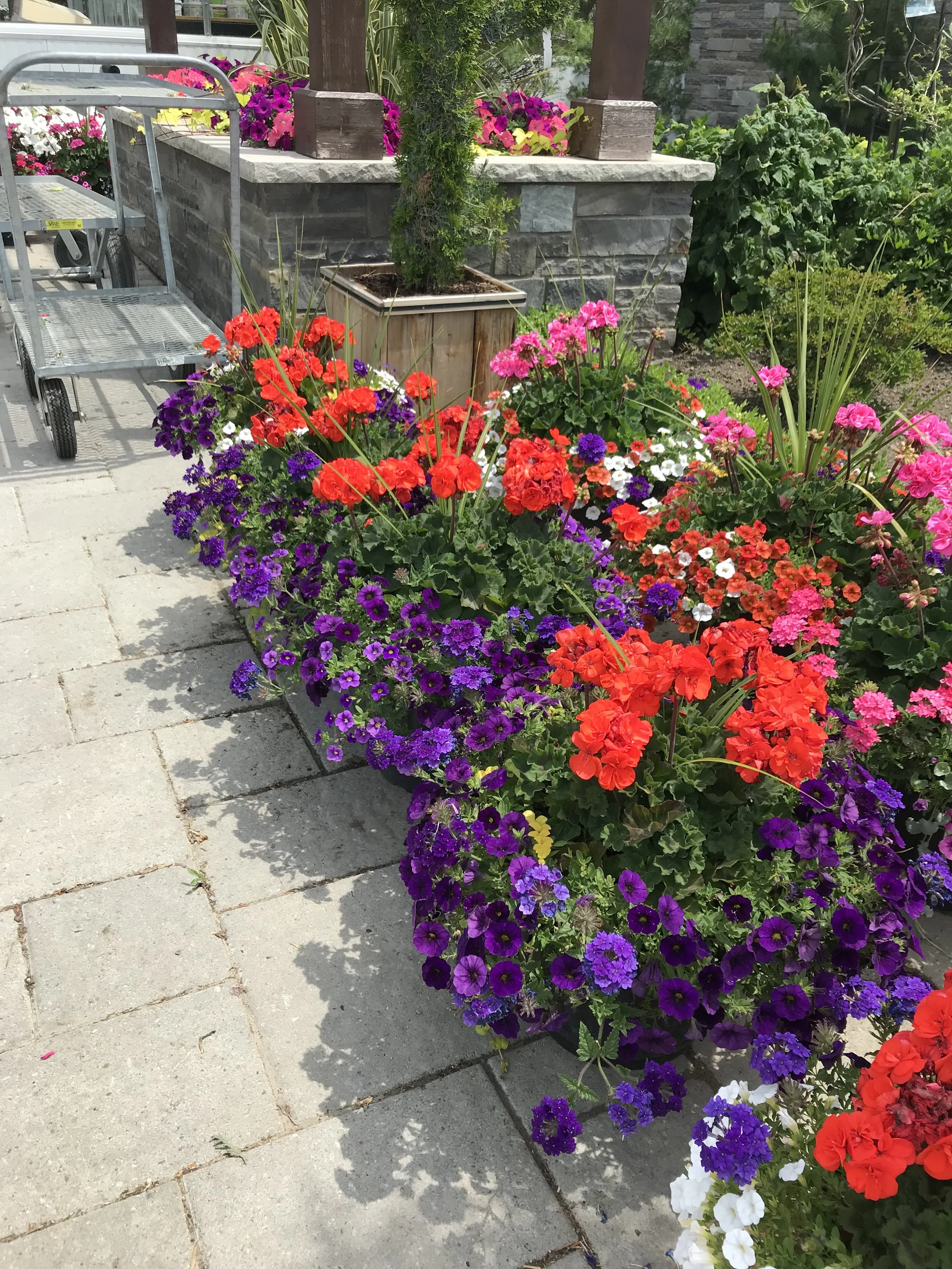
As you can see, mulching too soon can be pretty detrimental to a garden. In my area, I generally do not start mulching gardens until the end of May. In some cases I will wait even longer- for instance if I have annuals to get into the ground. For me, the annual planting frenzy kicks-off the third week of May and lasts for a few weeks. It is much easier to apply mulch around annuals after they have been tucked into the garden, rather than try to plant them into a mulched garden bed (which requires the mulch to be pushed out of the way in order to access the actual garden soil for planting… definitely not an efficient way to plant!)
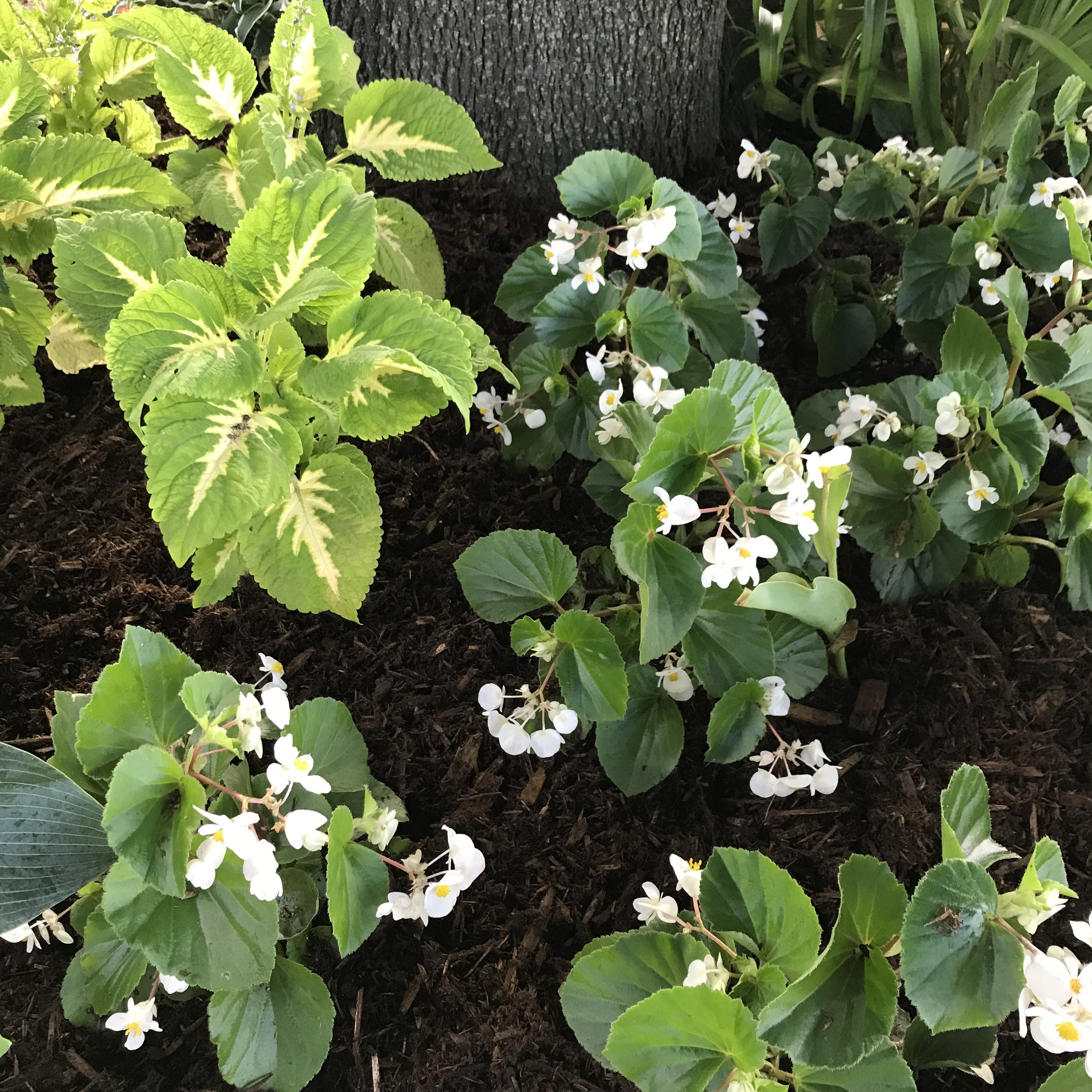
It is much easier to apply mulch after annuals are planted rather than have to dig through mulch to find soil to plant into.
And there you have it! A couple common spring gardening mistakes that I am sure we have all been guilty of at one point or another. So what’s the take home message in all of this? Well, if you feel ‘behind’ in your garden chores- don’t worry! You are most likely not as behind as you think; best case scenario, you are right on schedule! It’s far too early in the season to stress out about falling behind in gardening tasks. Enjoy the ‘spring wake-up’ at a more leisurely pace… your garden (not to mention your body) will thank you.
Wishing you a happy spring! It’s great to be back in the gardens :)
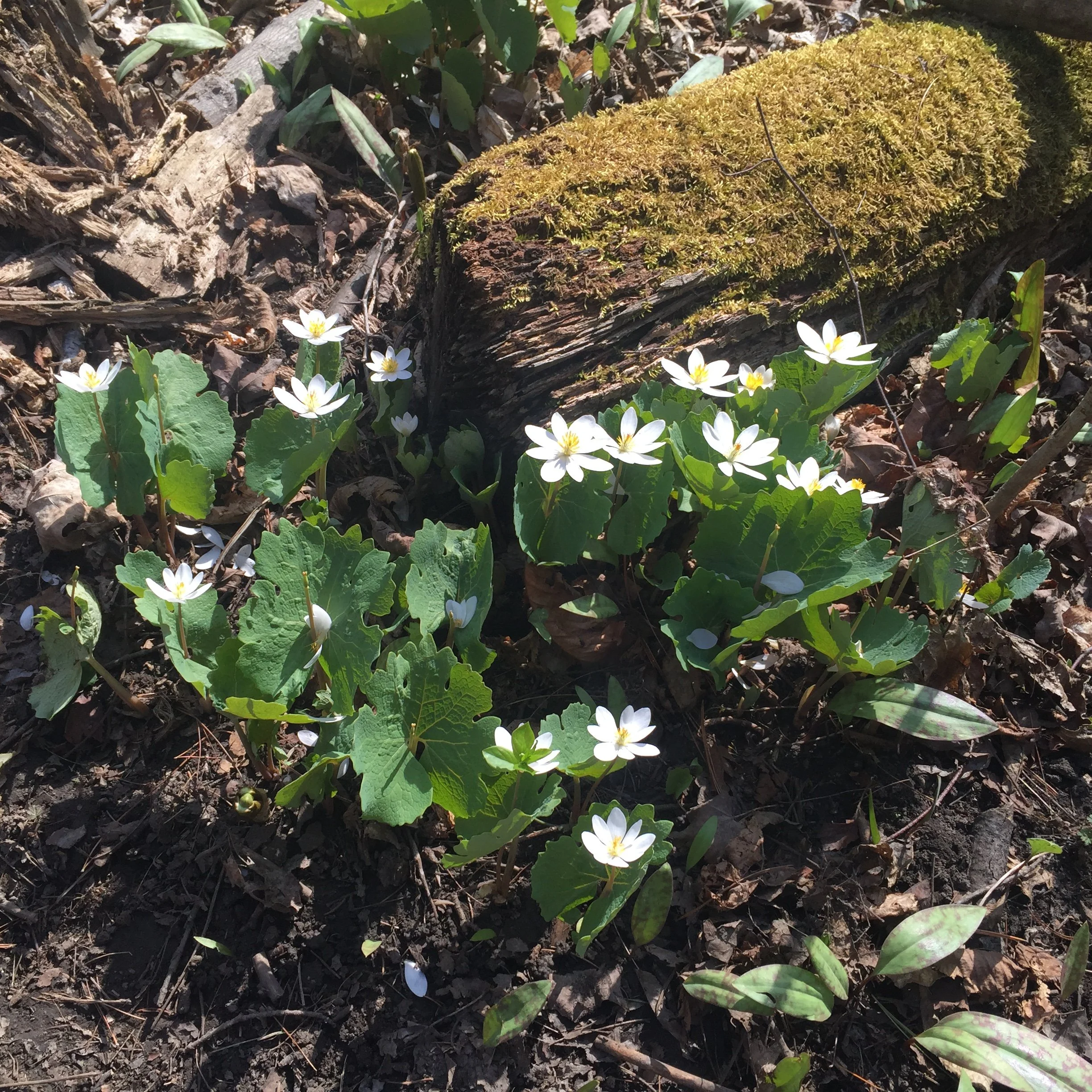
Sanguinaria canadensis (Bloodroot). It’s springtime in our woodlands!
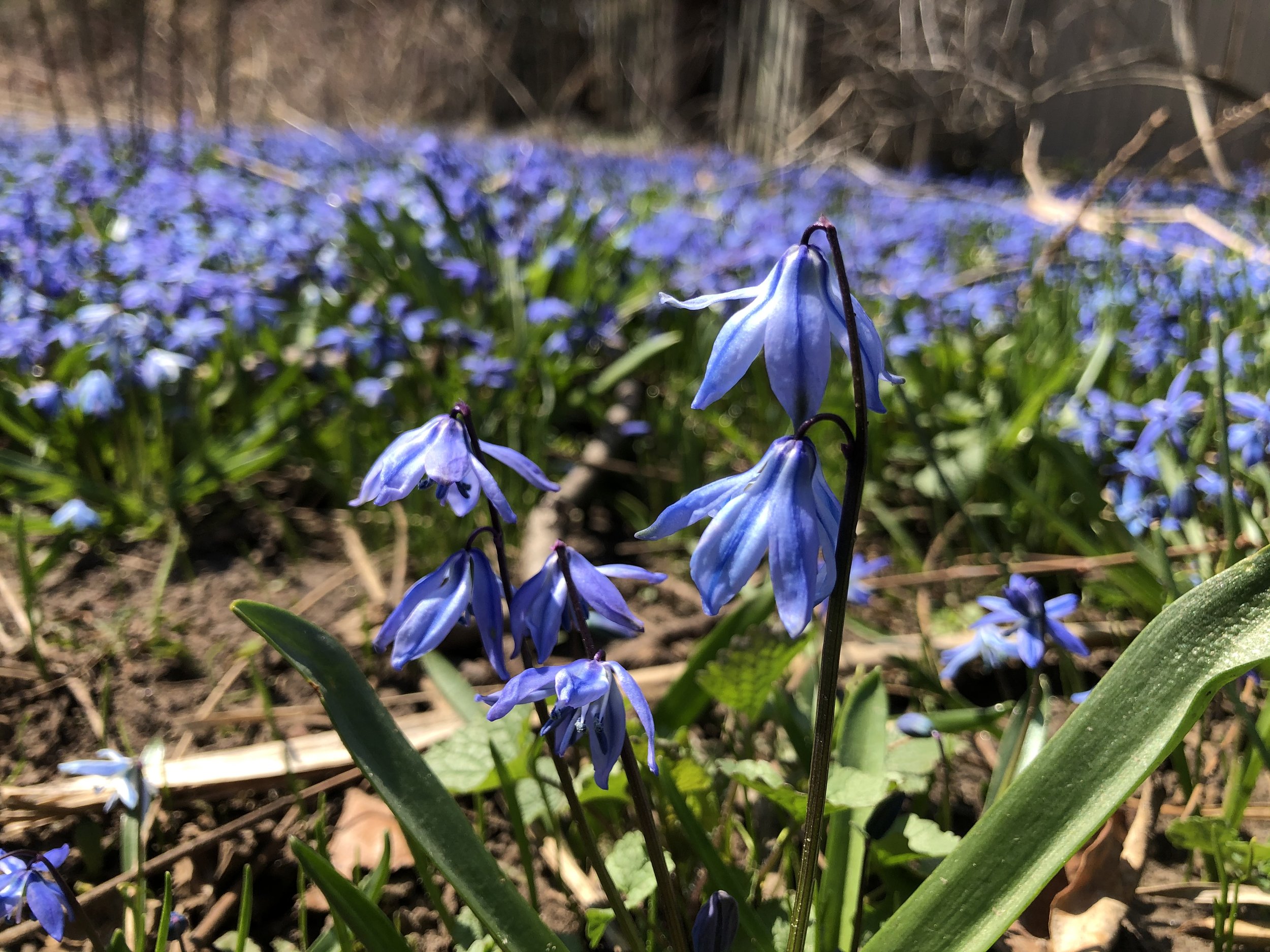
Scilla Sect. Chionodoxa (glory-of-the-snow). A sea of blue is a spring sight to behold!