Perennial Care

Not all blankets are cozy...

(Originally posted: December 3, 2020)

Hello there! It’s been a while! I hope your fall has been going well; in this area, it has been an absolutely glorious one for working in the garden!

Glorious fall days! No better place to be than in a garden.

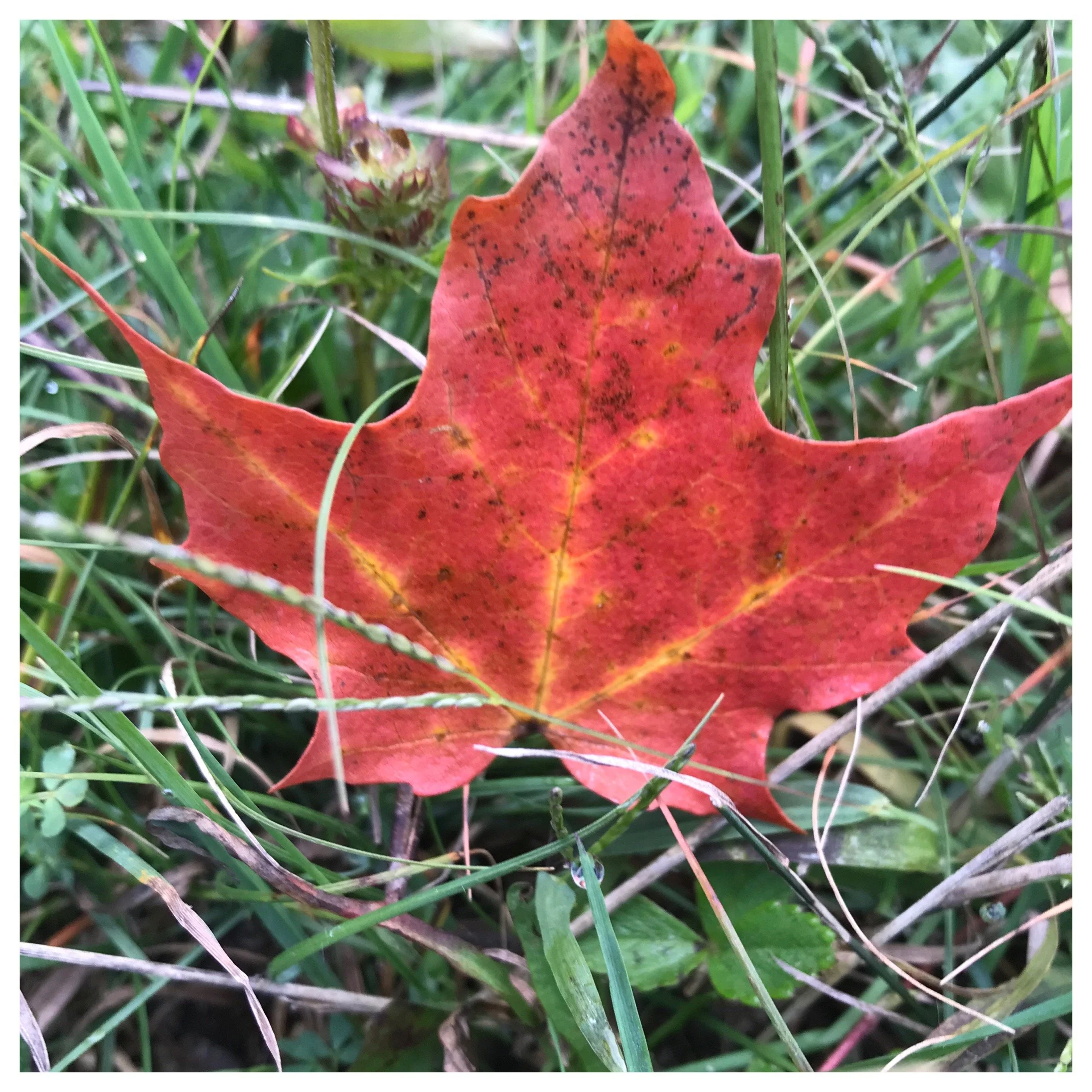
With that said, things are now coming to a close and with the snow just starting to fly, it is time to take a good hard look at the garden to ensure that it is in a good state headed into the winter months. Typically, one of my final gardening tasks of the season is to ensure that fallen leaves are not resting on any areas that will cause problems down the road. We have touched on this subject before, but I think it is a good one to revisit.

When it comes to leaf ‘litter’, it is a case of the good, the bad, and the ugly…

The Good

Leaf ‘litter’ is not really litter at all! It is a valuable resource for the soil and garden. When left on beds, leaves will break down over the winter and the nutrients and organic matter from them will return to the soil. This is nature’s way of recycling; giving back to the soil so the soil can continue to support life.

Leaf litter supports life in other ways too as it provides important shelter for overwintering insects and other garden critters- keeping them protected until the earth begins to warm once more. While small, these creatures can play important roles within the web of life that exists in the garden. From pollination to predation on garden pests, or even becoming food for other creatures, there is no doubt that promoting other forms of life within the garden can have huge benefits on how the garden functions as a whole.
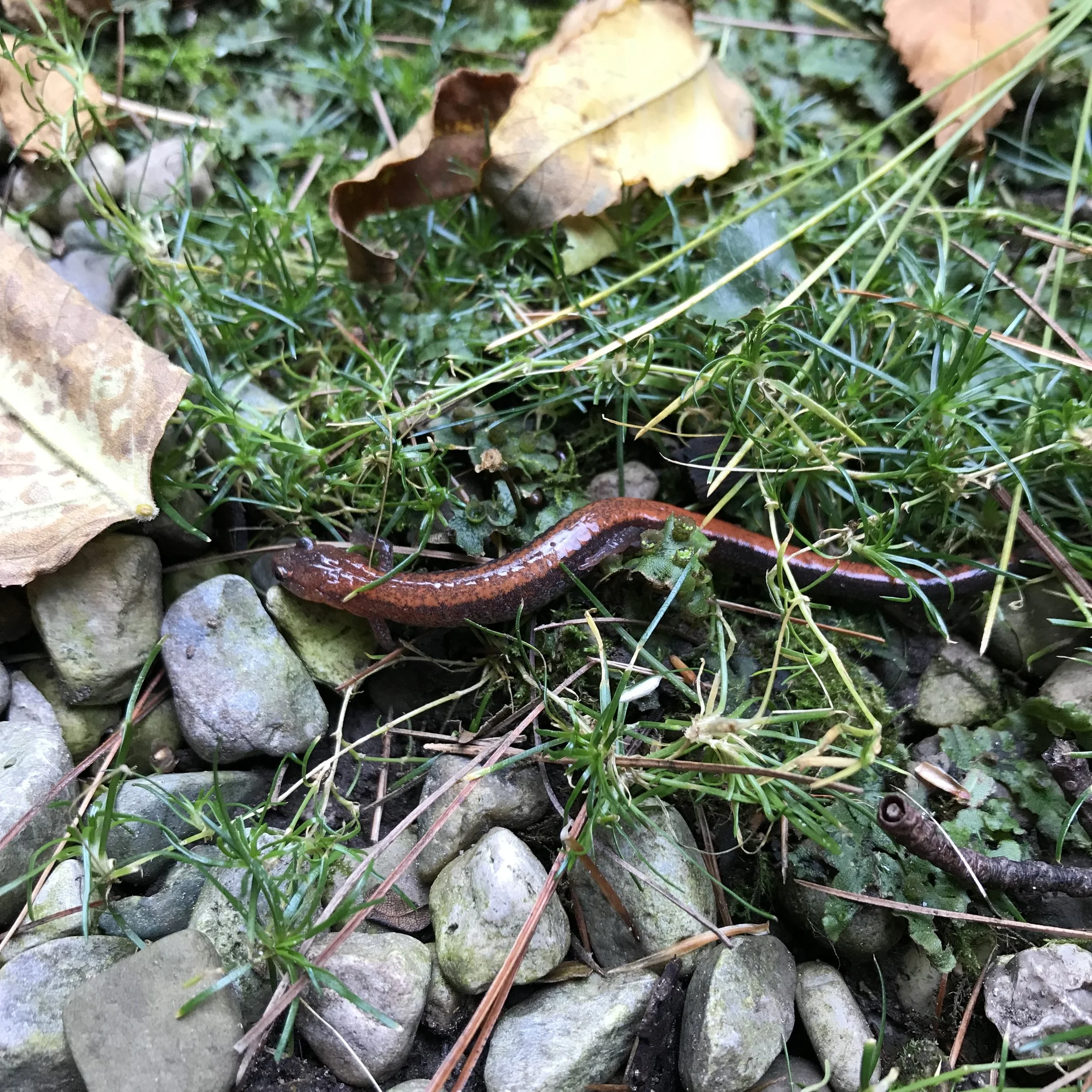
Salamanders- one of the many types of critters that can benefit from the presence of leaf litter in the garden.

The Bad

With all that said, in some instances, leaves can really pile up! (Believe me, I know. With three huge shade trees bordering my urban-sized backyard, I know what it feels like to be waist-deep in leaves!) Add snow and rain to a massive leaf pile, and you end up with leaves that have matted together to form a really REALLY thick blanket…or solid mound. (Been there. Done that.). On bare soil, a blanket of leaves is generally not an issue; where we can run into problems is when this blanket lies on top of evergreen plants for prolonged periods of time… such as over the winter; and that’s when things can ‘get ugly’.

The Ugly

Leaves still need to ‘breathe’ (not really the technical terminology, but for simplicity’s sake, let’s consider it breathing); if a thick blanket of fallen leaves is left on top of foliage that needs to ‘breathe’, the result can be smothered foliage and even the death of some plants… big whoops.

Now before you start cursing your shade trees, it should be noted that not all leaves are considered equal when it comes to the ‘smothering factor’; some leaves break down much faster than others and tend to be a non-issue in the garden. Leaves that are notorious for creating thick mats are the large thick leaves of oak (Quercus spp.), Norway and (to a lesser extent) sugar maples (Acer platanoides and Acer saccharum) and catalpa (Catalpa spp.). In contrast, the smaller, thinner leaves of willow (Salix spp.) littleleaf linden (Tilia cordata), silver maple (Acer saccharinum), and ash (Fraxinus spp.), can still form mats however these leaves break down much quicker and they do not hang around long enough to cause issues. So what is the take-home message here? Know the leaves that fall on your property! If you know what you are up against, you will know how to prevent the issues.

A nice oak leaf mat beginning to form (left) and the thin, non-persistent leaves of silver maple (right). The oak leaves can pose some problems in the garden when left covering certain plants, while the leaves of silver maple are generally not a concern.

The Solution is Simple

As you probably guessed, it is really important to pick leaves off all your evergreen plants (trees, shrubs, perennials, and groundcovers) to prevent foliage from being smothered. If you have evergreen trees and shrubs, don’t forget to look within the branches to make sure there aren’t any unwanted blankets within the plants. You will be amazed by how many leaves you pull out!
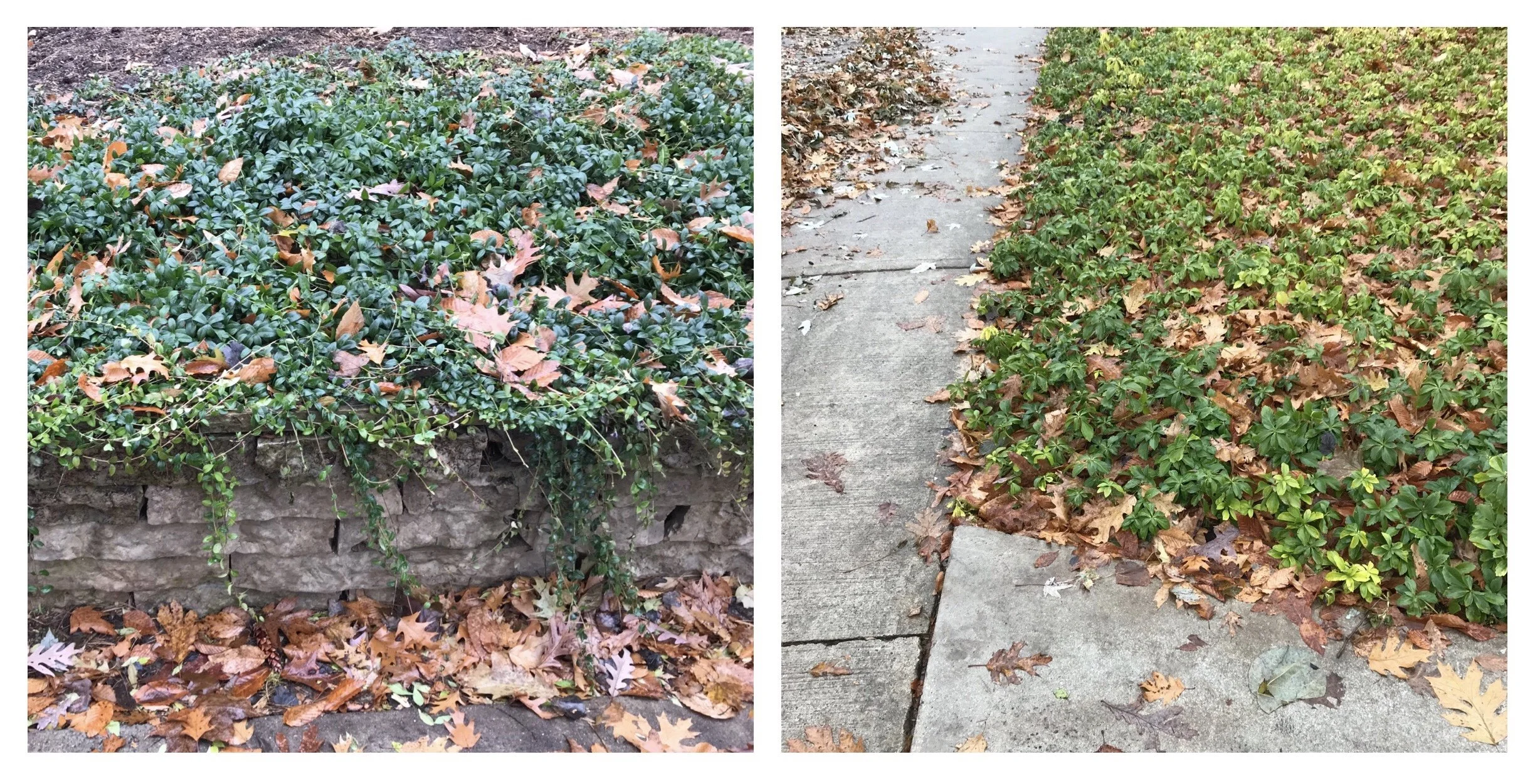
Matted leaves on evergreen groundcovers can cause foliage to die if the leaves are left to remain throughout the winter months and into the spring. Removing the leaves can help prevent issues down the road.
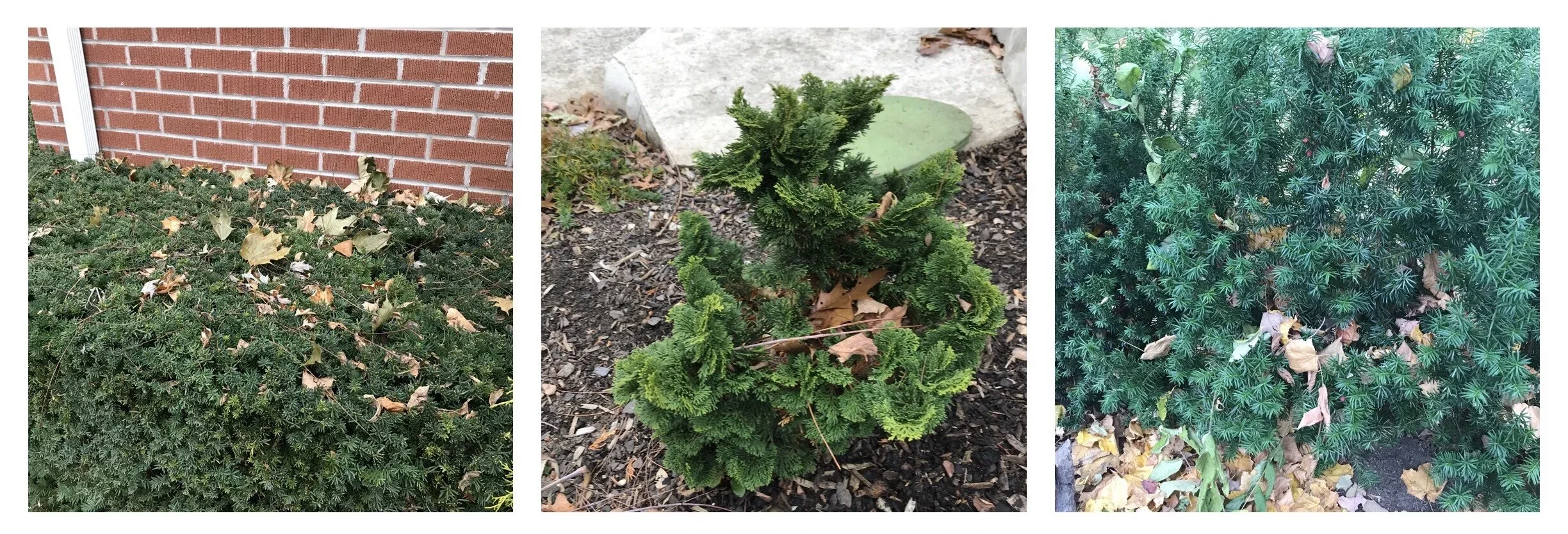
Fallen leaves resting on and within a few evergreen shrubs. I always make sure to remove these leaves to prevent future foliage problems (smothering), not to mention it just looks nicer too!

A couple more tips for managing leaves

  • If you tend to have large quantities of leaves- where allowing them to lie where they fall is just not practical, or you have leaves with a tendency to become ‘smothering’, you may want to consider buying a leaf mulcher (essentially a glorified ‘whipper snipper’ in a barrel). A mulcher will shred the leaves into a beautiful mulch that you can apply to your garden knowing that it will not cause any thick smothering blankets and that it will be mostly broken down come spring. Additionally, a mulcher helps reduce the volume of leaves, so it becomes possible to allow more leaf ‘litter’ to remain on your garden than if the leaves were to remain whole. All-in-all, a leaf mulcher is a fantastic way to make use of a free soil amendment provided to us every fall, courtesy of Mother Nature.
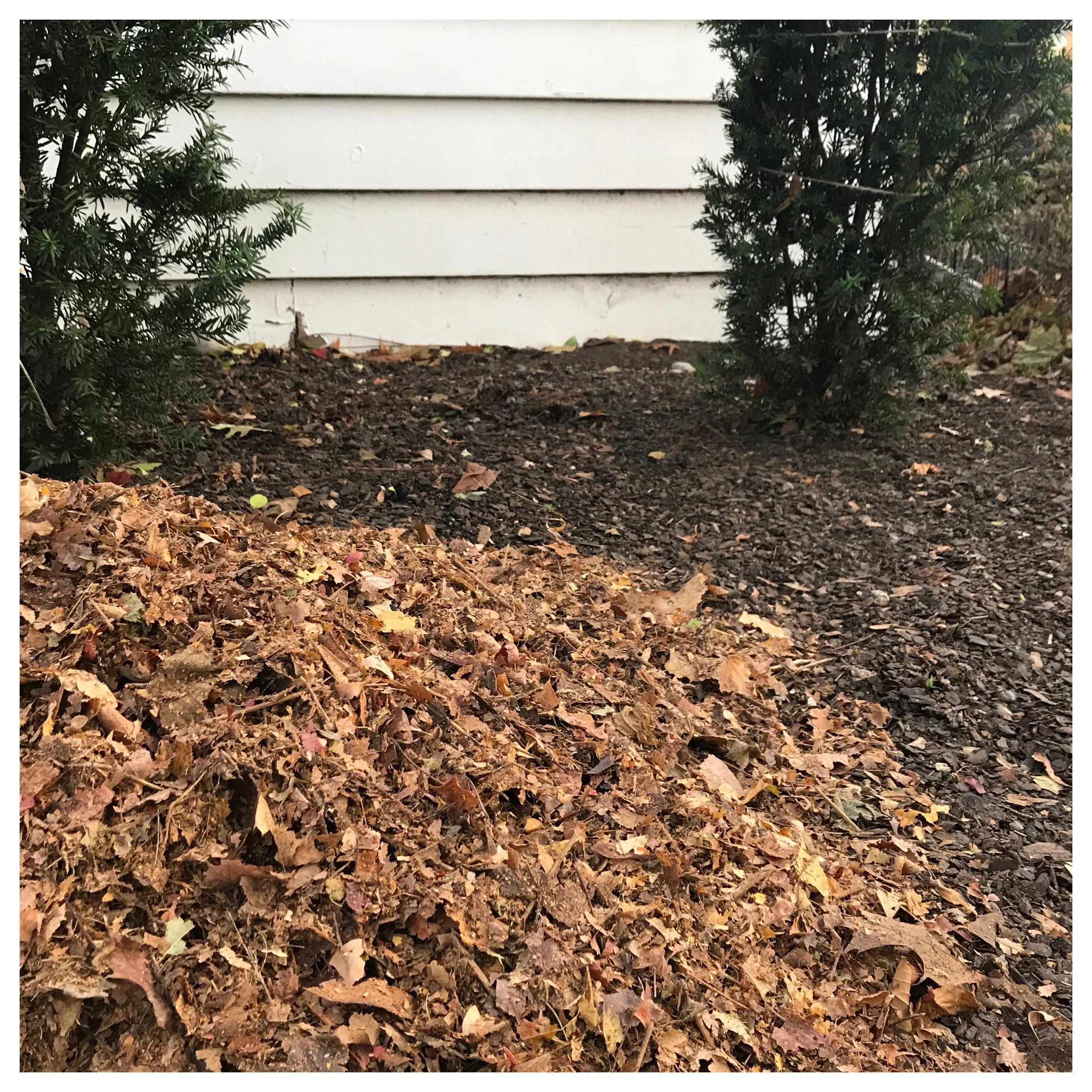
Ahhhh… it’s so satisfying to see a pile of mulched leaves, ready for distribution throughout the yard! Hmm- what plants should I buy with all the money I save on soil amendments!?!

  • Where leaf quantities are excessive, have a designated space for leaf ‘overflow’ such as a chicken-wire enclosed area. Having an enclosure is handy as it prevents the leaves from blowing around (your neighbours will thank you). It is also a nice contained place where the leaves can slowly break down into leaf mold which can then be used in the garden. Alternatively the excess leaves can be put in a compost pile to speed up decomposition. In general, the leaf mold enclosure and the compost pile are two handy strategies that can be used if you want to keep all your leaves but have too many to allow to sit on the garden over the winter.

And that’s a wrap! Speaking of wraps… stay tuned for my next post which is about another task that I ‘wrap up’ at the end of a gardening season. Any guesses as to what that is???
It's not over until it's over: Fall Planting

(Originally posted: September 27, 2020)

Around here, the first real ‘nip’ in the air usually comes in late August. It usually doesn’t last- typically reserved for the hours between dusk and sunrise- but it is always an instant reminder that change is on our doorstep.

I always get excited when the temperature begins to dip. Not only do I love the seasonality of life in Canada, but the cooler air is welcomed with open arms. I am usually pretty ‘done’ with the heat of summer at this point in the year (truthfully I am usually done with it in July) and I am just longing to cozy up in my fleece sweater and sport my favourite hair accessory: the toque.

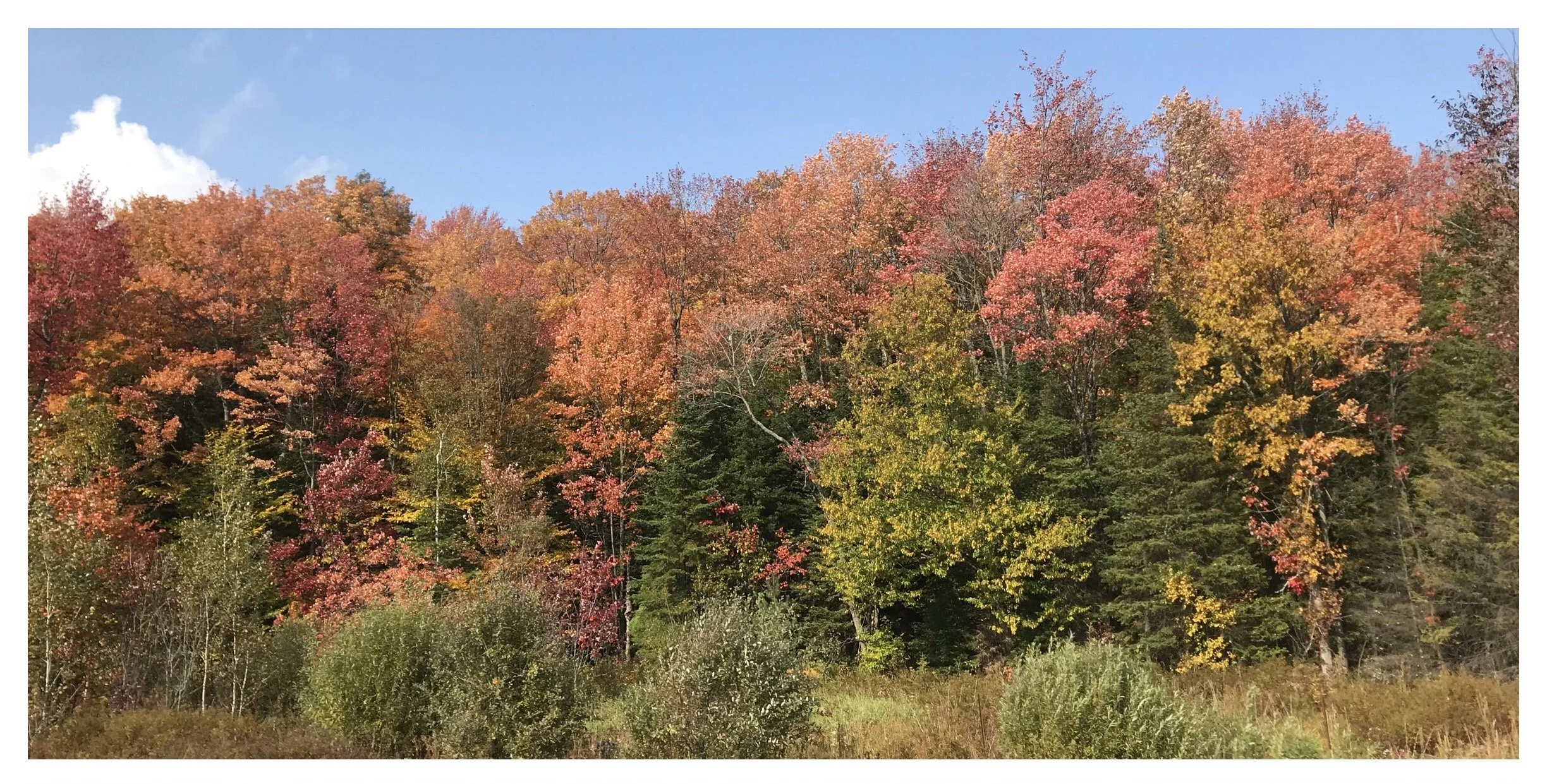
Shorter days, cooler temperatures, amazing colours… fall is here!

With the change in wardrobe comes a change in garden mindset too- thoughts of removing annuals, cutting back perennials, cleaning up leaves, and erecting snow/wind protection usually comes to mind when we think of fall gardening, but let’s not close out the gardening season so quickly! Fall is also a fantastic time for another fun task… planting! Which, may I point out, generally involves acquiring NEW PLANTS- yippee!

Fall Planting

Fall is a great time for planting for a few reasons:

  • The air temperatures are cooler which makes the change in location less stressful on the plant. Cooler temperatures also discourage the plant from sending out top growth (which is ideal since we want new plants to focus on root growth instead).

  • The soil is still warm which allows for root growth (and therefore plant establishment).

  • There is [usually] more consistent moisture in the form of rainfall. Moisture is essential for the establishment of newly installed plants. When it is generously provided by Mother Nature, it minimizes the need to irrigate newly planted material. Additionally, the cooler temperatures mean the garden won’t dry out as quickly so it will be easier to keep plants properly watered while they get established (proper watering is usually a losing battle in the summer).

  • We get a head-start on next year’s growing season. By planting at this point in the year, new plants have a good month or more to ‘put down roots’ giving them a good head-start for next year.

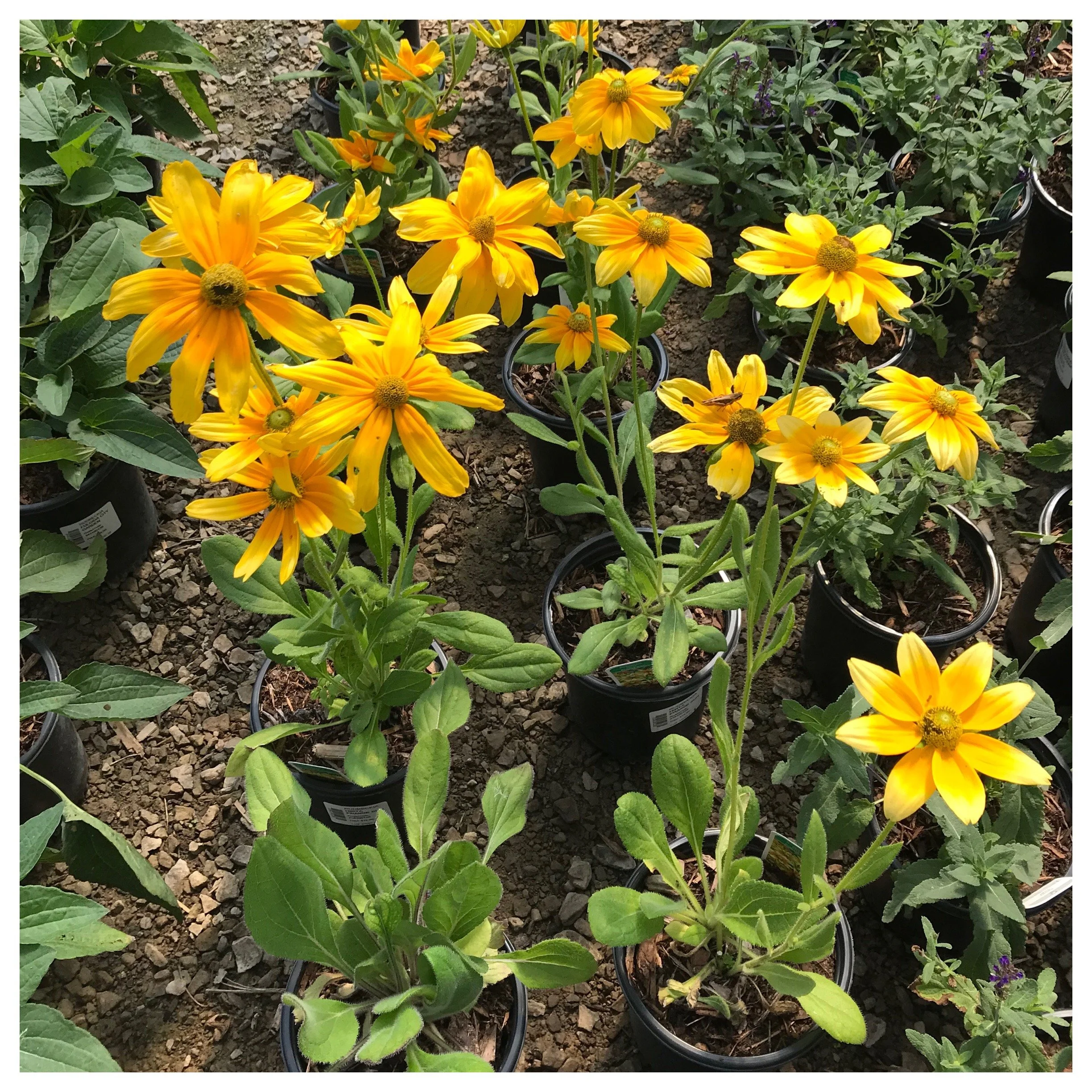
Yippee! New plants! (Rudbeckia hirta ‘Prairie Sun’)

A Word of Caution

While fall is generally a great time for planting, there are a few plants I shy away from installing in the autumn months. They include:

  • Broadleaf evergreens such as Rhododendron, Pieris, evergreen Ilex (holly) and Buxus (boxwood). These shrubs retain their leaves throughout the winter months and it is through these large leaves that moisture is lost. With the soil water frozen (and therefore ‘locked-up’), these plants are not able to replenish the water lost from their leaves and the plants then become at risk of desiccating (drying out) over the winter months.

  • Other evergreens with needle/scale-like foliage such as Pinus (pine), Picea (spruce), Thuja (cedar), Tsuga (hemlock) etc. While these evergreens are generally adapted to harsher climates and their foliage is designed to minimize water loss, the needles/scales are still areas where water loss can occur. Once again, with roots unable to access the moisture locked-up in the frozen soil, these plants can suffer from winter desiccation. (It should be noted that this is particularly an issue for newly planted nursery stock; once these evergreens are established with a more mature root system, the concern over winter desiccation lessens).

  • Plants that are marginally hardy for the location in which I am planting them. The two plants that come to mind are Buddleia (butterfly bush) and Caryopteris (bluebeard). For plants such as these, I want them to have the whole growing season to get themselves established in my garden before they need to face the harsh reality of winter!

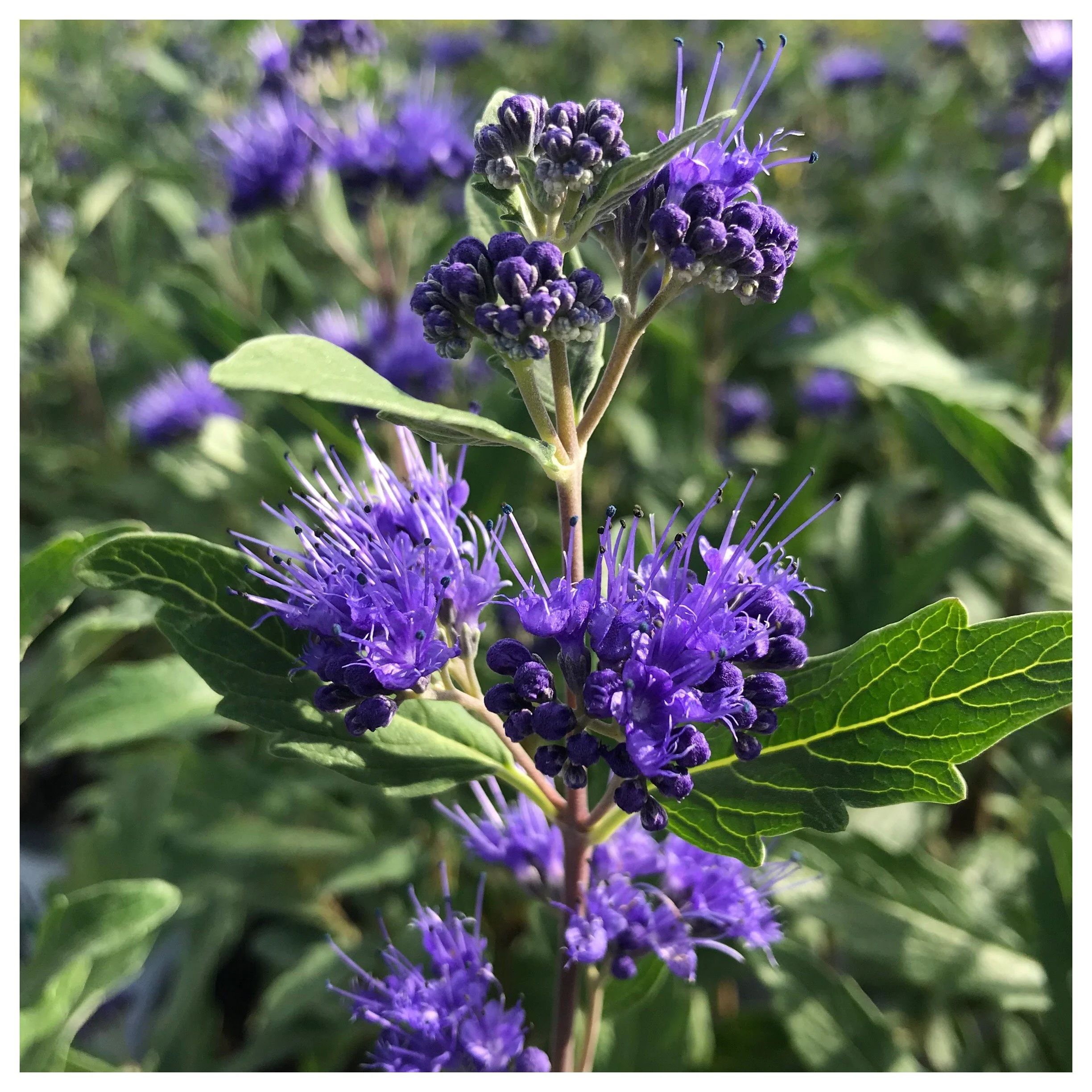
Caryopteris- a plant that doesn’t exactly have the best track record for withstanding our winters. For that reason, it is one that I prefer to plant in the spring.

Throwing out the Rules

As with many things in gardening, rules are meant to be broken. In reality there are many amazing sales to be had at the garden centres and realistically, gardeners tend to have a bit more time on their hands in September/October as opposed to the spring (when there is no end to the ‘to do list’). Planting at this time of year makes practical sense.

So what happens if you just happen to purchase some plants that are not-so-ideal for fall planting? Well, there are a few techniques you can use to help ensure the survival of your new additions:

  1. Burlap- erect a burlap screen around newly planted trees/shrubs to minimize airflow around the plants (which in turn minimizes the evaporative water loss from the plants and helps to ward-off desiccation). Screens get erected once air temperatures remain consistently cold- usually November.

  2. Mulch- Applying a good layer of mulch around the plant protects the establishing root system by providing additional insulation from the cold as well as potentially damaging temperature fluctuations. Mulch also helps to conserve soil moisture.

  3. Water- It is important to remember that despite cooler air temperatures, soil can still dry out. For roots to grow and establish, they need moisture so it is important to keep watering newly planted trees, shrubs, and perennials right up until the ground freezes! Proper watering during the autumn months will also ensure your plants are “fully hydrated” entering into the winter. This is an important step in helping your plants survive winter water loss without completely drying out. (A drought-stressed plant is much more likely to succumb to winter desiccation than a property watered plant.). So check your soil often, and when it starts to get dry, be sure to water. With that said, it is important to not keep the soil consistently wet, as this will promote root and crown rot issues in your plants.

Phew! Well that was long-winded! So as you can see, the growing season is certainly not over! On that note, I have a sudden urge to take a walk through my garden and make a shopping list- afterall there are still some ‘must-haves’ that must find a place in my garden this fall!

Happy planting!

A sea of colour… take it in! It won’t last long…

It'll Grow

(Originally posted: July 28, 2020)

A bad haircut. I am sure that many of us have ‘been there, done that’; perhaps more times than we would like to admit! Maybe it was the result of an adventurous whim to ‘try something new’ or one too many bad hair-days that finally led to an emotional snap, regardless of the motivation, at one point most of us have walked into a salon with a clear and simple directive: CHOP IT!

Regret soon follows: “What was I thinking?”

You beat yourself up a little: “I must have been crazy!”

And you try to find a solution: “Maybe I can cover this up somehow…”

Luckily (and thankfully), with time the bad haircut fades away to become a little blip in your hairdo history.

What on EARTH does this have to do with gardening you ask?

Well, one of my latest gardening tasks- completely cutting down perennials to rejuvenate their foliage- may conjure up feelings similar to the aftermath of a bad haircut… but I promise you that it will all work out in the end.

Now it may seem totally crazy to completely ‘whack back’ a perfectly lush plant in the middle of the growing season, leaving a gaping hole in your garden… but that is precisely what we do! The reason? The foliage of certain perennials can deteriorate once their flowering period wraps-up. Cutting these worn-out looking plants down to the ground (being mindful to not chop new growth that is already emerging from the base) is a great way to encourage a new flush of leaves that will look fresh and continue to look great for the remainder of the growing season.

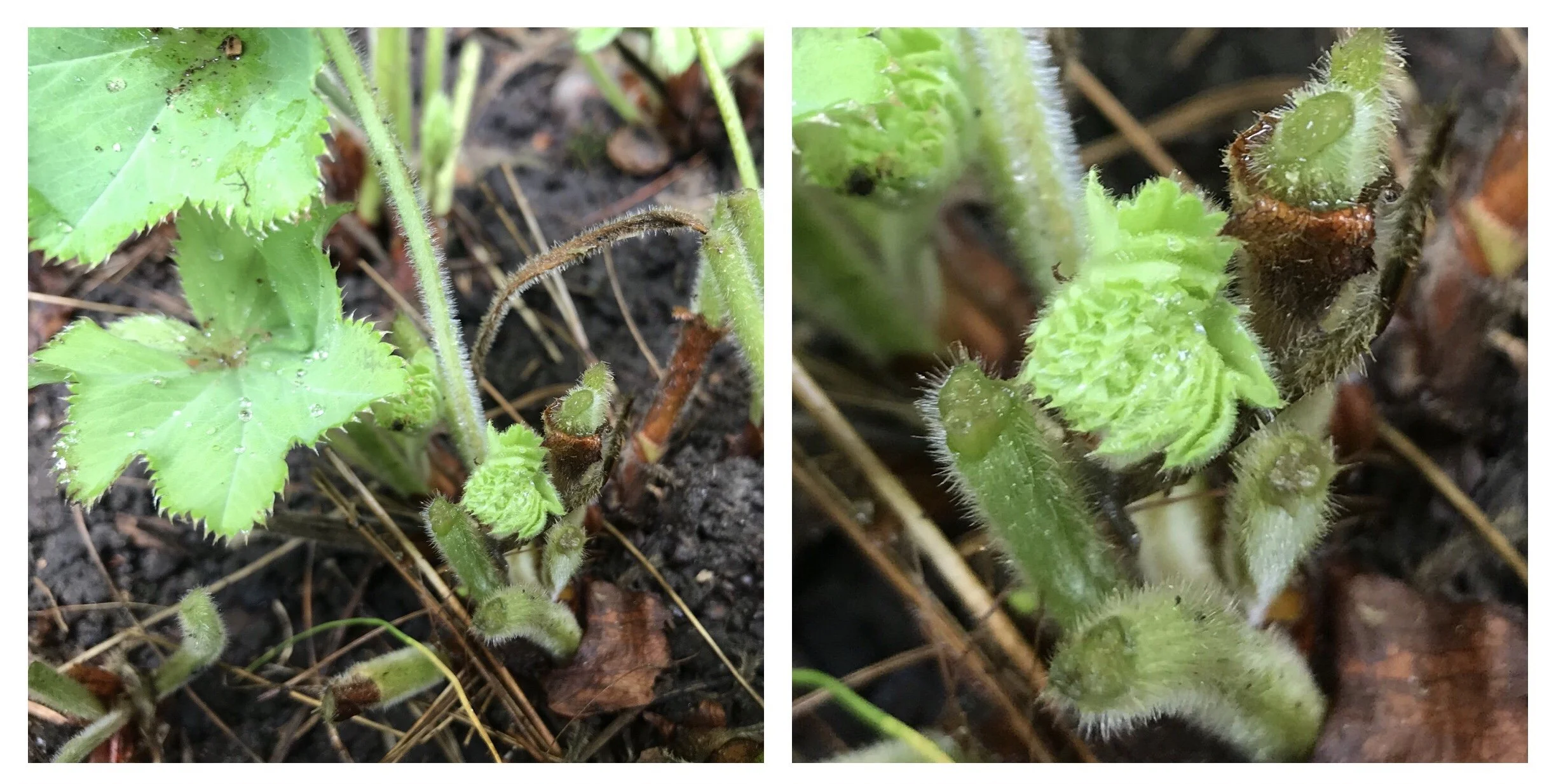
When cutting perennials to the ground, it is important to be mindful of new foliage that is already starting to grow from the base of the plant- such as these tiny Alchemilla mollis leaves.

Common perennials that respond to this seemingly harsh treatment include:

  • Alchemilla mollis (lady’s mantle)

  • Centaurea montana (bachelor’s button)

  • Geranium cvs. (various ‘sprawly’ cranesbill geranium cultivars such as ‘Johnson’s Blue’)

  • Nepeta spp. (various species of catmint)

  • Papaver orientale (oriental poppy)

  • Pulmonaria (lungwort)

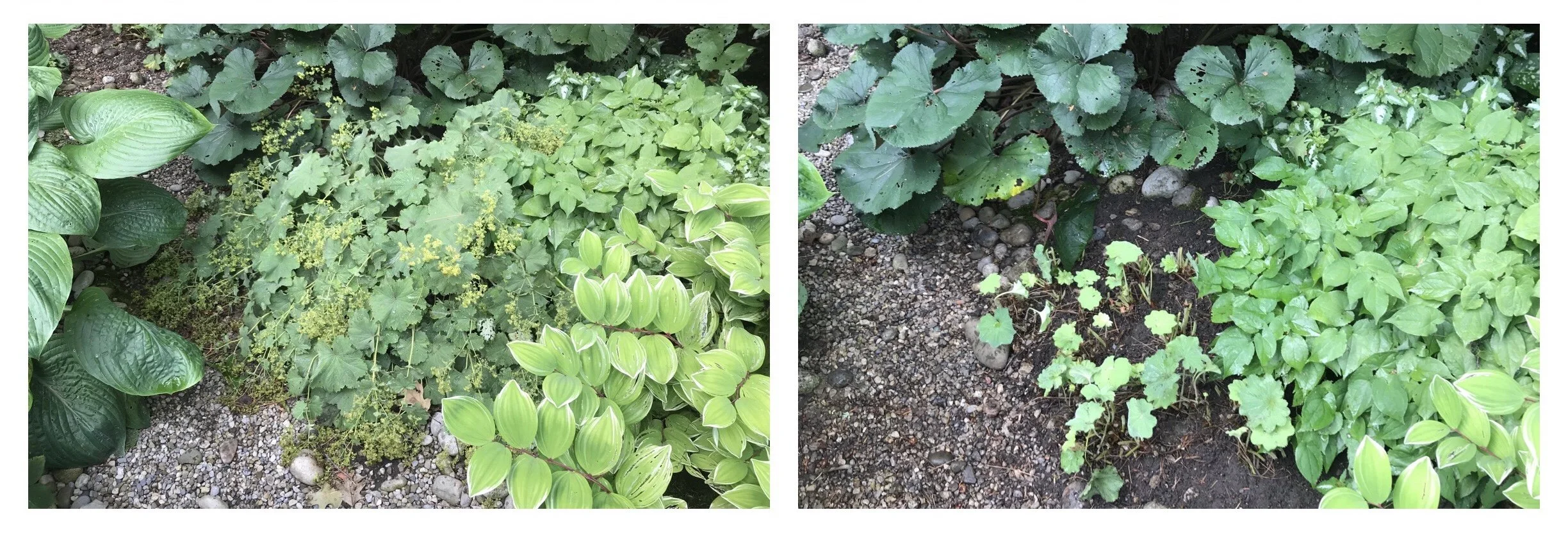
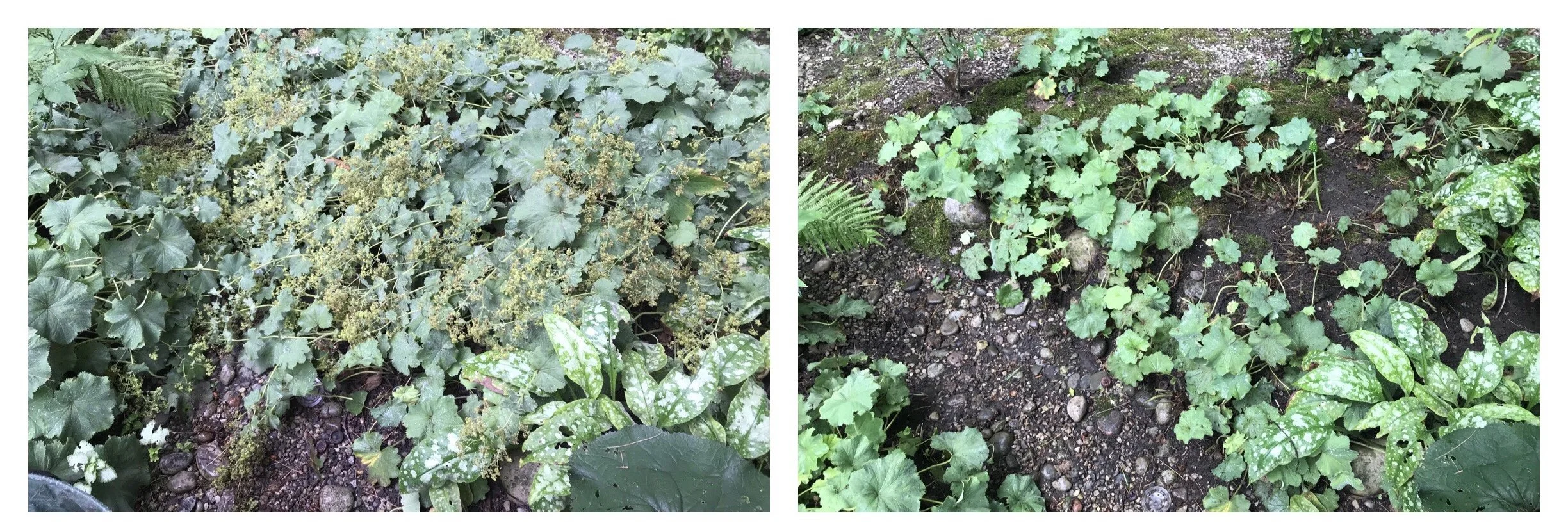
Alchemilla mollis (lady’s mantle) after flowering (left) and cut down to the newest leaves, as shown in the photo on the right (Gasp- what have I done?!?).

Another example of a patch of Alchemilla mollis after flowering (left) and cut down to the youngest leaves (right).

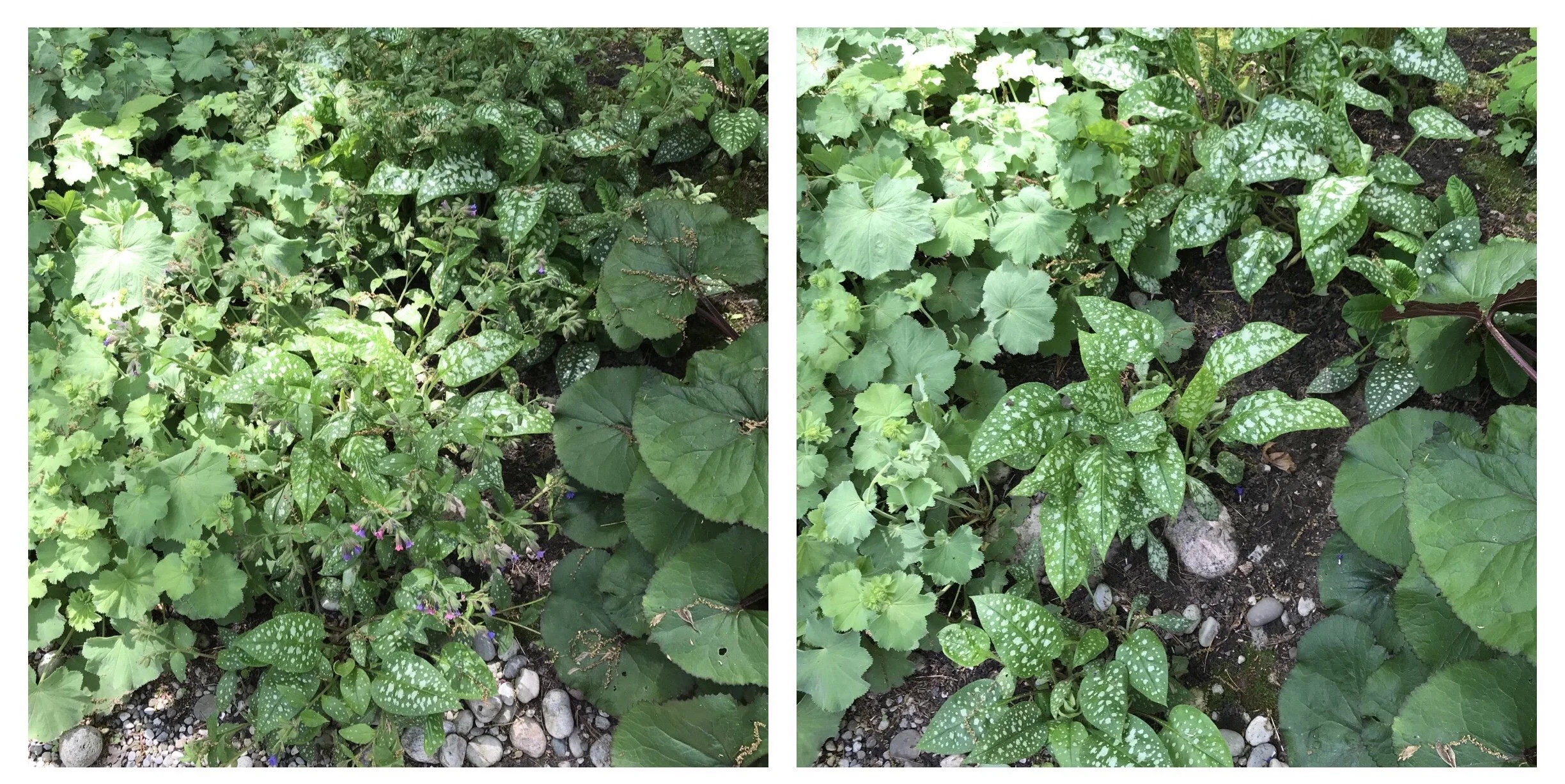
A patch of Pulmonaria showing the plants immediately after flowering (left) and with most of the old leaves cut down (right). As the new growth continues to flush out, I will go back and cut out the remaining old leaves- this two step approach is not so jarring to look at, and a little kinder to the plant too.

I will also use this technique on other plants under certain circumstances. For example:

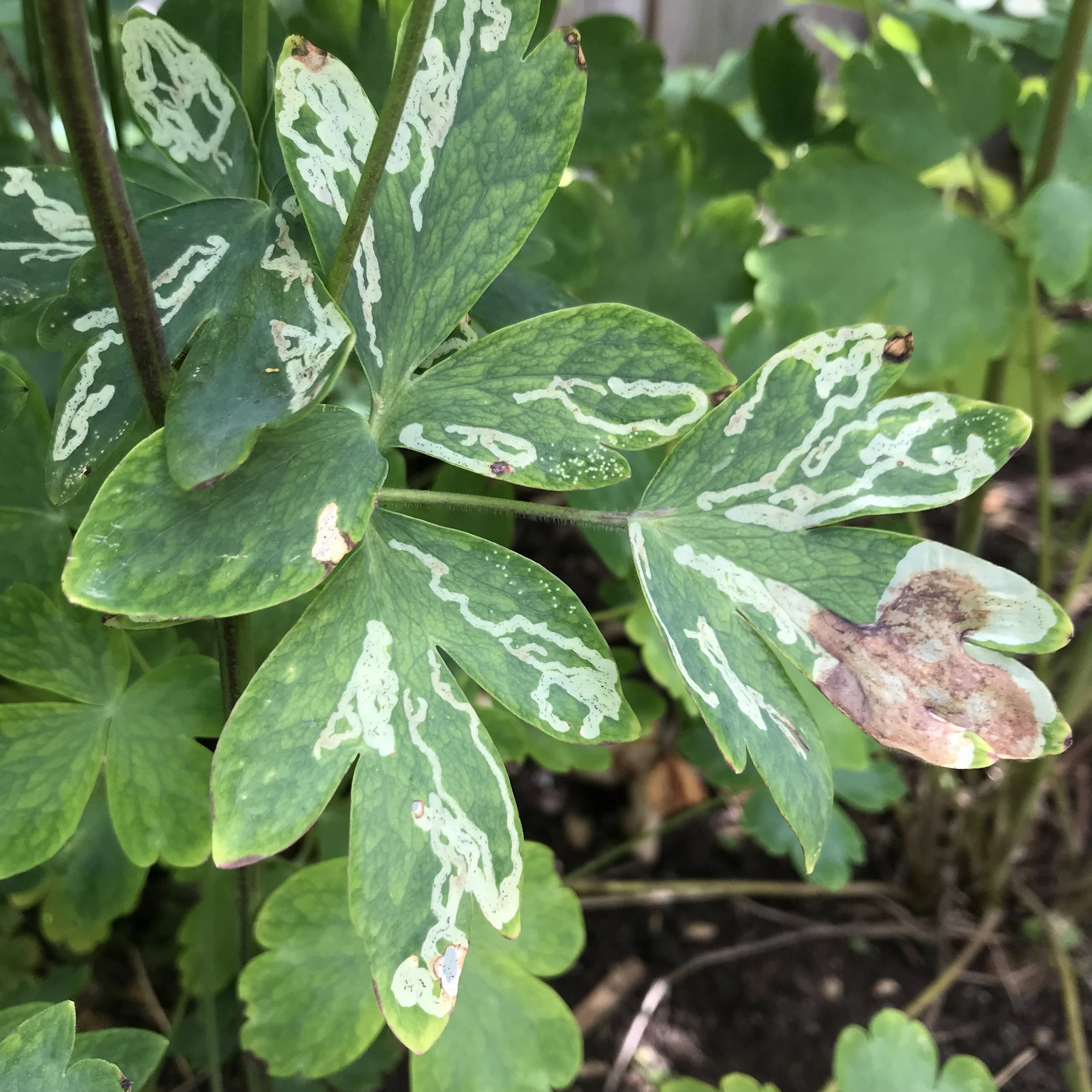
  • Aquilegia spp. (various species of columbine)- the leaves of these perennials are often feasted upon by leaf miner (little bugs that live and dine within the leaves). The tracks of feeding damage on the leaves can look quite interesting when feeding is minimal, but the leaves can look quite ratty when the infestation is severe. Chopping the plant down to the ground helps reduce the insect population and the new growth is generally not affected by the pest (or affected to a much lesser degree).

Leafminer damage on Aquilegia (columbine).

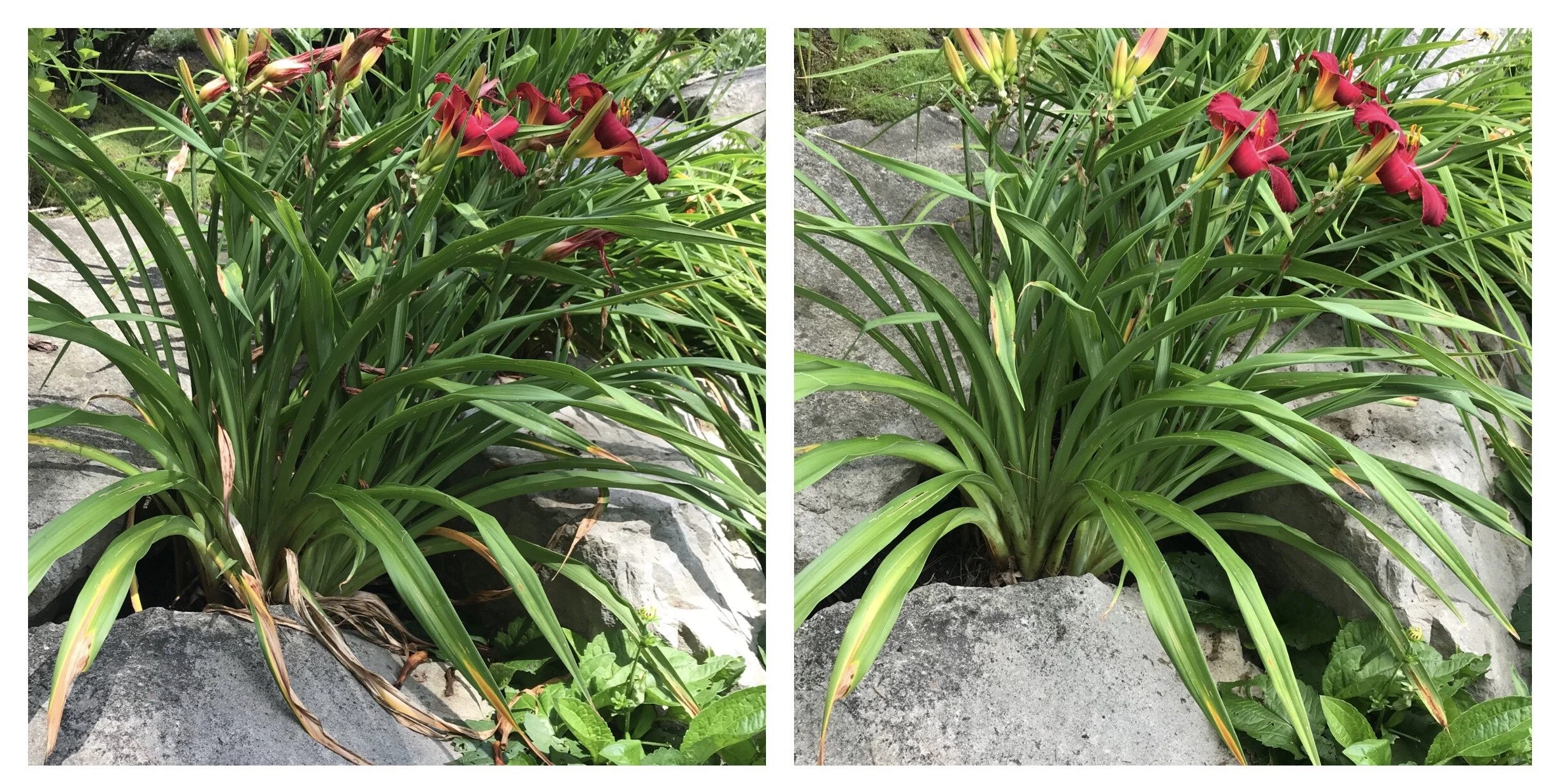
  • Hemerocallis spp. (daylily)- daylilies look amazing up until they bloom at which point their foliage begins to die back. The unsightly dead foliage can be remedied by dead-leafing (removing the dead leaves) but some plants will die back so extensively that the resulting ‘stringy look’ is hard to bear. If a daylily gets to this point, the plant has usually started to sprout new growth at the base. I will cut all the old leaves down to allow this new growth to take over.

A daylily in flower that is starting to show leaf die-back (left). At this point, the aesthetics are improved by dead-leafing (right). If die-back becomes extensive, I remove all the leaves to make way for new, fresh growth.

A word of caution

It is important to remember that removing leaves from a plant means removing the ability of the plant to make food for itself. This is tough for the plant! Help the plant rebound quickly by minimizing other stressors. Ensure the chopped plants stay well watered; drought-stressed plants will not be able to respond with new growth. Additionally, you may choose to add some nutrients to the soil in the way of compost or manure to ensure the plant has what it needs to grow.

And there you have it! Now it is time to grab your secateurs and chop down some foliage (if you have any of the plants listed above). Afterwards, step back and stare at the hole you just made in your garden with some regret, but keep in mind that little tidbit of consolation that was offered to you repeatedly during the days following your bad haircut…

“It’ll grow back”.