Leaf litter

Fall Clean-ups: Detailing

(Originally posted: November 29, 2019)

With the majority of the leaves down, fall clean-up is becoming less about ‘just getting leaves to the curb’ (or the compost pile or the leaf mulcher) and more about making the garden look tidy heading into the winter. Whether you prefer to strip your beds of leaves (with the plan to add lots of compost next year) or keep the leaves in place over the winter so that they can break down and add nutrients and organic matter to the soil, there are a few key tips that can ‘up the tidy factor’ in your fall garden (and protect your plants in the process).

Free your Plants!

When leaves from large trees fall, they cover the garden. (Thanks ‘Captain Obvious’!) During fall clean-up, these leaves are usually raked or blown out of the beds. What often gets neglected are all the leaves that have been captured by the branches of smaller trees and shrubs in the garden. Sure these plants look dead at this time of year, but they don’t have to look like debris traps! While it may seem tedious, picking out the leaves that have been trapped within the branches of your specimen trees/shrubs or even perennials, will greatly improve the overall tidiness of your garden.
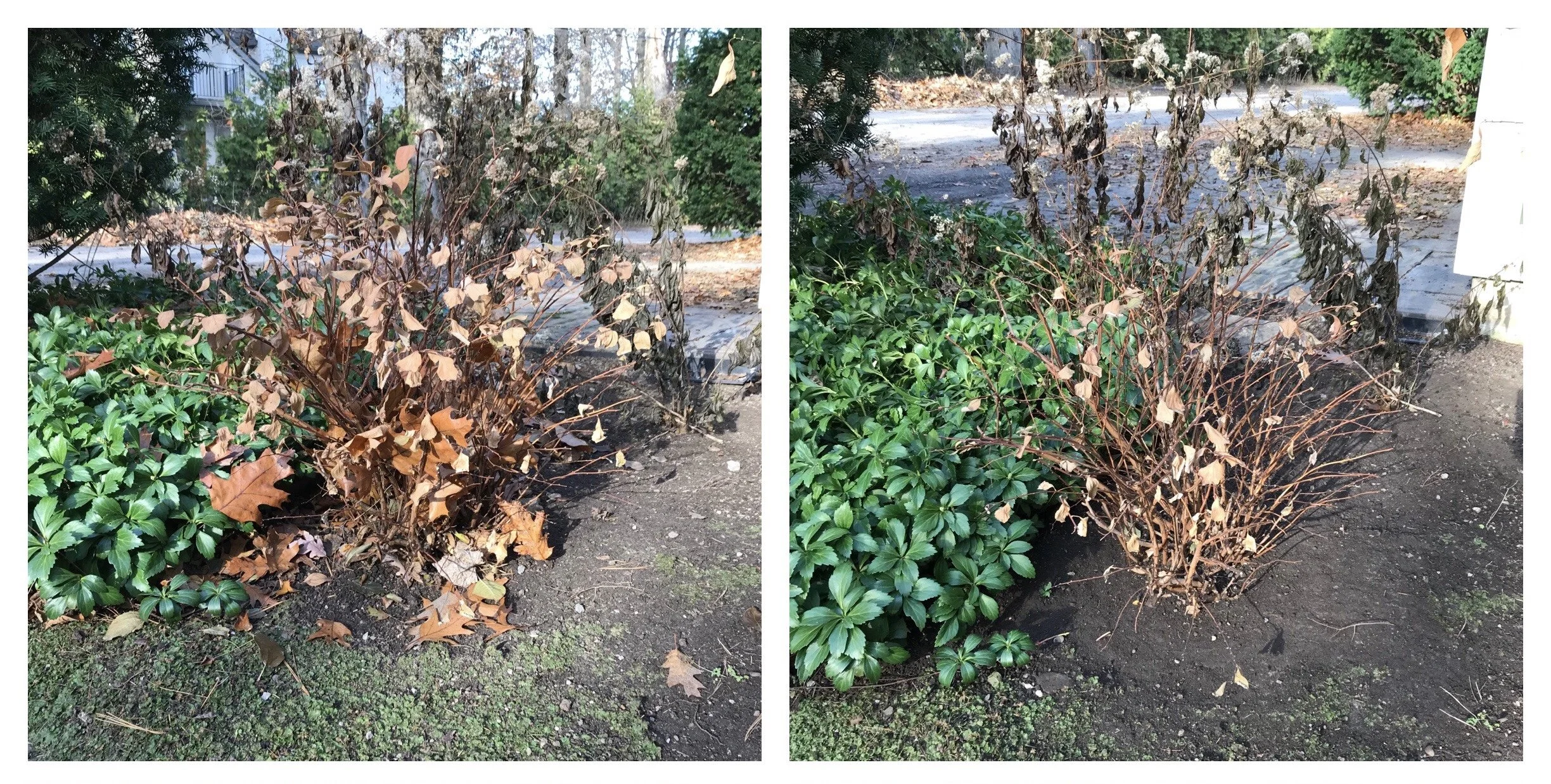
A Spiraea betulifolia (birch leaf spirea) that has been effective at trapping leaves (left) and the same shrub with the oak leaves removed (right).
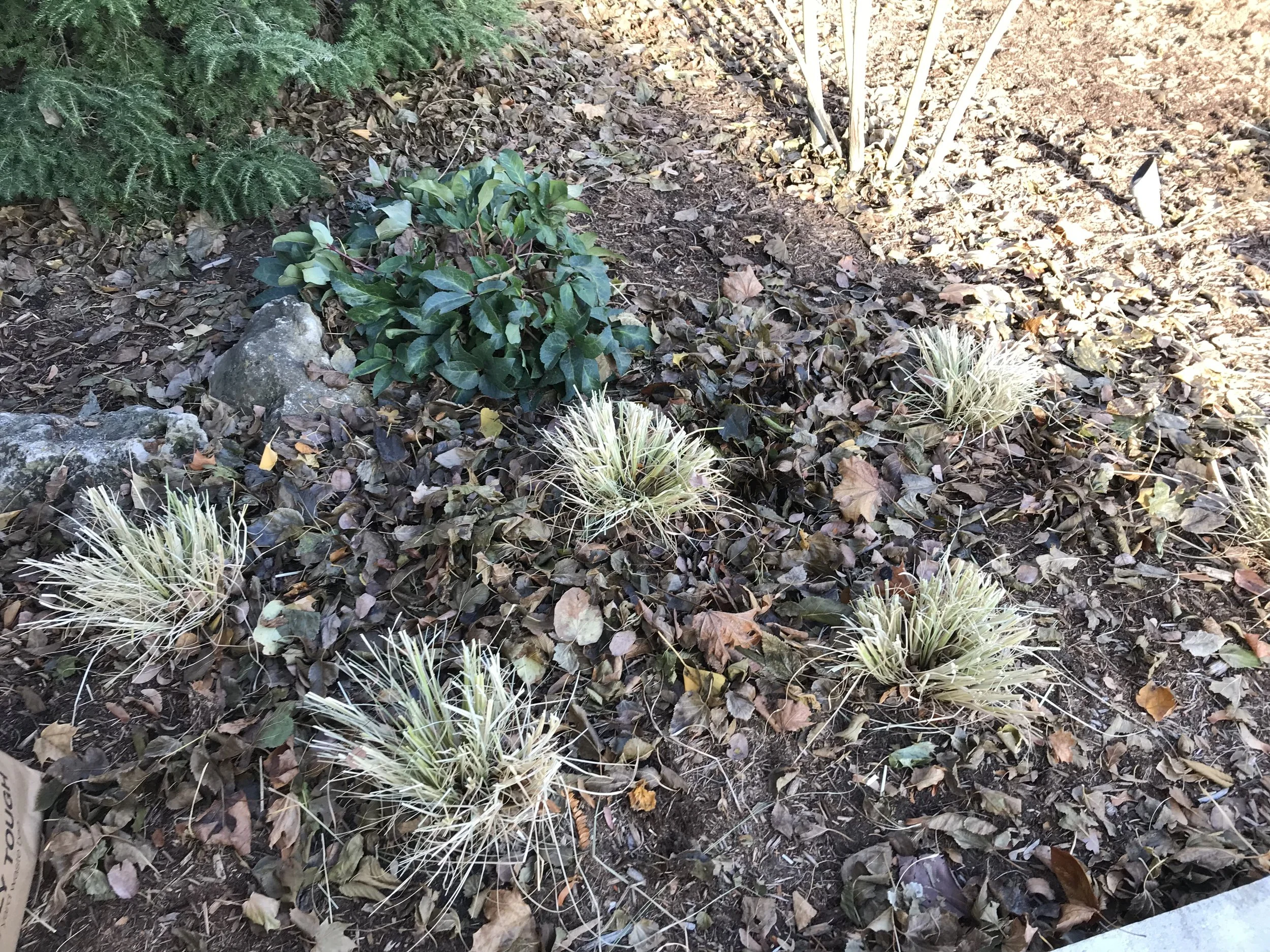
Leaves are left on this garden bed but they have been brushed off the clumps of [cut down] grass- this provides a little definition to the plantings and ‘ups the tidy factor’ despite the leaves remaining on the rest of the garden.

Picking out leaves becomes even more important when dealing with evergreen trees, shrubs, as well as groundcovers and other perennials. While leaves resting on the top of hedges or within the canopy of evergreens is really noticeable and unsightly, a build-up of fallen leaves can form thick mats on the evergreen needles/leaves which can smother/kill them. In the spring you can be left with a patchy-looking shrub or even a dead patch of groundcover. So, in the case of evergreens, it is not only aesthetically important to remove leaf litter (from on top of and within the plants), it is also important in maintaining plant health.
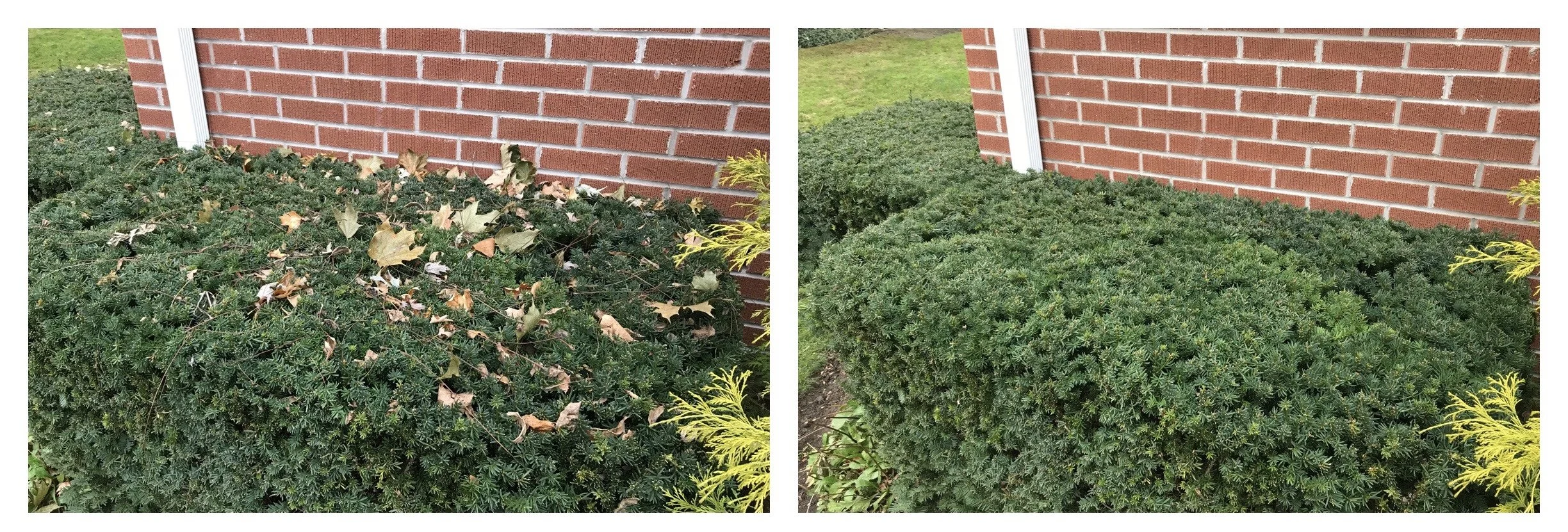
Leaves settled on top of a Taxus (yew) hedge (left) not only looks untidy but the leaves are not good for the yew foliage. Removing the leaves (right) is an easy fix.
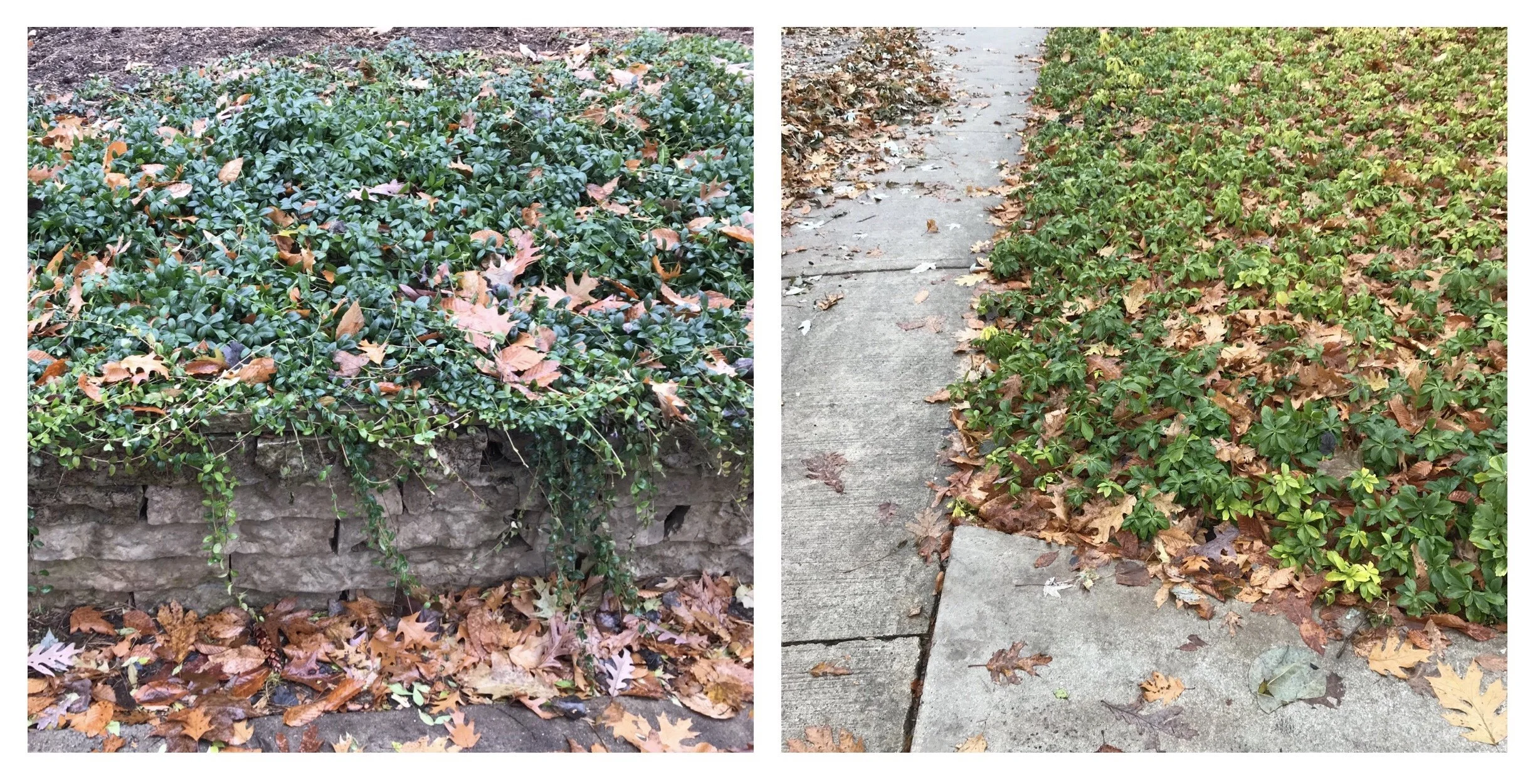
A fair amount of leaf litter resting on top of Vinca minor (periwinkle) on the left and Pachysandra terminalis (Japanese spurge) on the right; leaves should not be allowed to pile up on evergreen groundcovers such as these.

Now that we have dealt with the top portion of our trees and shrubs, we will now shift our gaze and look beneath them. Leaf blowers are notorious for blowing leaves into the base of shrubs and firmly lodging them in place. Yes, the garden bed may look tidy and uniform (with the mulch and top soil completely stripped away… ‘leaf blower rant’ to follow in a future post!) but the shrubs look like they are being swallowed by leaves! Enter another tedious task with big a payback… picking out leaves from the base of your plants. This task is guaranteed to restore some definition to your plantings but it also serves another purpose. A pile-up of leaves at the base of plants can act like a really cozy and inviting home for rodents over the winter months; rodents that can nibble on and therefore damage your plants. In an effort to not lay out the red carpet for rodents, I try to keep the base of my trees, shrubs, and even perennial clumps free of leaf build-up.
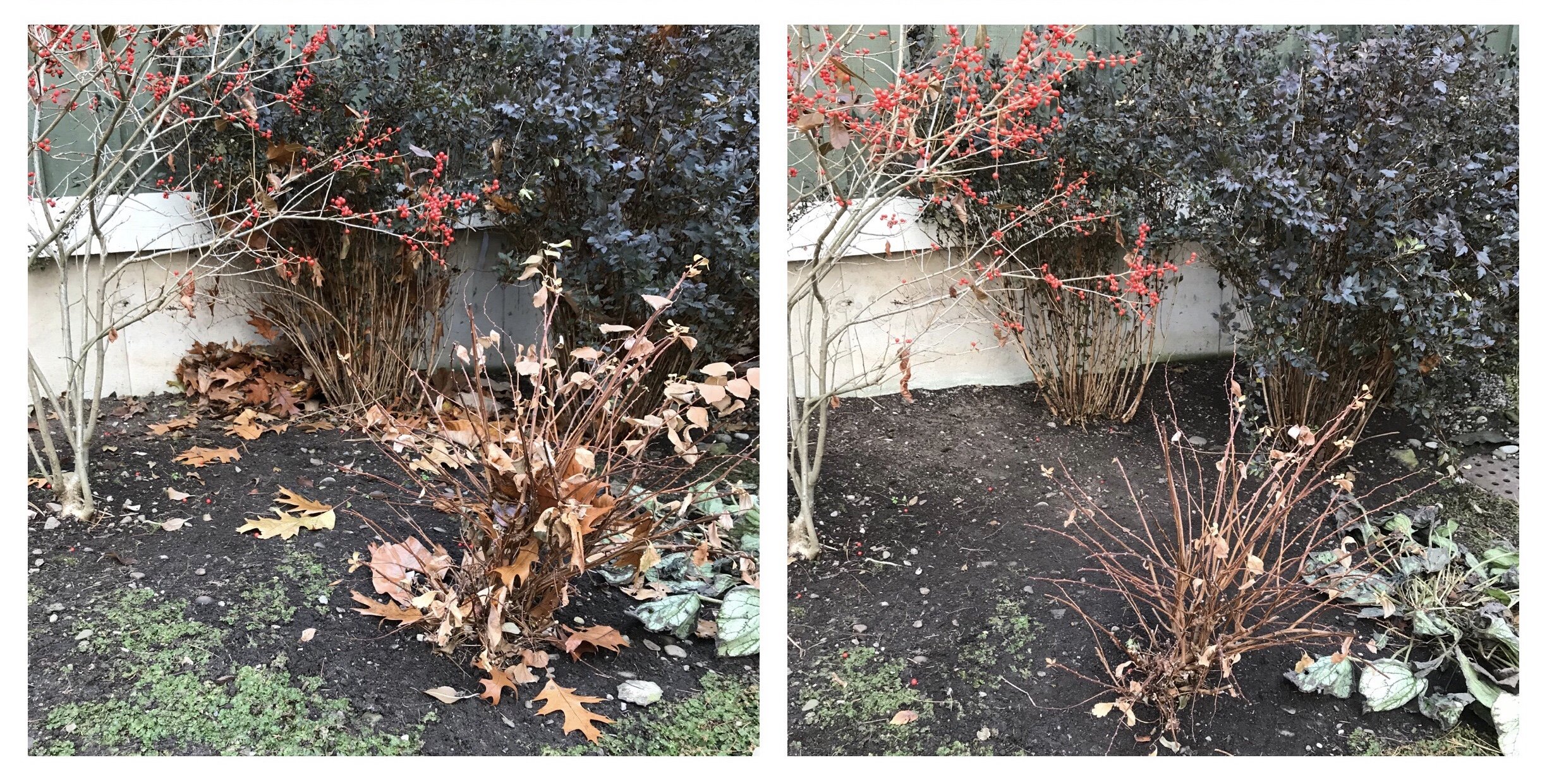
Leaves caught up in branches and around the base of some shrubs (left) and the same shrubs with leaves removed.

A Taxus x media (yew) hedge showing one section with leaves caught in branches and beneath the plants, and another section where the leaves have been ‘picked out’.

Edge

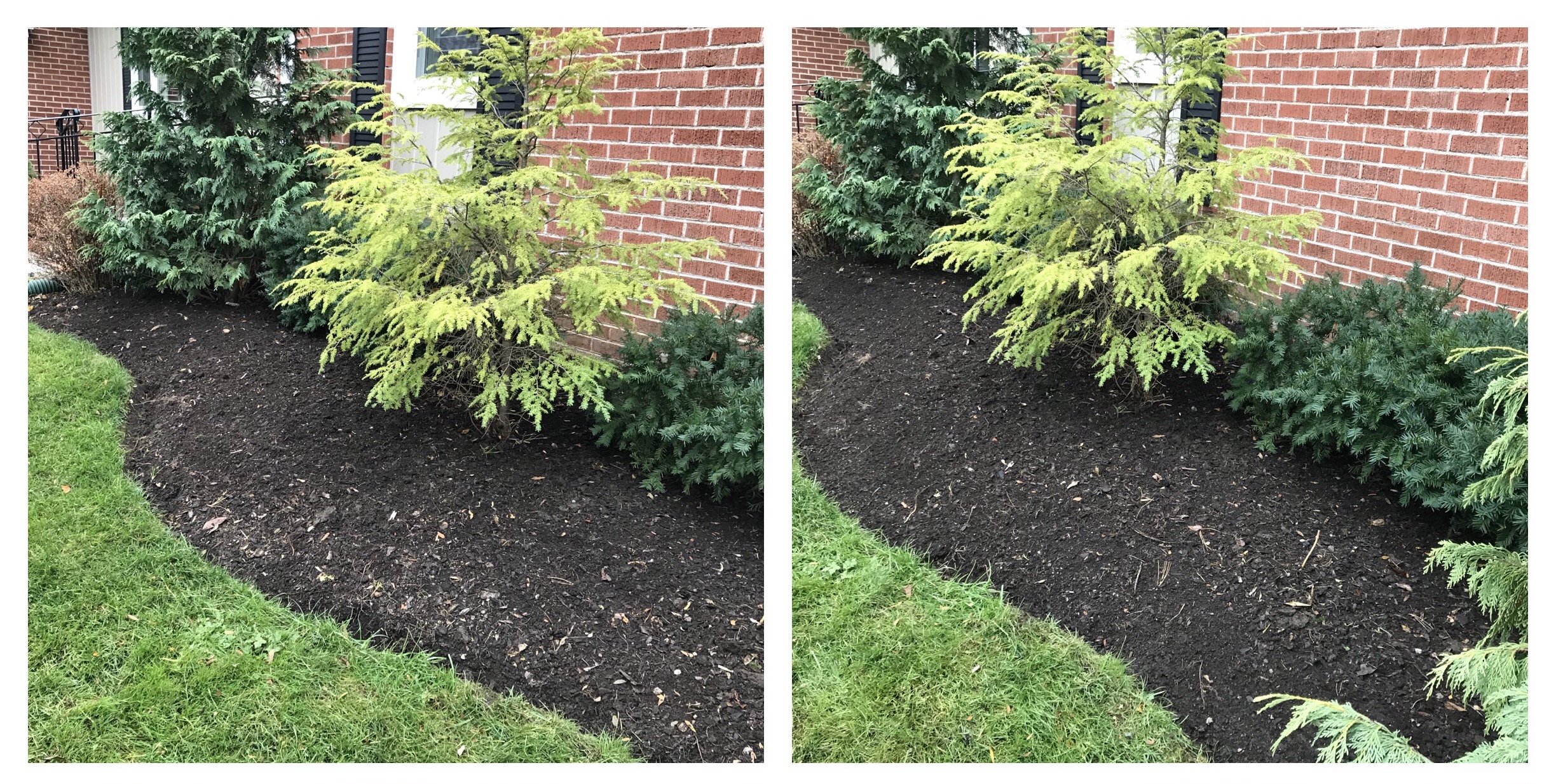
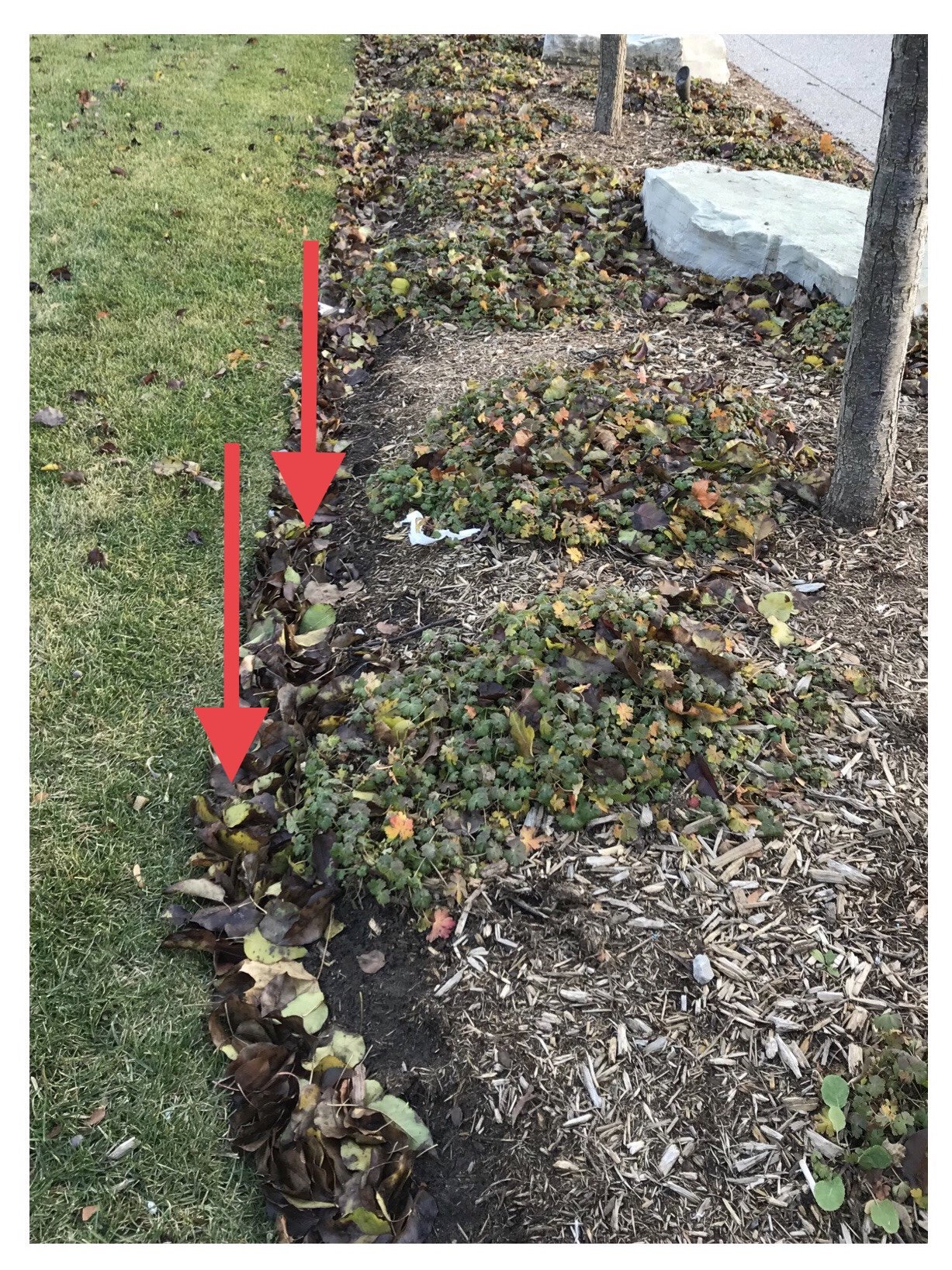
With less plant material in the garden now, the edges of our garden beds become much more prominent- which means bad edges tend to stand out like a sore thumb! A quick pass with the garden edger can ‘crisp-up’ the lines again, and give the garden a tidier look. I will also rake the turf following along the edge of a garden bed to remove any mulch that has decided to take heed of the notion that ‘the grass is greener on the other side’. To further enhance the edge of beds (ones with a surface of bare soil or fine mulch), I will take a rake and do a light pass along the front of the garden bed to give it a nice uniform look. In general, regardless of the amount of debris you leave on the garden bed, if you can keep the edge of the bed tidy, you will improve the overall appearance of the garden.
Fluff the Mulch

If you like cleaning leaves out your beds and you happen to have a layer of mulch on your gardens, now is the perfect time to turn or ‘fluff up’ the mulch- one final refresher before the snow flies!

And there you have it! These tips may seem minor and of low priority given the fact that the gardening season is coming to a close, but if you live in an area that does not receive reliable snowfall, then chances are you could be looking at your garden ‘as is’ for a fairly long time! These are all tasks that are often overlooked during fall clean-ups (by homeowners and professionals alike!) and I find that to complete a fall clean-up that really stands out… the tidiness is in the details.
SPRING CLEANING: Debris Clean-up

(Originally posted April 26, 2019)

Buds bursting into bloom- a sure sign of spring! (Photo Credit: Mohammad Ali Jafarian; Unsplash)

As the snow disappears and a brown world emerges, most gardeners anxiously await the burst of green that is ushered in by warmer temperatures and Spring rains. In our area, I know many people feel that the ‘brown season’ (that period between snow melt and Spring green-up) lasts for an eternity; for me it is fleeting- mainly because there is so much to do to prepare the gardens for the growing season ahead!

As soon as the ground is not too soggy, and the threat of extreme cold has passed, I begin my clean-ups -usually the middle of April. Although I spend the later half of March and beginning of April doing my dormant season pruning, it is during my Spring clean-ups that I get myself reaquainted with my gardens, greet them after a long winter, see what has changed, as well as jog my memory on consistent issues that need to be addressed in the months ahead. During this time, I cover every square meter of the garden to not only make it look great, but also to complete a thorough assessment of it and come up with my game plan for the growing season.

Clean-up is pretty basic and meditative (to be read ‘tedious’ if you do not like repetitive tasks!). Essentially I am uncovering the garden from the debris (mainly leaves) that swirled around and deposited in the garden late in the fall, or dropped on it over the course of the winter. I am also cutting back perennials that I left up over the winter for the purpose of ‘winter interest’... more on this in my next post! Now back to ‘debris’…

Debris: Friend or Foe?

Ah. The great debate.

In nature, nutrients are recycled. In simple terms, plants take up nutrients from the soil and use them to grow biomass such as wood, leaves, flowers, seeds, etc. When things such as leaves drop in the fall, they eventually break down and the nutrients go back into the soil to be used by plants once again. Unfortunately in urban environments, we make it an annual ritual to strip away everything that our plants drop onto our properties. That’s a whole lot of nutrients being carted away to municipal compost sites. We cut off the nutrient cycle and as a result, in the long term, our gardens suffer.

So how much ‘organic matter’ should gardeners leave on their garden beds? Although some leaves left to decompose on beds are good (they add nutrients and organic matter to the soil- definitely a good thing), too many can pose a problem in an ornamental garden. Piles of leaves (especially really thick ones) can easily smother plants, especially when left on groundcovers or the foliage of evergreens.

Leaf litter (Photo credit: Hq Lightroom; Unsplash)

Ultimately, the amount of ‘debris’ left on a garden is the personal preference of the gardener (many gardeners can turn a blind eye to some leaf litter on the beds, reassured by the fact that they are ‘feeding’ their soil and therefore their plants). I am in the business of trying to make gardens look immaculate. While not ideal from an ‘ecological perspective’, I generally remove all debris from the beds (except for old mulch, which I keep on the beds) so that they look tidy. With that said, it is always at the forefront of my mind that what I remove, I must replace in the form of amendments (manures, compost, mulch) at a later date. So, if you are like me and constantly removing organic matter from your garden, then please join me in this really important pledge…

I, [insert your name here], promise you, my garden, that what I take away from you in the form of ‘debris’, I will give back to you, in the form of amendments later in the growing season. I will monitor your health through soil testing and let the results guide my actions.

Regardless of your overall debris tolerance, there is always clean-up to do in the Spring. I have found that there are three key areas to keep in mind when cleaning out leaves. If you focus on these areas, you can maximize the well-being of your plants… as well as the tidiness level of your garden.

1) LEAF MATS ON GROUNDCOVERS AND EVERGREENS

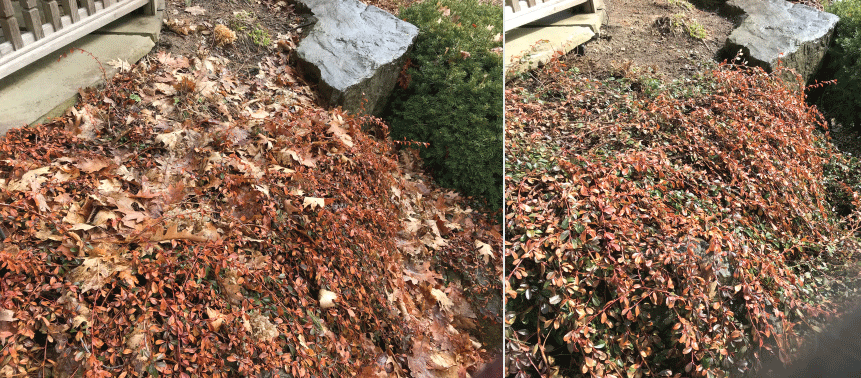
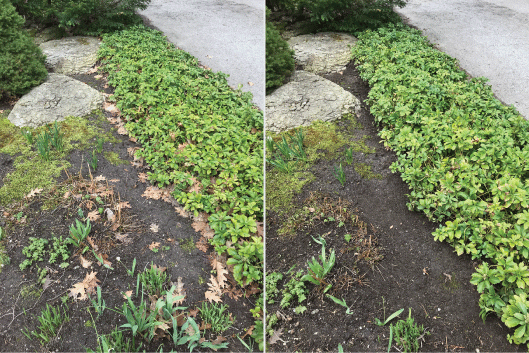
Beware!!! Mats of leaves, especially thick ones such as those from oak trees (Quercus spp.), left on groundcovers, evergreens, and emerging perennials can easily smother foliage or emerging growth! Do your plants a favour and remove these leaves- your garden will look a million times better too!

From left to right: Cotoneaster sp. covered with leaf litter from the winter; Cotoneaster sp. with leaf litter picked out.

From left to right: Leaves in and around a patch of Pachysandra terminalis (Japanese spurge); a much tidier Pachysandra patch with leaves removed

2) THE BASES OF SHRUBS

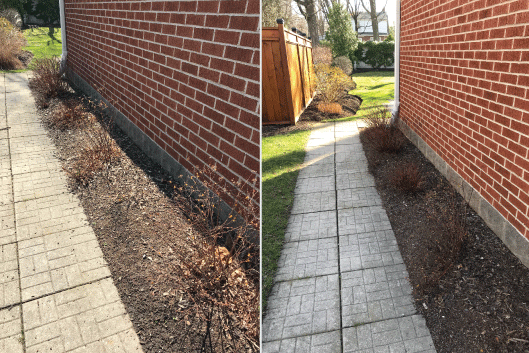
So I have a confession- leaves stuck within the bases of shrubs drive me absolutely CRAZY! (Ak! So messy!) So it goes without saying that I spend time picking these leaves out. My eyes not only breathe a sigh of relief, but the shrubs do too. A pile-up of rotting leaves can act the same as a pile of mulch against the base of shrubs- a trap for moisture which can in turn lead to rot and diseases. A build-up of leaves can also create a cozy little home for insect pests too. So you may not be bothered by the look of leaves trapped within your shrubs, and you may curse me as you are picking them out, but your shrubs will thank you. Listen carefully… they speak quietly :)

From left to right: Leaves trapped within Spirea branches don’t seem to look too bad… until you pick them out and you are left with a much tidier bed. Ah. Satisfaction.

3) LEAVES HUNG-UP IN THE FOLIAGE OF PLANTS

Leaves and fallen branches hung up within small trees and shrubs is another easy ‘issue’ to address that can make a big difference in how tidy a garden looks. It’s an easy thing to overlook (especially when you have your head down in the dirt) but it’s an excuse to look up and enjoy the springtime garden.

Breathe in. Breathe out. Sigh. It’s good to be back in the dirt.

HAPPY SPRING CLEANING!