Disease Control

It'll Grow

(Originally posted: July 28, 2020)

A bad haircut. I am sure that many of us have ‘been there, done that’; perhaps more times than we would like to admit! Maybe it was the result of an adventurous whim to ‘try something new’ or one too many bad hair-days that finally led to an emotional snap, regardless of the motivation, at one point most of us have walked into a salon with a clear and simple directive: CHOP IT!

Regret soon follows: “What was I thinking?”

You beat yourself up a little: “I must have been crazy!”

And you try to find a solution: “Maybe I can cover this up somehow…”

Luckily (and thankfully), with time the bad haircut fades away to become a little blip in your hairdo history.

What on EARTH does this have to do with gardening you ask?

Well, one of my latest gardening tasks- completely cutting down perennials to rejuvenate their foliage- may conjure up feelings similar to the aftermath of a bad haircut… but I promise you that it will all work out in the end.

Now it may seem totally crazy to completely ‘whack back’ a perfectly lush plant in the middle of the growing season, leaving a gaping hole in your garden… but that is precisely what we do! The reason? The foliage of certain perennials can deteriorate once their flowering period wraps-up. Cutting these worn-out looking plants down to the ground (being mindful to not chop new growth that is already emerging from the base) is a great way to encourage a new flush of leaves that will look fresh and continue to look great for the remainder of the growing season.
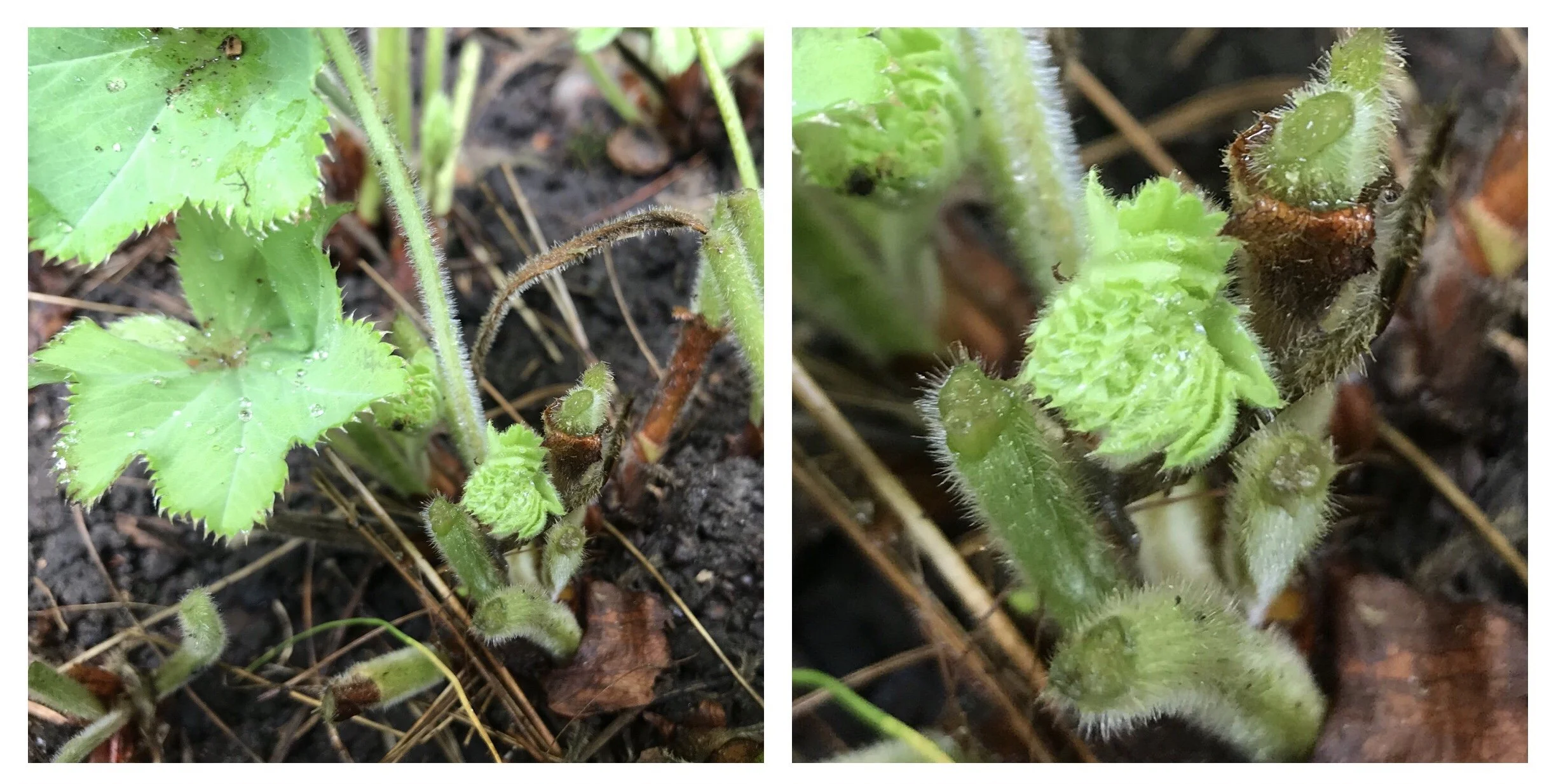
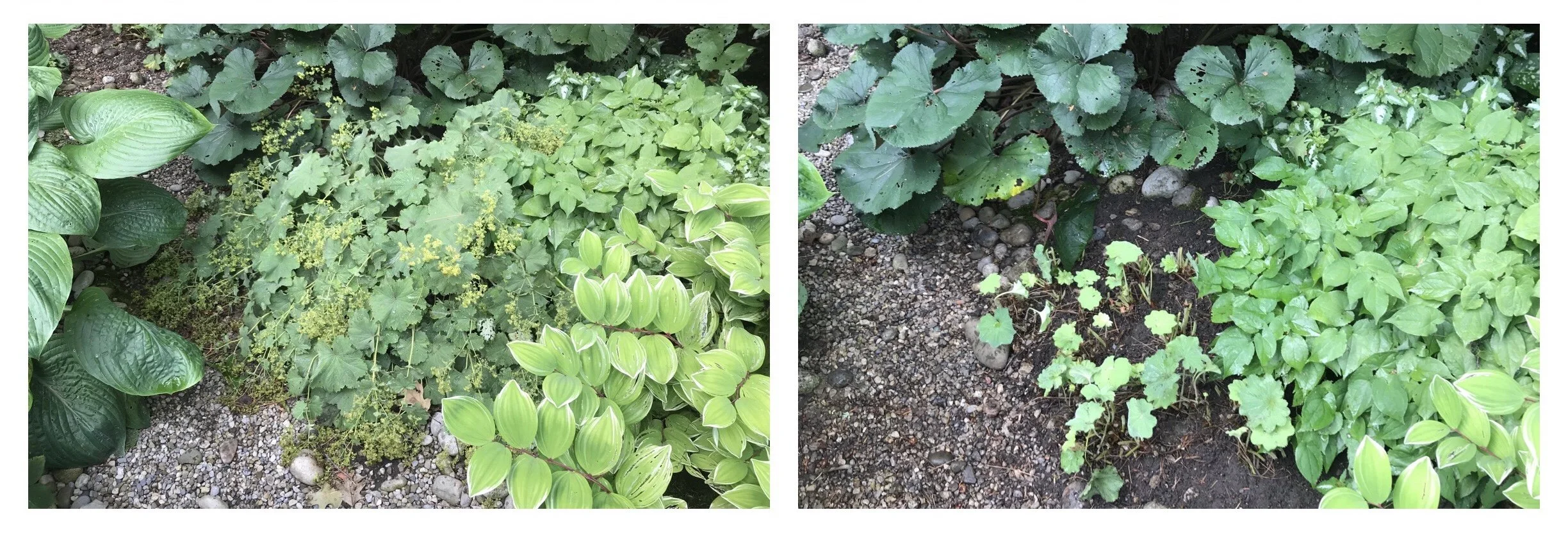
When cutting perennials to the ground, it is important to be mindful of new foliage that is already starting to grow from the base of the plant- such as these tiny Alchemilla mollis leaves.

Common perennials that respond to this seemingly harsh treatment include:

  • Alchemilla mollis (lady’s mantle)

  • Centaurea montana (bachelor’s button)

  • Geranium cvs. (various ‘sprawly’ cranesbill geranium cultivars such as ‘Johnson’s Blue’)

  • Nepeta spp. (various species of catmint)

  • Papaver orientale (oriental poppy)

  • Pulmonaria (lungwort)

Alchemilla mollis (lady’s mantle) after flowering (left) and cut down to the newest leaves, as shown in the photo on the right (Gasp- what have I done?!?).
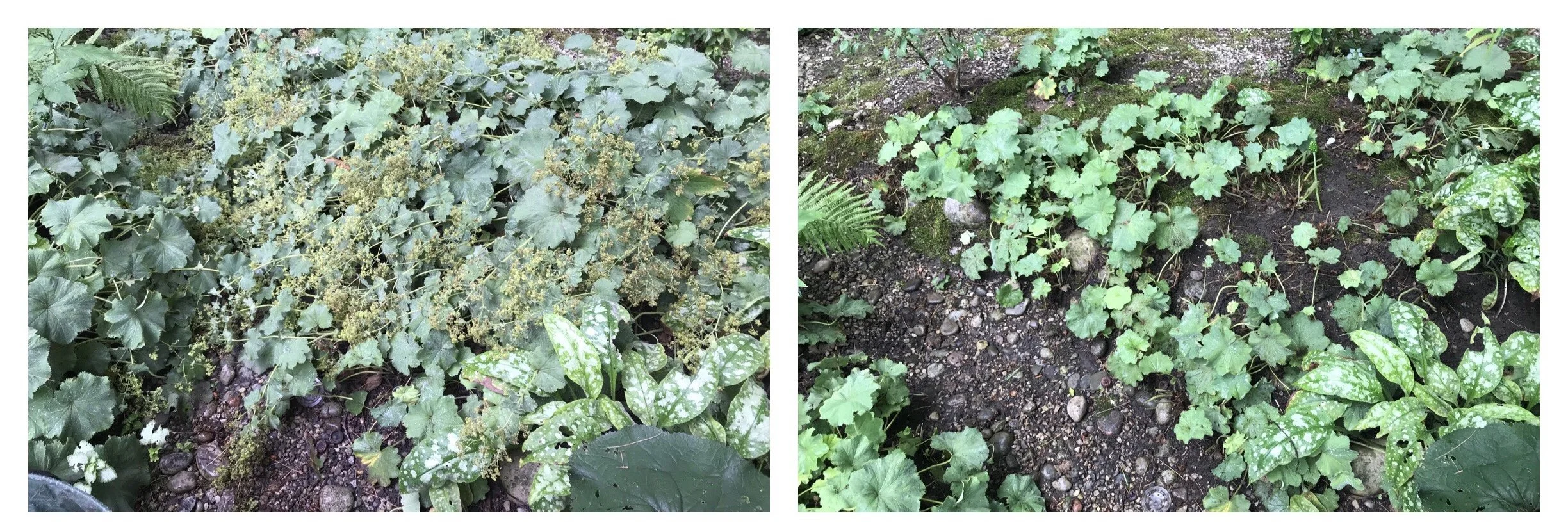
Another example of a patch of Alchemilla mollis after flowering (left) and cut down to the youngest leaves (right).
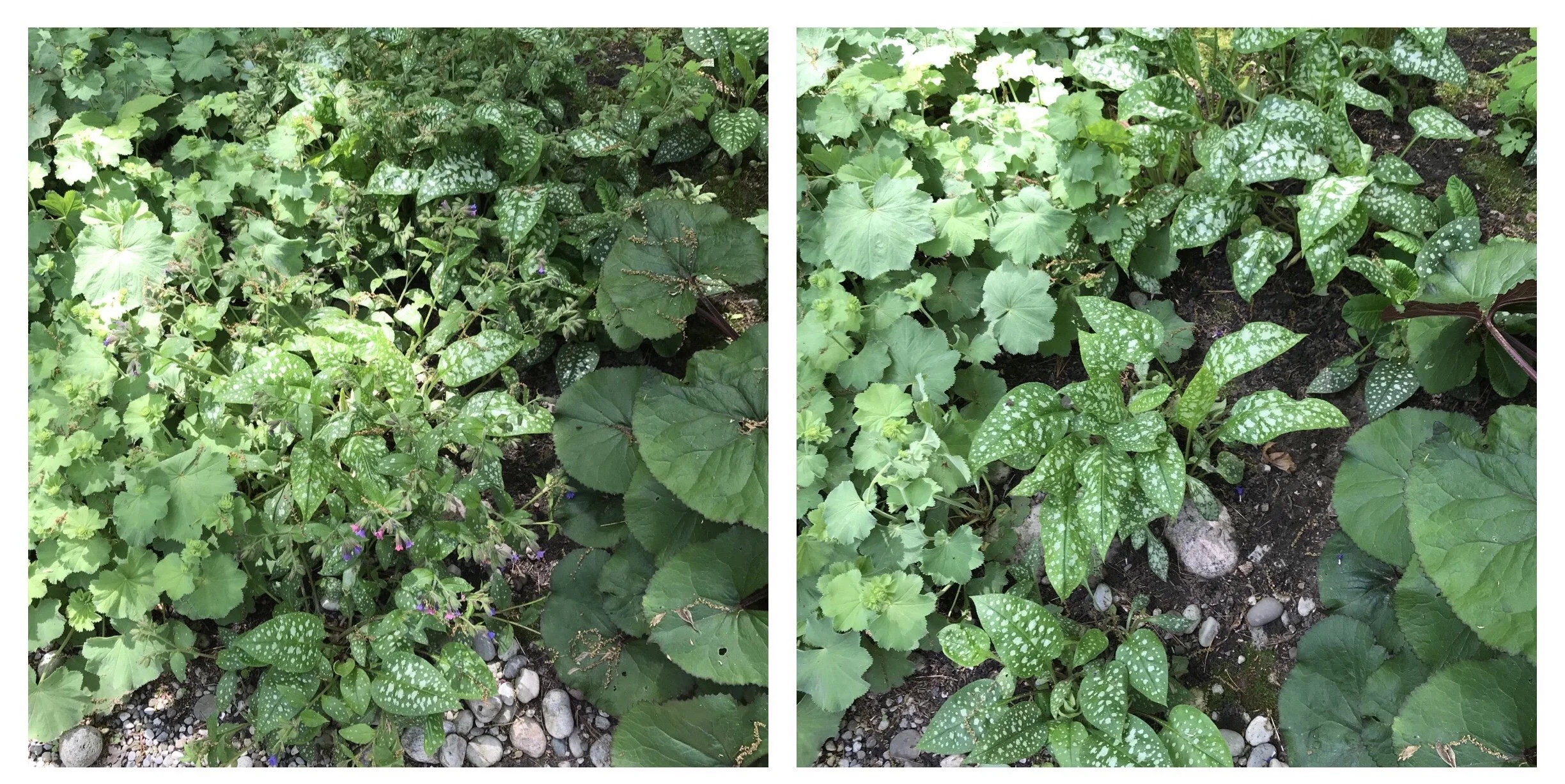
A patch of Pulmonaria showing the plants immediately after flowering (left) and with most of the old leaves cut down (right). As the new growth continues to flush out, I will go back and cut out the remaining old leaves- this two step approach is not so jarring to look at, and a little kinder to the plant too.

I will also use this technique on other plants under certain circumstances. For example:

  • Aquilegia spp. (various species of columbine)- the leaves of these perennials are often feasted upon by leaf miner (little bugs that live and dine within the leaves). The tracks of feeding damage on the leaves can look quite interesting when feeding is minimal, but the leaves can look quite ratty when the infestation is severe. Chopping the plant down to the ground helps reduce the insect population and the new growth is generally not affected by the pest (or affected to a much lesser degree).
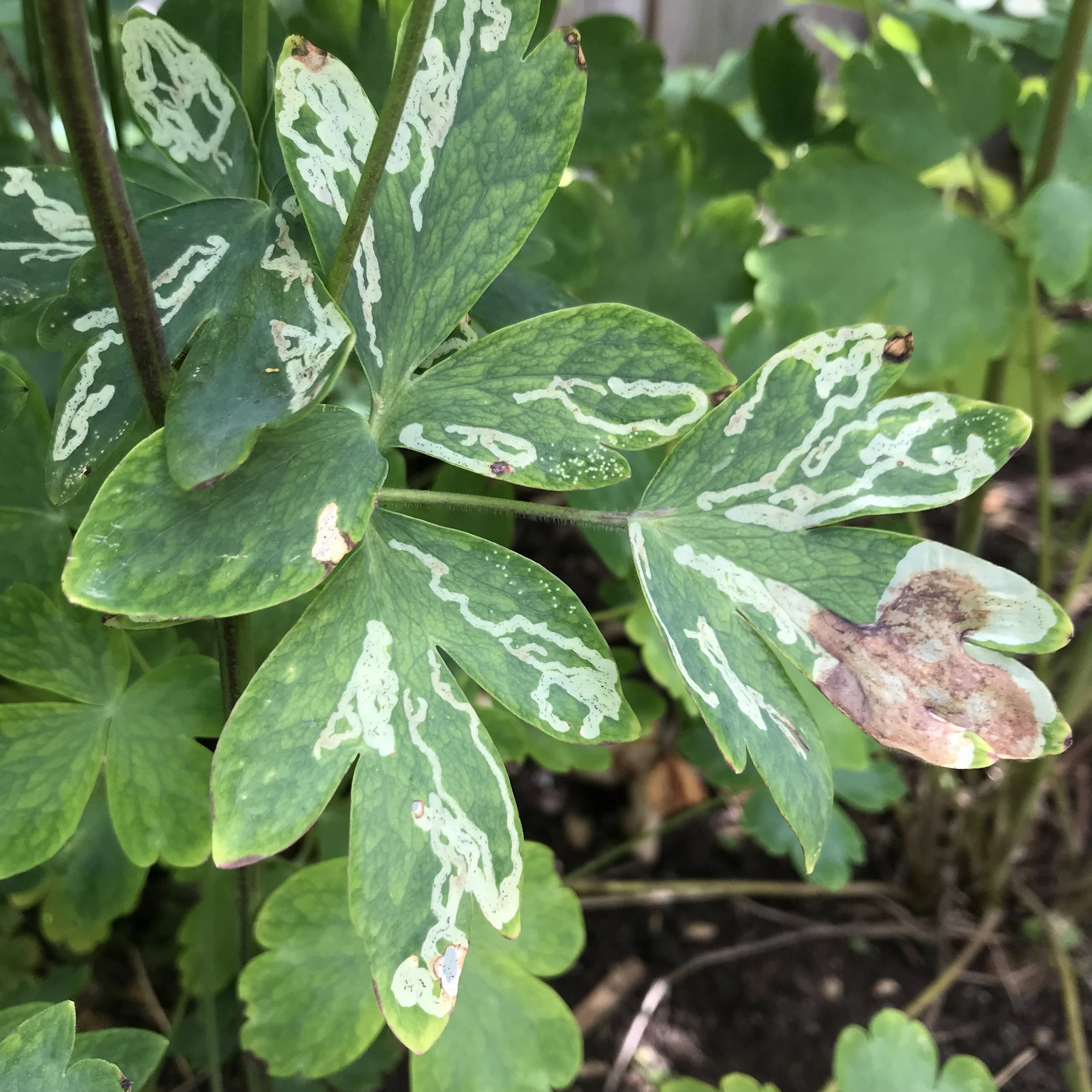
Leafminer damage on Aquilegia (columbine).

  • Hemerocallis spp. (daylily)- daylilies look amazing up until they bloom at which point their foliage begins to die back. The unsightly dead foliage can be remedied by dead-leafing (removing the dead leaves) but some plants will die back so extensively that the resulting ‘stringy look’ is hard to bear. If a daylily gets to this point, the plant has usually started to sprout new growth at the base. I will cut all the old leaves down to allow this new growth to take over.
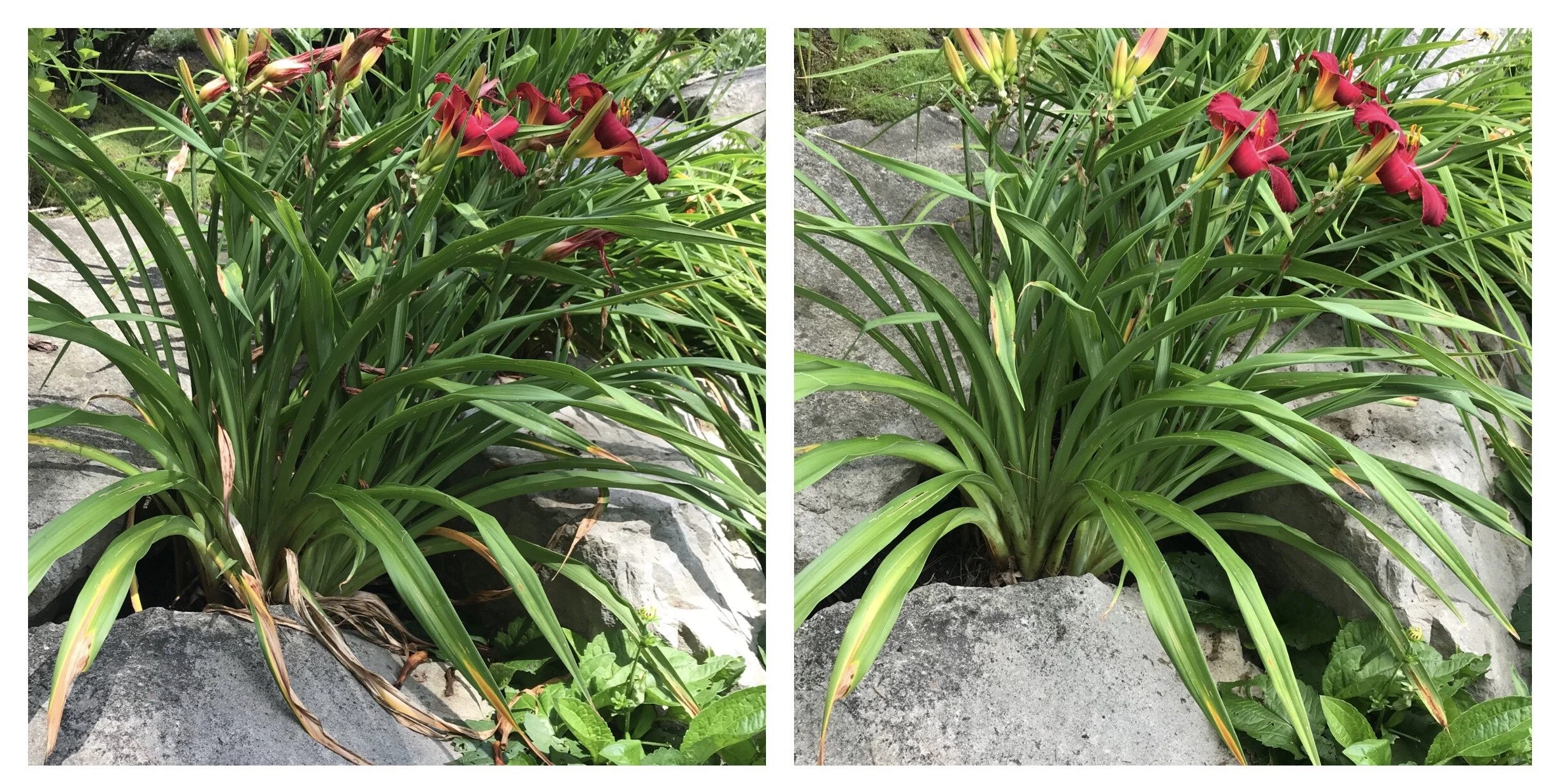
A daylily in flower that is starting to show leaf die-back (left). At this point, the aesthetics are improved by dead-leafing (right). If die-back becomes extensive, I remove all the leaves to make way for new, fresh growth.

A word of caution

It is important to remember that removing leaves from a plant means removing the ability of the plant to make food for itself. This is tough for the plant! Help the plant rebound quickly by minimizing other stressors. Ensure the chopped plants stay well watered; drought-stressed plants will not be able to respond with new growth. Additionally, you may choose to add some nutrients to the soil in the way of compost or manure to ensure the plant has what it needs to grow.

And there you have it! Now it is time to grab your secateurs and chop down some foliage (if you have any of the plants listed above). Afterwards, step back and stare at the hole you just made in your garden with some regret, but keep in mind that little tidbit of consolation that was offered to you repeatedly during the days following your bad haircut…

“It’ll grow back”.
Turn your 'Pruning Eyes' On!

(Originally posted: April 13, 2020)

So… it’s spring; a strange spring, but spring nonetheless. At a time like this when our whole world has been shaken up, it is nice to see the ‘rebirth’ that comes from soaking rains, longer days, and a higher sun.

Hello little lovelies- it is so nice to see you again!

From a gardening perspective, April is typically a month that starts off slow yet builds to a flurry of activity by the end. While winter and spring play a rousing game of ‘tug-o-war’ for much of the month, I tend to focus on prepping plants for the growing season while the weather is highly changeable (first half of the month) and then conduct my detailed spring cleanups closer to the end of the month when spring is beginning to win it’s battle for seasonal supremacy. By keeping the gardens ‘tucked in’ a little longer, the plants (especially more tender ones) remain protected from any crazy weather events that Mother Nature should decide to throw at us.

(Now I will come clean and admit that I threw this timeline completely out the window in my own garden this year, because let’s face it- we are dealing with a LOT of ‘at home’ time and I am not getting my full garden fix from working in other people’s gardens!)

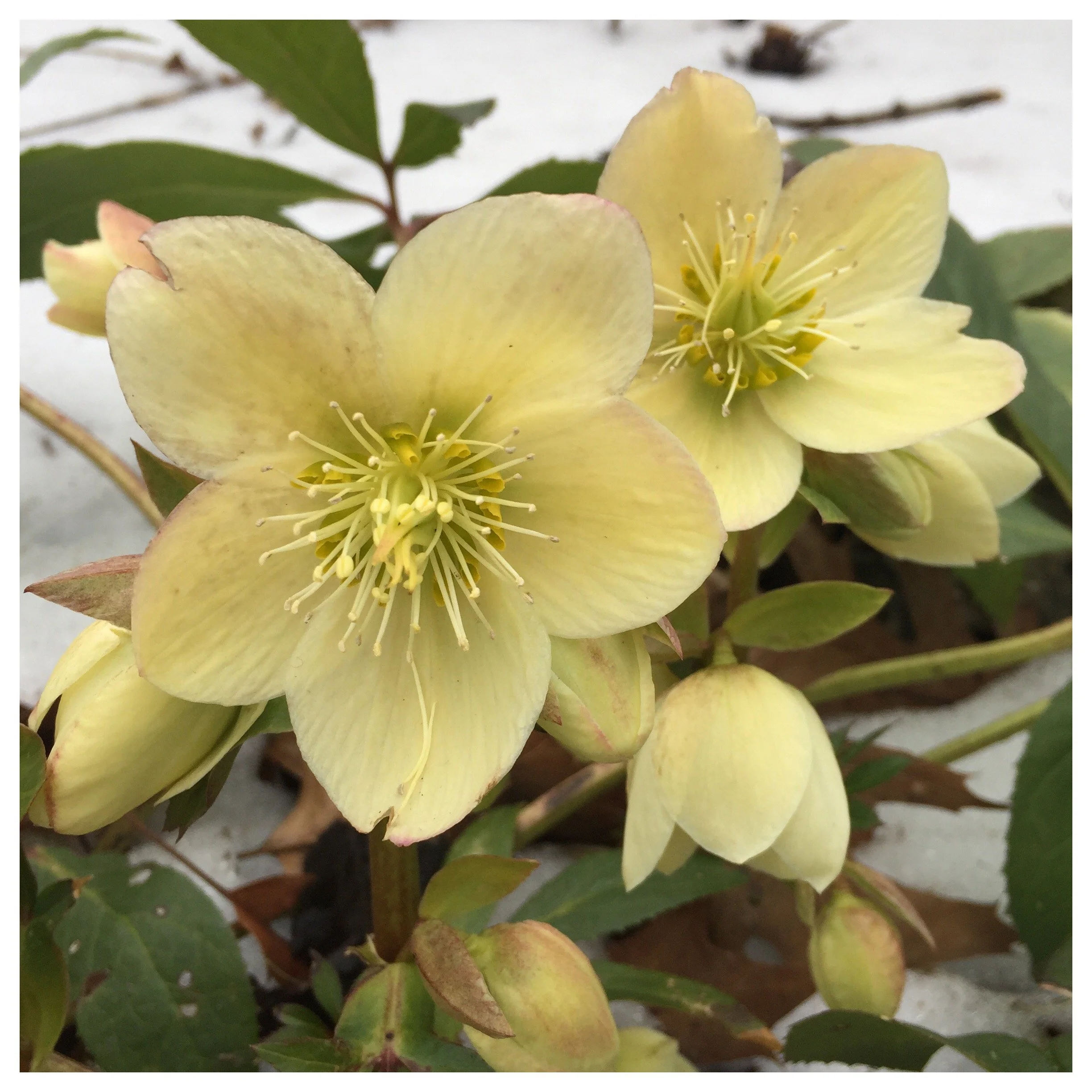
A Helleborus sp. laughing in the face of a late season snowfall.

PRUNING, PRUNING and MORE PRUNING

With all that said, in theory, my first gardening visits of the season involve A LOT of pruning (which ends up being a little hard on hands that haven’t seen the secateurs all winter…). In this post, I am going to focus on the easy stuff: herbaceous perennials and a few basic maintenance pruning techniques for woody plants.

Pruning of Herbaceous Perennials

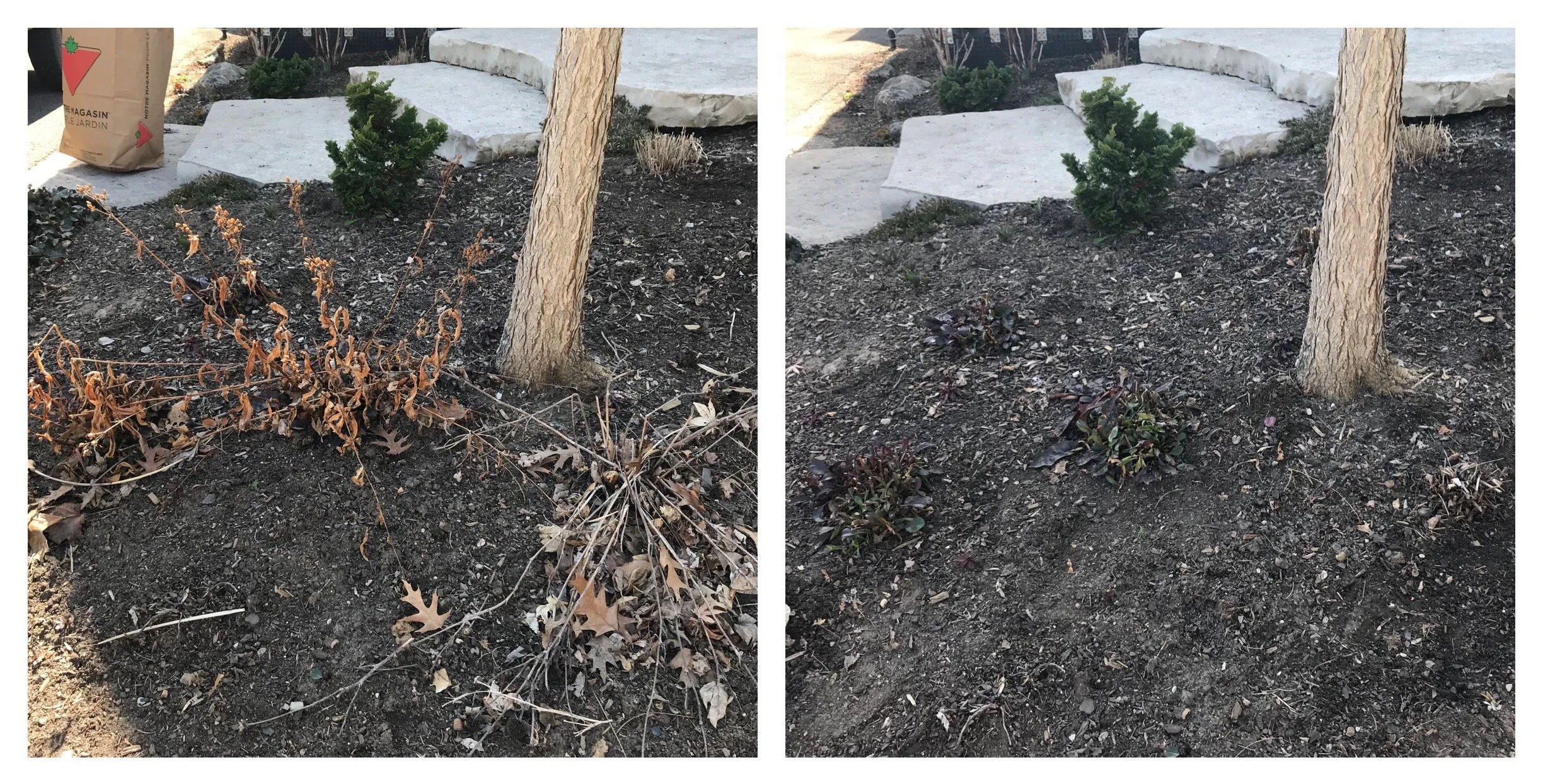
Remember all those perennials we left up over the winter for winter-interest or for wildlife value? (See my fall post “Perennials: to chop or not?” if you need to jog your memory!) These herbaceous perennials all died to the ground or to a clump of ‘live’ leaves at the base of the plant (the basal foliage) in the fall. Well the time has come to cut all that dead stuff down while making sure to not cut off any of the basal foliage or new growth emerging from the ground. It’s an easy and gratifying task- not only does it tidy-up the garden substantially, but it often reveals new growth that is starting to push it’s way into the world. (Be sure to whisper ‘hello’!)

Perennials that are ready to be pruned down to make way for new growth- all the dead stuff goes!

Pruning Woody Plants- Basic Maintenance Pruning

I also do a lot of pruning on trees and shrubs, afterall it is the perfect time for pruning for a couple different reasons. First of all, and generally speaking, disease pressure is low during the dormant season and into early spring (and this is a good thing since every pruning cut we make is an opportunity for disease organisms to enter and infect our plants). Secondly we are able to actually see all the branches sans leaves- this certainly helps in identifying what branches to leave in tact and what to prune out.

As we wander through our gardens, secateurs in hand, it is important to keep in mind the types of branches that can and should be pruned out: dead, diseased and damaged branches (the three d’s), crossing branches, and finally water sprouts and suckers. Let’s looks at each of these undesirables:

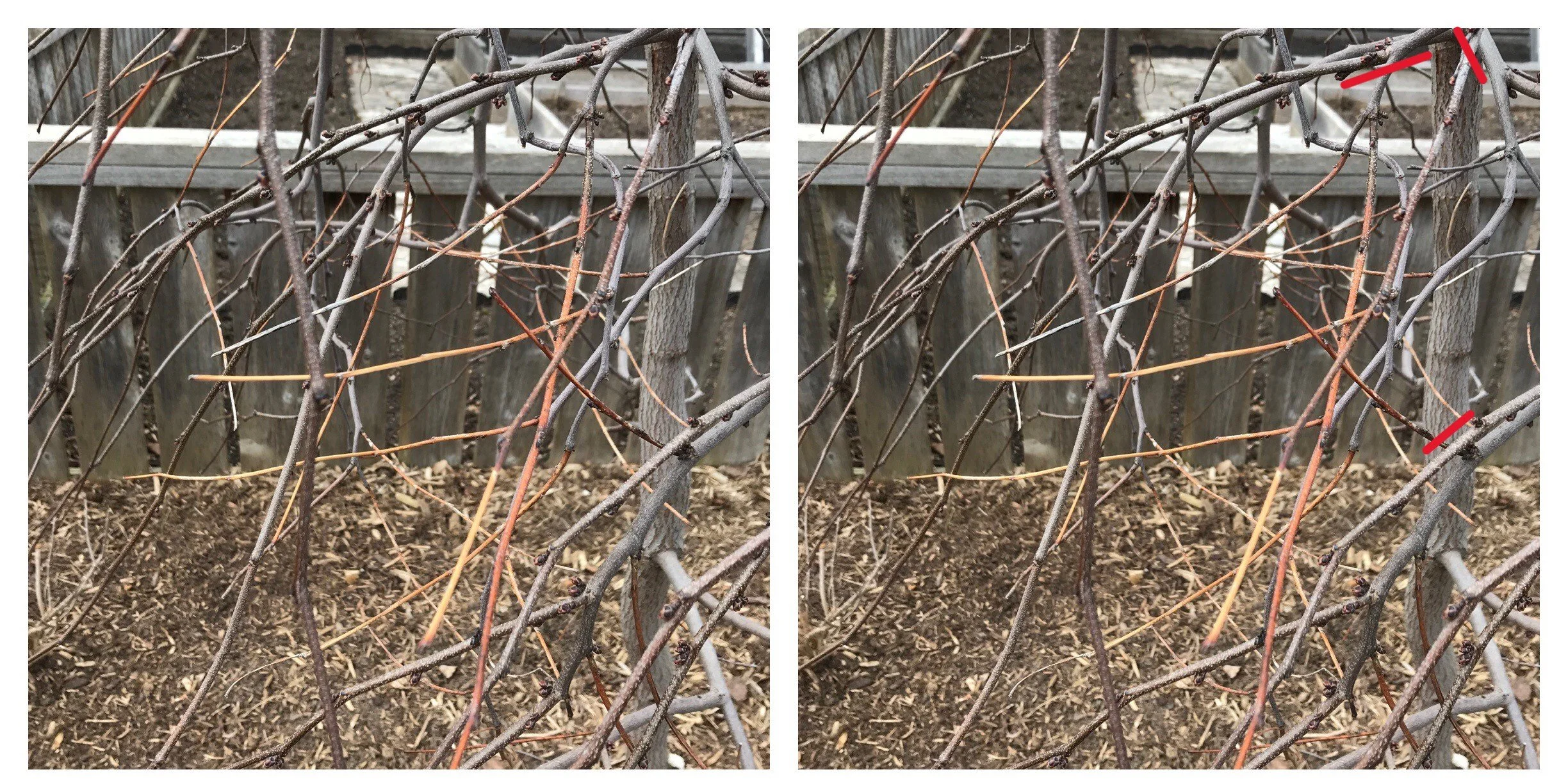
DEAD branches are not only unsightly but they can attract insect and disease issues; they can also build up over time and overcrowd a shrub and therefore need to be removed.

Dead branches and branches experiencing dieback on a weeping Cercis canadensis (redbud) are quite obvious due to their different colour. They need to be removed by cutting them back to a healthy branch. A few pruning points are shown in the photo on the right.

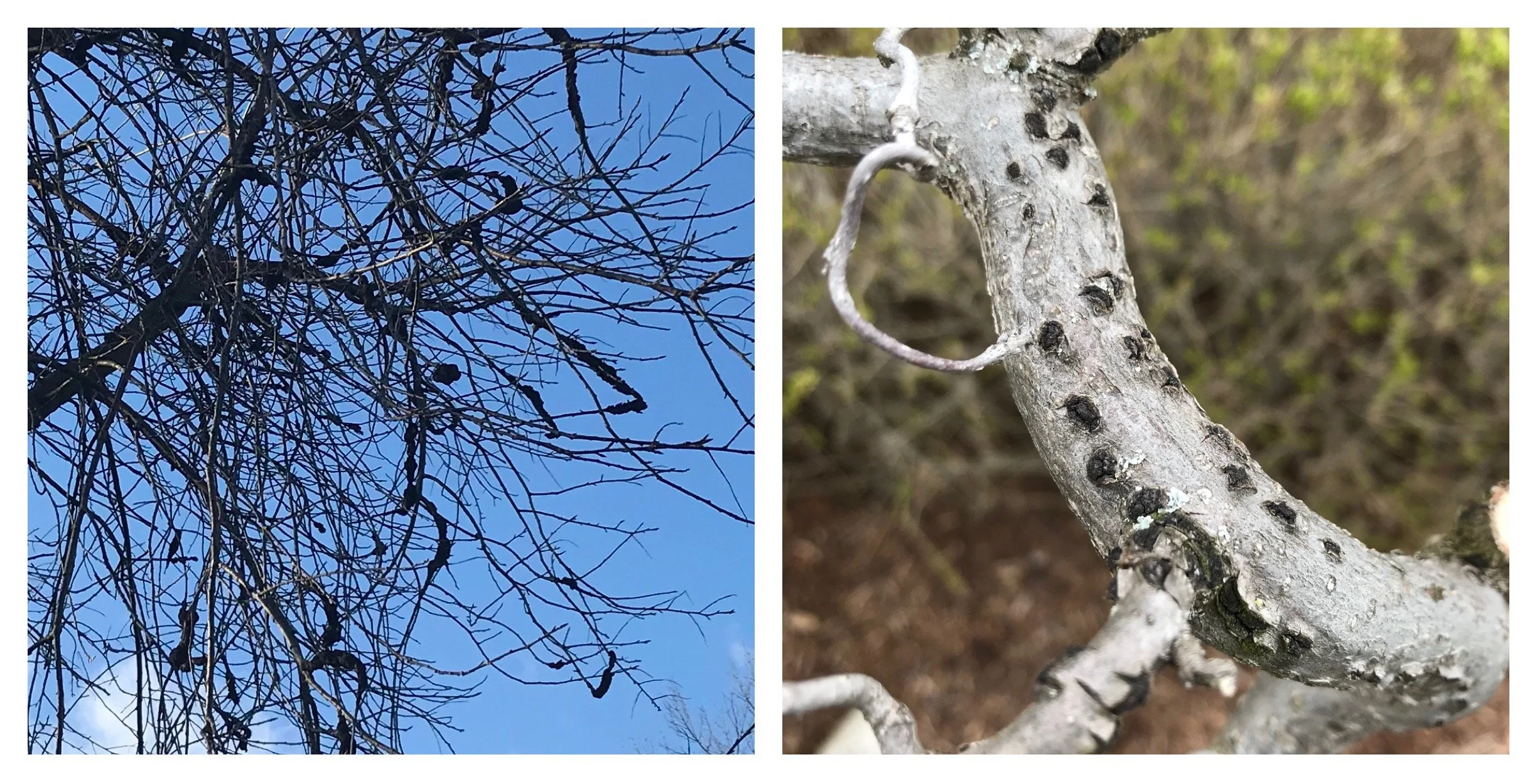
DISEASED branches should always be removed to prevent the disease from further progressing within the plant and to prevent the plant from being a source of infection to neighbouring susceptible plants (afterall, it’s hard for plants to practice social distancing).

It is important to look for evidence of disease on your trees and shrubs such as the black knot galls on the chokecherry (Prunus virginiana) in the photo on the left, or the stromata/fruiting structures depicted on the corkscrew hazel (Corylus avellana ‘Contorta’) on the right. While these are two diseases that are next to impossible to control, the infected branches should still be pruned out.

DAMAGED branches (such as ones that snapped over the winter, or were nibbled-on by animals) should be pruned back to undamaged tissue. A plant can heal a clean cut much better than a jagged one!

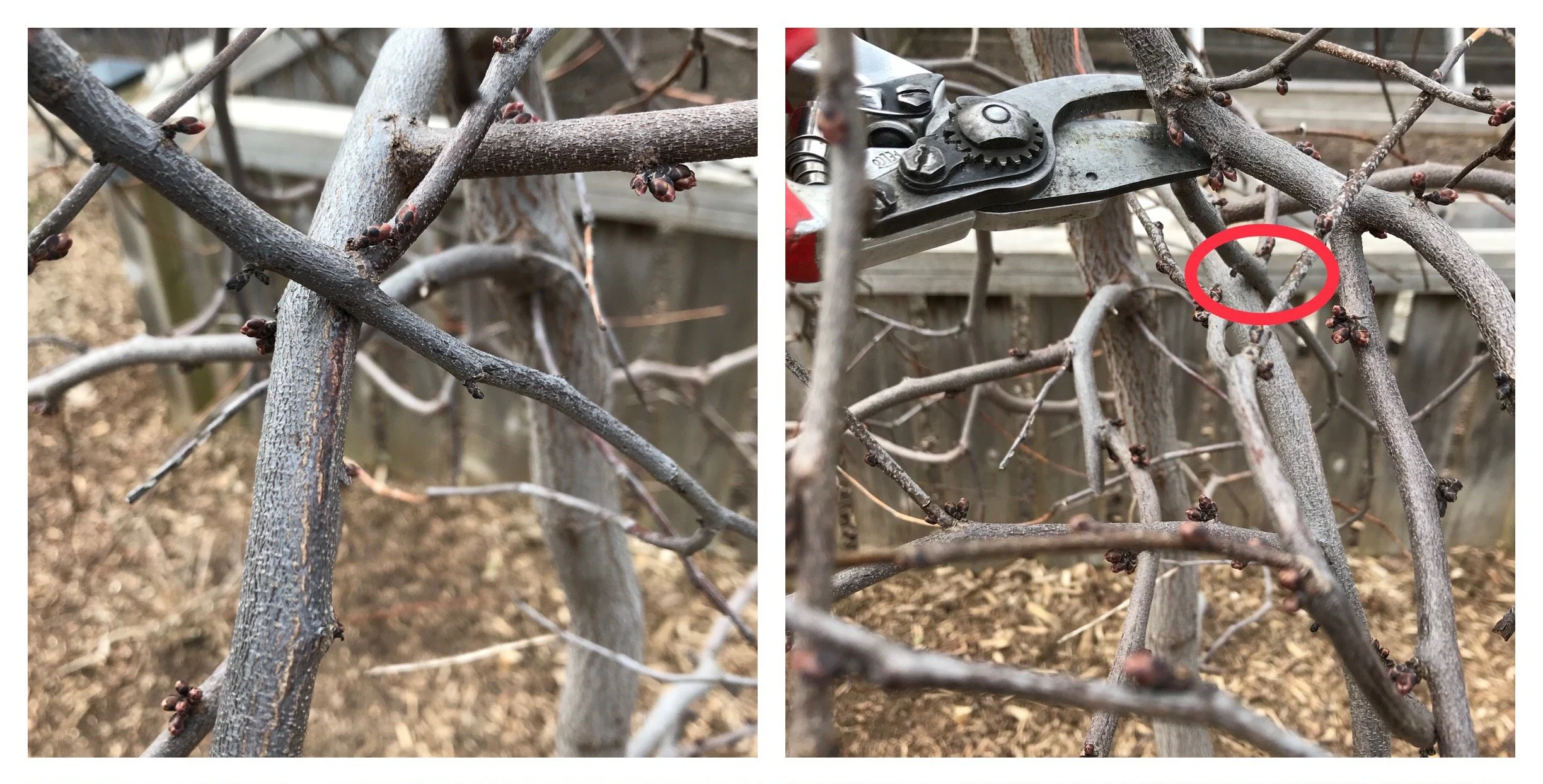
CROSSED branches that rub against one another cause damage to both branches through abrasion. One branch (usually the smaller, weaker one) should be pruned out by following it back to where it connects with another branch and cutting it at that location.

Crossed branches (left) cause damage to the branches through rubbing/abrasion. One of the branches should be removed by cutting it back to a point where it connects to another branch (right); red circle shows the location of the crossed branches.

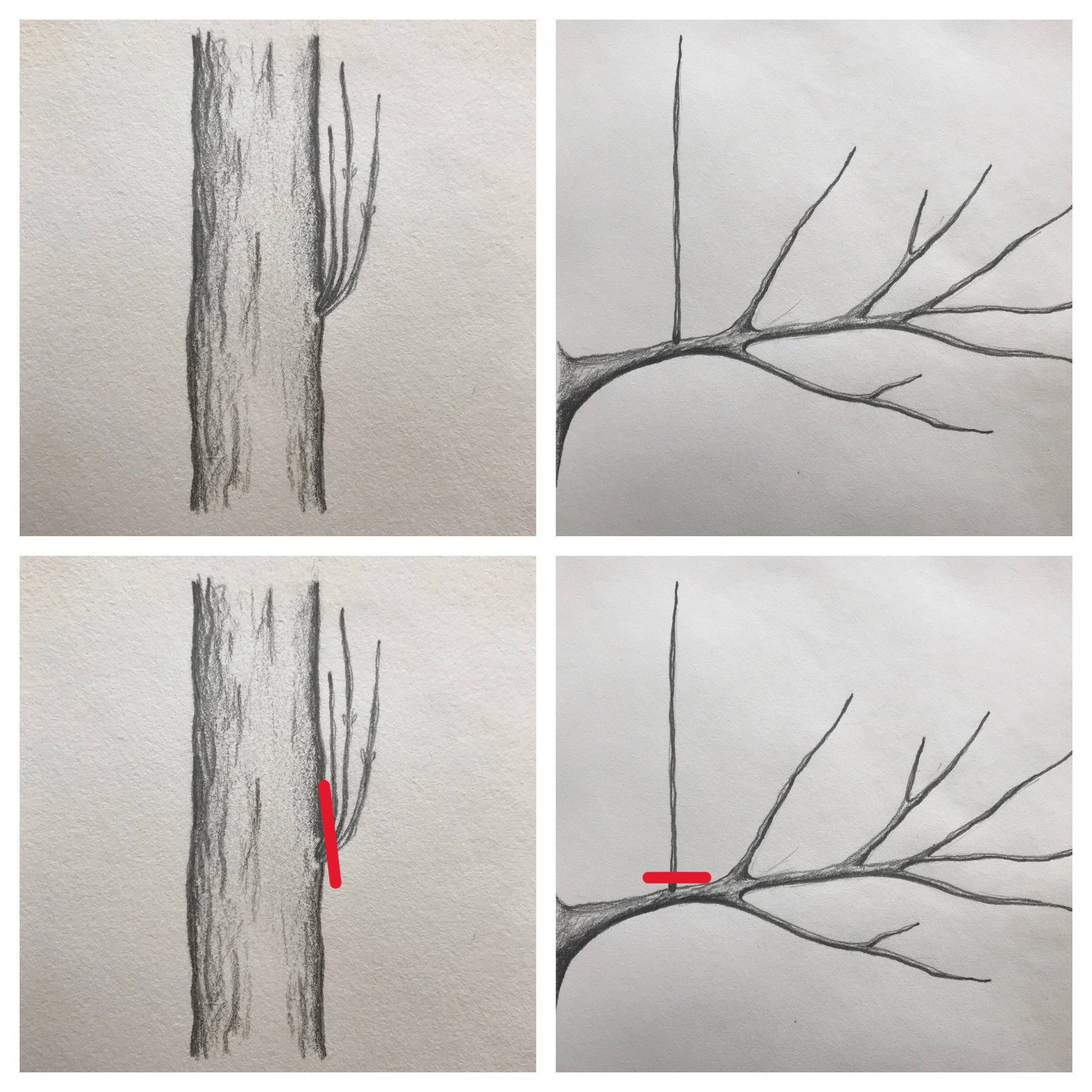
WATER SPROUTS are really fast growing shoots that grow out of dormant buds on branches and trunks of trees and shrubs. They typically grow straight up, so they tend to stick out like a sore thumb against the normal branching habit of the plant. Their fast growth is not ‘quality’ growth- these shoots are more prone to insect and disease attack plus their attachment points to trees/shrubs are also weaker than the attachment points of ‘proper’ branches. For these reasons, water sprouts should be removed.

Water sprouts emerging from the trunk of a tree (top left) and from a branch (top right) and the corresponding locations of the pruning cuts to be made to eliminate the water sprouts (red lines in bottom pictures).

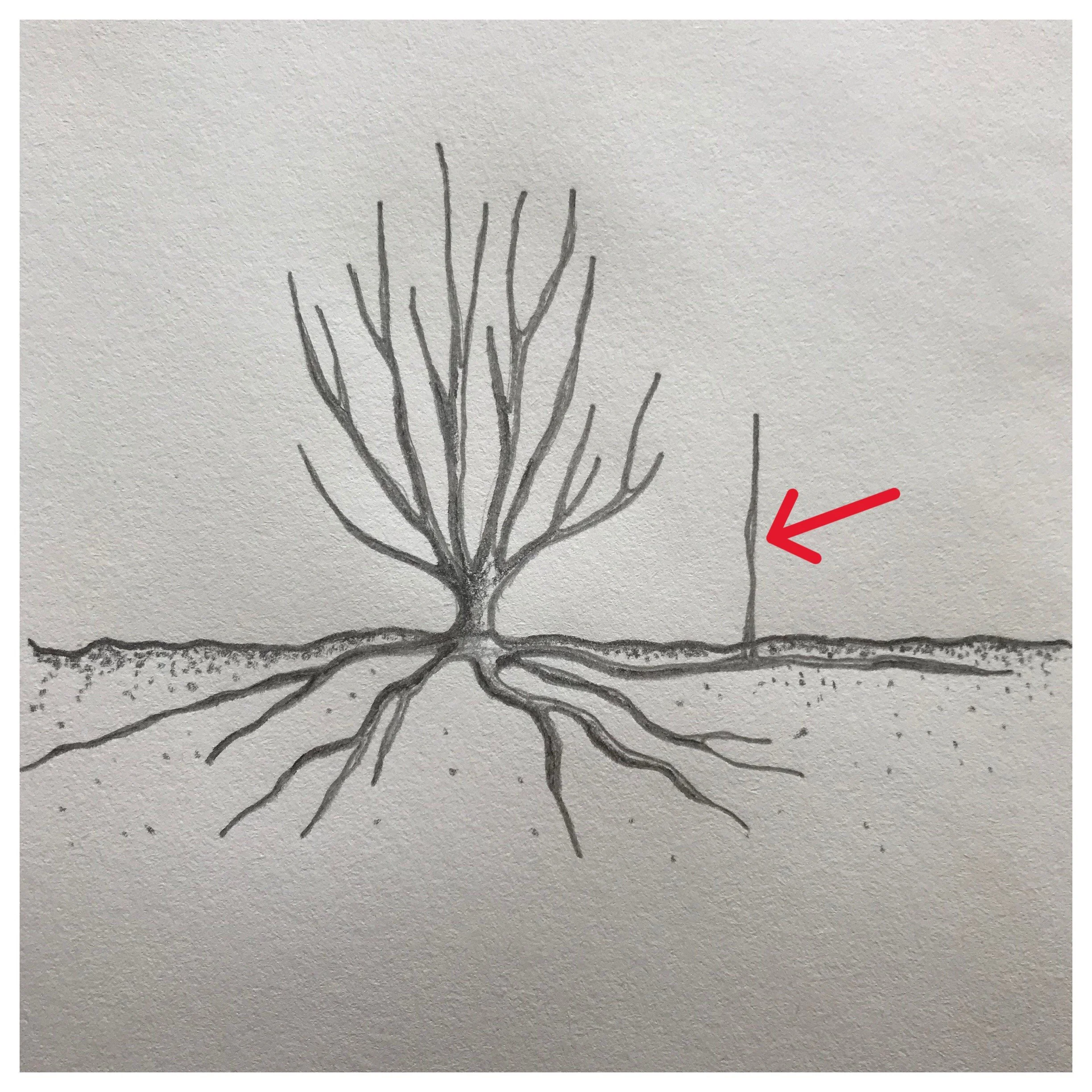
SUCKERS are vigorous sprouts (similar to water sprouts) that arise from the root system of a woody plant. Unless you are growing a plant for the purpose of naturalization or soil stabilization (where suckering is an acceptable, even welcomed plant characteristic), suckers should be removed with a sharp pull sideways or a snip as close to their point of origin as possible.

Diagram of a shrub with a sucker originating from it’s root system (as indicated by red arrow).

While our trees and shrubs are bare, it is the perfect opportunity to look for all these issues in our plants. It is important to note that we are not pruning for size reduction of our trees and shrubs (we will start this discussion in the next post) we are only removing ‘undesirable branches’ at this point.

A Few Important Pruning Tips

Before I close off this long-winded post, I want to leave you with a few things to keep in mind when pruning:

  • Always use sharp tools (again, clean cuts heal better than jagged ones)

  • Prune on a dry day: water is a great transporter of disease-causing organisms, there is no need to expose pruning wounds to potential sources of disease

  • Sanitize your pruners often! Especially after every cut into dead or diseased wood to prevent the spread of disease to other parts of the plant or to other plants in the garden. I use rubbing alcohol (applied with a bingo dabber) or disinfectant wipes

  • Always cut back into healthy wood (at least 15 centimetres/ 6 inches away from the dead/diseased tissue that you are removing) and cut back to either a bud or where the ‘offending branch’ connects to another branch.

So get your ‘pruning eyes’ on, your ‘pruning hands’ ready and get to work! Happy snipping!

Perennials: to chop or not?

(Originally posted: October 15, 2019)

Well it seems as though the gardening season is progressing at an alarming rate- is it really October??? We are now on to fall gardening tasks, and one of the main tasks is cutting perennials back (not to be confused with pruning trees and shrubs which I addressed in my previous post, Temper your Enthusiasm). At this time of year, I am often asked: “what should I cut back”? I am going to try to answer this question as concisely as possible in this post (no promises).

Before getting into the nitty gritty, however, I should first start with the other question that I am often asked which is “when should I cut back my perennials?”. In general, I wait until things are well on their way to dying back on their own. Right now, plants are gathering up some last rays of sunshine (as are we!) and beefing up their energy reserves in their root systems to help them survive the winter and have the ability to flush out new growth in the spring. Letting perennials go through this natural process allows the plants to properly prepare for winter. Usually when the leaves have turned colour (which is a sign that the plant is no longer photosynthesizing or making energy) is when I start whacking things back; this is usually (but not always) shortly before or shortly after the first frost.

What to Cut Back

Now… the all important question, what should we be cutting back? Using these 6 questions about your perennials can help point your secateurs in the right direction:

1) IS IT EVERGREEN?

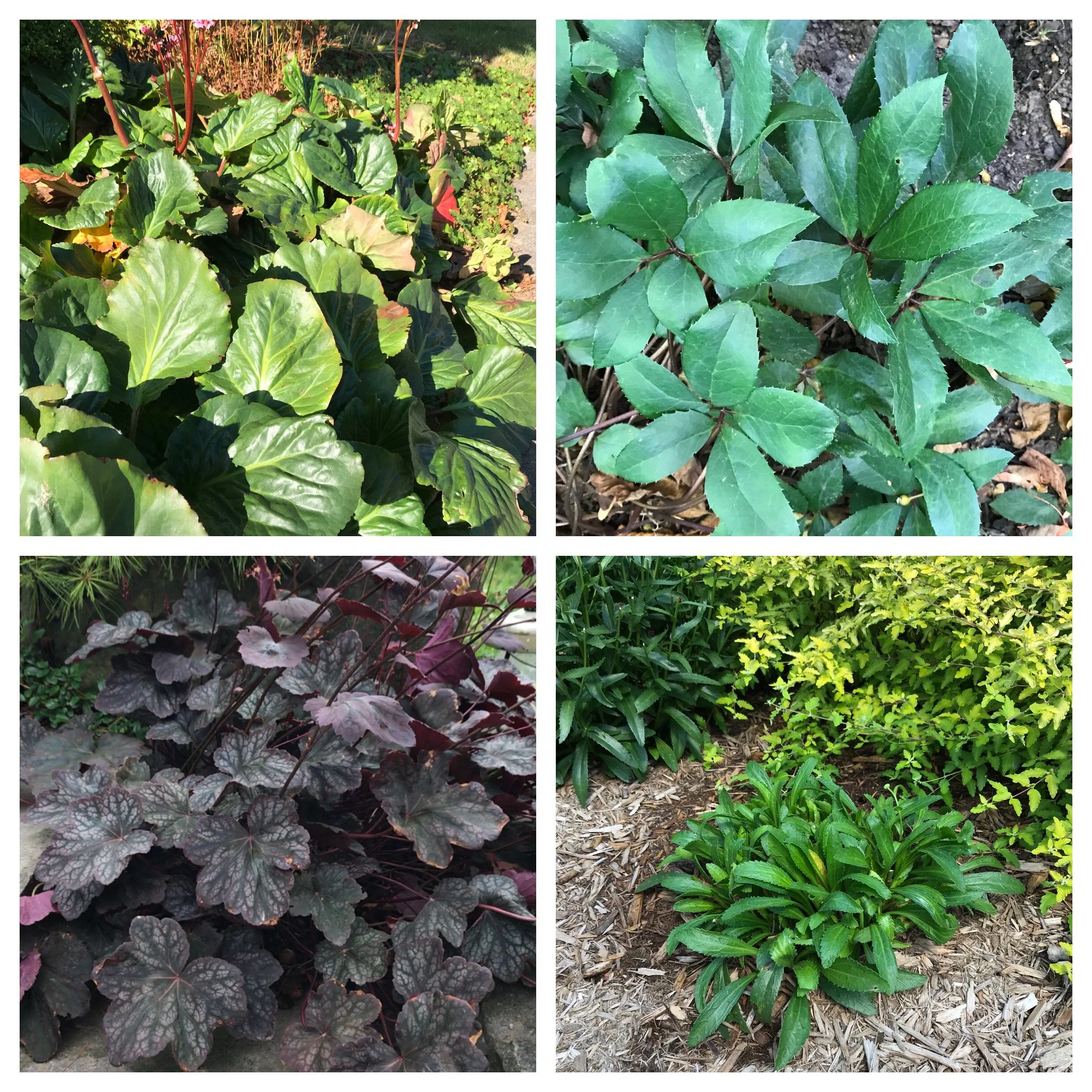
Let’s face it. We don’t always grow perennials for their floral display. Take Heuchera (coral bells) for example, many cultivars of this perennial are not winning any awards for blooms- A+ for effort, but no awards. So what does this plant have going for it? Foliage! Not only do Heuchera come in all sorts of gorgeous foliage colours, the leaves of coral bells persist year-round. They are evergreen (or ever-purple, or ever-chartreuse or ever-pink…). Other examples of perennials in the evergreen category include various species of Helleborus (Lenten rose or Christmas rose), Bergenia, and Yucca. Additionally, there are also some perennials, such as Leucanthemum superbum (shasta daisy) whose flower stems die down while their basal foliage remains evergreen. So as the saying goes ‘if you’ve got it, flaunt it’ and these plants have got it…foliage in the winter, that is! Leave these perennials standing tall! Sure they may look a little ratty come spring (depending on the kind of winter we are served and the growing conditions that the plants are subjected to) but the fact of the matter is that they have the potential to look nice, even during the winter months. In areas with unreliable snow cover (ahem… southern Ontario) this can be a really nice addition to the garden.

Examples of evergreen/semi-evergreen perennials (clockwise from top left): pigsqueak (Bergenia spp.)., lenten rose (Helleborus sp.), the basal foliage of shasta daisies (Leucanthemum spp.) and coral bells (Heuchera spp.),

2) DOES IT RETAIN IT’S STRUCTURE?

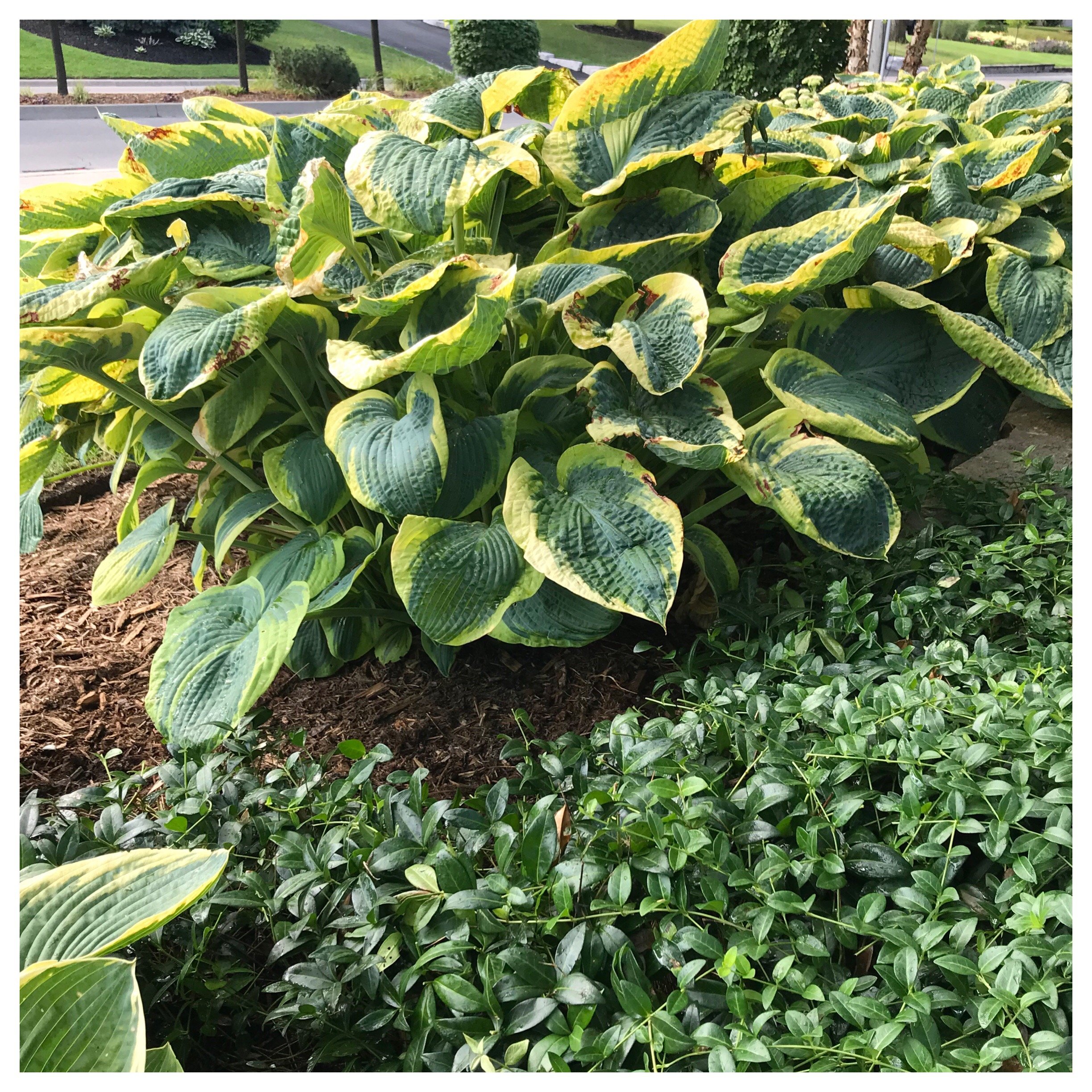
Some perennials, such as many ornamental grasses will retain their structure well into the winter months. These perennials will not only add structure to the garden but some gorgeous texture too (see ‘ornamental features’ below)! Other perennials such as Hosta spp. will essentially turn to mush come the first hard frost, while Polygonatum spp. (Solomon’s seal) will drop it’s leaves and loose it’s graceful form in the process. In any case, I am going to make the assumption that no one finds an indistinguishable mess of mushy leaves to be attractive. If your plants seem to crumble as soon as the cold weather hits, cut them back! It will be one less clean-up job to do in the spring and your winter garden will thank you for improving her aesthetics!

The hosta- a beautiful addition to the shady garden… absolutely useless in a winter garden.

3) IS IT WOODY?

Some perennials develop woody stems such as Perovskia atriplicifolia (Russian sage) or Lavandula (lavender). These are guaranteed to retain some structure in the winter and pruning for these two perennials is best left to the spring anyway. Leave them up and enjoy having some added structure to your garden!

4) DOES IT HAVE ORNAMENTAL FEATURES?

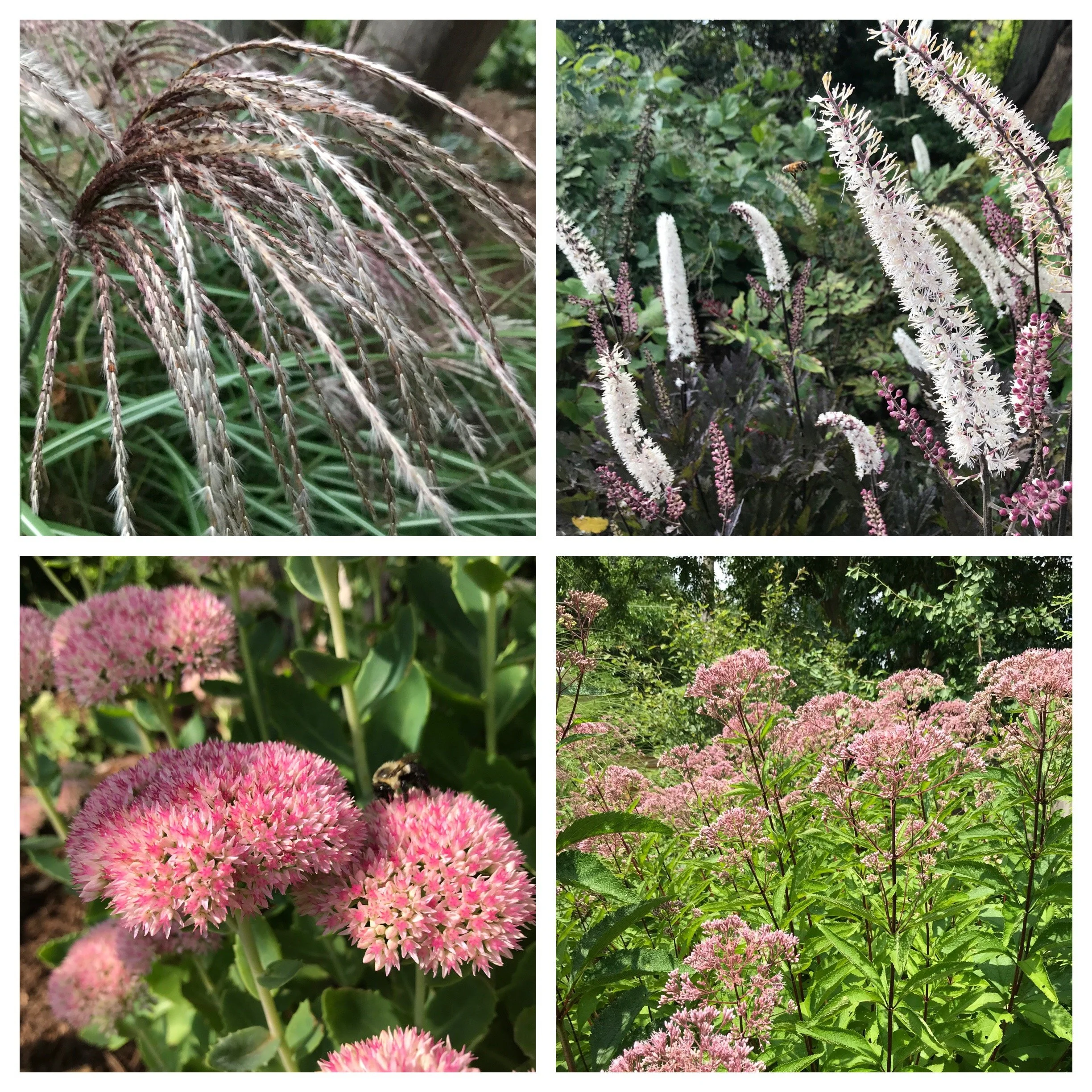
Beautiful texture? Ornamental seed pods? Pretty dried flowers? These are all features that look oh so beautiful when touched by a frost or coated in a light dusting of snow. Remember- winter is a beautiful season, if a plant has something that can help capture this beauty, then let it be!

Ornamental grasses and perennials such as bugbane (Cimicifuga spp.), Sedum spp.) and Joe Pye weed (Eupatorium spp.) have seedheads that capture a dusting of snow beautifully. * Remember, if you have a plant that tends to seed itself prolifically, you may want to chop the flowers before they go to seed. *

5) DOES IT HAVE WILDLIFE VALUE?

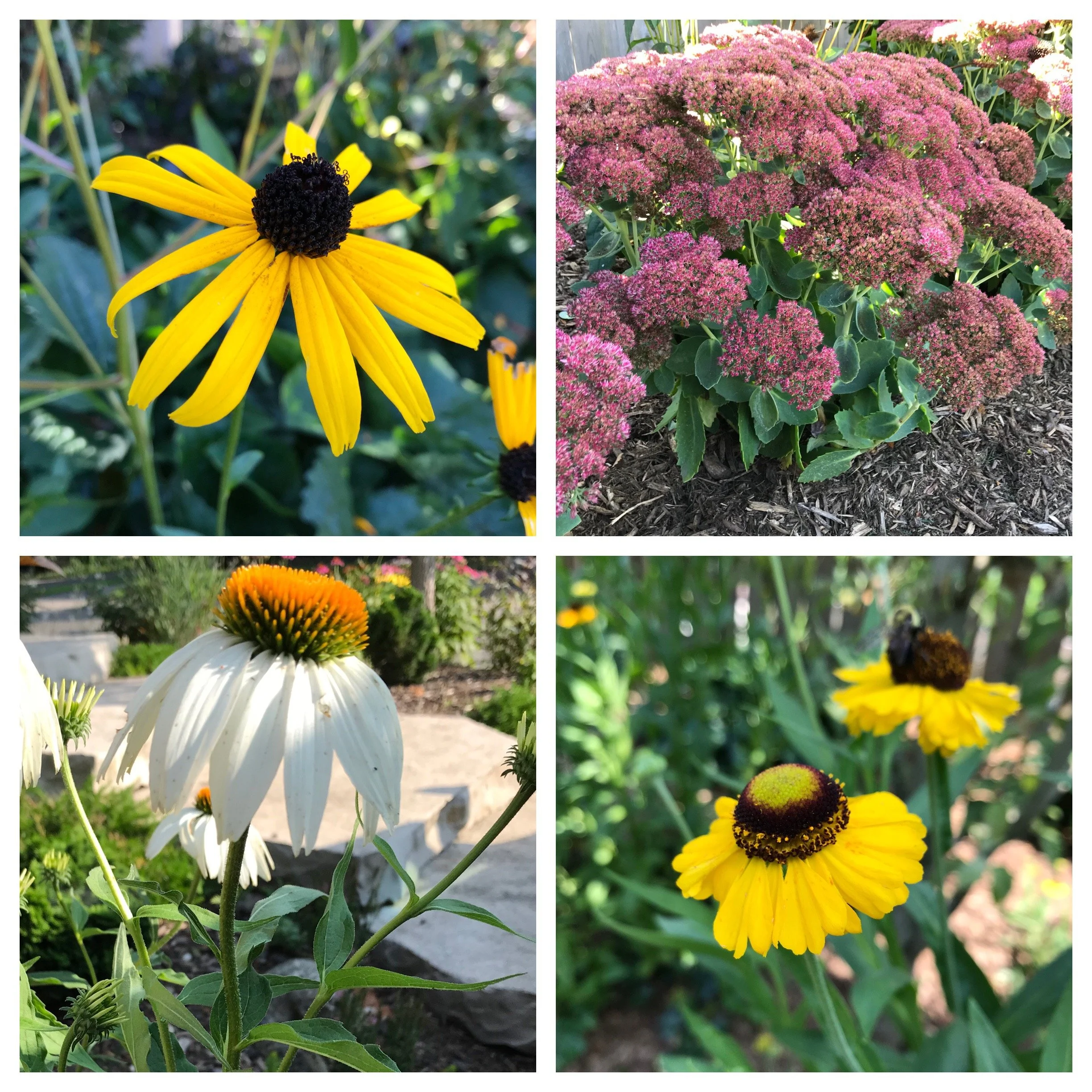
Many perennials produce seeds valued by wildlife (especially birds); some of the more common ones include species of: Echinacea (coneflower), Rudbeckia (black-eyed Susan/gloriosa daisy), Sedum (stonecrop), Eupatorium (Joe Pye weed and boneset), Helenium (sneezeweed) and Heliopsis (false sunflower). Leave these perennials standing over the fall and winter months and you can feel good about providing a food source for our feathered friends.

Some perennials with wildlife value. Clockwise from top left: black-eyed Susan (Rudbeckia hirta), stonecrop (Sedum spp.), sneezeweed (Helenium autumnale) and coneflowers (Echinacea spp.)

6) IS IT DISEASED?

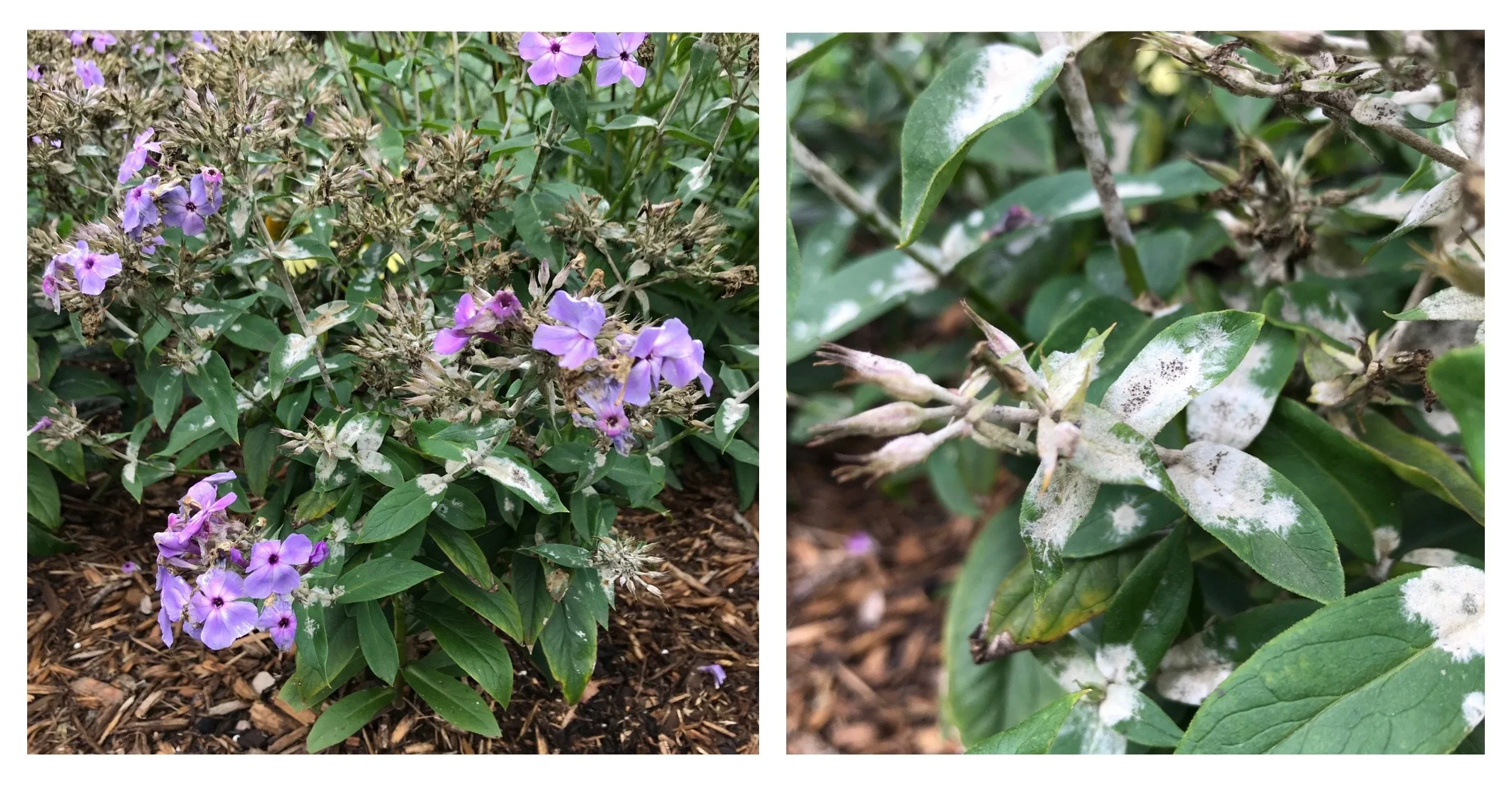
Did you notice anything funny on the leaves of any of your perennials this year? Perhaps a white fuzzy coating or little rusty pustules or unusual blotches? If you suspect that a perennial in your garden was diseased, it is best to cut it down (or even dig it out). Often diseases will overwinter in the garden on diseased plant material; this can become a source of infection for the next season. Cut anything suspicious down and DO NOT compost it. If it is a re-occuring problem, it may indicate that the plant is not growing in its optimum conditions (stressed plants are more prone to diseases) or it is a problem that the perennial is particularly susceptible to. If you have plants that seem to be hit by disease year after year, it may be time to think of some more robust replacements (an excellent task for the winter!).

Even though this Phlox would retain some structure over the winter, it is diseased and should be cut down (and the clippings removed from the garden).

OK OK, so that may not have been overly concise but I hope it helped! Remember- if you are not sure what to do with a certain perennial, you can always leave it alone to see how it fares the winter months. It can often be surprising what plants look attractive in the winter. So don’t be too hasty in chopping down all your perennials- right now you are the designer of your winter garden!