Detailing

Footprints are for the Beach

(Originally posted: August 17, 2020)

What do you see when you look at this picture?
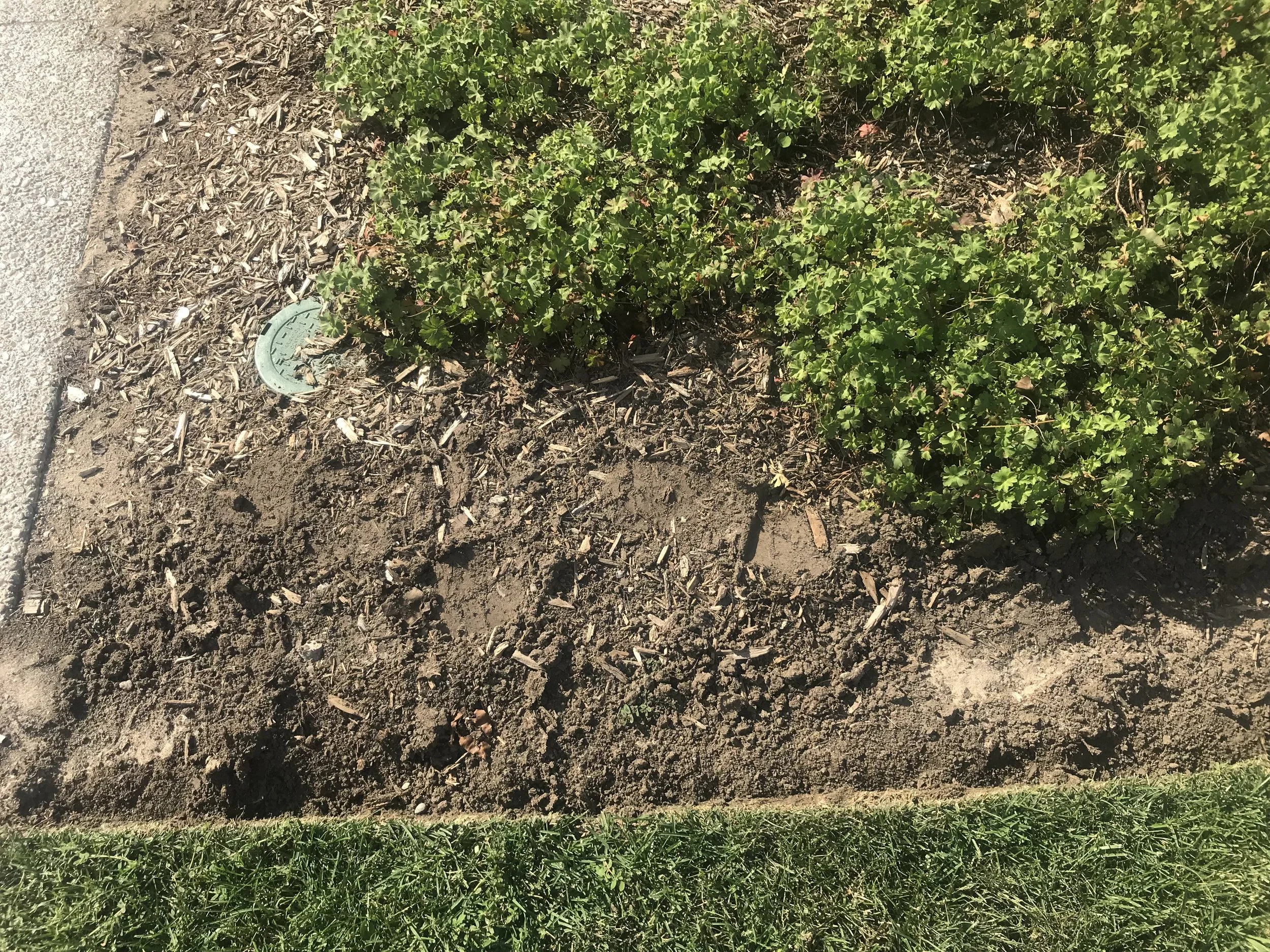
I’ll start by telling you what I don’t see. (Rant alert!!!)

I don’t see a beautiful garden edge.

I don’t see a patch of Geranium x cantabrigiense that feels the same way about the relentless heat we have been experiencing that I do.

Instead, I see 2 big footprints glaring at me from the dirt. Hmmm… mens size 9.5 maybe?

Anyone who knows me, knows that footprints in a garden are a HUGE pet peeve of mine. I am known to walk backwards out of a garden, fluffing out my footprints as I retreat. I am sure it has raised many an eyebrow. I am also known to contort into various awkward-looking pseudo-yoga poses in order to avoid taking a step into a garden bed. (Should we call for help? Wonder the passerbys).
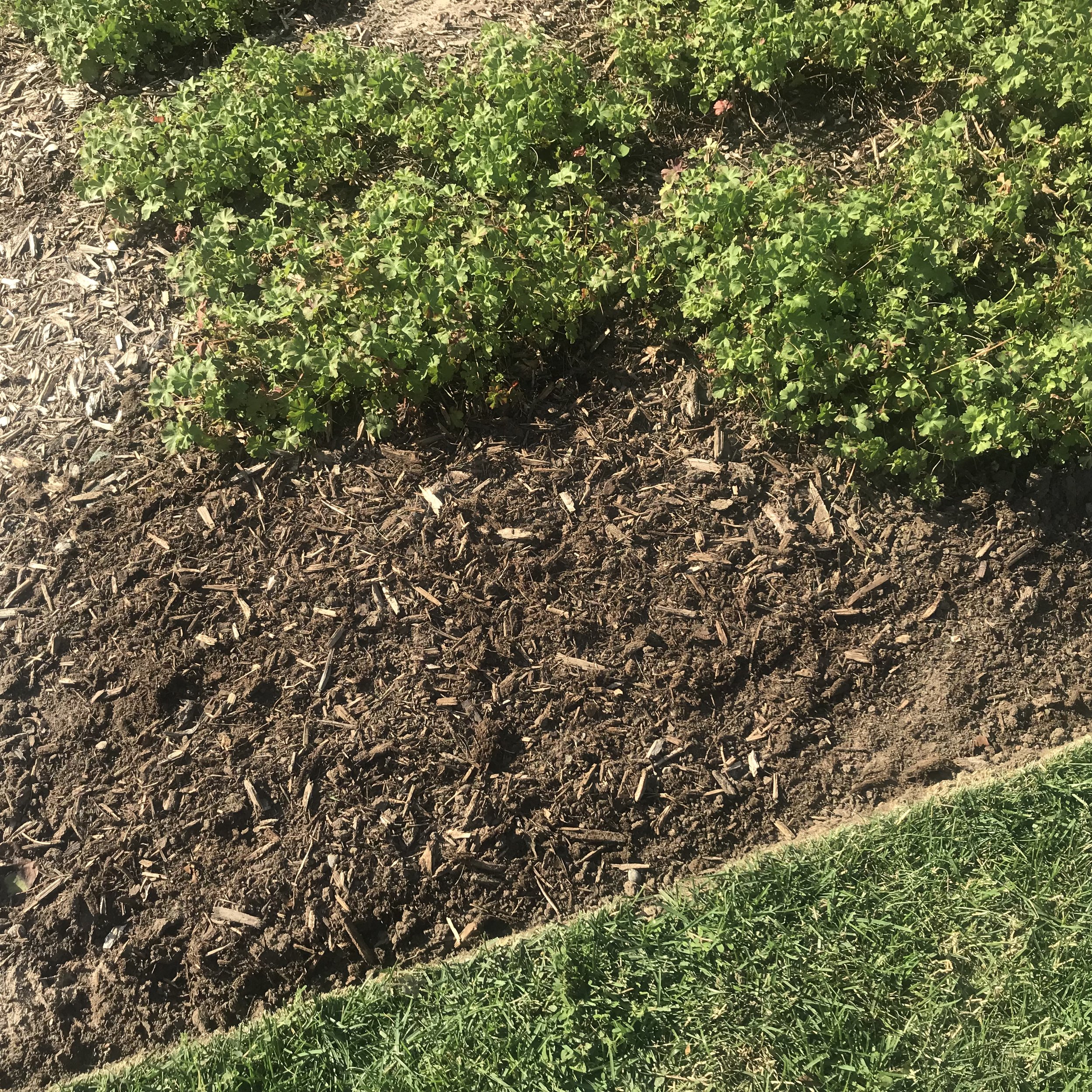
Ahhhh…. just a little fluff of the mulch makes everything better!

As a landscape gardener, I believe that gardens should look like they magically take care of themselves or little garden fairies tend to them while we are sleeping. Therefore when I leave a job site, I strive to leave no trace of my gardening visit. 

Footprints just look awful. They dash the illusion of magical intervention, and they detract from the nice features within a garden. As in the photo above, instead of seeing the absolutely beautiful garden edge made by Mr. 9.5, all I see is the print of a CSA approved workboot. Pitty. 

OK. Rant complete. Now onto something more productive as there are other reasons to not trample in a garden. Repeatedly walking all over a garden bed (especially a wet one) causes compaction of the soil: an all-around bad situation.

Let’s backtrack. 

Soil is made up of a few different things:

  1. Mineral components (sand, silt and clay)

  2. Organic components (such a living organisms and decaying plant matter)

  3. Pore spaces (tiny spaces between soil particles that are filled with water or air)

Now there are entire textbooks devoted to soil. I know- I’ve owned one… and likely slept on it before an exam in the hopes that any unlearned information would somehow transfer into my brain via osmosis. So I am going to try to keep this concise: essentially, the pore spaces in the soil are really important! 

When soil is compacted, the solid soil particles are pressed closer together thus reducing pore spaces. When this happens, there are significant consequences. Here are some of them:

  • The soil becomes denser and it becomes harder for plant roots to push through the soil, stunting the root system and negatively impacting the overall growth of the plants

  • The soil cannot absorb moisture as easily (which means that rain/irrigation water is more likely to run off the soil rather than infiltrate into it)

  • The ability of the soil to drain can be restricted, leading to overly saturated conditions for extended periods of time (not all plants are able to tolerate these conditions)

  • Gas exchange between the roots of plants and the soil (needed for biological processes) and also between the soil environment and the ‘outer world’ is compromised which negatively impacts plant growth

  • Availability and plant uptake of nutrients can be negatively affected in compacted soils

  • Soil processes such as the decomposition of organic matter can be slowed down
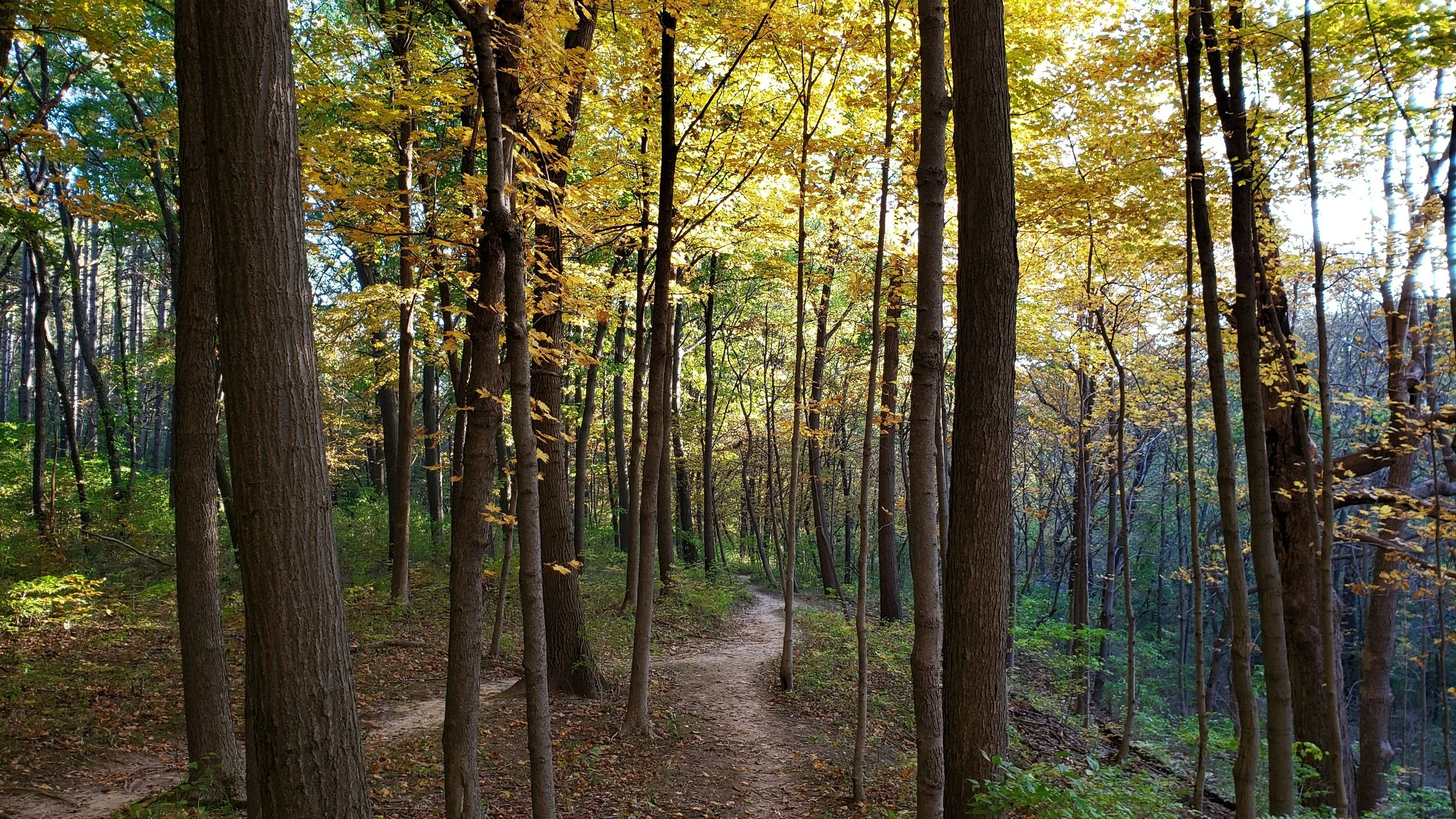
Why is it that nothing grows on a hiking trail? Soil compaction is a significant factor.

OK. You can wake up now!

So you probably get the point that soil compaction is a BAD thing… but what’s a lowly weight-bearing gardener to do?

While it is impossible to not walk in a garden, there are some tips to help minimize compaction of your soil:

  • Tread minimally: if you can reach what you need to reach without stepping into your garden, harness your inner psuodo-yogi and do it! Additionally, don’t walk through your garden to get to your next task, step out of it and walk around it if possible. Then take the shortest route possible back into the garden to access your next working area.

  • Be mindful of the moisture level in your soil: it is much easier to compact wet soils than dry ones. If you need to be walking in your garden beds, do so when the soil is on the drier side. This is an especially important point to keep in mind if you garden on clay soils, which are much easier to compact than sandier soils.

  • Designate your walking zones: some gardeners will put minor paths through their garden to act as access points from which they can work without having to step into their cultivated areas. These paths can be as simple as a mulched trail or small stepping stone walkway. Whatever your path of choice, using one keeps the impacts of compaction to a specific area.

  • Distribute your weight: some gardeners choose to distribute their weight by placing down temporary planks across the garden on which they walk. Obviously this is not always feasible or practical but it can be a good soil-preserving technique.
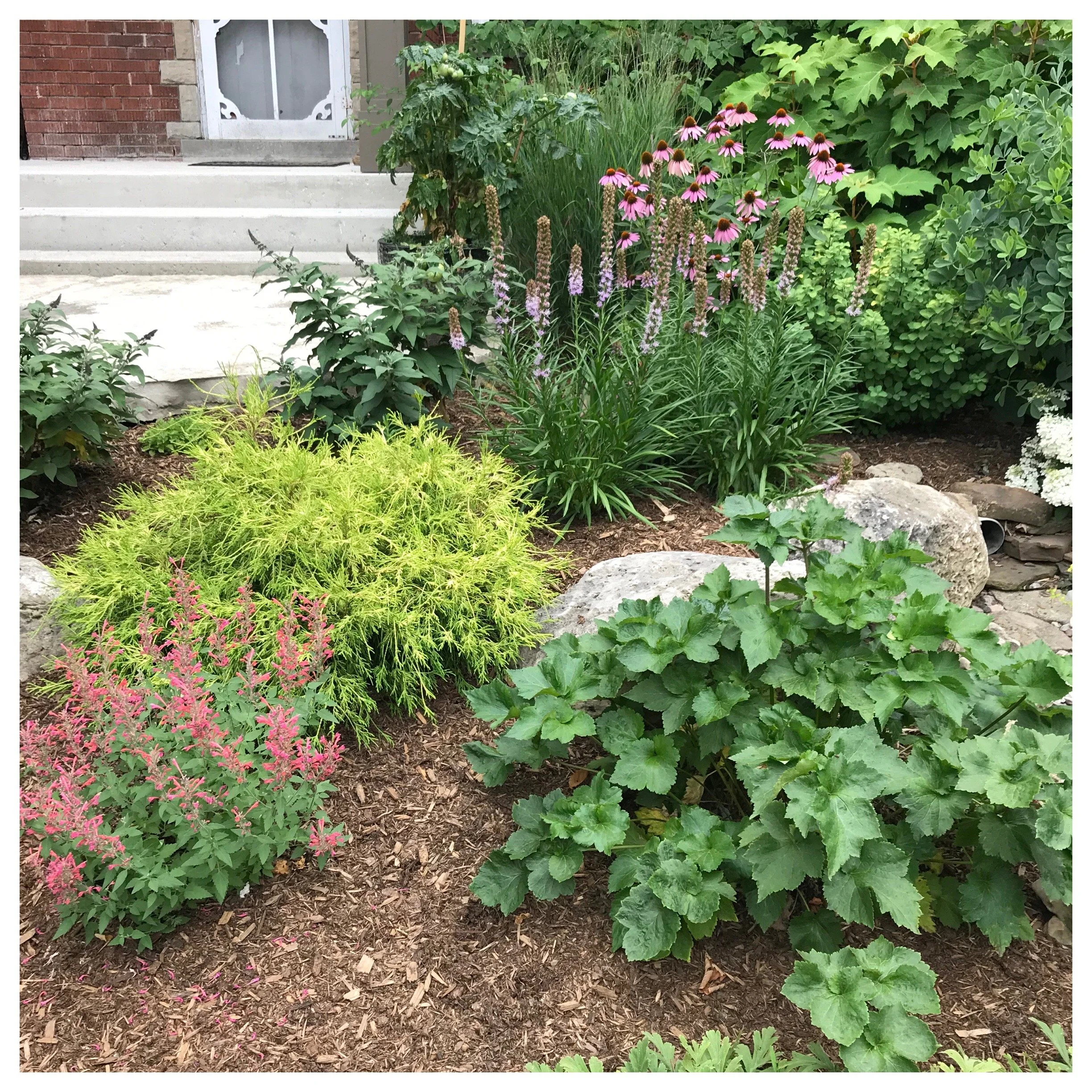
A garden that can be accessed by various features such as a dry riverbed (not shown) and rockery.

And thats a wrap!

Soil compaction... an important process that can have significant consequences on your garden and it’s inhabitants (and here you thought you were looking at simple footprints...).
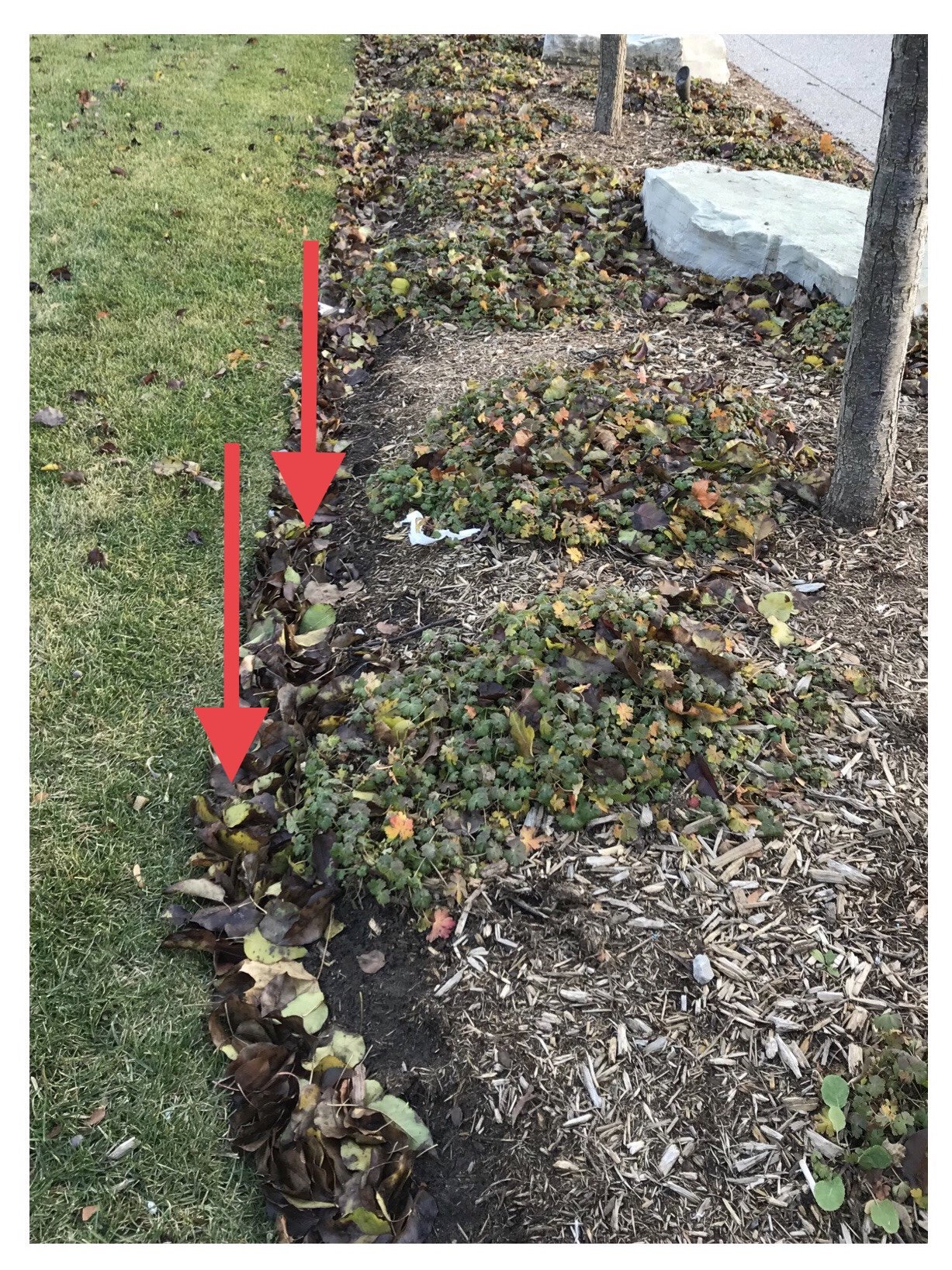
Fall Clean-ups: Detailing

(Originally posted: November 29, 2019)

With the majority of the leaves down, fall clean-up is becoming less about ‘just getting leaves to the curb’ (or the compost pile or the leaf mulcher) and more about making the garden look tidy heading into the winter. Whether you prefer to strip your beds of leaves (with the plan to add lots of compost next year) or keep the leaves in place over the winter so that they can break down and add nutrients and organic matter to the soil, there are a few key tips that can ‘up the tidy factor’ in your fall garden (and protect your plants in the process).

Free your Plants!

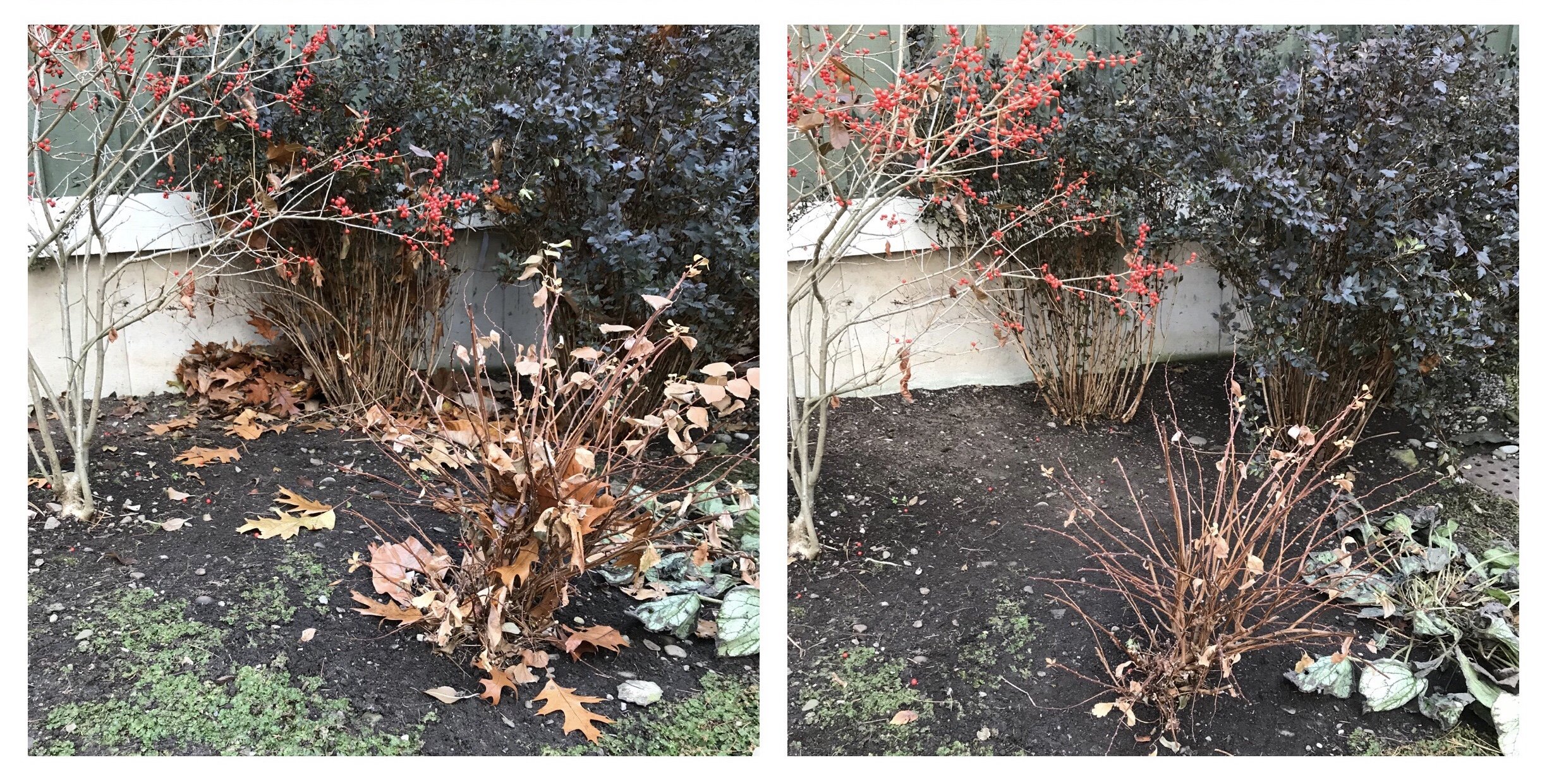
When leaves from large trees fall, they cover the garden. (Thanks ‘Captain Obvious’!) During fall clean-up, these leaves are usually raked or blown out of the beds. What often gets neglected are all the leaves that have been captured by the branches of smaller trees and shrubs in the garden. Sure these plants look dead at this time of year, but they don’t have to look like debris traps! While it may seem tedious, picking out the leaves that have been trapped within the branches of your specimen trees/shrubs or even perennials, will greatly improve the overall tidiness of your garden.

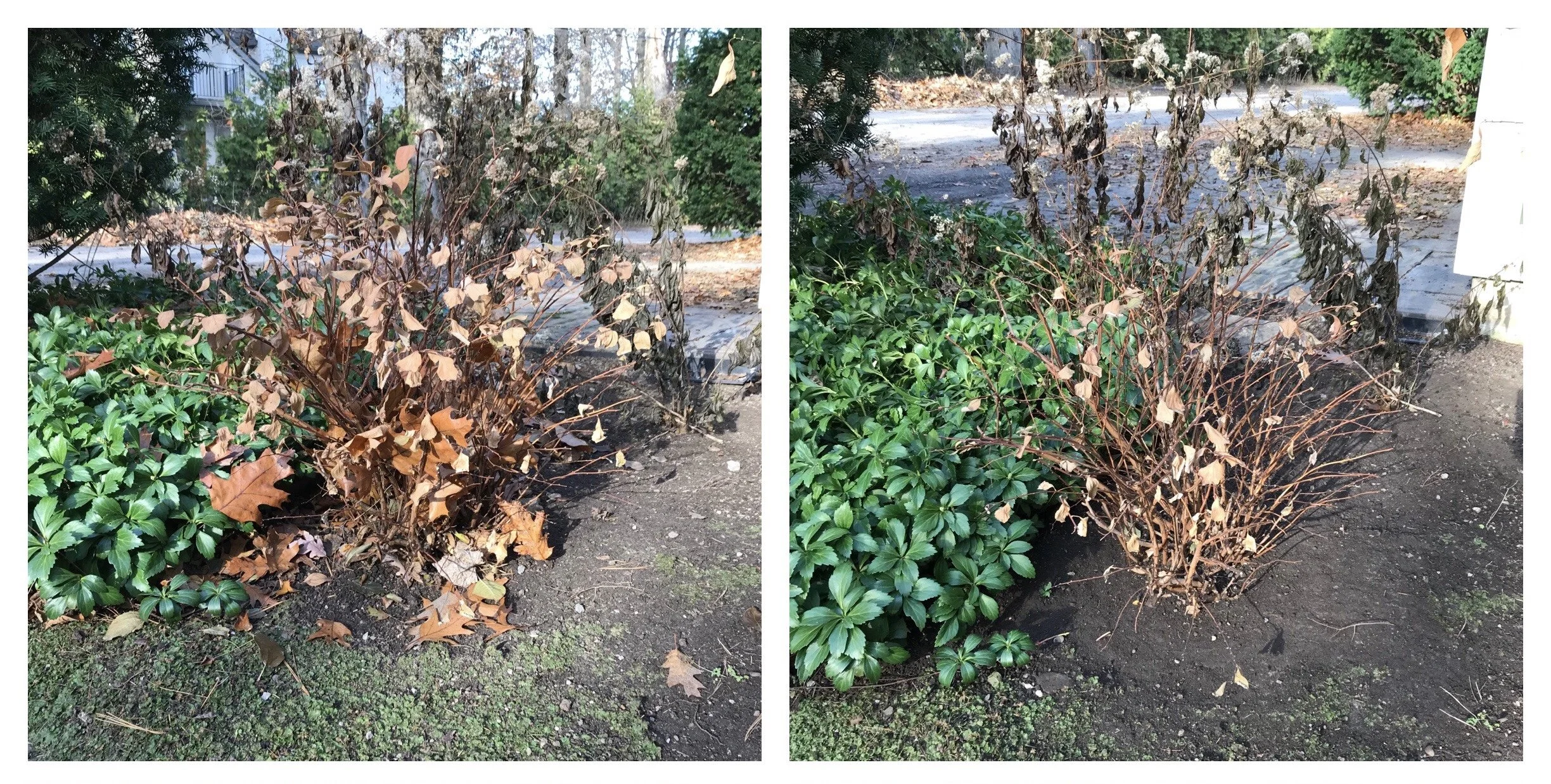
A Spiraea betulifolia (birch leaf spirea) that has been effective at trapping leaves (left) and the same shrub with the oak leaves removed (right).

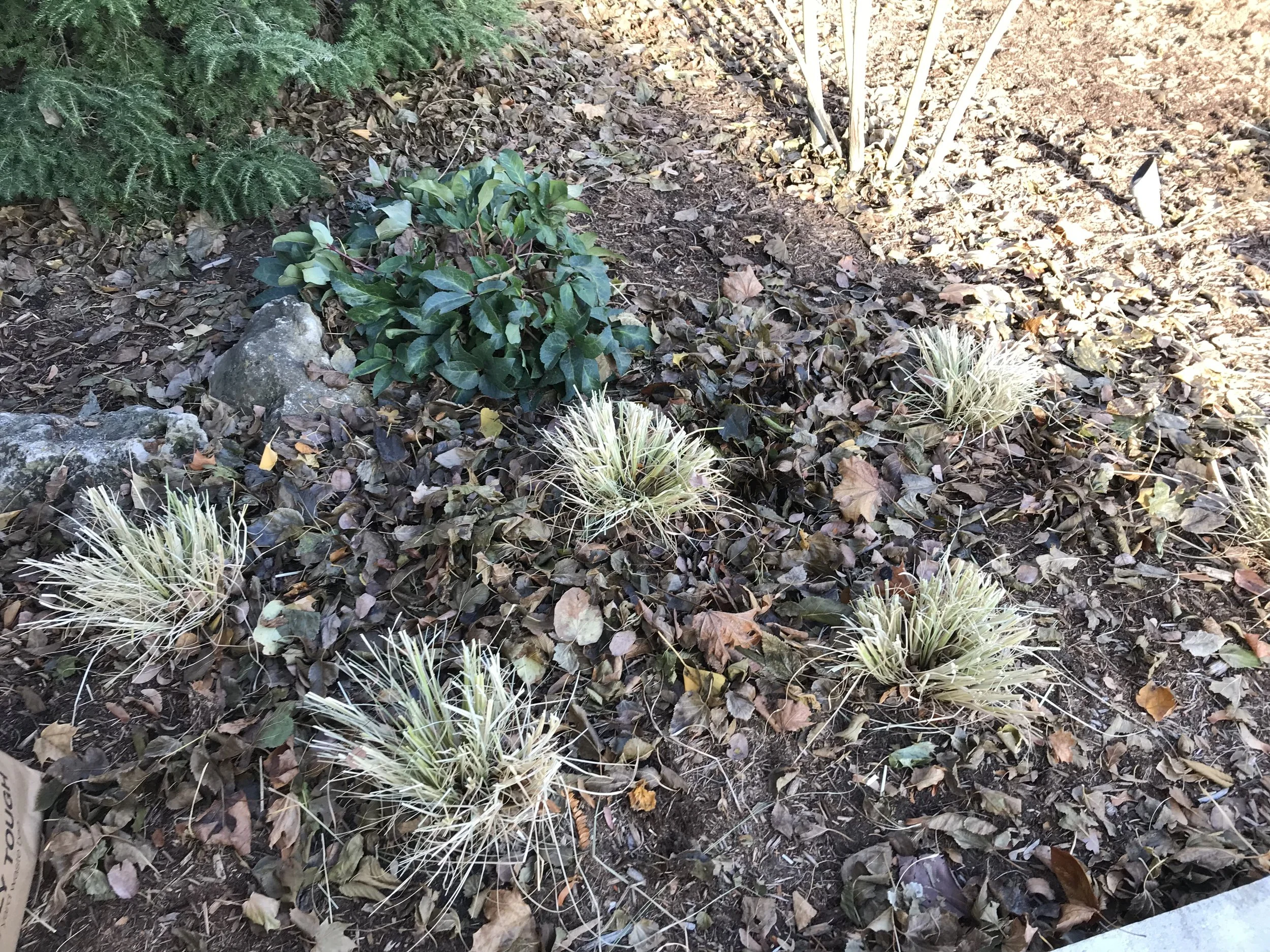
Leaves are left on this garden bed but they have been brushed off the clumps of [cut down] grass- this provides a little definition to the plantings and ‘ups the tidy factor’ despite the leaves remaining on the rest of the garden.

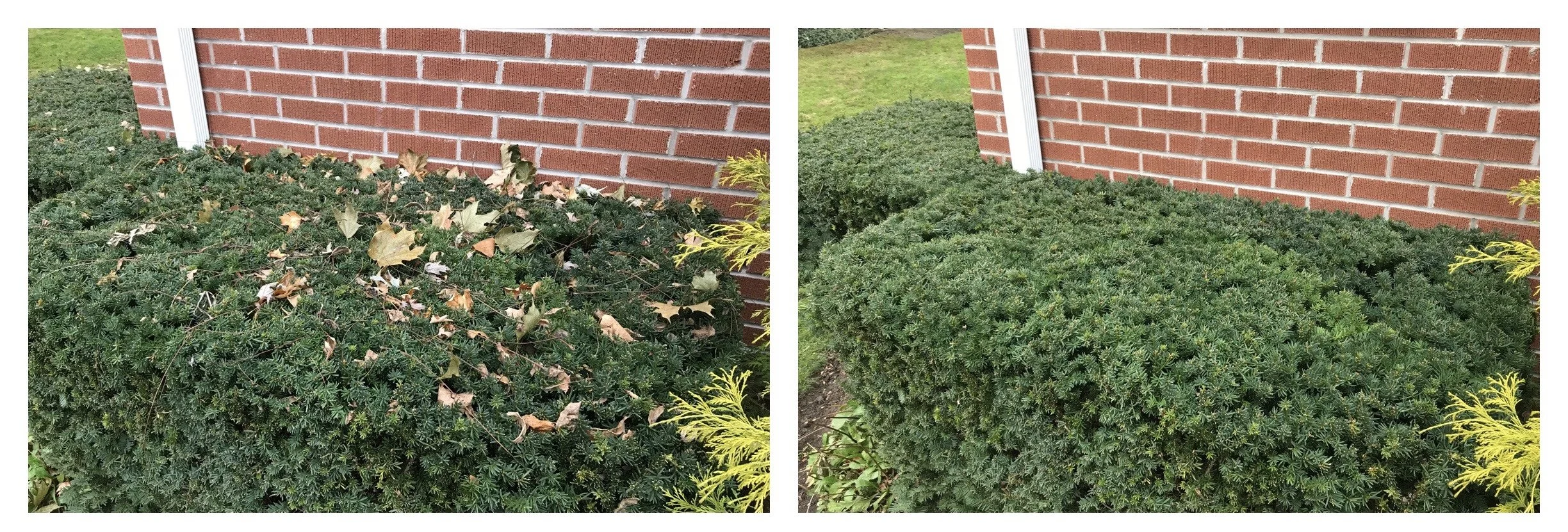
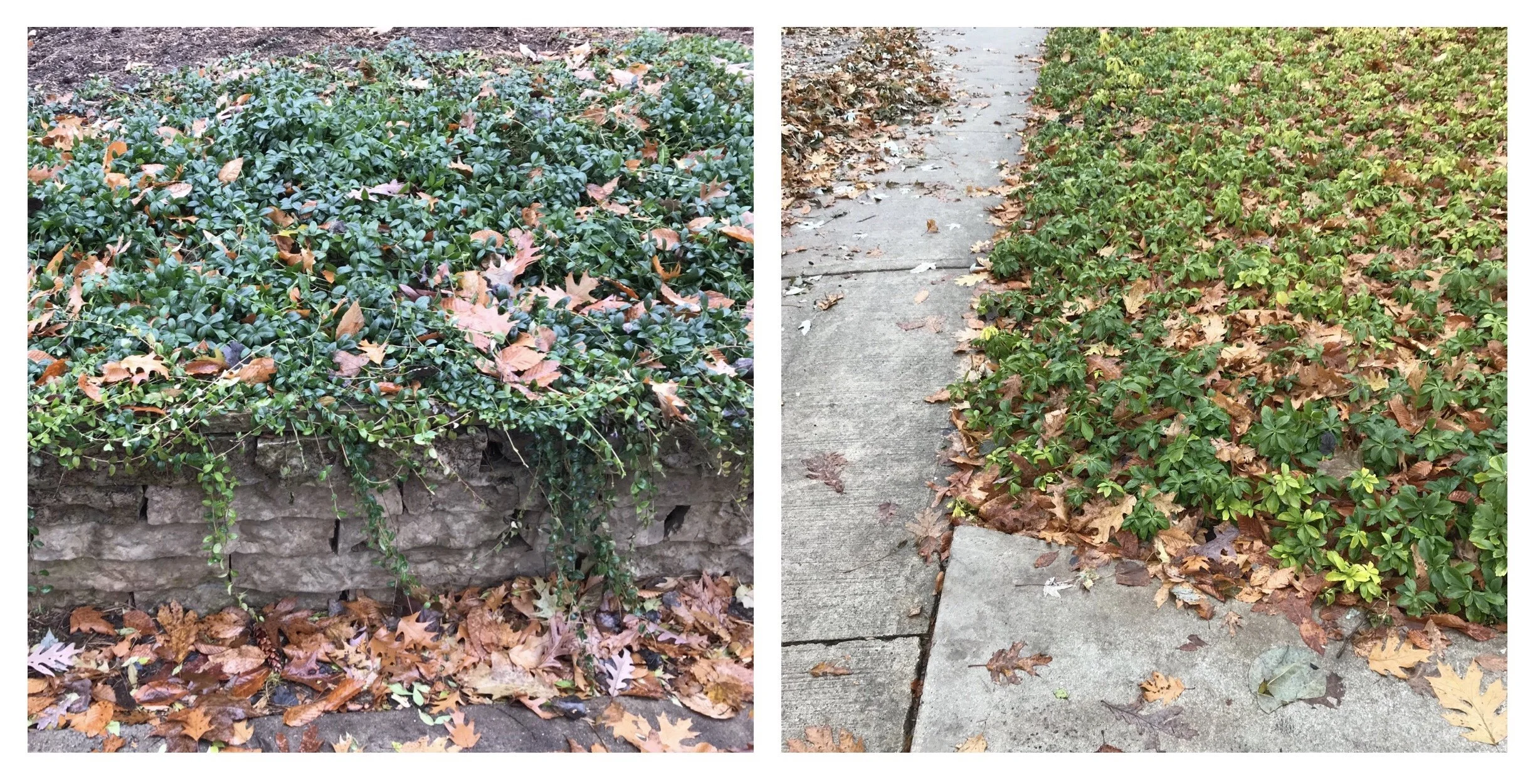
Picking out leaves becomes even more important when dealing with evergreen trees, shrubs, as well as groundcovers and other perennials. While leaves resting on the top of hedges or within the canopy of evergreens is really noticeable and unsightly, a build-up of fallen leaves can form thick mats on the evergreen needles/leaves which can smother/kill them. In the spring you can be left with a patchy-looking shrub or even a dead patch of groundcover. So, in the case of evergreens, it is not only aesthetically important to remove leaf litter (from on top of and within the plants), it is also important in maintaining plant health.

Leaves settled on top of a Taxus (yew) hedge (left) not only looks untidy but the leaves are not good for the yew foliage. Removing the leaves (right) is an easy fix.

A fair amount of leaf litter resting on top of Vinca minor (periwinkle) on the left and Pachysandra terminalis (Japanese spurge) on the right; leaves should not be allowed to pile up on evergreen groundcovers such as these.

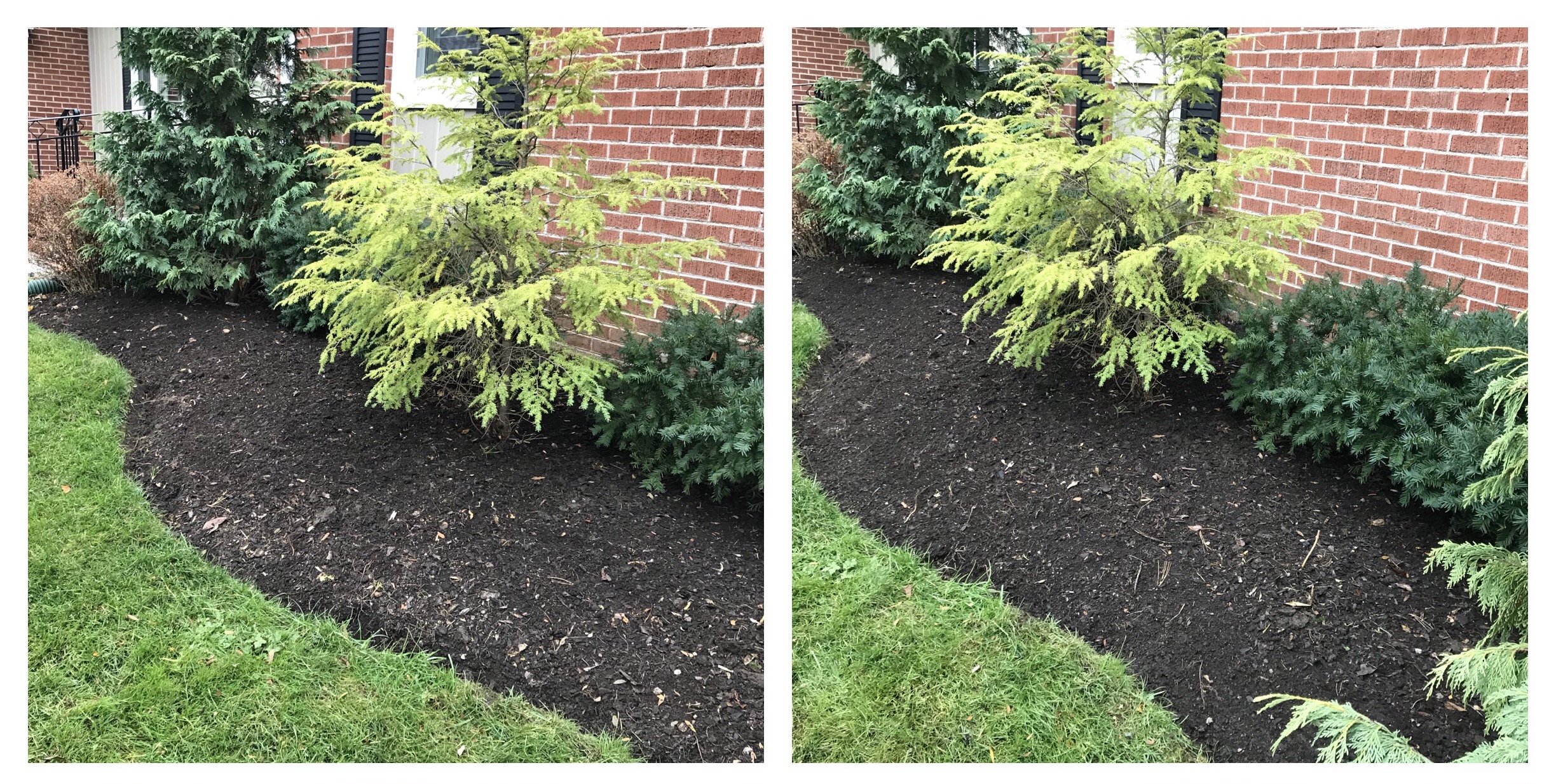
Now that we have dealt with the top portion of our trees and shrubs, we will now shift our gaze and look beneath them. Leaf blowers are notorious for blowing leaves into the base of shrubs and firmly lodging them in place. Yes, the garden bed may look tidy and uniform (with the mulch and top soil completely stripped away… ‘leaf blower rant’ to follow in a future post!) but the shrubs look like they are being swallowed by leaves! Enter another tedious task with big a payback… picking out leaves from the base of your plants. This task is guaranteed to restore some definition to your plantings but it also serves another purpose. A pile-up of leaves at the base of plants can act like a really cozy and inviting home for rodents over the winter months; rodents that can nibble on and therefore damage your plants. In an effort to not lay out the red carpet for rodents, I try to keep the base of my trees, shrubs, and even perennial clumps free of leaf build-up.

Leaves caught up in branches and around the base of some shrubs (left) and the same shrubs with leaves removed.

A Taxus x media (yew) hedge showing one section with leaves caught in branches and beneath the plants, and another section where the leaves have been ‘picked out’.

Edge

With less plant material in the garden now, the edges of our garden beds become much more prominent- which means bad edges tend to stand out like a sore thumb! A quick pass with the garden edger can ‘crisp-up’ the lines again, and give the garden a tidier look. I will also rake the turf following along the edge of a garden bed to remove any mulch that has decided to take heed of the notion that ‘the grass is greener on the other side’. To further enhance the edge of beds (ones with a surface of bare soil or fine mulch), I will take a rake and do a light pass along the front of the garden bed to give it a nice uniform look. In general, regardless of the amount of debris you leave on the garden bed, if you can keep the edge of the bed tidy, you will improve the overall appearance of the garden.

Fluff the Mulch

If you like cleaning leaves out your beds and you happen to have a layer of mulch on your gardens, now is the perfect time to turn or ‘fluff up’ the mulch- one final refresher before the snow flies!

And there you have it! These tips may seem minor and of low priority given the fact that the gardening season is coming to a close, but if you live in an area that does not receive reliable snowfall, then chances are you could be looking at your garden ‘as is’ for a fairly long time! These are all tasks that are often overlooked during fall clean-ups (by homeowners and professionals alike!) and I find that to complete a fall clean-up that really stands out… the tidiness is in the details.