Tips and tricks

All Wrapped Up

(Originally posted: December 18, 2020)

Well the gardening season is essentially complete but there has been one final task that I recently ‘wrapped up’ (pun intended) ahead of winter; that task would be, you guessed it…. wrapping some evergreens with burlap screens.
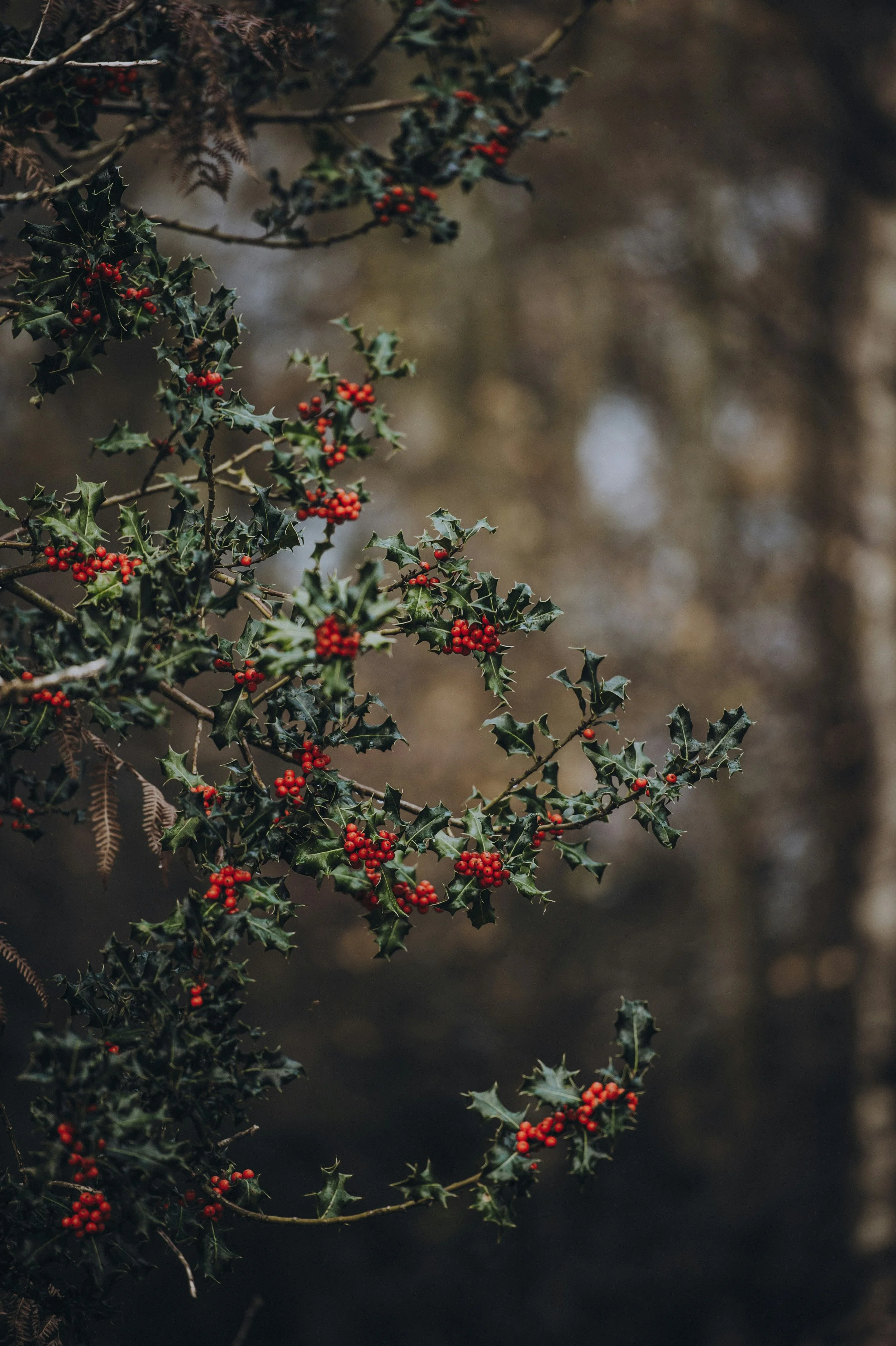
When the world around is brown- it is time for other plants to shine… why would you want to cover them up? Photo credit: Annie Spratt on Unsplash

Now, it should be known that I am of the opinion that any plant that needs to be ‘under cover’ during it’s moment to shine is not worth growing. After all, why do we plant evergreens? For the fact that they are ever GREEN! They provide a dash of that glorious colour when the rest of the world is brown… or white if you are lucky enough to have snow.

A good example of ‘stealing a plant’s thunder’ is evident when you look at evergreen holly (Ilex ). Not only does this plant have stunning green leaves, but it also has absolutely gorgeous red berries that almost sparkle in the otherwise sleeping late fall and winter landscape. How terribly unfair does it seem to screen-out this kind of beauty?

There are, however, some evergreens that have other moments of glory- such as Rhododendrons with their spectacular floral displays in the spring. In the case of these plants, a burlap screen is an acceptable practice in my mind if it means keeping these specimens happy and flowering properly.

The Burlap Screen- How it Works

As human beings, we are used to bundling in warm clothing during the cold winter days or curling up in a warm blanket to get cozy. In the case of plants, it is important to note that the intention of a burlap screen or wrap is not to keep a plant ‘warm‘ rather it is to prevent water loss from the plant and the associated damage that it causes.

The Threat of Desiccation (this should bring back memories of science class…)

Water moves through a plant from it’s roots (taken in from the soil) to it’s leaves, where any unused water then exits the plant via pores in a process known as transpiration. Transpiration occurs at much higher rates in warm weather when plants are actively growing and it significantly drops (or becomes virtually non-existent) when plants are dormant (i.e winter). During the growing season, water is replaced within the plant by uptake from the soil. In the winter, however, water in the soil is frozen and it becomes inaccessible to plant roots. Therefore if water is lost, it cannot be replenished. The result? The plant begins to dry out or desiccate with the damage beginning at the tips/margins of the leaves and working backwards. This type of damage is also called winter burn. Leaves damaged by winter burn not only look unsightly, but if desiccation is severe, the leaves are also no longer able to properly function as ‘light-harvesting/ food-making’ sites for the plant come spring. If damage is extensive enough, the overall health of the plant can suffer.

So what are the factors that draw water out of a plant?

  1. Warm sunny weather can stimulate photosynthesis (and, by association, transpiration)

  2. Wind promotes the evaporation of water from the leaf; this speeds up water loss as water is constantly drawn away from the plant in windy weather.
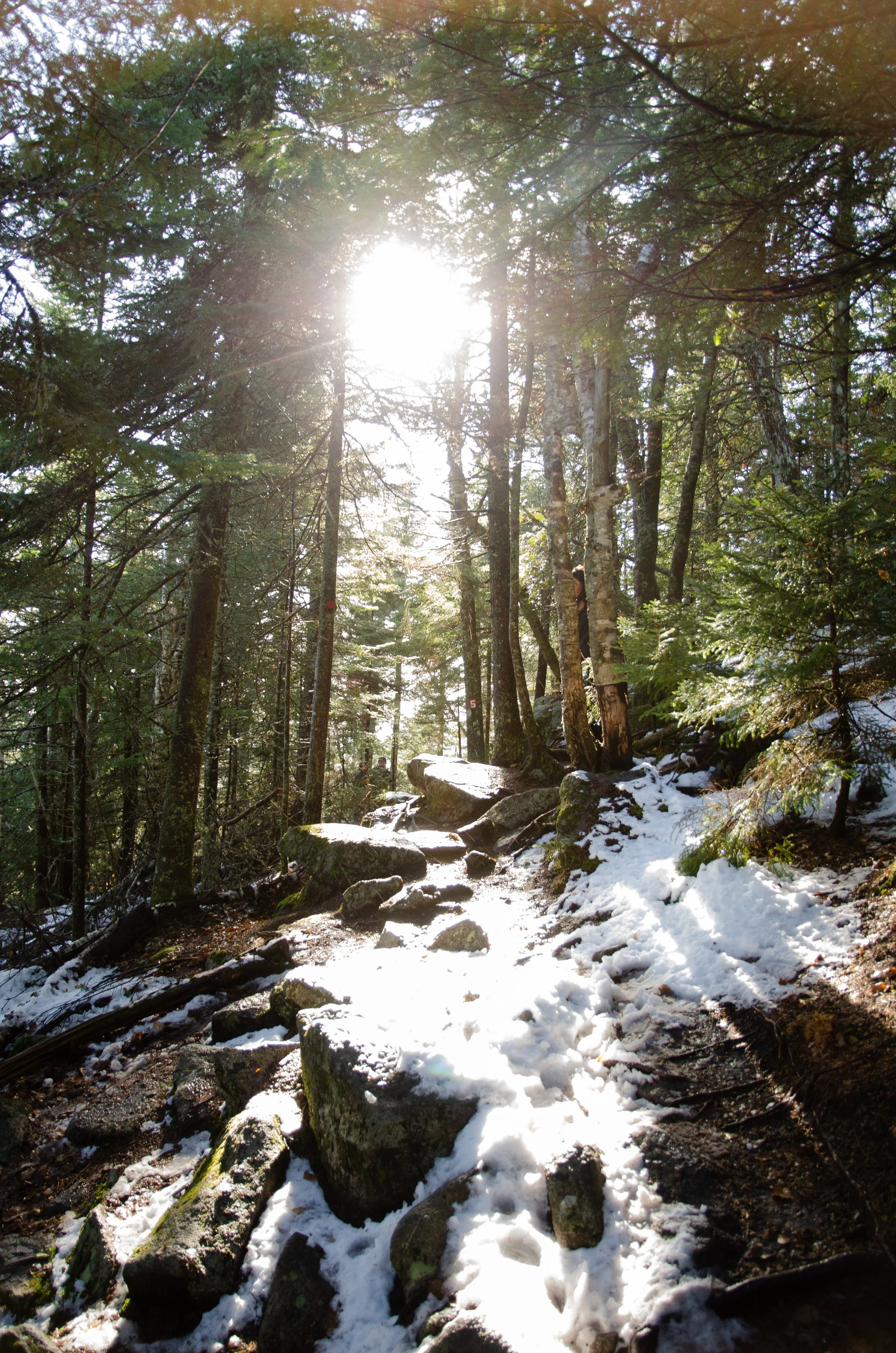
It’s always nice to see the sun in the winter… but it can cause problems for some of our garden plants. (Winter sun photo by Claudio Pantoni on Unsplash)

To protect or to not protect? That is the question.

In general, plants that I typically protect for the winter months include:
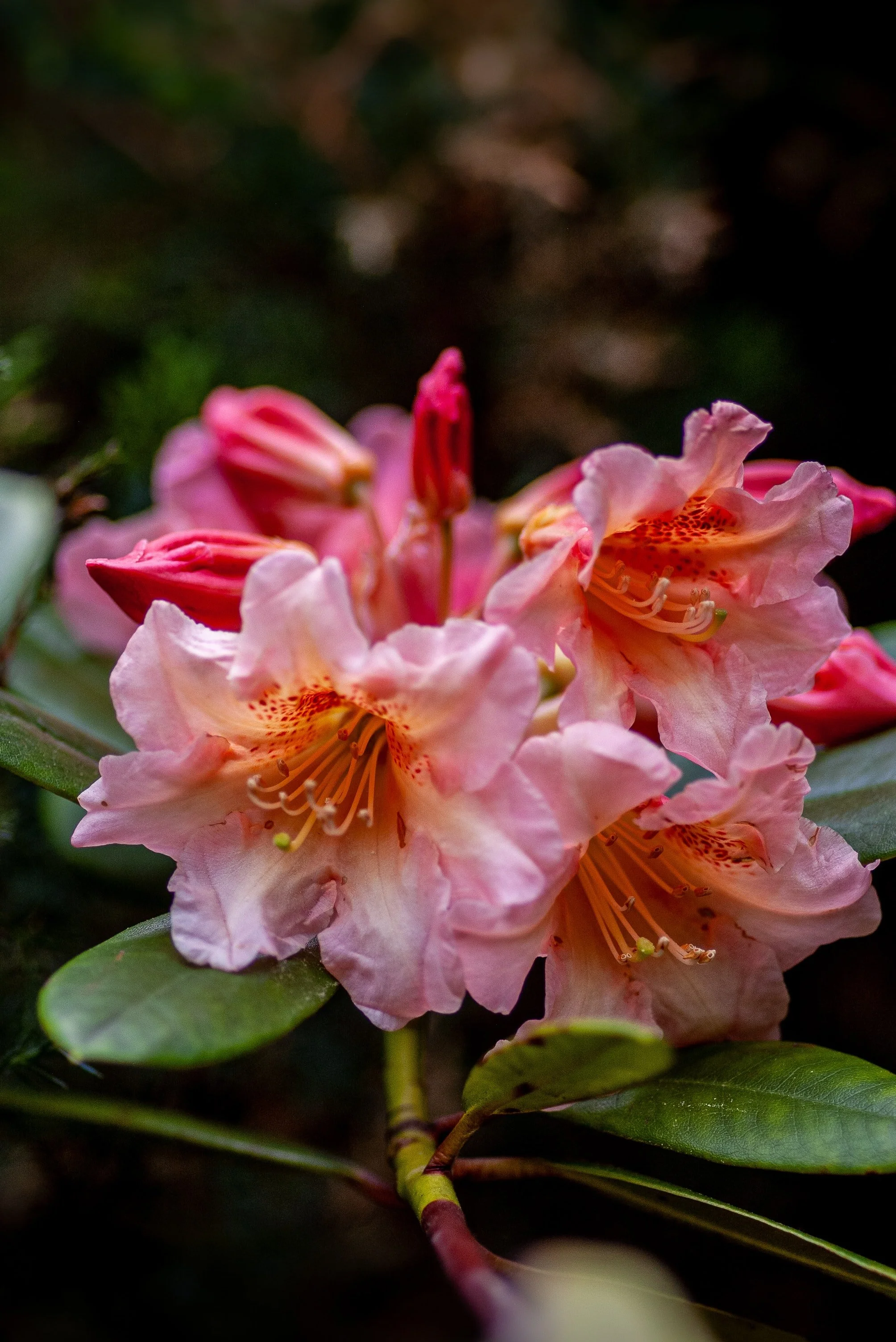
If a burlap screen can keep this beauty flowering properly, then bring on the screen! (Photo credit: Yoksel Zok on Unsplash)

  • Broadleaf evergreens which have the potential to lose a great deal of water to the air due to the large surface area of their leaves (as opposed to the needles or scales that adorn other evergreens). Broadleaf evergreens are the main type of plant that I will protect with a burlap screen if they are situated in a sunny and/or exposed location. Examples of broadleaf evergreens that may need some protection include:

  • Rhododendron

  • Pieris

  • Boxwood (Buxus spp.)

  • Evergreen holly (Ilex)

  • Recently planted evergreens or tender trees/shrubs (those planted during the latter half of the growing season) have under-developed root systems, which means their ability to take up and supply the plant with moisture from the soil is not yet optimized. These plants are therefore more prone to becoming drought-stressed (and in turn they are more likely to suffer winter burn/desiccation). A screen to minimize unnecessary water loss can be the difference between the plant surviving it’s first winter in the garden, and shopping for a replacement come spring. Some of the most commonly planted trees and shrubs in this category include:

    • Cedars (Thuja)

    • Falsecypress (Chamaecyparis)

    • Yew (Taxus)

    • Boxwood (Buxus)

    • Japanese maple (Acer palmatum)

  • Plants with tender buds can gain some protection from a burlap screen. While it won’t protect buds against cold temperatures or even damaging temperature fluctuations, a burlap screen can prevent desiccation of the buds from drying winds. This is especially valid for plants that flower on old wood (trees and shrubs that are going into winter with their flower buds ‘locked and loaded’, ready to burst forth in the spring). For these plants, if the buds do not survive the winter, the flower show in the spring is reduced or eliminated. If spring-flowering trees and shrubs are located in exposed, windy areas a screen can certainly provide some protection. A couple examples of plants with buds to protect include:

    • Redbud (Cercis)

    • Mophead hydrangea (Hydrangea macrophylla)

  • Plants exposed to salt spray from roads generally appreciate having a screen erected to prevent the spray from landing on the foliage or branches (this spray can contribute to the burning of leaves, needles and buds). Some plants are more salt tolerant than others, so before planting by a roadside, it is important to consider a plant’s salt tolerance.
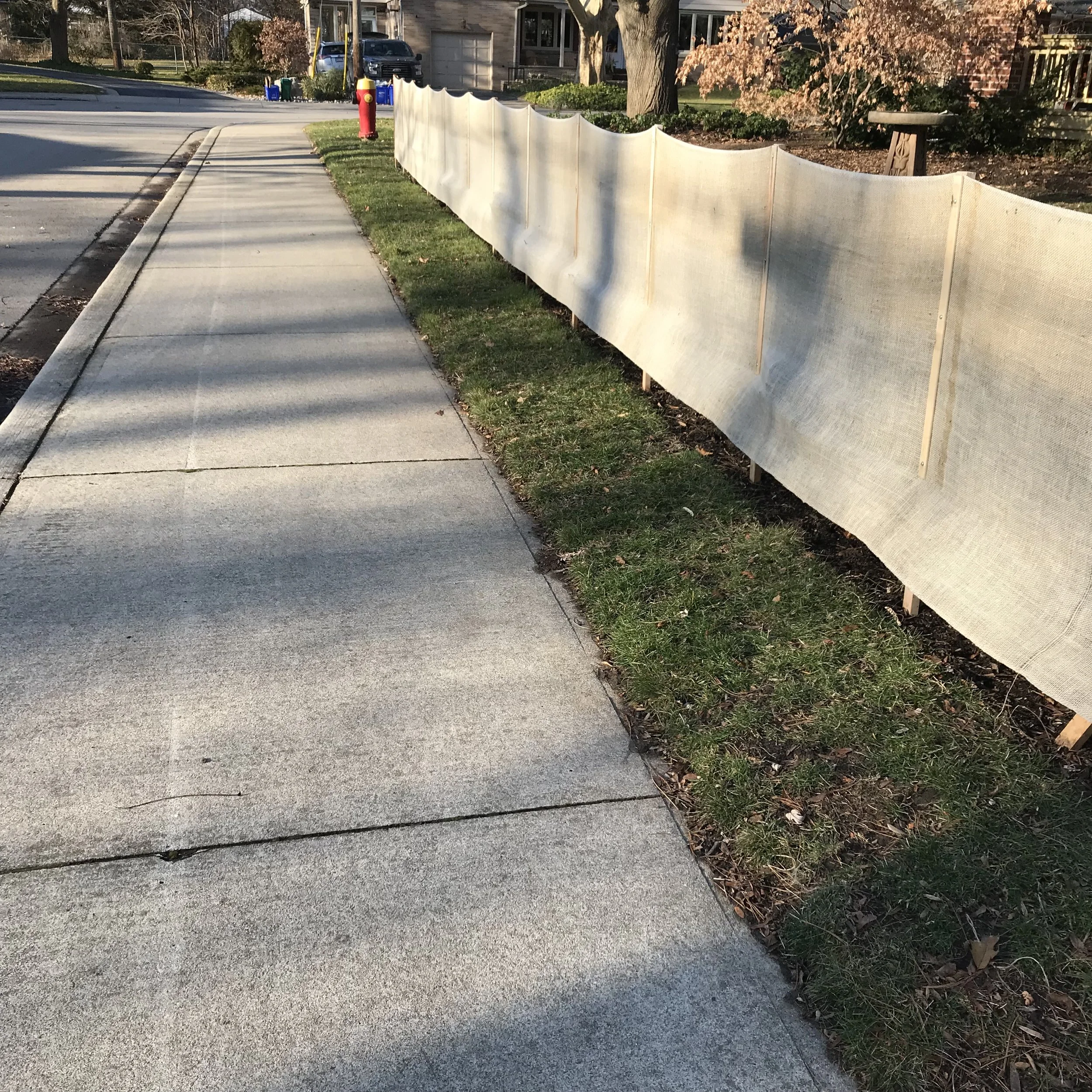
A picture-perfect burlap screen protecting a line of Hydrangea paniculata from sidewalk and road salt, snow piles from sidewalk plowing, and the exposure that comes with an open corner lot. I marvel at the meticulous work of this homeowner’s work every year!

Tips for Screening and Wrapping (and I am not talking Christmas presents!)

  • Where possible, burlap should be stapled or zip-tied to stakes or other supports to create a screen/wrap for the plant (see photo below). This is much more desirable than putting burlap directly onto the plant for a couple reasons. First of all, wet burlap that freezes onto foliage can cause damage to the foliage. Secondly, the lack of airflow within a completely bundled-up plant can promote disease problems.

  • If a plant must be wrapped, don’t pull in the foliage tightly; wrap the burlap only tight enough that it stays in place and secure it by spiraling twine down and back up the plant.

  • Wait until the weather is consistently cold to erect burlap screens. This allows the plants to ‘shut down for winter’ without any external influences; protection is then erected as a final ‘security blanket’. Stakes can always be installed during the warmer fall months and the burlap attached to them once the weather turns consistently chilly.

  • Remove burlap when a plant can once again access water from the soil (when the soil thaws).

  • Over the course of the winter, check on the burlap to make sure it has not collapsed onto the plant that you are trying to protect! Make adjustments when necessary.
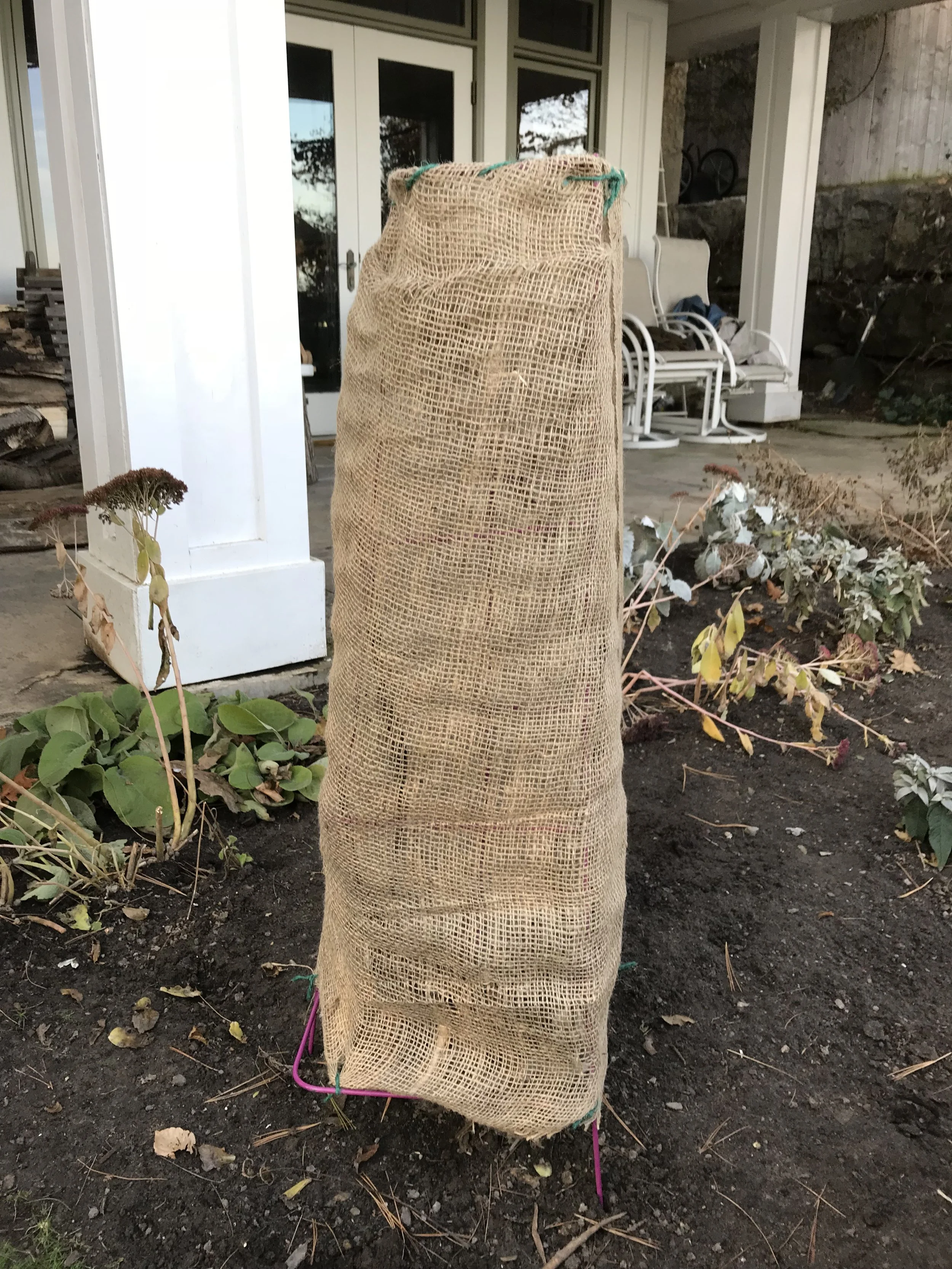
A plant wrapped with burlap. Note the metal frame that is being used to keep the burlap from making direct contact with the plant beneath.


Now it’s time to bundle up… to bundle up your plants. Just remember to do so sparingly… a garden full of burlap screens is certainly not necessary from a horticultural standpoint, or desirable from an aesthetic standpoint; after all, a winter garden can be a thing of beauty too!
Always a cheery winter sight! Photo by Peter Lewis on Unsplash
Footprints are for the Beach

(Originally posted: August 17, 2020)

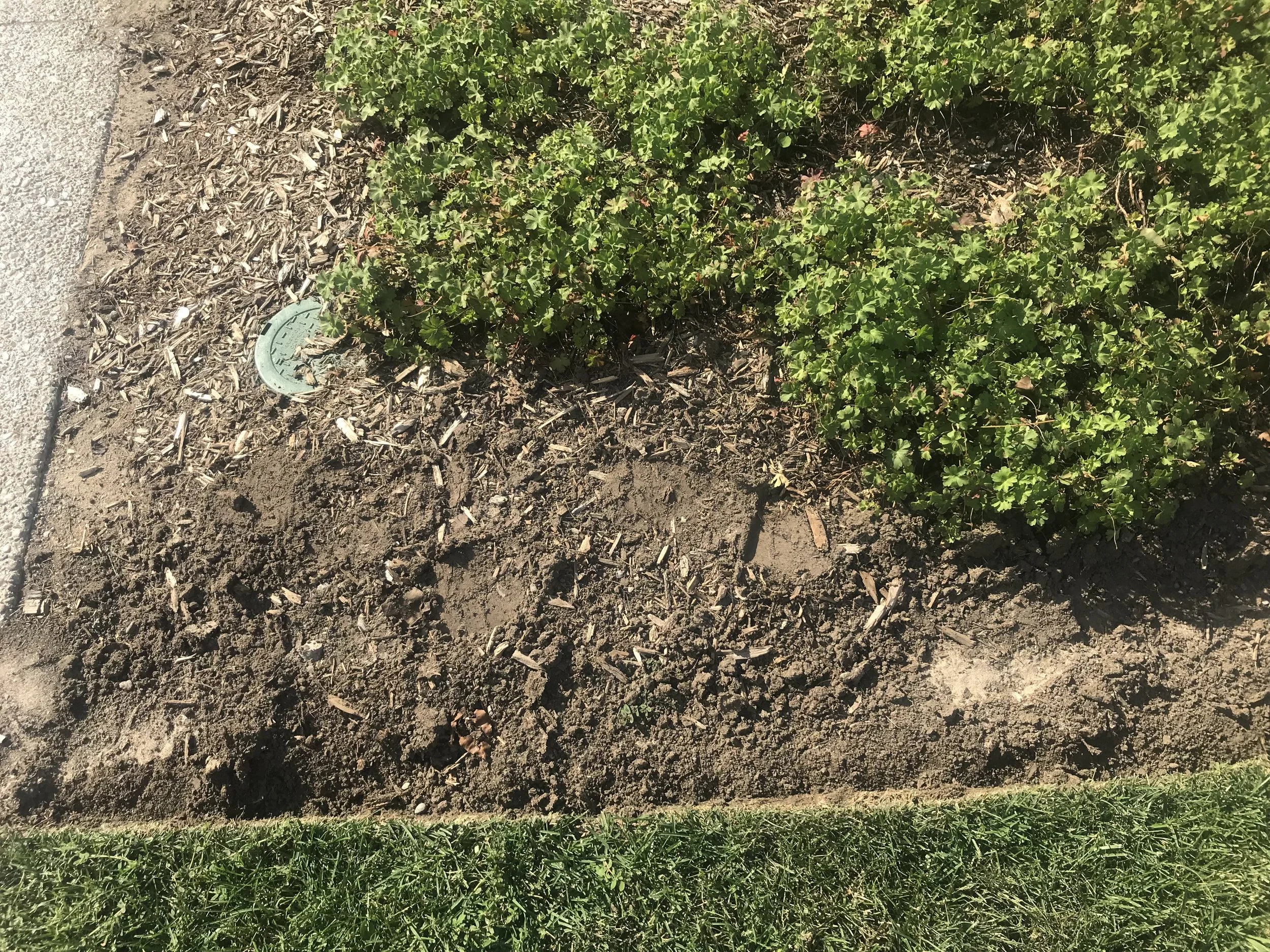
What do you see when you look at this picture?

I’ll start by telling you what I don’t see. (Rant alert!!!)

I don’t see a beautiful garden edge.

I don’t see a patch of Geranium x cantabrigiense that feels the same way about the relentless heat we have been experiencing that I do.

Instead, I see 2 big footprints glaring at me from the dirt. Hmmm… mens size 9.5 maybe?

Anyone who knows me, knows that footprints in a garden are a HUGE pet peeve of mine. I am known to walk backwards out of a garden, fluffing out my footprints as I retreat. I am sure it has raised many an eyebrow. I am also known to contort into various awkward-looking pseudo-yoga poses in order to avoid taking a step into a garden bed. (Should we call for help? Wonder the passerbys).

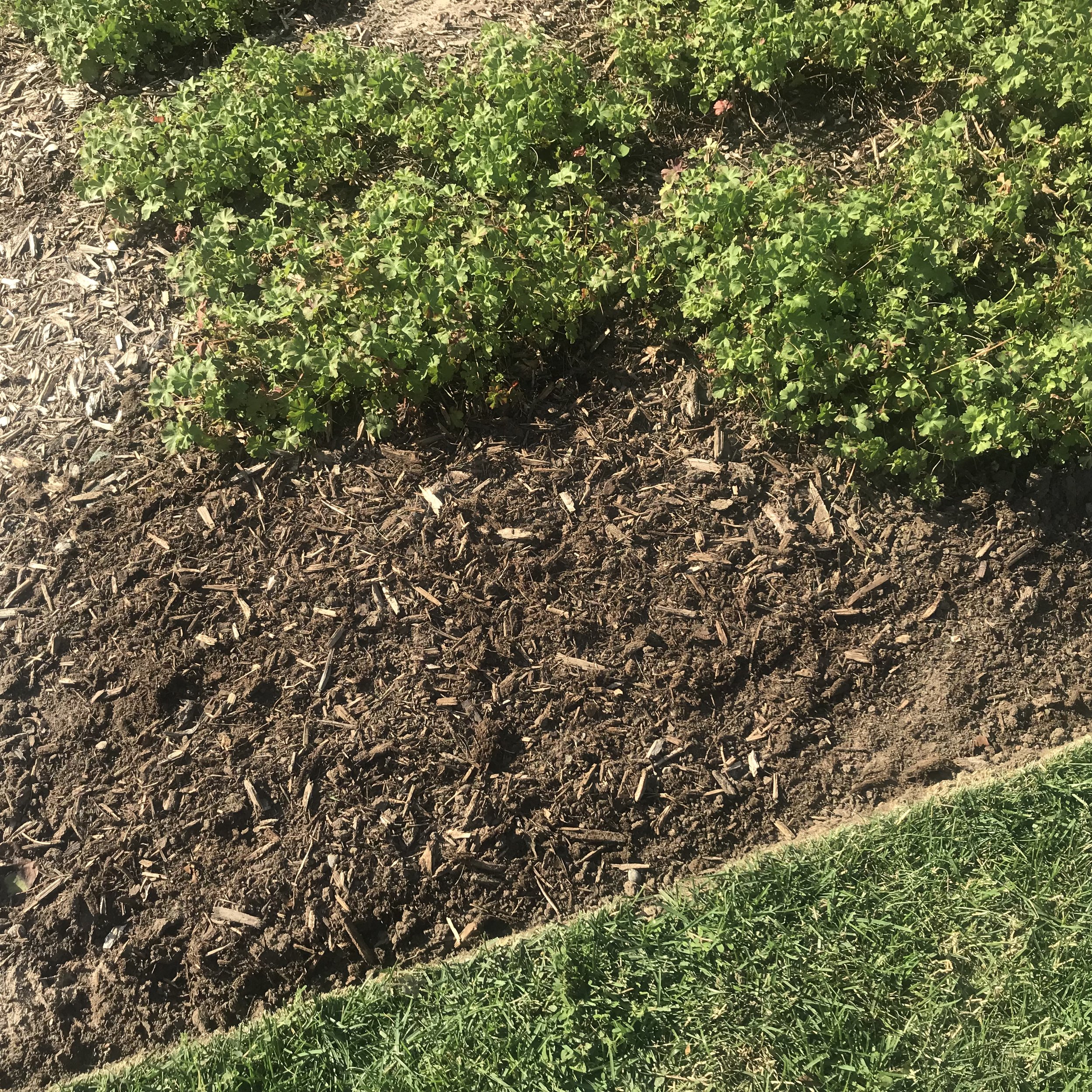
Ahhhh…. just a little fluff of the mulch makes everything better!

As a landscape gardener, I believe that gardens should look like they magically take care of themselves or little garden fairies tend to them while we are sleeping. Therefore when I leave a job site, I strive to leave no trace of my gardening visit. 

Footprints just look awful. They dash the illusion of magical intervention, and they detract from the nice features within a garden. As in the photo above, instead of seeing the absolutely beautiful garden edge made by Mr. 9.5, all I see is the print of a CSA approved workboot. Pitty. 

OK. Rant complete. Now onto something more productive as there are other reasons to not trample in a garden. Repeatedly walking all over a garden bed (especially a wet one) causes compaction of the soil: an all-around bad situation.

Let’s backtrack. 

Soil is made up of a few different things:

  1. Mineral components (sand, silt and clay)

  2. Organic components (such a living organisms and decaying plant matter)

  3. Pore spaces (tiny spaces between soil particles that are filled with water or air)

Now there are entire textbooks devoted to soil. I know- I’ve owned one… and likely slept on it before an exam in the hopes that any unlearned information would somehow transfer into my brain via osmosis. So I am going to try to keep this concise: essentially, the pore spaces in the soil are really important! 

When soil is compacted, the solid soil particles are pressed closer together thus reducing pore spaces. When this happens, there are significant consequences. Here are some of them:

  • The soil becomes denser and it becomes harder for plant roots to push through the soil, stunting the root system and negatively impacting the overall growth of the plants

  • The soil cannot absorb moisture as easily (which means that rain/irrigation water is more likely to run off the soil rather than infiltrate into it)

  • The ability of the soil to drain can be restricted, leading to overly saturated conditions for extended periods of time (not all plants are able to tolerate these conditions)

  • Gas exchange between the roots of plants and the soil (needed for biological processes) and also between the soil environment and the ‘outer world’ is compromised which negatively impacts plant growth

  • Availability and plant uptake of nutrients can be negatively affected in compacted soils

  • Soil processes such as the decomposition of organic matter can be slowed down

Why is it that nothing grows on a hiking trail? Soil compaction is a significant factor.

OK. You can wake up now!

So you probably get the point that soil compaction is a BAD thing… but what’s a lowly weight-bearing gardener to do?

While it is impossible to not walk in a garden, there are some tips to help minimize compaction of your soil:

  • Tread minimally: if you can reach what you need to reach without stepping into your garden, harness your inner psuodo-yogi and do it! Additionally, don’t walk through your garden to get to your next task, step out of it and walk around it if possible. Then take the shortest route possible back into the garden to access your next working area.

  • Be mindful of the moisture level in your soil: it is much easier to compact wet soils than dry ones. If you need to be walking in your garden beds, do so when the soil is on the drier side. This is an especially important point to keep in mind if you garden on clay soils, which are much easier to compact than sandier soils.

  • Designate your walking zones: some gardeners will put minor paths through their garden to act as access points from which they can work without having to step into their cultivated areas. These paths can be as simple as a mulched trail or small stepping stone walkway. Whatever your path of choice, using one keeps the impacts of compaction to a specific area.

  • Distribute your weight: some gardeners choose to distribute their weight by placing down temporary planks across the garden on which they walk. Obviously this is not always feasible or practical but it can be a good soil-preserving technique.

A garden that can be accessed by various features such as a dry riverbed (not shown) and rockery.

And thats a wrap!

Soil compaction... an important process that can have significant consequences on your garden and it’s inhabitants (and here you thought you were looking at simple footprints...).

The Natural Prune

(Originally posted: July 6, 2020)

Pruning season is in full effect now. It’s a fun time of year because as early-blooming shrubs come out of bloom, it is generally the perfect time to prune them before they begin setting flower buds for next year.

Pruning can be a daunting task for many gardeners who are often incapacitated by the thought of timing things properly and the fear of killing their plants. Rest assured, if you time your pruning immediately after the flowering period, and remove no more than one third of the plant, your plant should be fine and flower again next season. (I said *should* because there are always exceptions, and if the plant is stressed in other ways such as through drought or nutrient deficiencies, the ability of the plant to rebound from pruning can be compromised. Additionally, some plants are more tolerant of a ‘haircut’ than others.)

I think that in reality, the main concern when it come to pruning should be disfiguring a plant- which happens all too often. Plants, like people, come in all shapes and sizes; and, also like people, the natural growth habit of a plant is what contributes to it’s natural beauty. This is why it drives me CRAZY when I see hedge shears used as a general all-purpose pruning tool (especially by landscape crews).

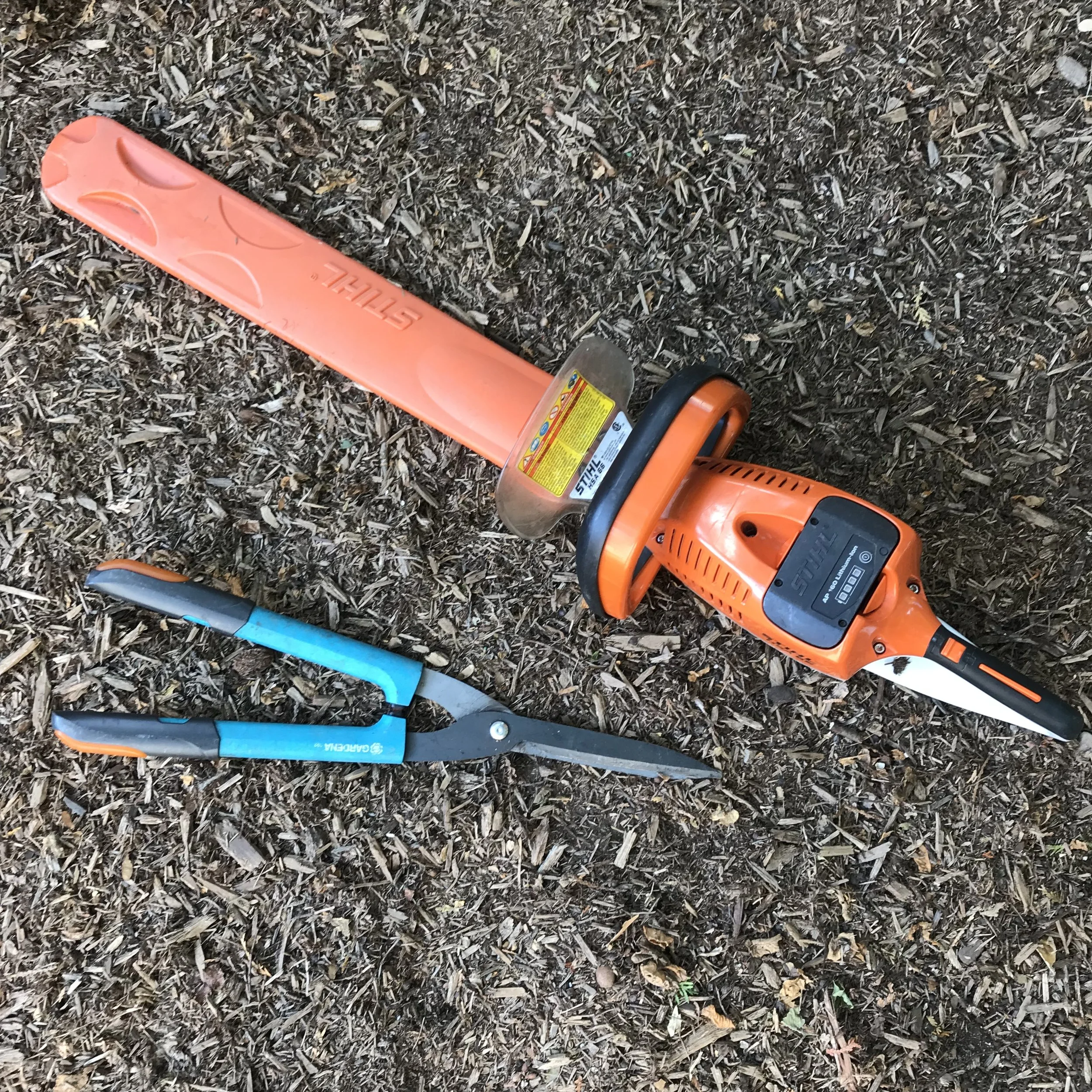
Don’t get me wrong- I love my hedge shears BUT they serve a specific purpose and that is for pruning hedges.

Hedge shears should only be used for one thing and that thing is….

anyone…

anyone…

Bueller?

The answer is HEDGES!!!!

Hedge shears are great for pruning things into lines, tight globes, pyramids, random animal shapes… but when it comes to flowering shrubs, they absolutely decimate the natural growth habit of a plant. (If you are a person who likes all the plants in your garden to be rounded- you are not alone, many people do, however this is not the post for you! You may now save yourself a few minutes of time and gracefully bow out of this article.)

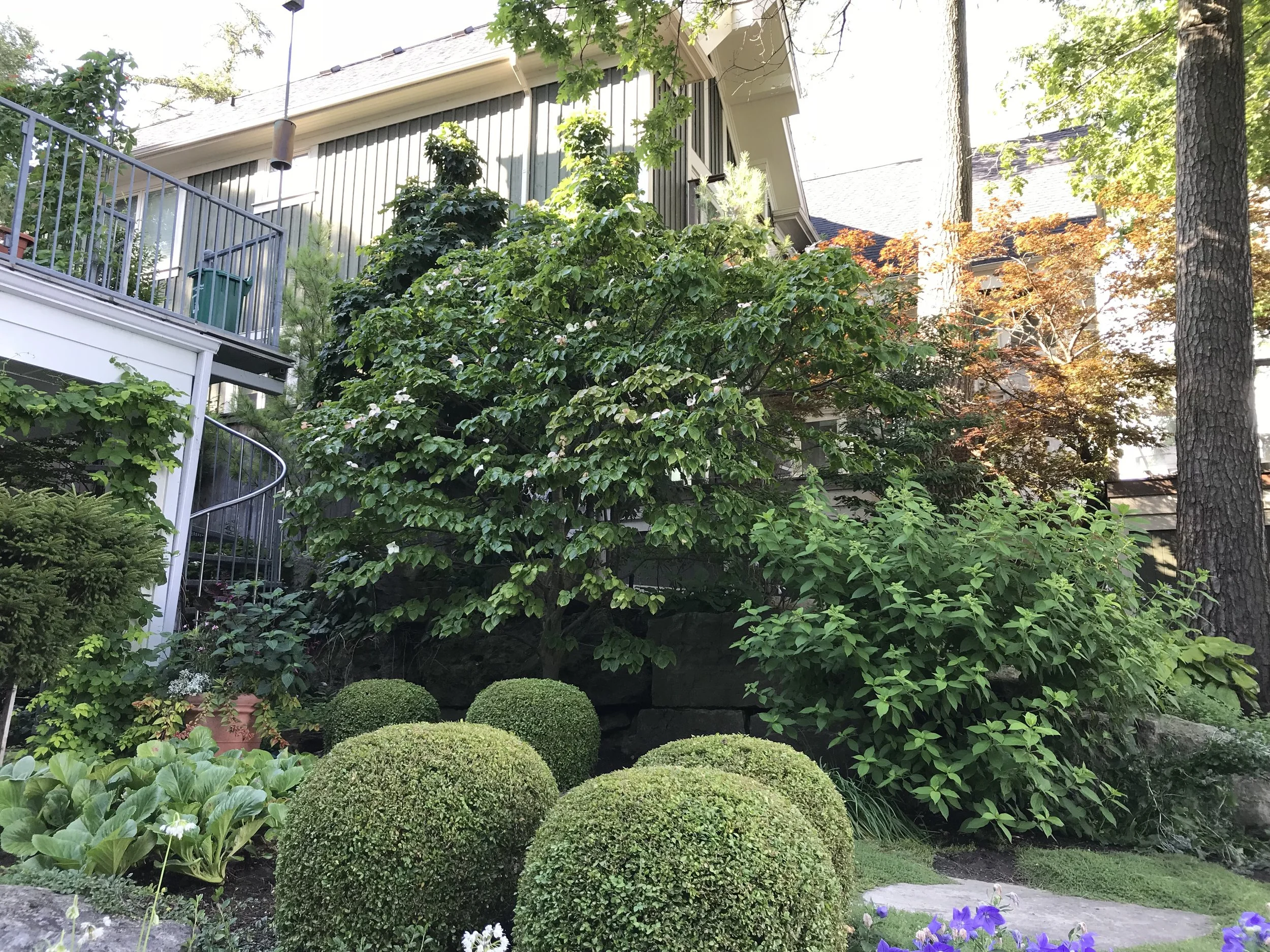
Hedge shears: great for things like boxwood spheres… but not for the other flowering shrubs in the garden (such as the Hydrangea paniculata or Cornus kousa growing in the background).

OK- back to natural shapes…

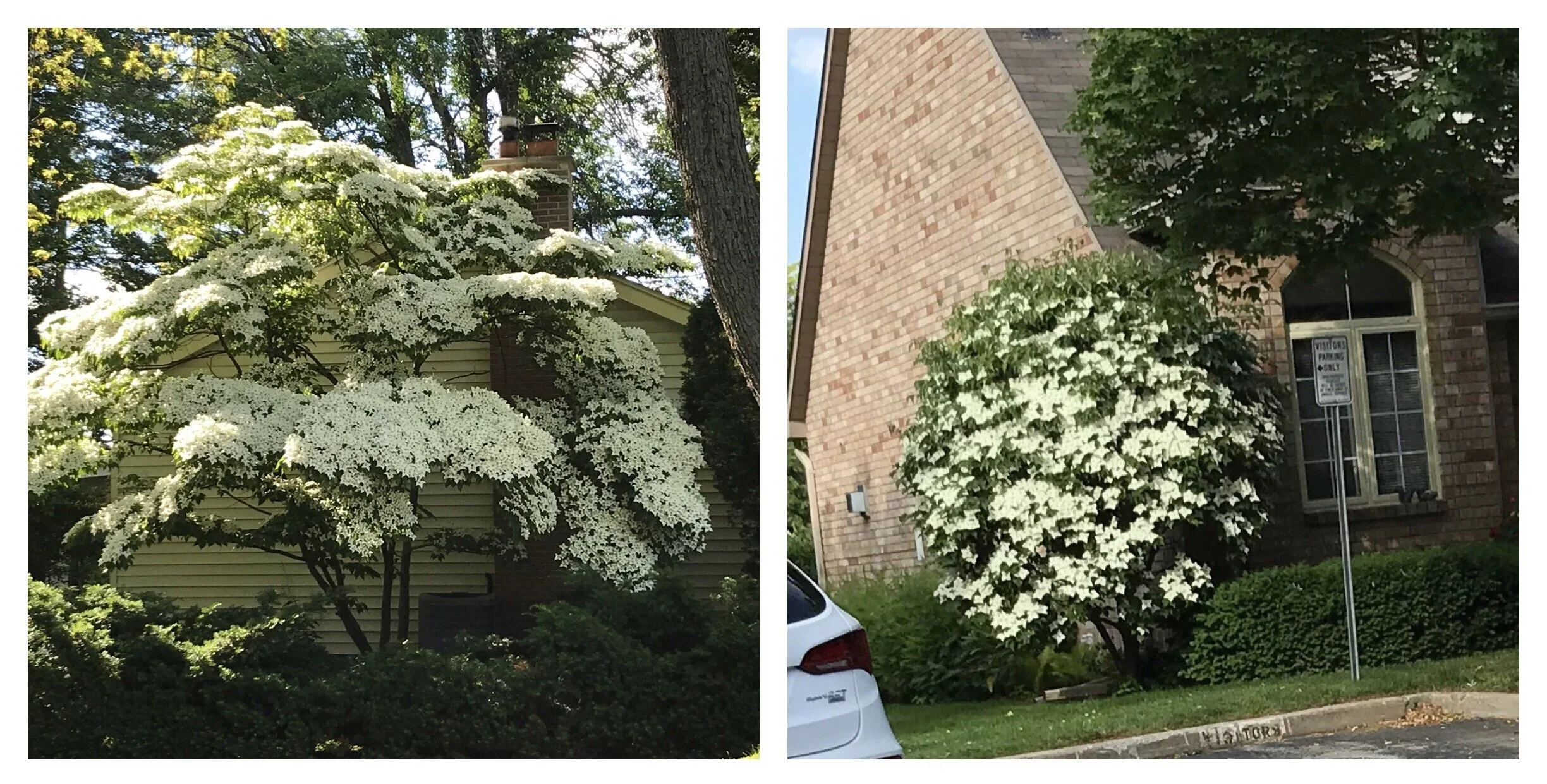
Let’s use a kousa dogwood (Cornus kousa) as an example. This is a shrub known for it’s architecturally stunning horizontal branching structure. Here are two photos- the first on the left showing the natural form of the tree, and the second (on the right) that has fallen victim to the hedge shears.

Poor dogwood! This type of disfigurement is completely avoidable with a little knowledge of how trees and shrubs grow and respond to pruning.

The Effect of Pruning

Let’s backtrack just for a second and take a look at what pruning actually does to a plant. When a pruning cut is made, it encourages the plant to grow from the next available growing point behind the pruning cut which is either:

  1. A bud or set of buds

  2. Existing branches

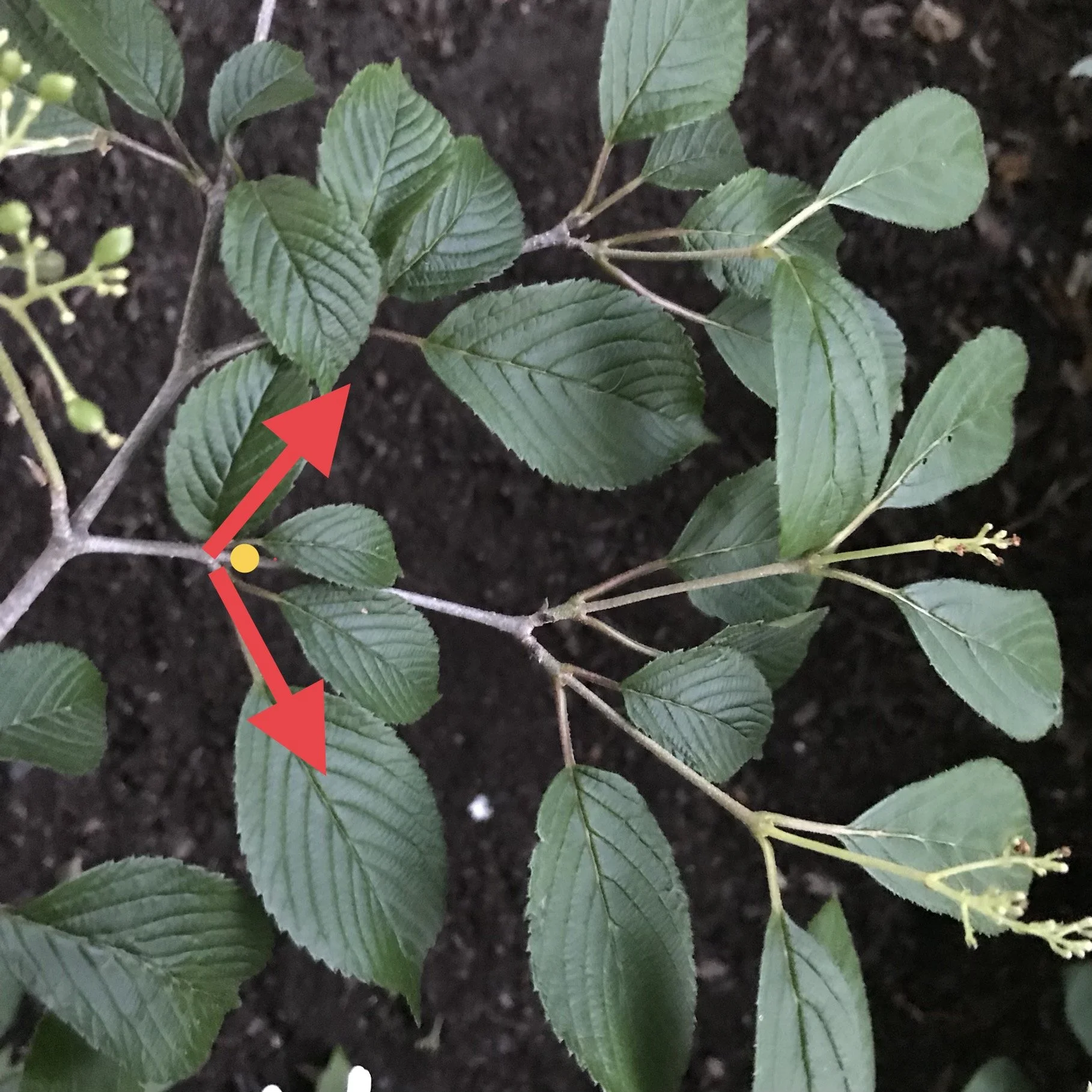
If a branch has been pruned back to a bud/buds, this is known as a ‘heading-back’ cut. The bud(s) are essentially forced to grow (in the direction in which they are pointing) and the pruning has ultimately promoted branching at the point of pruning.

Pruning back to a bud (a ‘heading back’ cut). The yellow dot indicates the pruning point and the red arrows illustrate the direction of resultant growth.

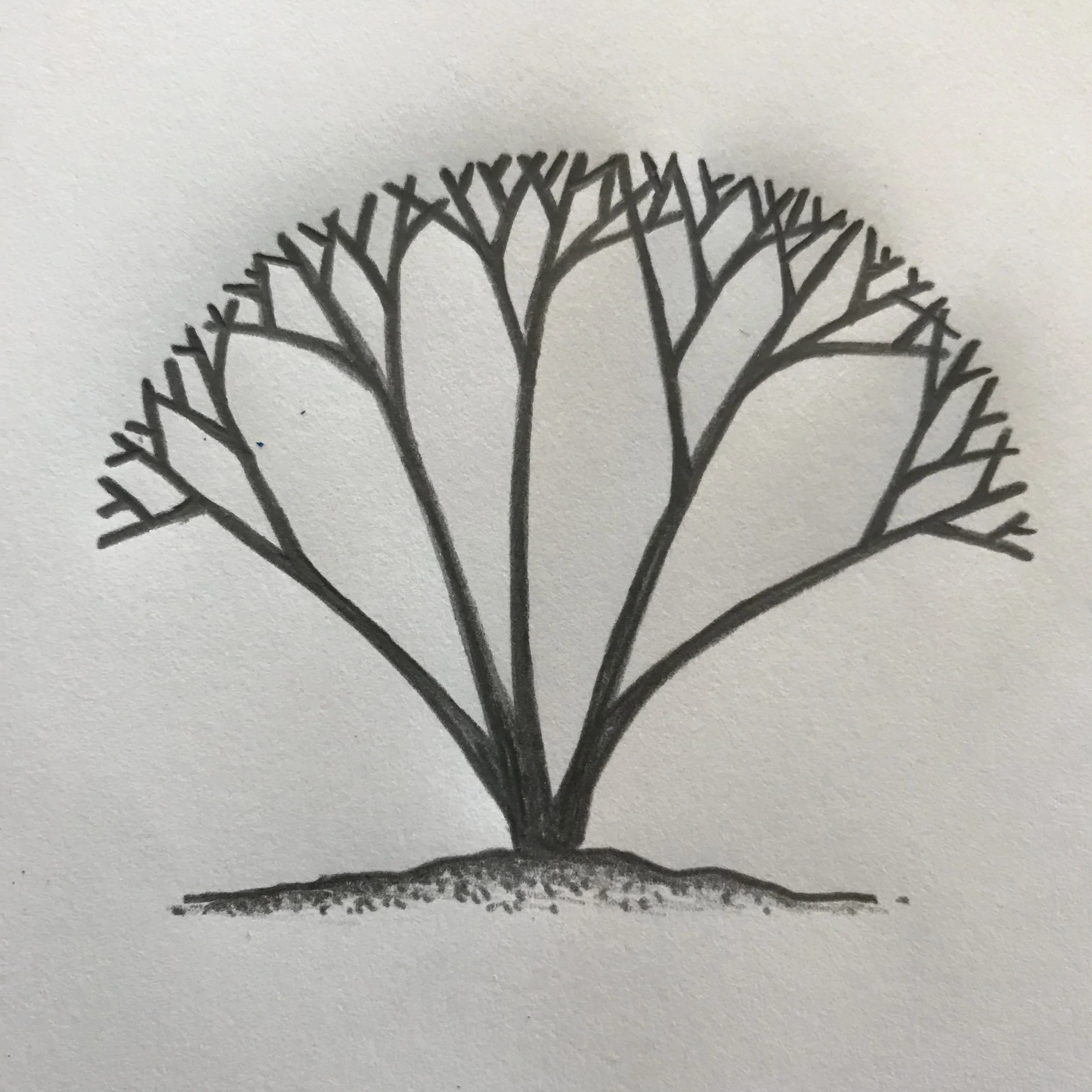
When a plant is routinely sheared (or just the tips of branches are snipped off to control size), the constant growth from buds and resultant new branches ultimately leads to a tree or shrub with really dense growth and branching on the outer edges and bare stems within the centre of the plant- not exactly a natural form!

A basic schematic that shows how routine shearing leads to a shrub with very dense branching on the outer edges of the shrub and a sparse interior.

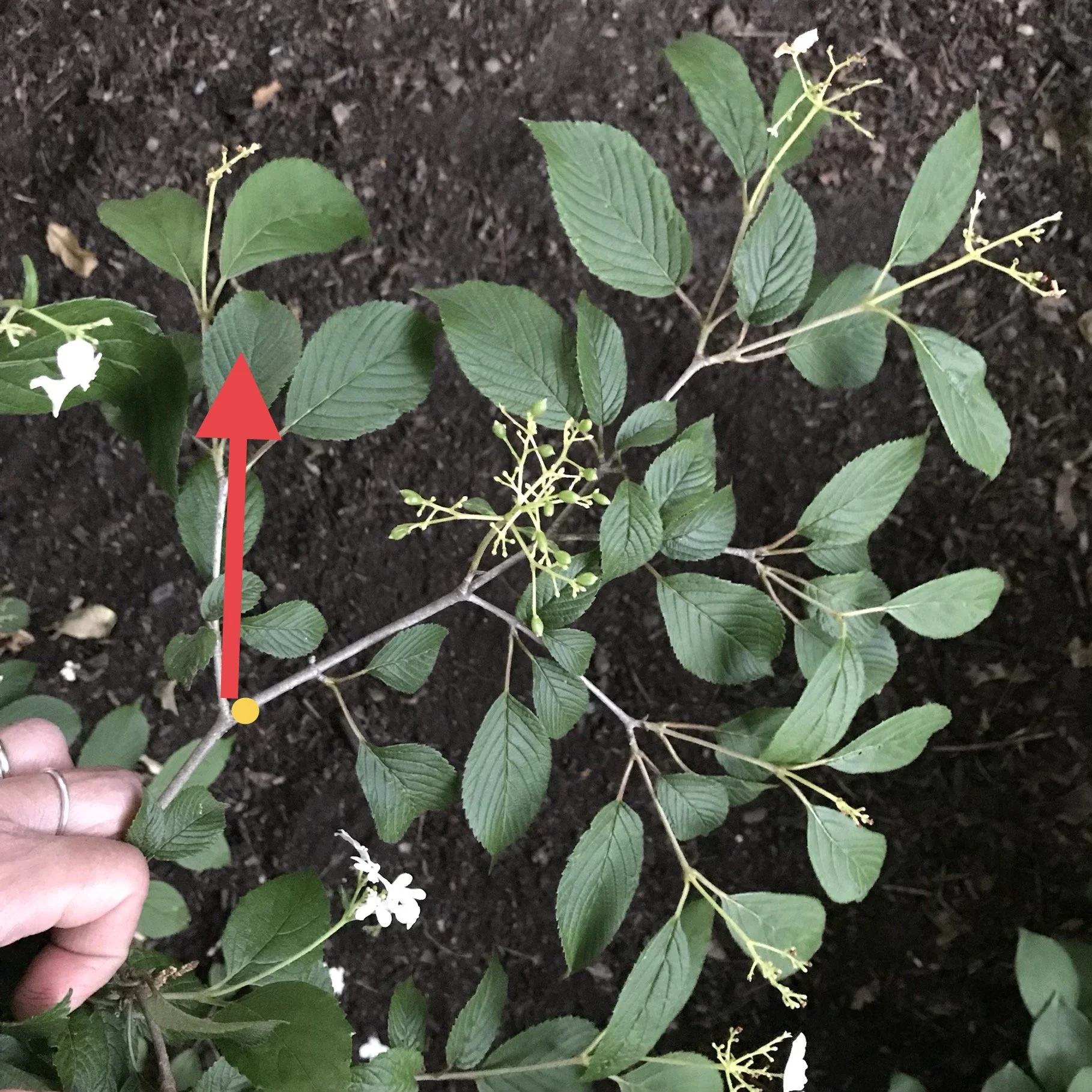
On the contrary, when a branch is pruned back to another branch (known as a ‘thinning cut’), the plant will essentially direct it’s growth toward that remaining branch.

A ‘thinning cut’ back to a lateral branch (indicated by the yellow dot) and the resultant growth directed toward the remaining branch (as indicated by the red arrow).

It is these thinning cuts that are the key to what I like to call ‘the natural prune’. Here is how it is done…

The trick is to visualize a ‘shrub within the shrub’. Usually I get blank looks when I use this line- but it is the best way to describe the process. Essentially, you want the shrub to have the exact same branching structure after the pruning job is complete as it did before you took the secateurs to it, yet the overall size is scaled back.

Perhaps the idea of pruning sounds even more daunting than before? Have no fear! Let’s walk through this together.

I generally follow three steps when doing a ‘natural prune’ on trees and shrubs:

  1. Identify a long branch

  2. Trace this branch back to where it connects with a secondary (lateral) branch somewhere within the shrub

  3. Prune the long branch close to it’s union with the lateral branch (usually a few millimeters away from the point of connection, with the pruning cut angled up toward the lateral branch)

  4. Continue this technique around the whole shrub, multiple rounds if necessary, to remove all the longest branches

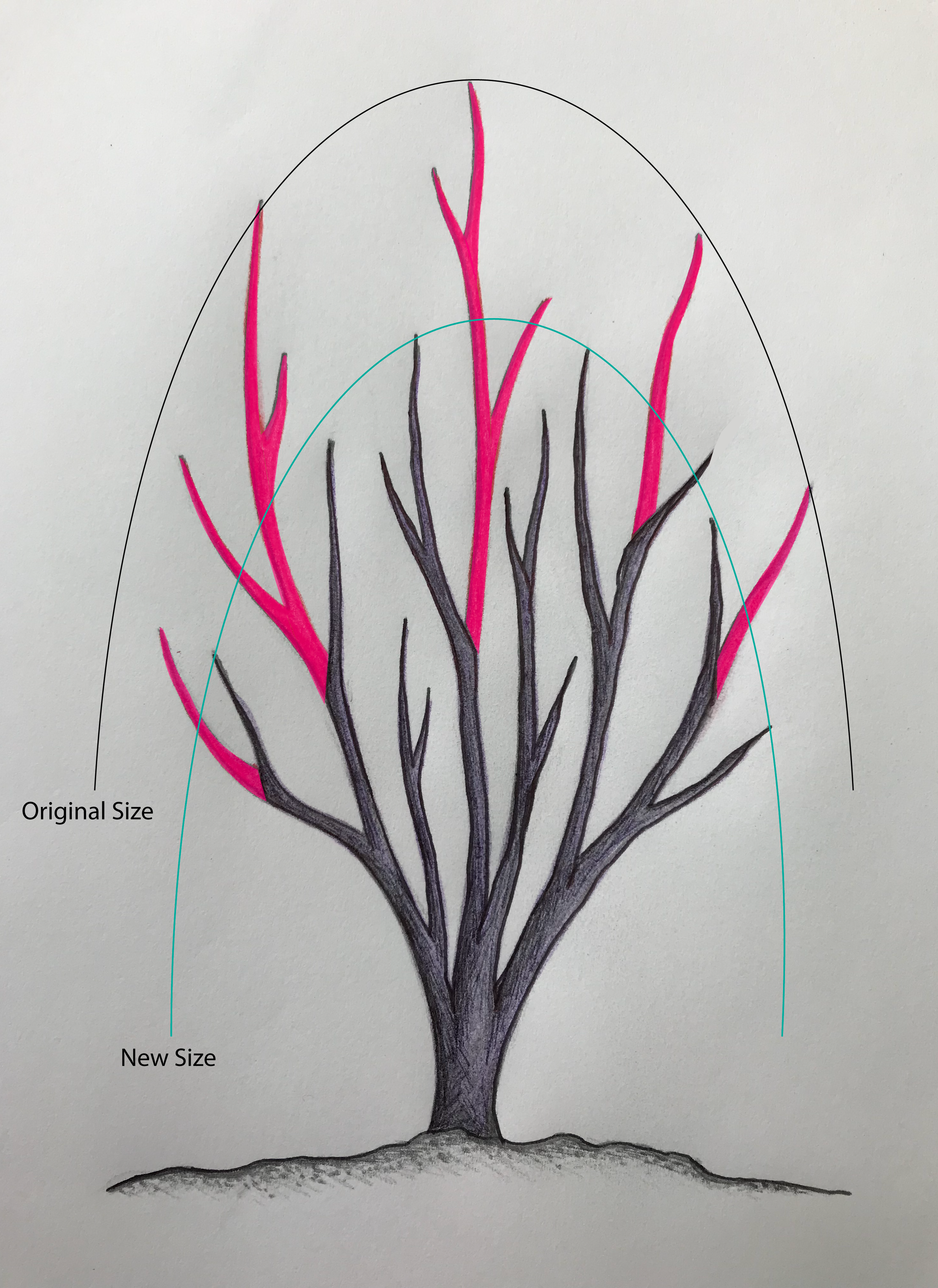
An overly simplified image of a shrub illustrating the use of ‘thinning cuts’ to reduce the overall size. The coral-coloured branches indicate the portions of the shrub to be removed, the rest of the shrub remains. Note that the overall height and size of the shrub has been reduced using this technique.

Using this technique:

  • with the longest branches removed, the shorter ones become the outermost branches and therefore the overall size of the plant has been reduced

  • the pruning cuts are hidden within the shrub so you won’t be looking at little stubs that scream “I’ve just been pruned!”

  • the form of the shorter branches remain untouched and therefore the natural form of the shrub remains in tact

  • The plant won’t be forced to branch out from buds along the pruned stem because, by pruning to a secondary branch, the tree/shrub has essentially been told to direct it’s energy toward growing that secondary branch

Simple!

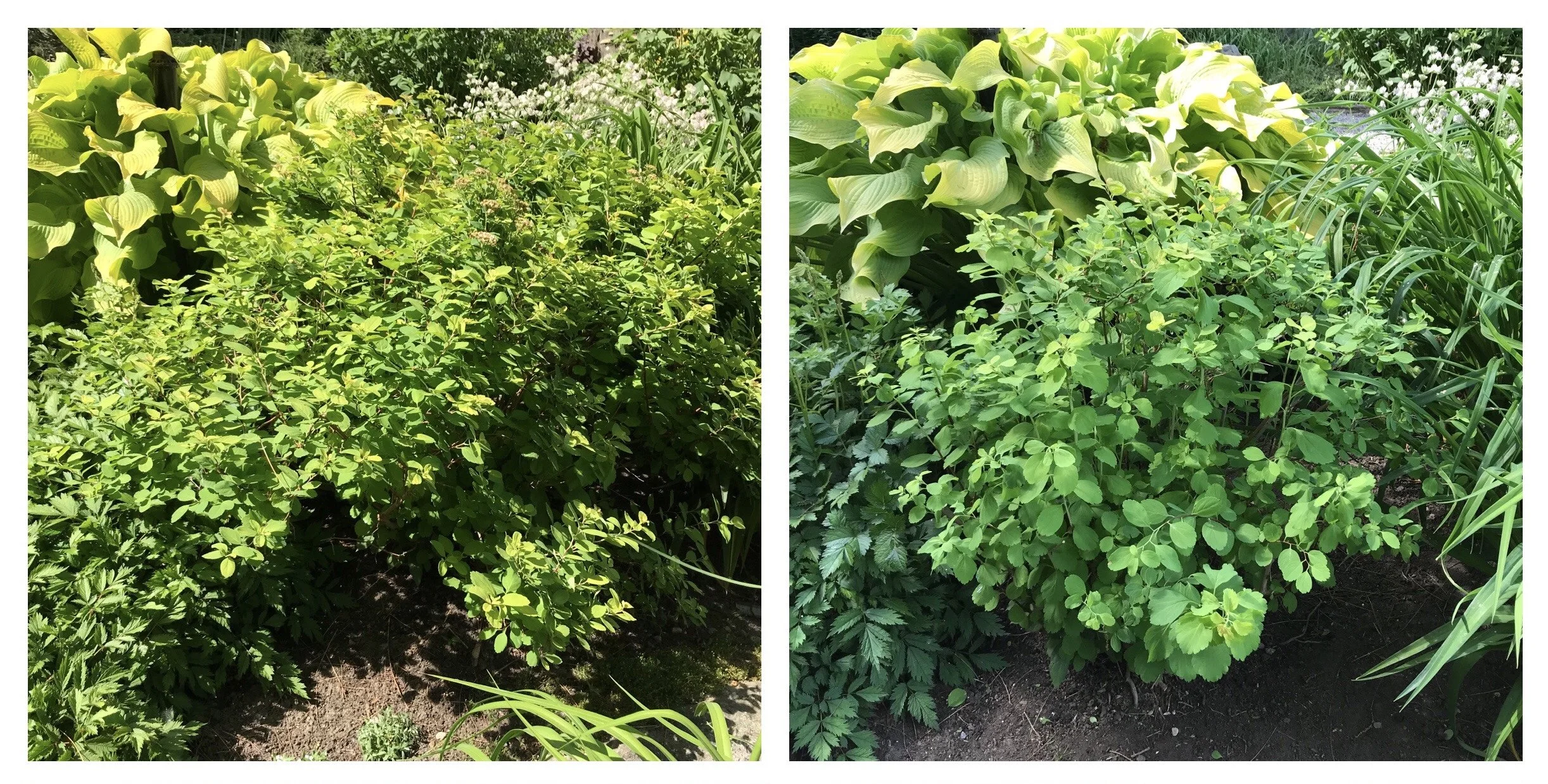
A sprawling ‘Glow Girl’ birch leaf spirea (Spirea betulifolia ‘Tor Gold’) immediately after flowering (left) and after a natural prune (right).

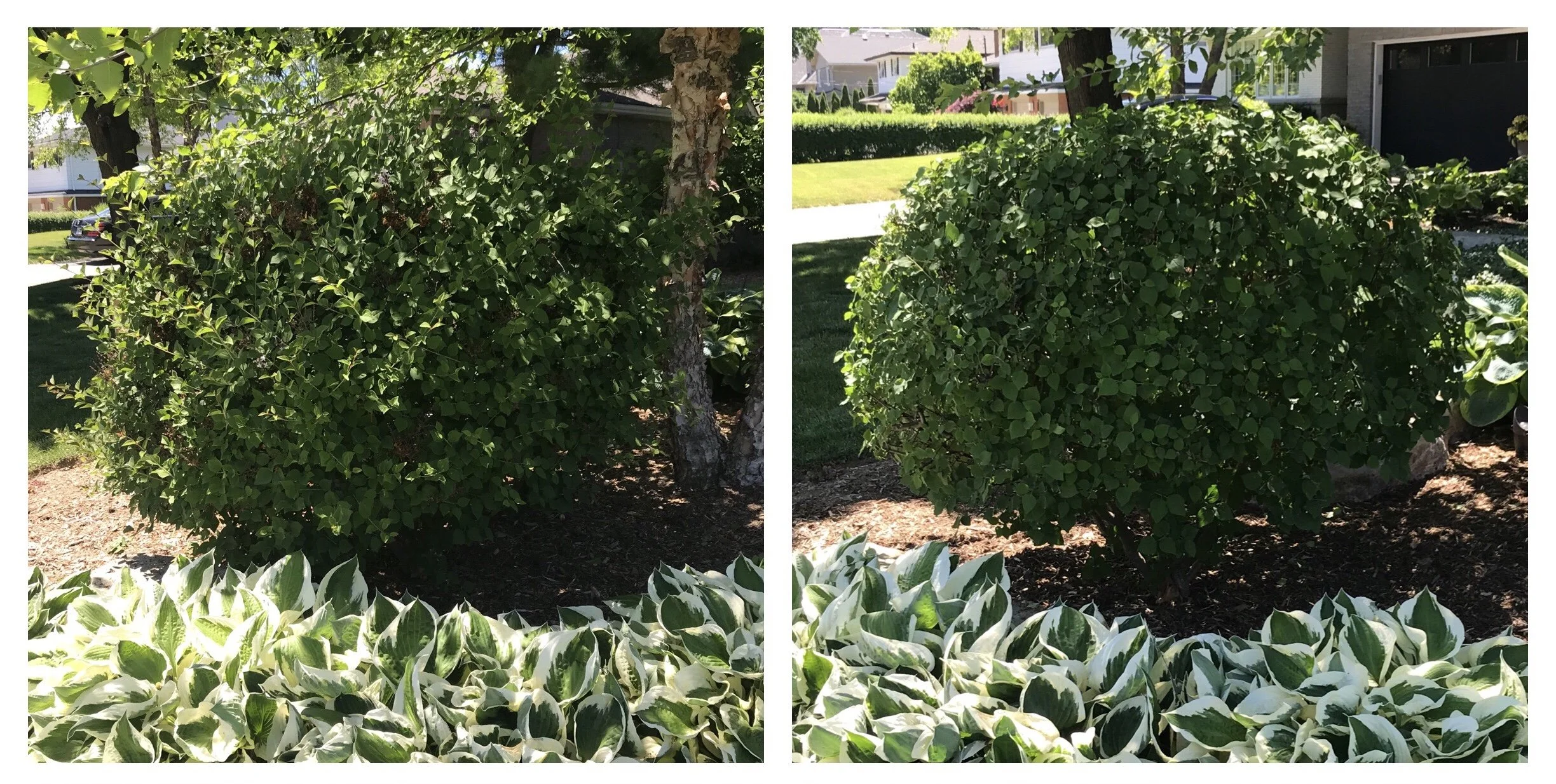
A dwarf Korean lilac (Syringa meyerii pallibin) kept as a globe. In this case hedge shears could have been used, but I reduced the size by thinning the longest branches.

Some Final Thoughts

This type of pruning is subtle- something that can be done yearly or every other year to help limit the size increase of the shrub over time. Doing subtle routine pruning is a much better approach to size control than trying to reign in a plant that is on the verge of outgrowing it’s garden space (which is usually the time when people begin to think about taking action). Drastic pruning on an overgrown plant is not only hard on the plant, it rarely looks natural and is usually a loosing battle. With all that said, overgrown plants are best avoided by ensuring your garden can accommodate the mature size of any tree and shrub that is planted in it.

So have fun and take your time with this pruning technique. It will take much longer than a ‘hedge shear haircut’, but the extra time will pay off when you are sitting in your garden admiring the diversity in forms throughout your yard.