Mulch

Springing into Action!

(Originally posted May 2, 2022)

Hello?!? Is anybody out there? Remember me? I am not offended if you don’t. It’s been quite a while since my last post. As much as I love writing about gardens, this is a side project for me; I do it strictly for fun and sometimes the fun things get put on hold when life gets busy. With that said, I am back and still planning on writing, so if you are willing to continue following my blog, then I am thrilled to have you along for the ride!

It’s hard to believe we are at the start of another growing season. Yay! Spring is here!

Spring. It’s an aptly named season when you really think about it: new life is ‘spring’ing forth from the earth after a long winter slumber, the sun is putting an extra ‘spring’ in our step as we gleefully skip along while the sun’s rays kiss our vitamin D deficient bodies, and we all ‘spring’ into gardening action at the first hint of a warm day. (At what other time of year does 10 degrees Celsius feel balmy??)
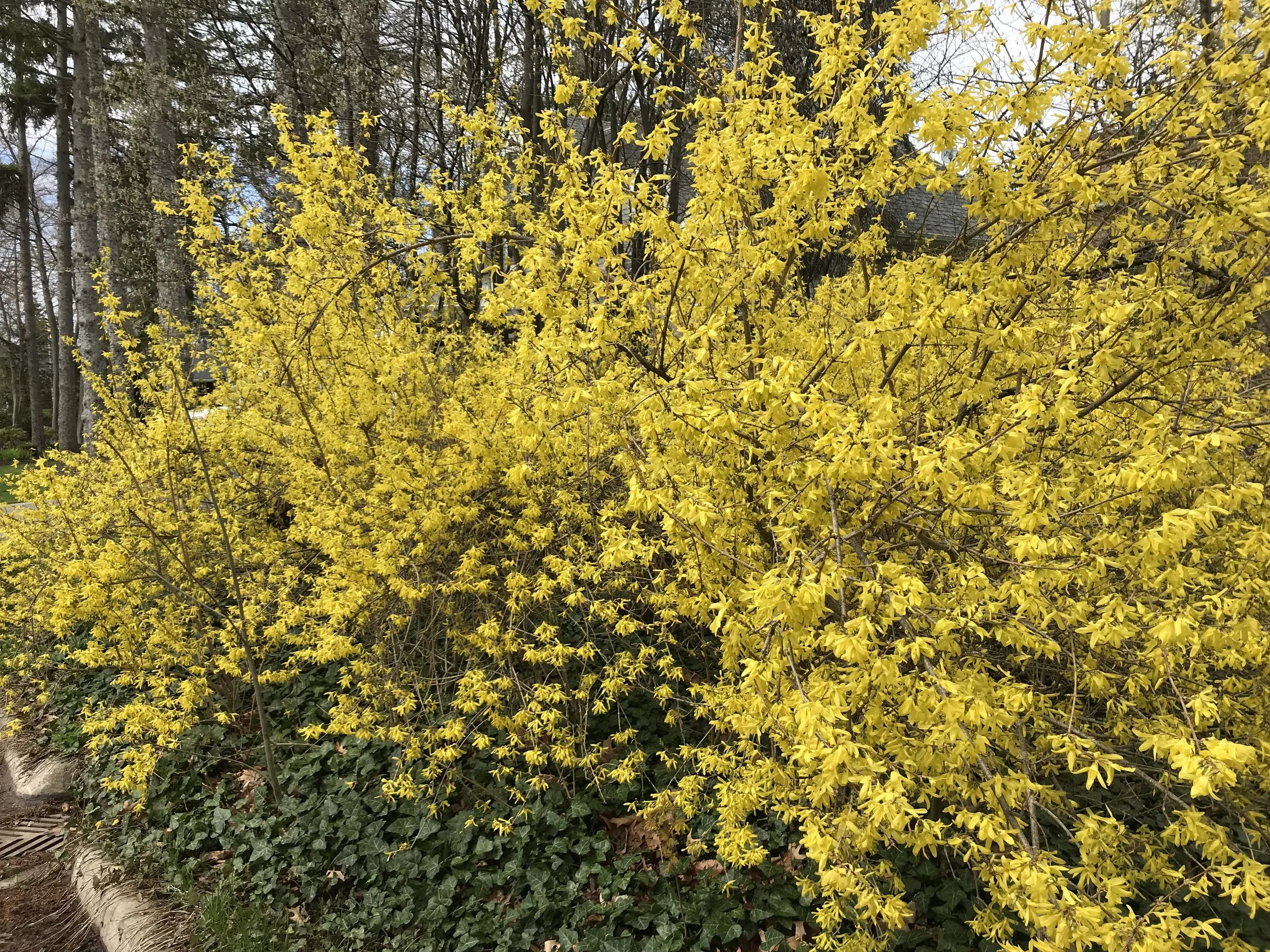
Forsythia spp.- a sure sign of spring.

Garage/shed doors are thrown open; gloves, hand tools and rakes come out (Ug. Did I really put those away in that condition?) and we get to work. Our desire to usher out winter and welcome spring is all consuming. With all that pent-up gardening enthusiasm we often get overly zealous with our spring tasks, so it is easy to get ahead of ourselves... which leads me to two main gardening mistakes that we tend to make in early spring:

  1. Cleaning up the garden too soon

  2. Mulching too soon

Lets look at each of these in turn…

Premature Garden Clean-up

So the equinox has come and gone, warmer weather has made an appearance… oh wait… now it’s gone… now it’s back again… and now it’s snowing?!? Ah yes, spring is an indecisive season. For this reason, it is best to refrain from cleaning out the yard on those first few warm days because severe weather can follow soon after. All the leaves on the beds, and standing herbaceous perennial foliage, can buffer garden plants (and soils) from harsh temperature swings and wild weather. Additionally, all the old flower stalks, perennial stems, and leaves in the garden are valuable overwintering sites for beneficial insects. Leaving everything in place for a little longer allows these beneficial organisms to emerge, enabling them to play a valuable role within the garden ecosystem in the months ahead.

Despite the benefits of all the ‘dead stuff’ in the garden, if you feel you must clean up a little, focus on areas where leaves have piled up over the winter months and make sure these leaf piles are not smothering evergreen foliage or perennials below. I usually do this ‘preliminary leaf clean-up’ within the first two weeks of April and then do a more thorough tidy-up (which includes cutting back herbaceous perennials) sometime between the middle to the end of April.
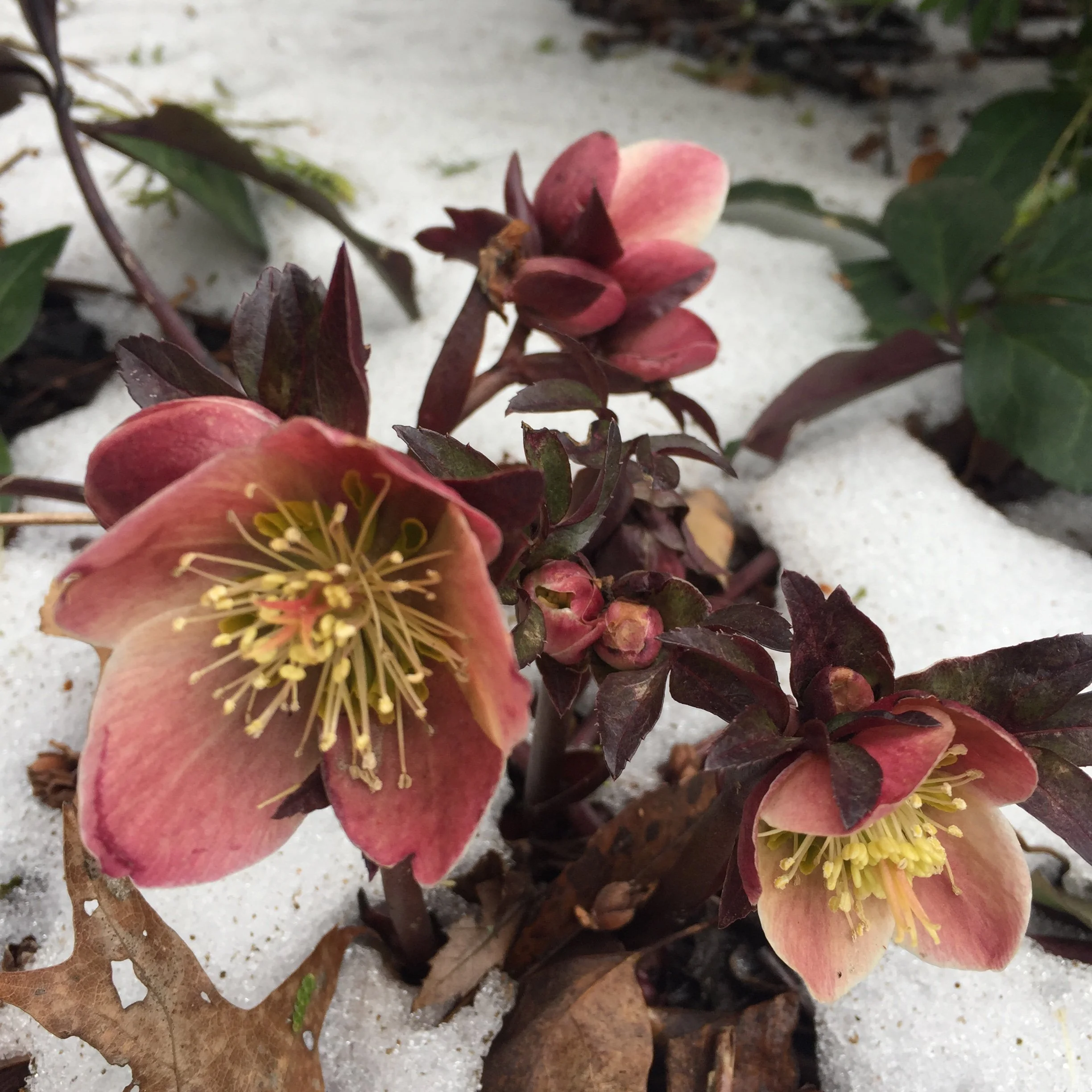
April snow is often cursed but not overly not unusual in these parts. It’s one of the reasons we need to temper our enthusiasm and hold off on spring clean-up until later in the month.

Mulching too Soon

No question about it, mulch on a garden looks great. (With the exception of red mulch…just don’t do it. Seriously.) Aside from aesthetics, mulch is valuable in many other ways but it’s useful properties make it more of a garden liability when it is applied too early in the season.

For example, mulch has an uncanny ability to prevent the evaporation of water from the soil. This is fantastic during the dog days of summer when rainfall can be scarce, but during the spring when rain is in abundance, we are often dealing with overly saturated soils. Depending on your soil texture, it can take a fair amount of time for soil moisture levels to decrease (clay soils take much longer to dry out than sandy soils). Putting mulch on saturated soil will prolong the length of time it takes for garden soil to dry out. In the meantime, some plants can suffer in the waterlogged conditions and some may rot away.

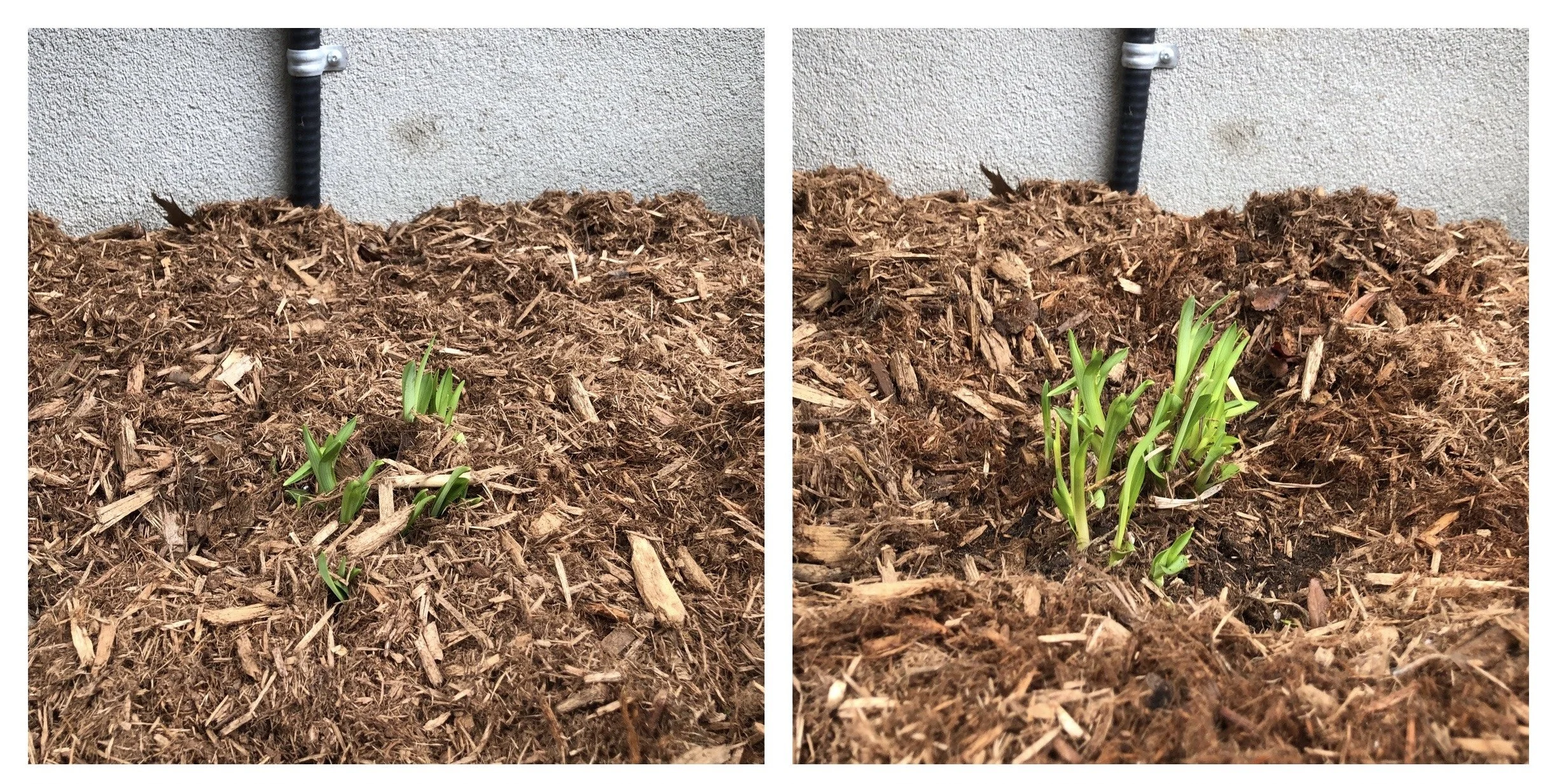
Mulch is also amazing at blocking sunlight. It is the main reason why it is able to suppress weeds- a thick layer of mulch blocks the light that plants need to grow, and that weed seeds need to germinate. Now take that same mulch and put it over top of perennials just starting to emerge, and you’ve got yourself a problem. I see this issue quite often on properties where landscape crews (who do not know the placement of garden plants that have yet to ‘wake up’) mulch too early in the season and inadvertently cover up (and sometimes smother) garden plants. Whoops.
A Hosta mulched-over by a landscape crew. Luckily this one had already emerged and was freed from the thick mulch blanket. Remember- mulch does not get put over top of plants, it goes around them! It’s hard to apply it properly if you can’t see the plants.

Another benefit of mulch is it’s ability to moderate soil temperatures. This is great for preventing freeze/thaw events during the winter (which can be detrimental to plants) however, if a thick layer of mulch is applied too early in the spring, it can slow the warming up of garden soils- which can negatively impact plant growth.

Finally, mulching should occur after amendment/fertilizer applications are complete (if this is necessary based on soil tests). Mulching before amendments have been applied essentially closes the window to applying amendments and fertilizers directly to the soil where it is needed. Fertilizing early is not an option because plants need to be actively growing to make use of the applied nutrients. If they can’t, the nutrients may be washed out of the soil before they even serve a purpose and nutrient loss can have negative effects within the surrounding environment. This is overly simplified and highly dependent on what is actually getting applied to the garden, but I think you get my point: amendments first, mulch next, but not too early!

As you can see, mulching too soon can be pretty detrimental to a garden. In my area, I generally do not start mulching gardens until the end of May. In some cases I will wait even longer- for instance if I have annuals to get into the ground. For me, the annual planting frenzy kicks-off the third week of May and lasts for a few weeks. It is much easier to apply mulch around annuals after they have been tucked into the garden, rather than try to plant them into a mulched garden bed (which requires the mulch to be pushed out of the way in order to access the actual garden soil for planting… definitely not an efficient way to plant!)
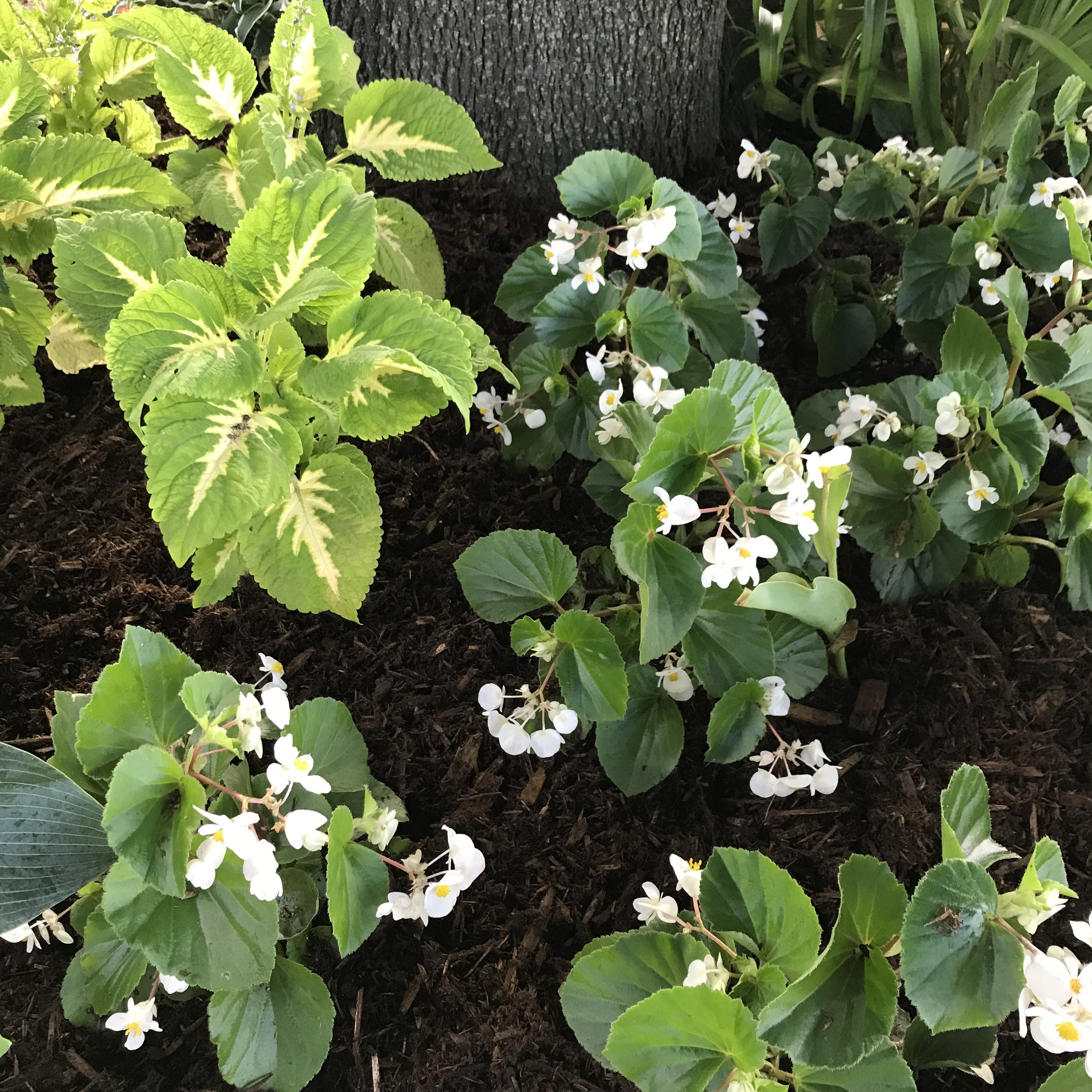
It is much easier to apply mulch after annuals are planted rather than have to dig through mulch to find soil to plant into.

And there you have it! A couple common spring gardening mistakes that I am sure we have all been guilty of at one point or another. So what’s the take home message in all of this? Well, if you feel ‘behind’ in your garden chores- don’t worry! You are most likely not as behind as you think; best case scenario, you are right on schedule! It’s far too early in the season to stress out about falling behind in gardening tasks. Enjoy the ‘spring wake-up’ at a more leisurely pace… your garden (not to mention your body) will thank you.

Wishing you a happy spring! It’s great to be back in the gardens :)
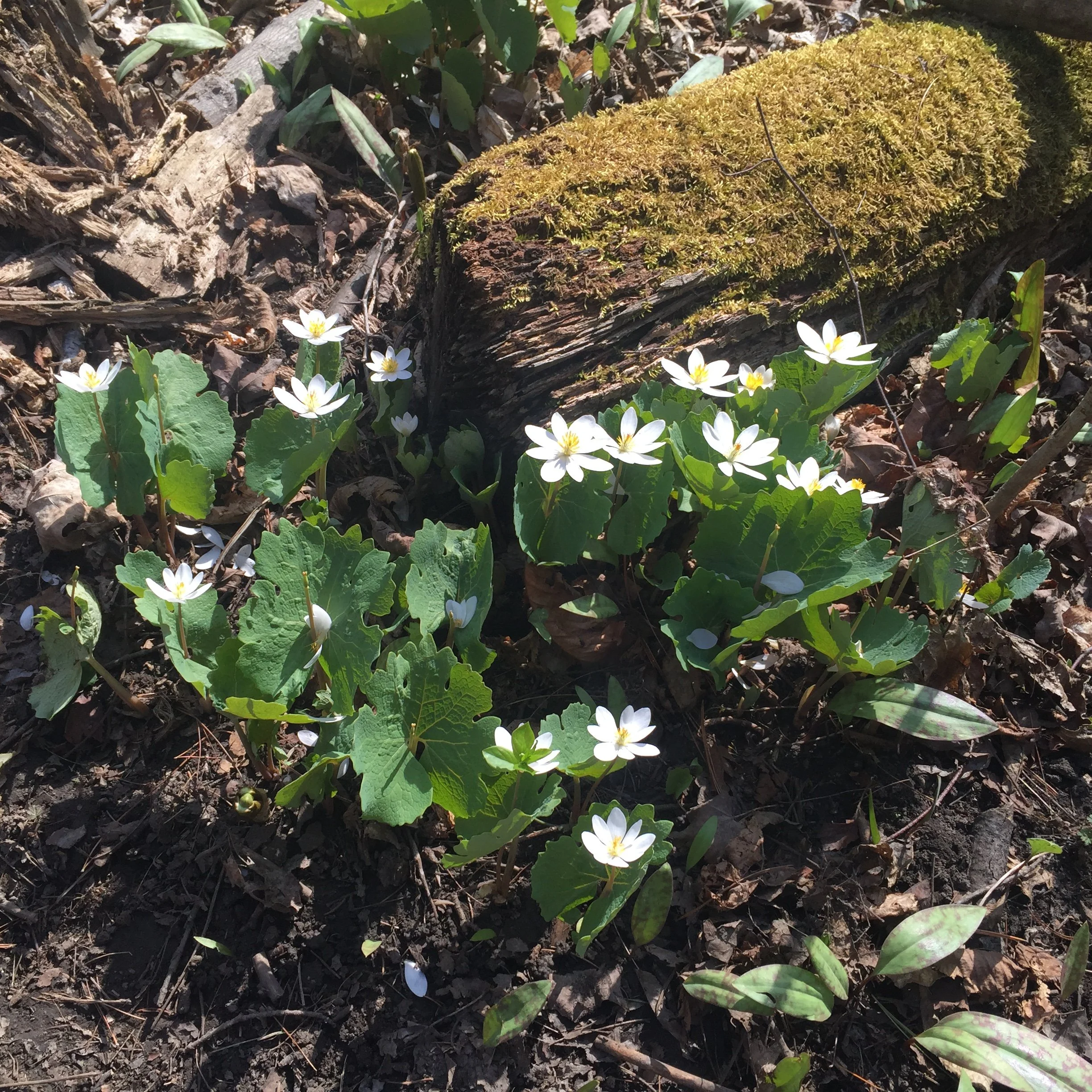
Sanguinaria canadensis (Bloodroot). It’s springtime in our woodlands!
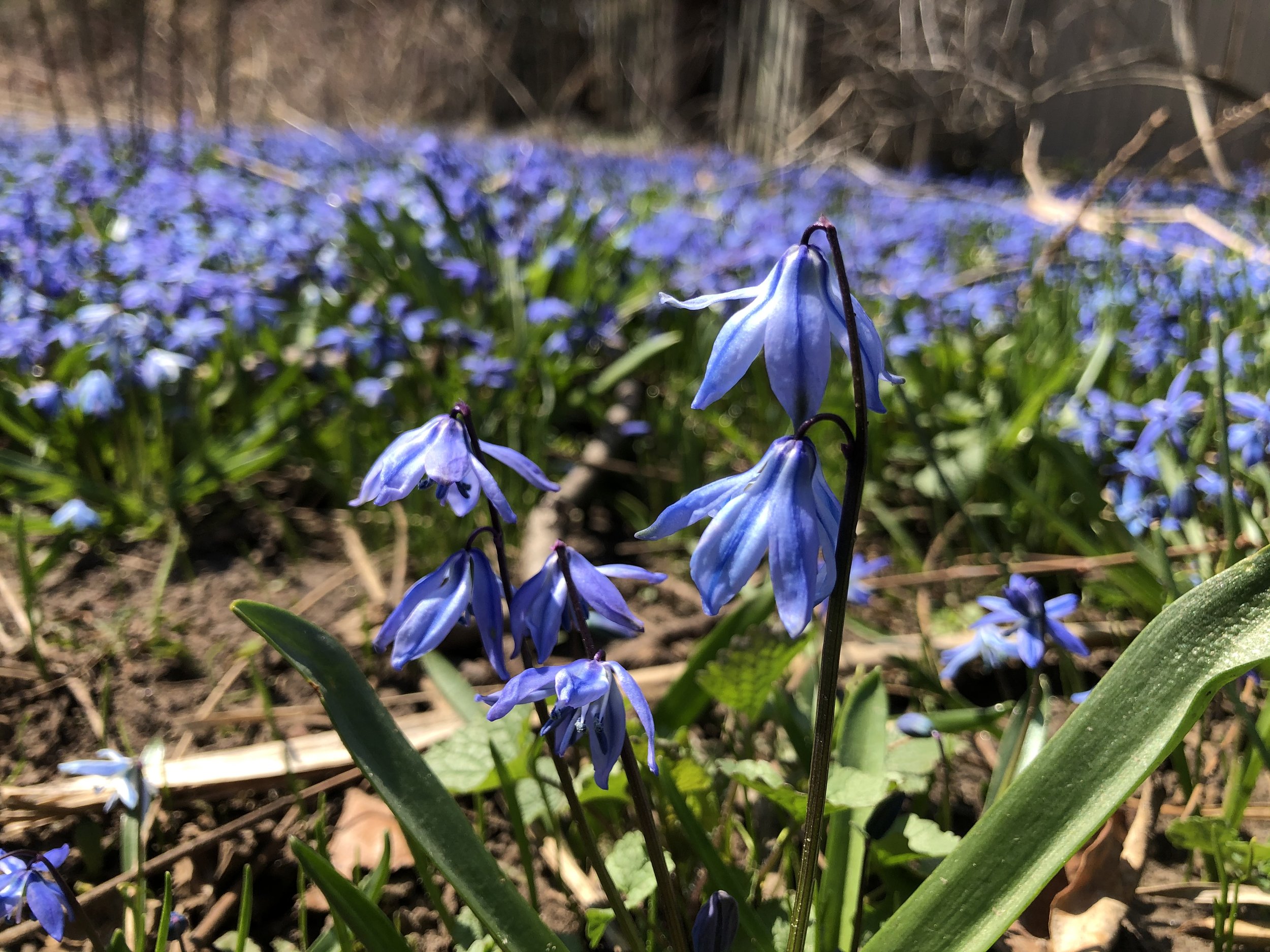
Scilla Sect. Chionodoxa (glory-of-the-snow). A sea of blue is a spring sight to behold!

Not all blankets are cozy...

(Originally posted: December 3, 2020)

Hello there! It’s been a while! I hope your fall has been going well; in this area, it has been an absolutely glorious one for working in the garden!

Glorious fall days! No better place to be than in a garden.

With that said, things are now coming to a close and with the snow just starting to fly, it is time to take a good hard look at the garden to ensure that it is in a good state headed into the winter months. Typically, one of my final gardening tasks of the season is to ensure that fallen leaves are not resting on any areas that will cause problems down the road. We have touched on this subject before, but I think it is a good one to revisit.

When it comes to leaf ‘litter’, it is a case of the good, the bad, and the ugly…

The Good

Leaf ‘litter’ is not really litter at all! It is a valuable resource for the soil and garden. When left on beds, leaves will break down over the winter and the nutrients and organic matter from them will return to the soil. This is nature’s way of recycling; giving back to the soil so the soil can continue to support life.

Leaf litter supports life in other ways too as it provides important shelter for overwintering insects and other garden critters- keeping them protected until the earth begins to warm once more. While small, these creatures can play important roles within the web of life that exists in the garden. From pollination to predation on garden pests, or even becoming food for other creatures, there is no doubt that promoting other forms of life within the garden can have huge benefits on how the garden functions as a whole.

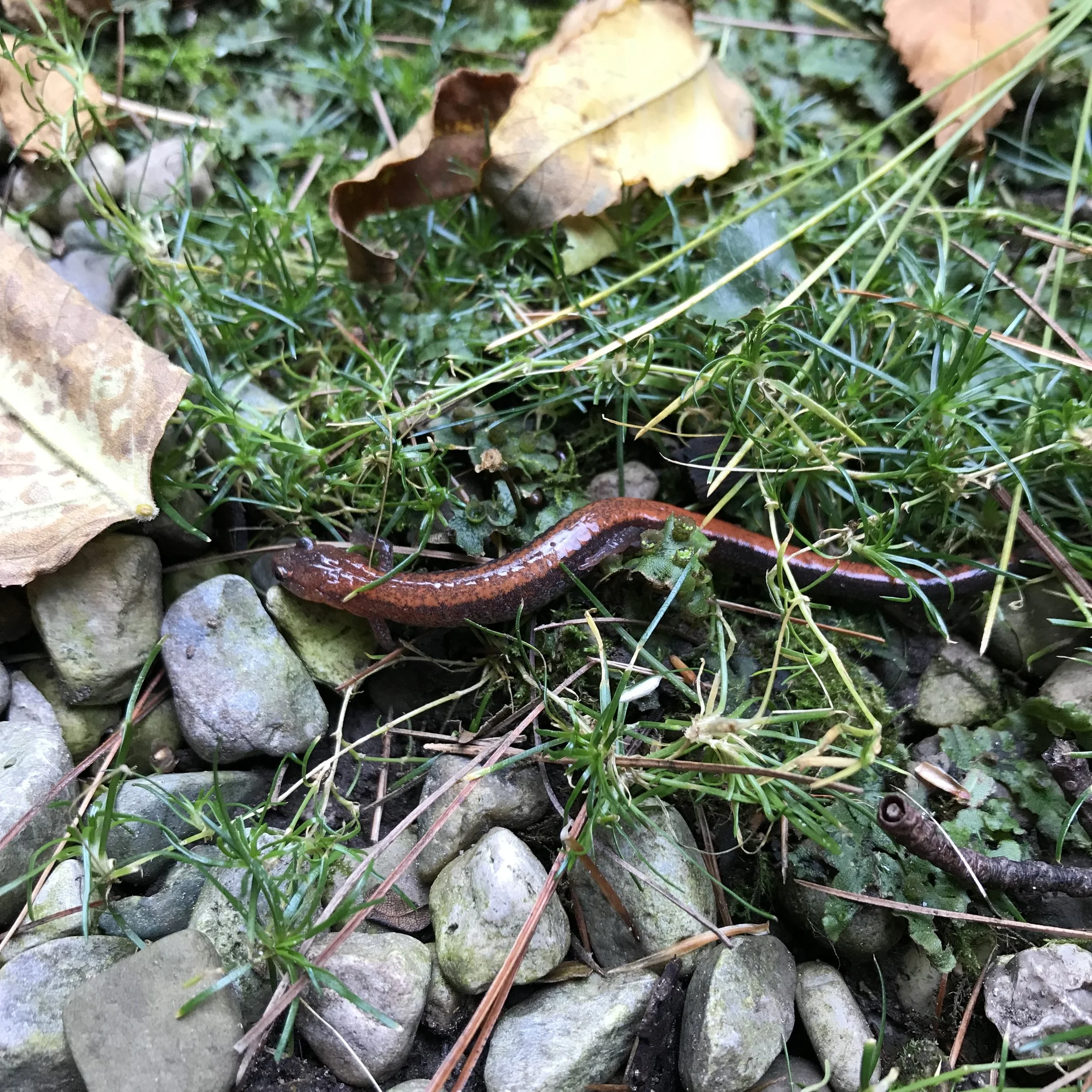
Salamanders- one of the many types of critters that can benefit from the presence of leaf litter in the garden.

The Bad

With all that said, in some instances, leaves can really pile up! (Believe me, I know. With three huge shade trees bordering my urban-sized backyard, I know what it feels like to be waist-deep in leaves!) Add snow and rain to a massive leaf pile, and you end up with leaves that have matted together to form a really REALLY thick blanket…or solid mound. (Been there. Done that.). On bare soil, a blanket of leaves is generally not an issue; where we can run into problems is when this blanket lies on top of evergreen plants for prolonged periods of time… such as over the winter; and that’s when things can ‘get ugly’.

The Ugly

Leaves still need to ‘breathe’ (not really the technical terminology, but for simplicity’s sake, let’s consider it breathing); if a thick blanket of fallen leaves is left on top of foliage that needs to ‘breathe’, the result can be smothered foliage and even the death of some plants… big whoops.

Now before you start cursing your shade trees, it should be noted that not all leaves are considered equal when it comes to the ‘smothering factor’; some leaves break down much faster than others and tend to be a non-issue in the garden. Leaves that are notorious for creating thick mats are the large thick leaves of oak (Quercus spp.), Norway and (to a lesser extent) sugar maples (Acer platanoides and Acer saccharum) and catalpa (Catalpa spp.). In contrast, the smaller, thinner leaves of willow (Salix spp.) littleleaf linden (Tilia cordata), silver maple (Acer saccharinum), and ash (Fraxinus spp.), can still form mats however these leaves break down much quicker and they do not hang around long enough to cause issues. So what is the take-home message here? Know the leaves that fall on your property! If you know what you are up against, you will know how to prevent the issues.

A nice oak leaf mat beginning to form (left) and the thin, non-persistent leaves of silver maple (right). The oak leaves can pose some problems in the garden when left covering certain plants, while the leaves of silver maple are generally not a concern.

The Solution is Simple

As you probably guessed, it is really important to pick leaves off all your evergreen plants (trees, shrubs, perennials, and groundcovers) to prevent foliage from being smothered. If you have evergreen trees and shrubs, don’t forget to look within the branches to make sure there aren’t any unwanted blankets within the plants. You will be amazed by how many leaves you pull out!

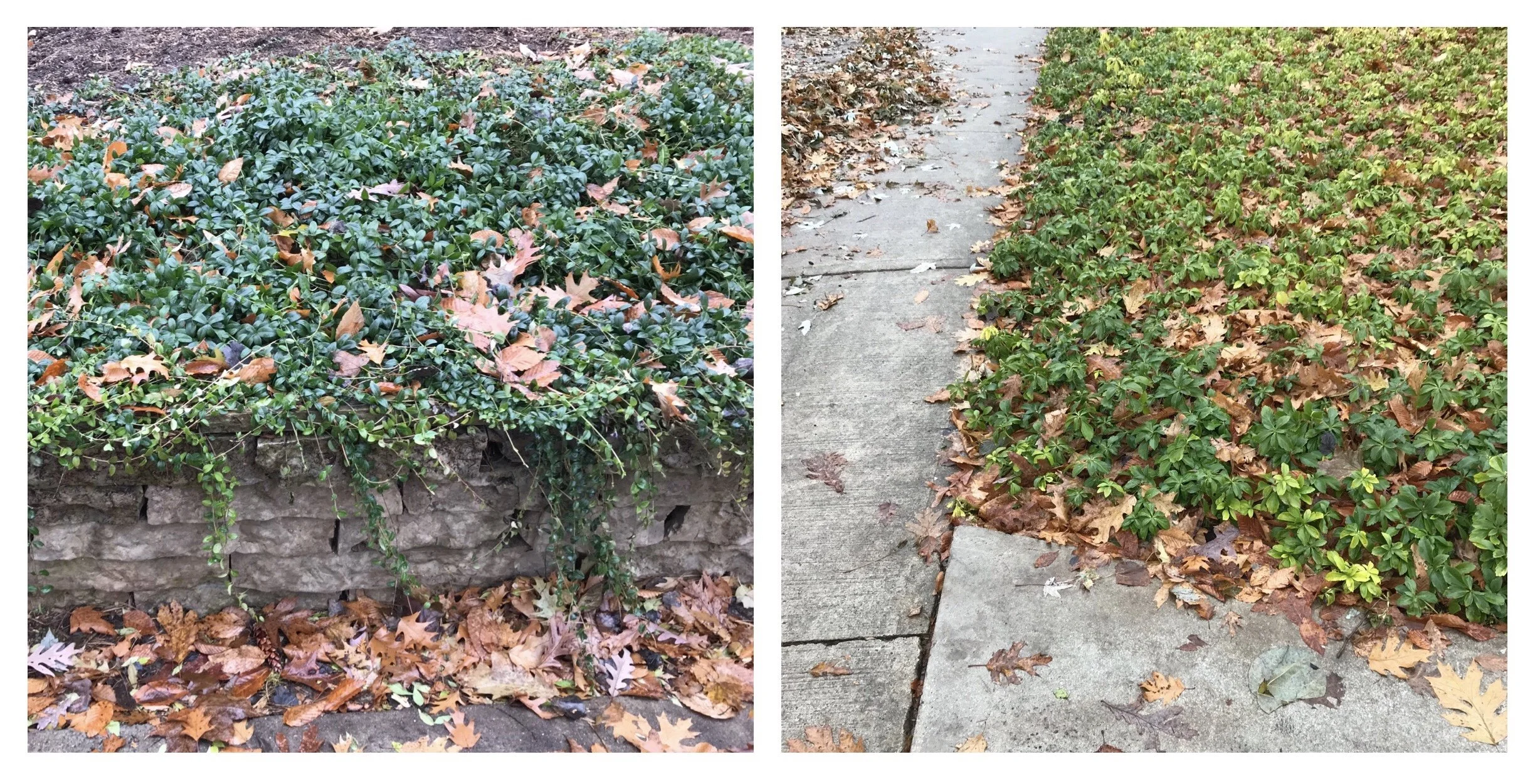
Matted leaves on evergreen groundcovers can cause foliage to die if the leaves are left to remain throughout the winter months and into the spring. Removing the leaves can help prevent issues down the road.

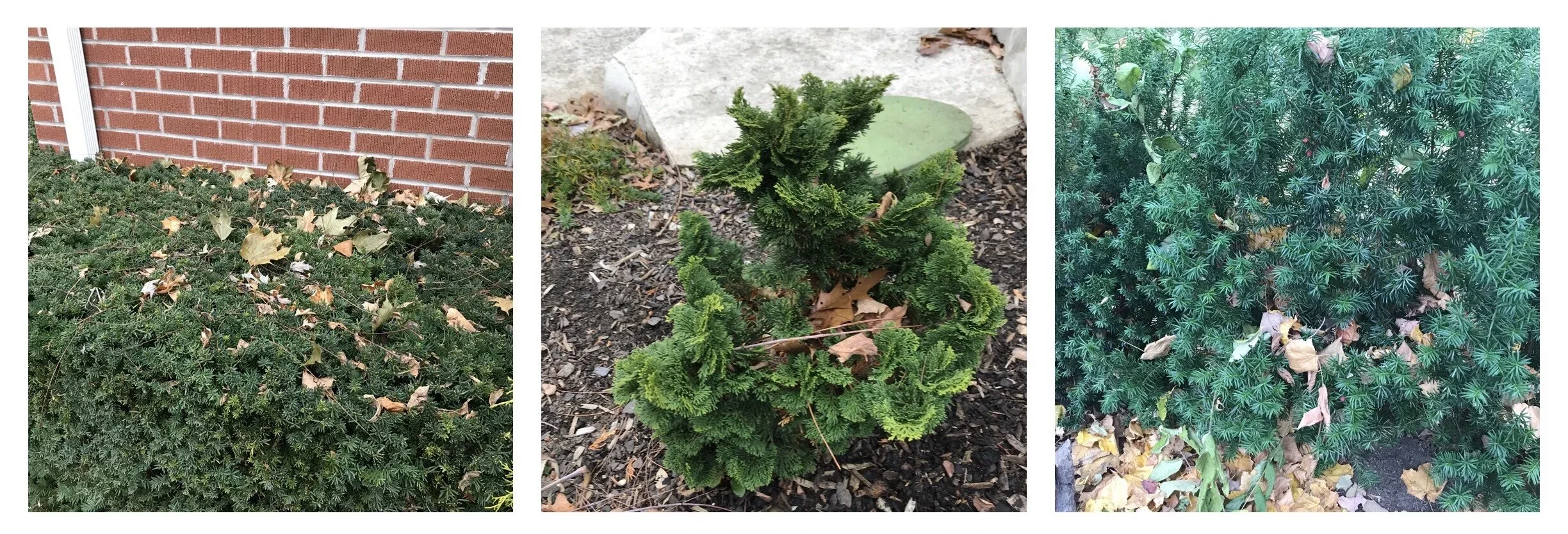
Fallen leaves resting on and within a few evergreen shrubs. I always make sure to remove these leaves to prevent future foliage problems (smothering), not to mention it just looks nicer too!

A couple more tips for managing leaves

  • If you tend to have large quantities of leaves- where allowing them to lie where they fall is just not practical, or you have leaves with a tendency to become ‘smothering’, you may want to consider buying a leaf mulcher (essentially a glorified ‘whipper snipper’ in a barrel). A mulcher will shred the leaves into a beautiful mulch that you can apply to your garden knowing that it will not cause any thick smothering blankets and that it will be mostly broken down come spring. Additionally, a mulcher helps reduce the volume of leaves, so it becomes possible to allow more leaf ‘litter’ to remain on your garden than if the leaves were to remain whole. All-in-all, a leaf mulcher is a fantastic way to make use of a free soil amendment provided to us every fall, courtesy of Mother Nature.

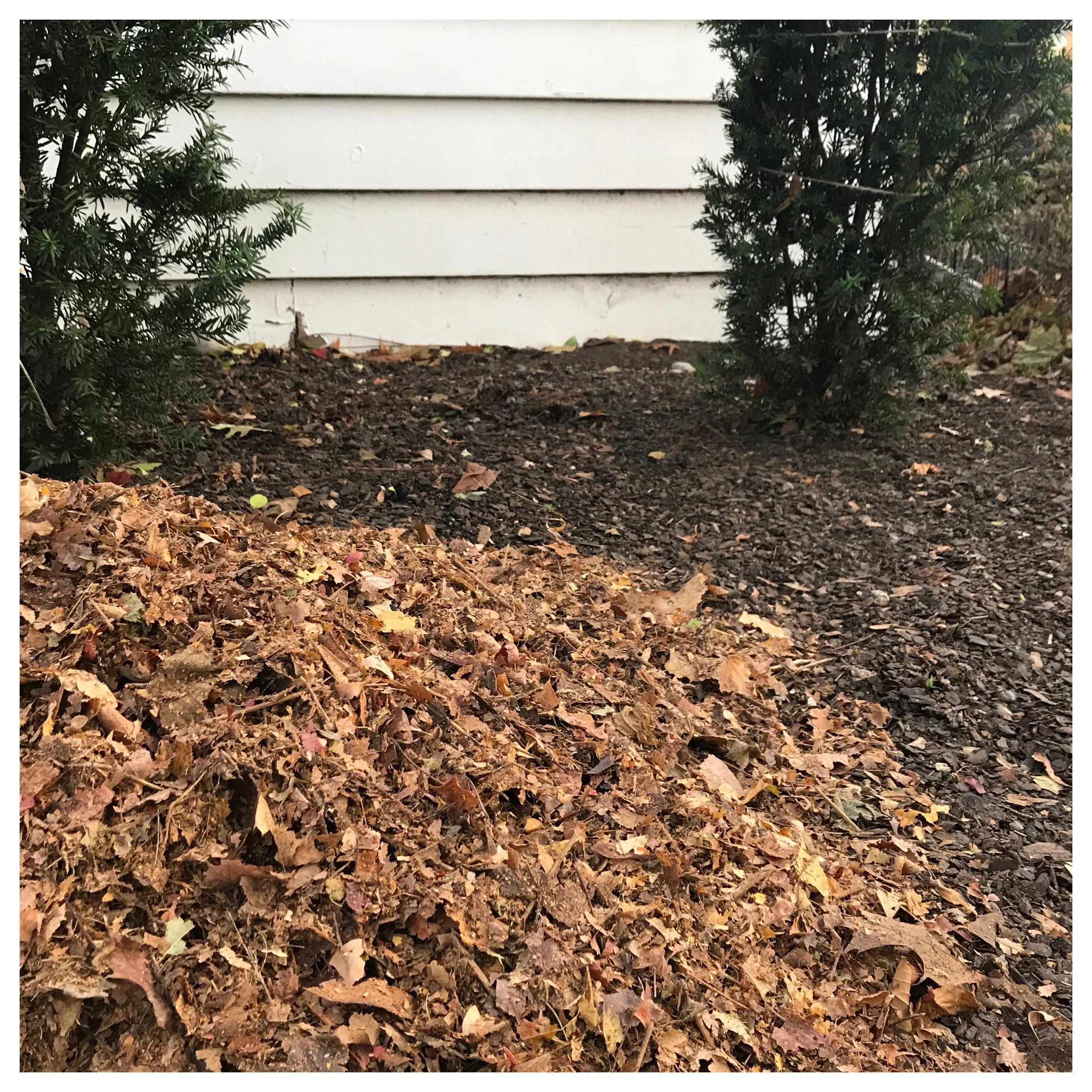
Ahhhh… it’s so satisfying to see a pile of mulched leaves, ready for distribution throughout the yard! Hmm- what plants should I buy with all the money I save on soil amendments!?!

  • Where leaf quantities are excessive, have a designated space for leaf ‘overflow’ such as a chicken-wire enclosed area. Having an enclosure is handy as it prevents the leaves from blowing around (your neighbours will thank you). It is also a nice contained place where the leaves can slowly break down into leaf mold which can then be used in the garden. Alternatively the excess leaves can be put in a compost pile to speed up decomposition. In general, the leaf mold enclosure and the compost pile are two handy strategies that can be used if you want to keep all your leaves but have too many to allow to sit on the garden over the winter.

And that’s a wrap! Speaking of wraps… stay tuned for my next post which is about another task that I ‘wrap up’ at the end of a gardening season. Any guesses as to what that is???

Mulching: Tips and Tricks

(Originally posted: July 12, 2019)

Time for part two of my ‘mulching series’…some tips for applying mulch.

I usually mulch after I have finished planting annuals. Annuals need to be planted in soil and not mulch, so the process of pushing aside mulch, planting flowers, and then replacing the mulch is a little too time-consuming for my liking. Once all my spring planting/transplanting is complete, and the soil is not saturated I begin mulching my gardens.

Now, it is one thing to just throw mulch on a bed but it is another to apply it with finesse. This is your finishing touch, after all! Attention to detail during this step goes a long way! Here are a few pointers on how to make your mulching job look top notch…

Leave no Trace

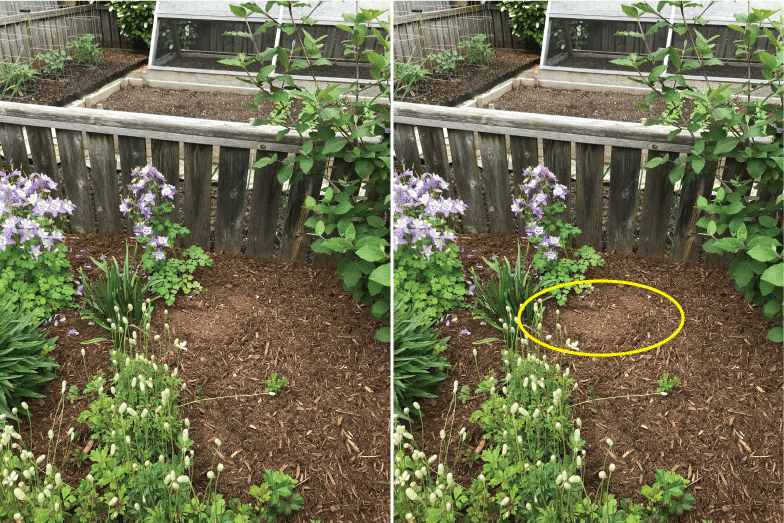
Start at the back of the bed and work forward so that you don’t have to trample on freshly applied fluffy mulch… footprints never look nice in a garden bed! If you must walk on your newly applied mulch- fluff out your footprints! It’s really all about keeping a nice uniform look to the bed.

I feel a bit like a crime detective by circling footprints on the ground! Be a sneaky gardener- don’t leave your footprints behind! They really do look awful in a garden bed!

Mulch the Beds NOT the Plants!

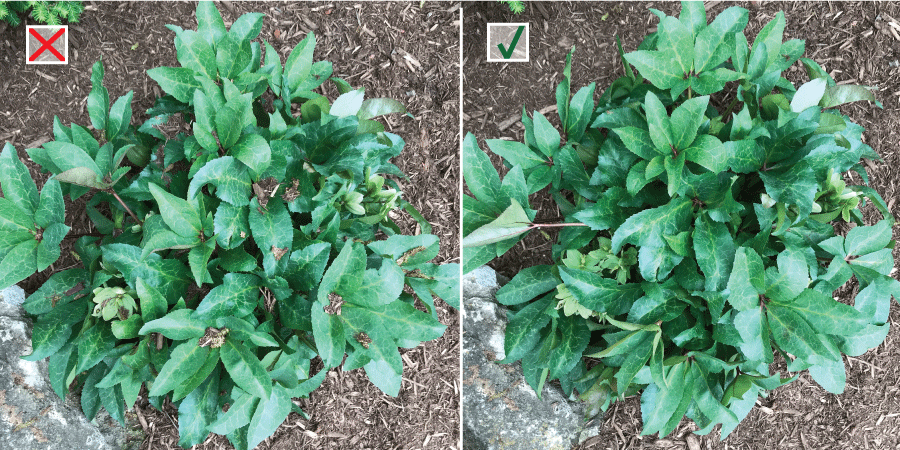
I know it is easy to just toss mulch into a bed and call it a day. Usually the plants get in the way. Take the time to brush the mulch off the greenery; the mulching job will look much tidier.

Show off your Curves (or Straight Lines…)

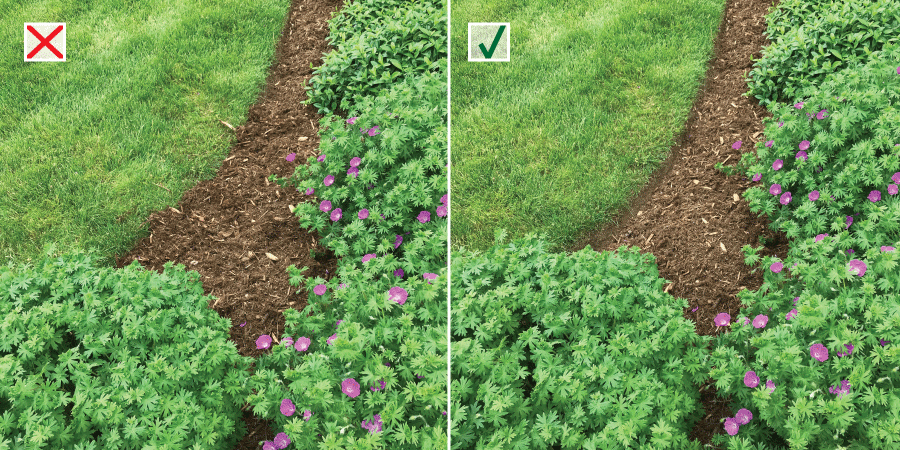
With all the work done to create nice definition to your garden beds through the use of edging, don’t throw all that work away by filling the edges in with mulch (or, even worse, allowing the mulch to overflow onto the grass!). Avoid this problem by tapering out the mulch as you approach the edge of the bed. This technique will keep the garden edge visible and clearly defined.

By thinning the mulch out as you approach the edge of your garden bed, you can retain a nice crisp edge!

Don’t be smothering…

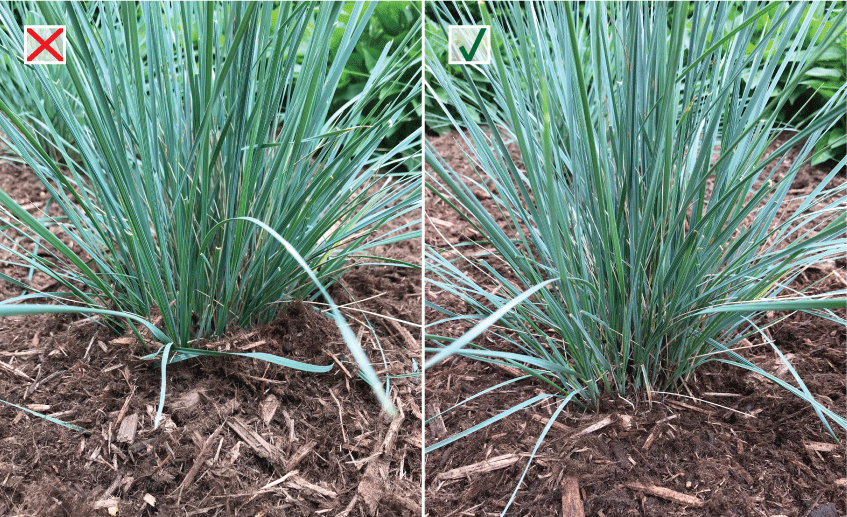
…give your plants some space by not piling up mulch around the base of them. This is an important tip from a plant health perspective. Piling up mulch against the base of perennials, shrubs and trees provides a nice cozy environment in which critters (such as insects, and microorganisms) can live. Many of these critters can negatively impact your plants through feeding or causing disease. I realize that not having mulch right up to the plants interrupts the uniformity of the mulching job. I work around this by applying a ‘sprinkling’ of mulch around the plants just to give the appearance that the area has been mulched when in fact it hasn’t been. Think of it like a dusting of icing sugar on a cake.

If this blue oat grass (Helictotrichon sempervirens) on the left could speak, it is saying”I love you, but I need my space…” Ouch. Don’t get smothering! Taper out the mulch around your plants. A ‘dusting’ around your plants can give the illusion that the mulch layer is continuous.

And there you have it! A couple long-winded posts about mulch. Much more can be written about this topic, but I will save background information for the winter :) Right now it’s time to get out there and garden!