Clean-up

Springing into Action!

(Originally posted May 2, 2022)

Hello?!? Is anybody out there? Remember me? I am not offended if you don’t. It’s been quite a while since my last post. As much as I love writing about gardens, this is a side project for me; I do it strictly for fun and sometimes the fun things get put on hold when life gets busy. With that said, I am back and still planning on writing, so if you are willing to continue following my blog, then I am thrilled to have you along for the ride!

It’s hard to believe we are at the start of another growing season. Yay! Spring is here!

Spring. It’s an aptly named season when you really think about it: new life is ‘spring’ing forth from the earth after a long winter slumber, the sun is putting an extra ‘spring’ in our step as we gleefully skip along while the sun’s rays kiss our vitamin D deficient bodies, and we all ‘spring’ into gardening action at the first hint of a warm day. (At what other time of year does 10 degrees Celsius feel balmy??)
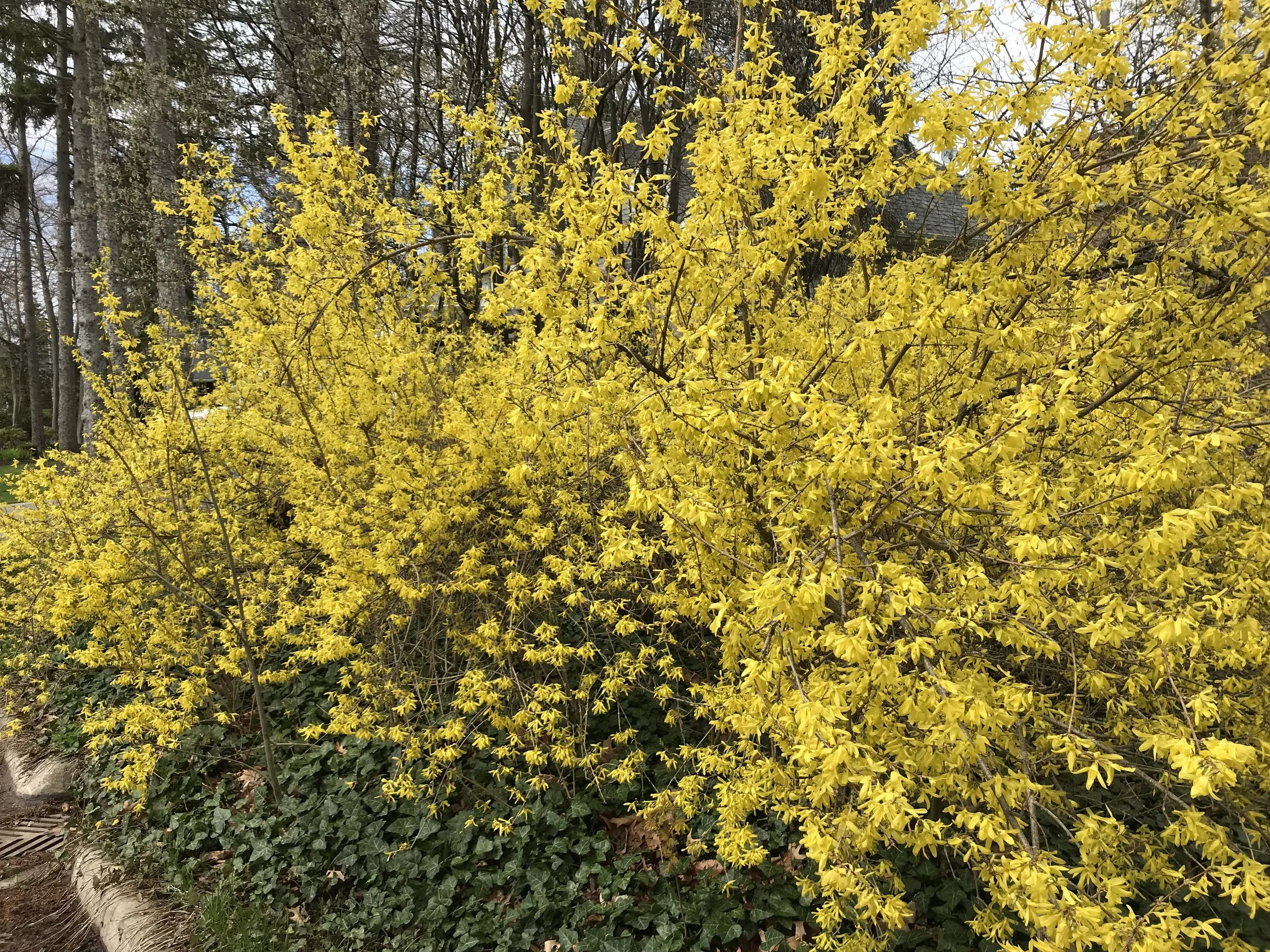
Forsythia spp.- a sure sign of spring.

Garage/shed doors are thrown open; gloves, hand tools and rakes come out (Ug. Did I really put those away in that condition?) and we get to work. Our desire to usher out winter and welcome spring is all consuming. With all that pent-up gardening enthusiasm we often get overly zealous with our spring tasks, so it is easy to get ahead of ourselves... which leads me to two main gardening mistakes that we tend to make in early spring:

  1. Cleaning up the garden too soon

  2. Mulching too soon

Lets look at each of these in turn…

Premature Garden Clean-up

So the equinox has come and gone, warmer weather has made an appearance… oh wait… now it’s gone… now it’s back again… and now it’s snowing?!? Ah yes, spring is an indecisive season. For this reason, it is best to refrain from cleaning out the yard on those first few warm days because severe weather can follow soon after. All the leaves on the beds, and standing herbaceous perennial foliage, can buffer garden plants (and soils) from harsh temperature swings and wild weather. Additionally, all the old flower stalks, perennial stems, and leaves in the garden are valuable overwintering sites for beneficial insects. Leaving everything in place for a little longer allows these beneficial organisms to emerge, enabling them to play a valuable role within the garden ecosystem in the months ahead.

Despite the benefits of all the ‘dead stuff’ in the garden, if you feel you must clean up a little, focus on areas where leaves have piled up over the winter months and make sure these leaf piles are not smothering evergreen foliage or perennials below. I usually do this ‘preliminary leaf clean-up’ within the first two weeks of April and then do a more thorough tidy-up (which includes cutting back herbaceous perennials) sometime between the middle to the end of April.
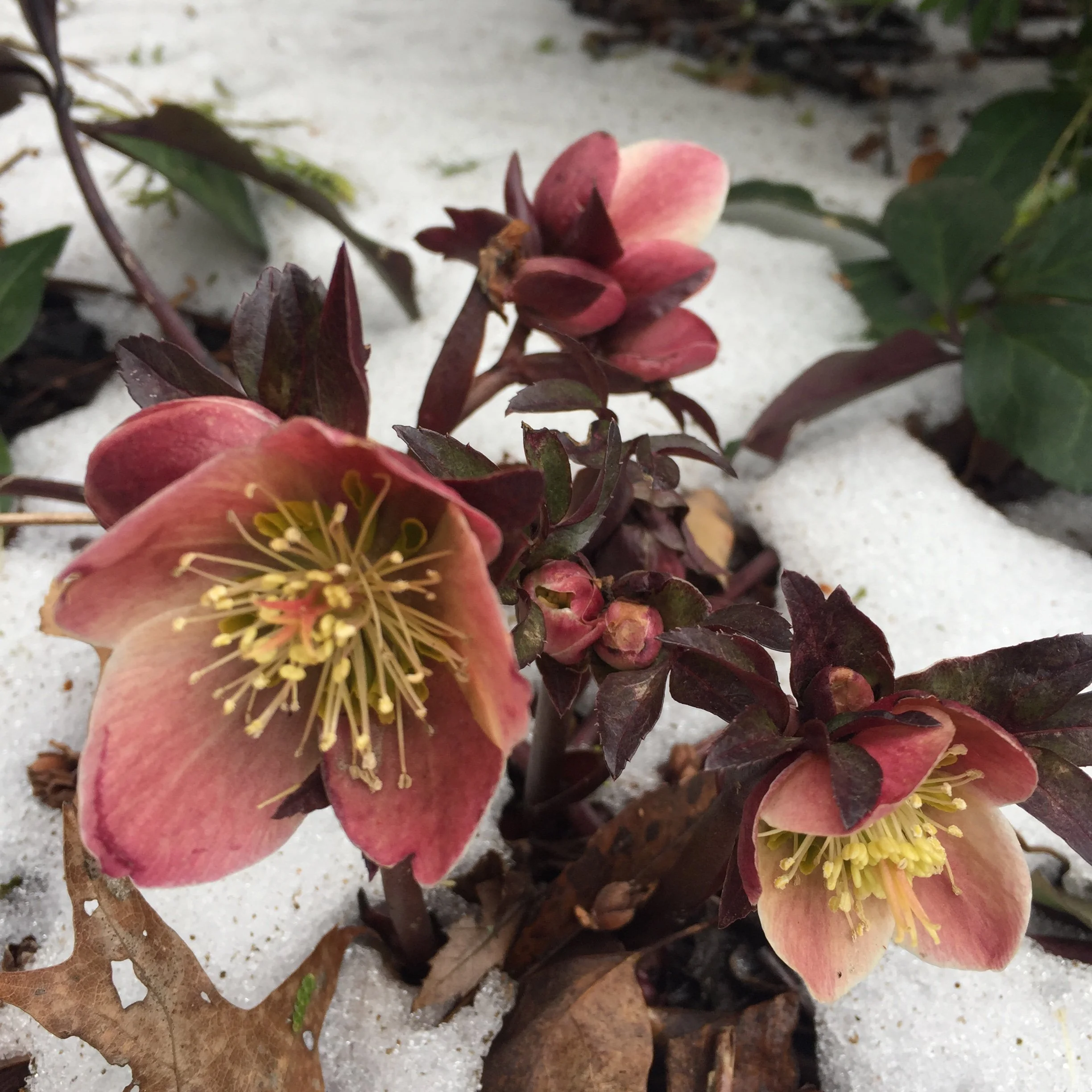
April snow is often cursed but not overly not unusual in these parts. It’s one of the reasons we need to temper our enthusiasm and hold off on spring clean-up until later in the month.

Mulching too Soon

No question about it, mulch on a garden looks great. (With the exception of red mulch…just don’t do it. Seriously.) Aside from aesthetics, mulch is valuable in many other ways but it’s useful properties make it more of a garden liability when it is applied too early in the season.

For example, mulch has an uncanny ability to prevent the evaporation of water from the soil. This is fantastic during the dog days of summer when rainfall can be scarce, but during the spring when rain is in abundance, we are often dealing with overly saturated soils. Depending on your soil texture, it can take a fair amount of time for soil moisture levels to decrease (clay soils take much longer to dry out than sandy soils). Putting mulch on saturated soil will prolong the length of time it takes for garden soil to dry out. In the meantime, some plants can suffer in the waterlogged conditions and some may rot away.

Mulch is also amazing at blocking sunlight. It is the main reason why it is able to suppress weeds- a thick layer of mulch blocks the light that plants need to grow, and that weed seeds need to germinate. Now take that same mulch and put it over top of perennials just starting to emerge, and you’ve got yourself a problem. I see this issue quite often on properties where landscape crews (who do not know the placement of garden plants that have yet to ‘wake up’) mulch too early in the season and inadvertently cover up (and sometimes smother) garden plants. Whoops.
A Hosta mulched-over by a landscape crew. Luckily this one had already emerged and was freed from the thick mulch blanket. Remember- mulch does not get put over top of plants, it goes around them! It’s hard to apply it properly if you can’t see the plants.

Another benefit of mulch is it’s ability to moderate soil temperatures. This is great for preventing freeze/thaw events during the winter (which can be detrimental to plants) however, if a thick layer of mulch is applied too early in the spring, it can slow the warming up of garden soils- which can negatively impact plant growth.

Finally, mulching should occur after amendment/fertilizer applications are complete (if this is necessary based on soil tests). Mulching before amendments have been applied essentially closes the window to applying amendments and fertilizers directly to the soil where it is needed. Fertilizing early is not an option because plants need to be actively growing to make use of the applied nutrients. If they can’t, the nutrients may be washed out of the soil before they even serve a purpose and nutrient loss can have negative effects within the surrounding environment. This is overly simplified and highly dependent on what is actually getting applied to the garden, but I think you get my point: amendments first, mulch next, but not too early!

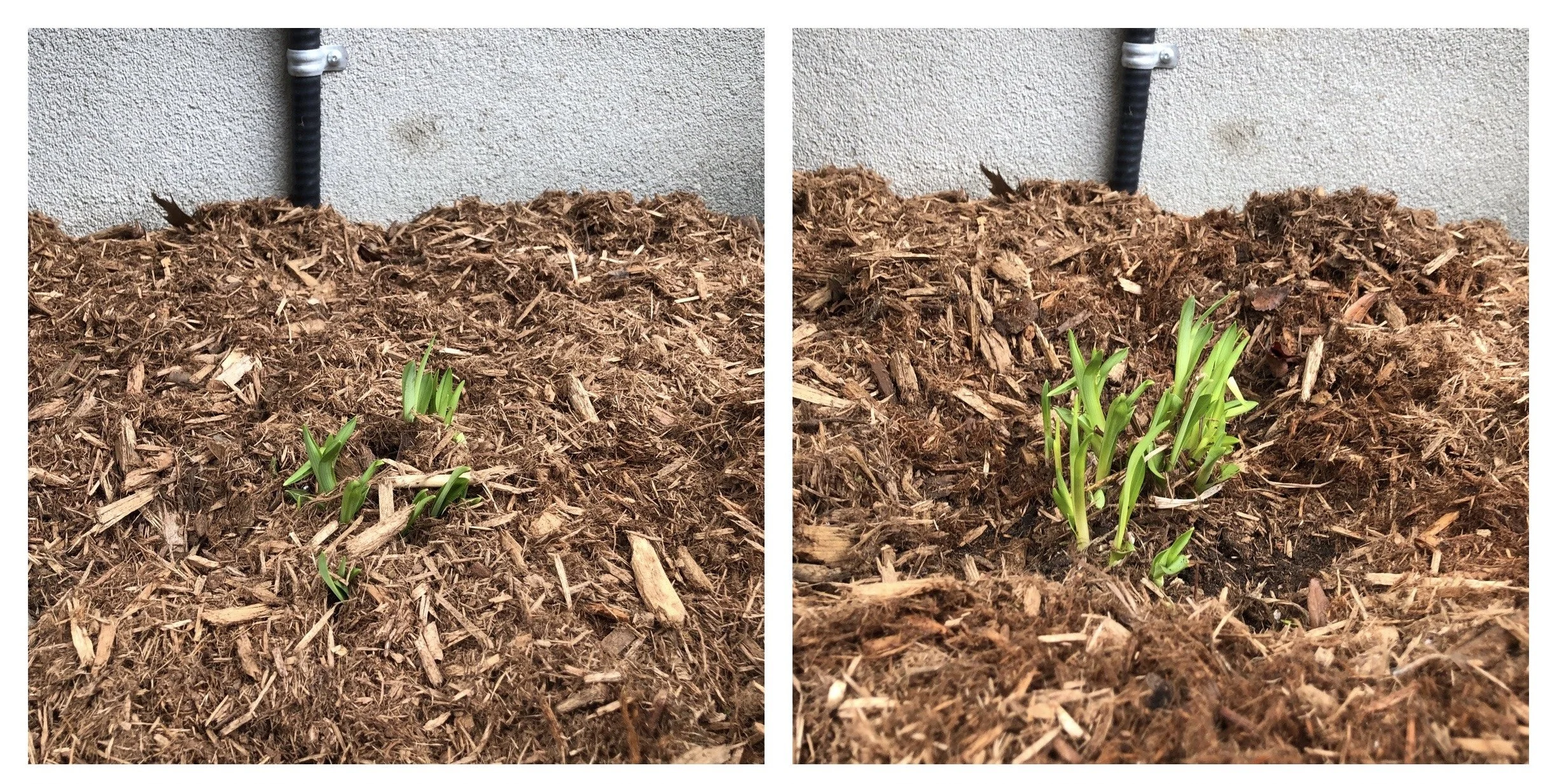
As you can see, mulching too soon can be pretty detrimental to a garden. In my area, I generally do not start mulching gardens until the end of May. In some cases I will wait even longer- for instance if I have annuals to get into the ground. For me, the annual planting frenzy kicks-off the third week of May and lasts for a few weeks. It is much easier to apply mulch around annuals after they have been tucked into the garden, rather than try to plant them into a mulched garden bed (which requires the mulch to be pushed out of the way in order to access the actual garden soil for planting… definitely not an efficient way to plant!)
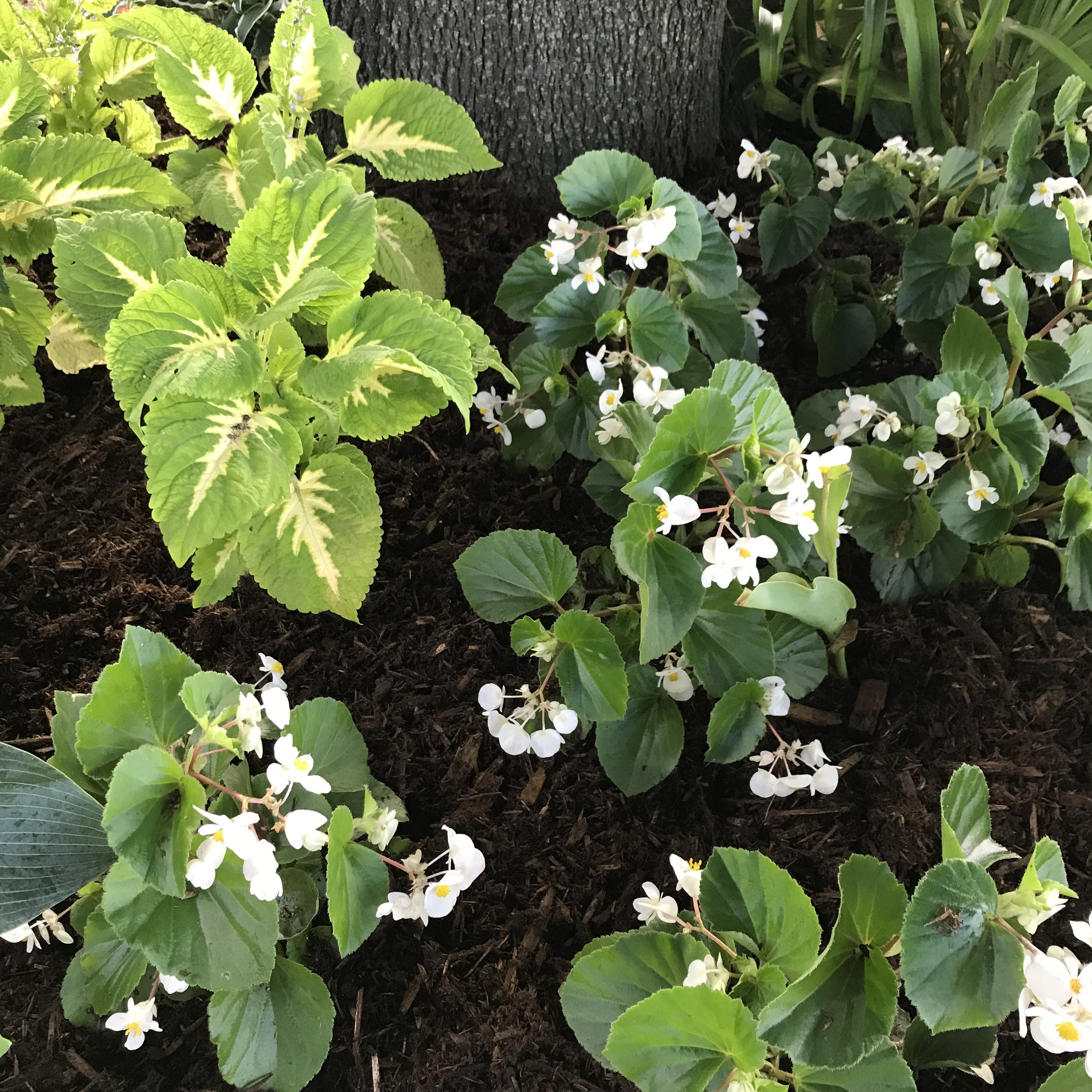
It is much easier to apply mulch after annuals are planted rather than have to dig through mulch to find soil to plant into.

And there you have it! A couple common spring gardening mistakes that I am sure we have all been guilty of at one point or another. So what’s the take home message in all of this? Well, if you feel ‘behind’ in your garden chores- don’t worry! You are most likely not as behind as you think; best case scenario, you are right on schedule! It’s far too early in the season to stress out about falling behind in gardening tasks. Enjoy the ‘spring wake-up’ at a more leisurely pace… your garden (not to mention your body) will thank you.

Wishing you a happy spring! It’s great to be back in the gardens :)
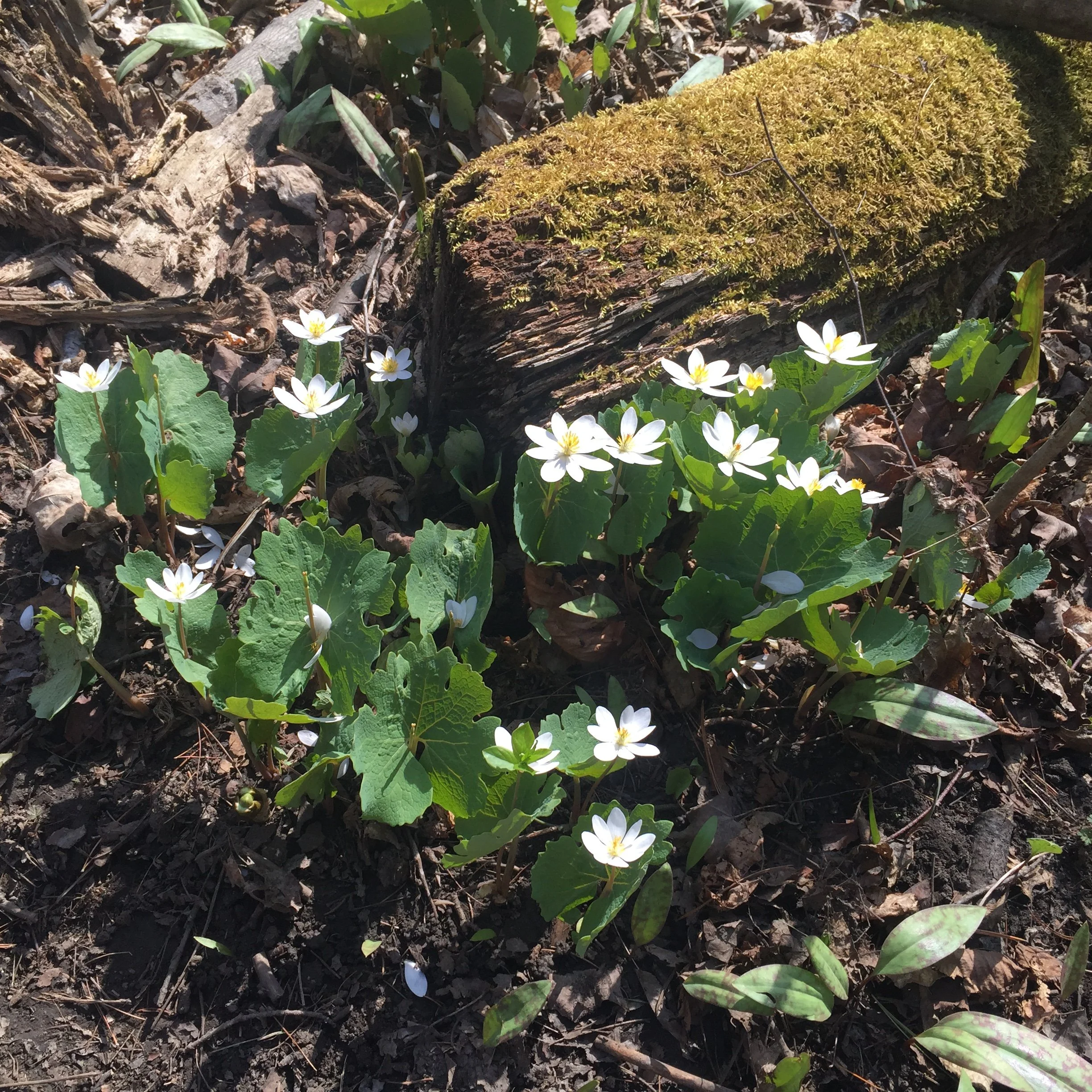
Sanguinaria canadensis (Bloodroot). It’s springtime in our woodlands!
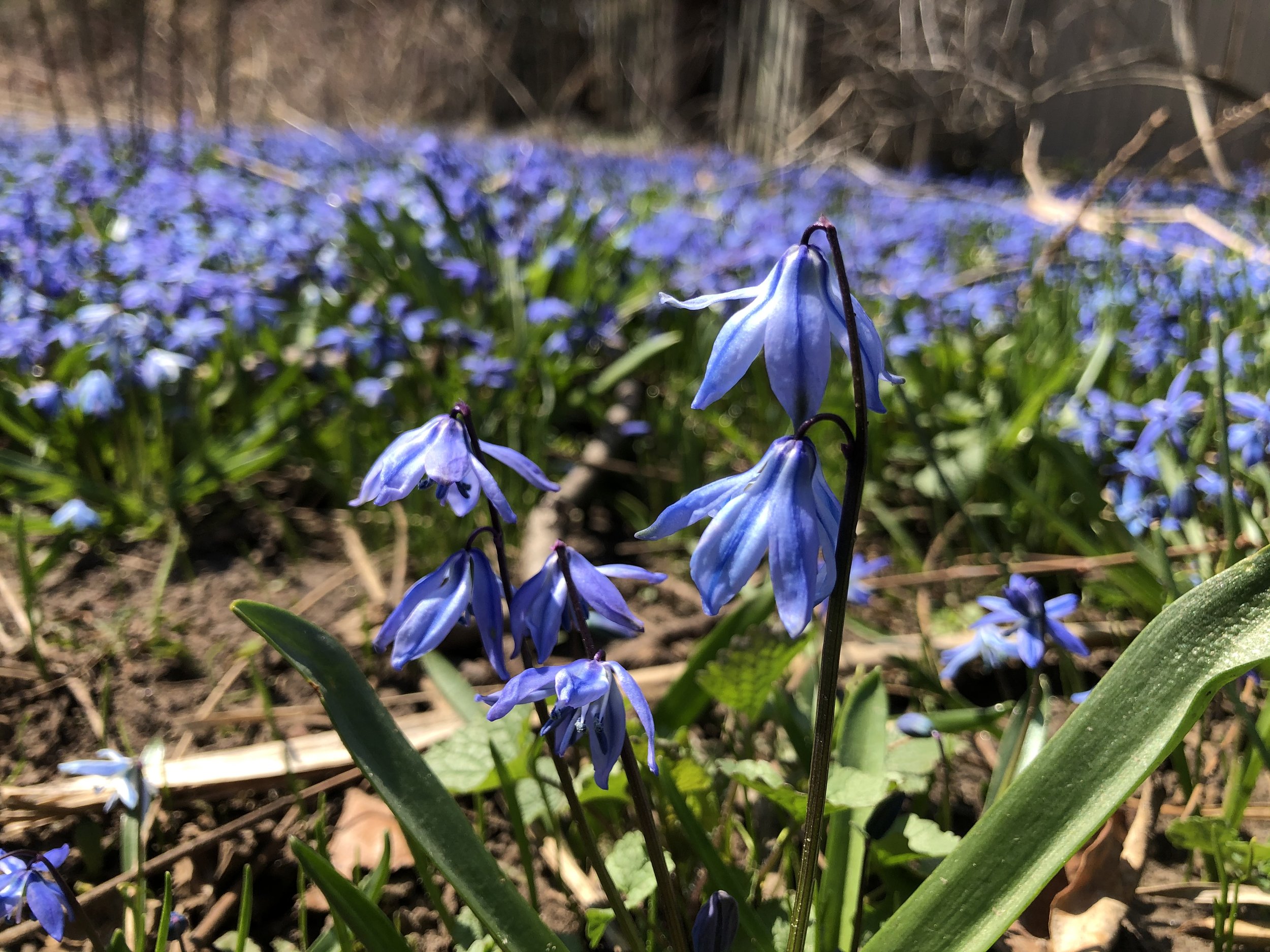
Scilla Sect. Chionodoxa (glory-of-the-snow). A sea of blue is a spring sight to behold!
Perennials: to chop or not?

(Originally posted: October 15, 2019)

Well it seems as though the gardening season is progressing at an alarming rate- is it really October??? We are now on to fall gardening tasks, and one of the main tasks is cutting perennials back (not to be confused with pruning trees and shrubs which I addressed in my previous post, Temper your Enthusiasm). At this time of year, I am often asked: “what should I cut back”? I am going to try to answer this question as concisely as possible in this post (no promises).

Before getting into the nitty gritty, however, I should first start with the other question that I am often asked which is “when should I cut back my perennials?”. In general, I wait until things are well on their way to dying back on their own. Right now, plants are gathering up some last rays of sunshine (as are we!) and beefing up their energy reserves in their root systems to help them survive the winter and have the ability to flush out new growth in the spring. Letting perennials go through this natural process allows the plants to properly prepare for winter. Usually when the leaves have turned colour (which is a sign that the plant is no longer photosynthesizing or making energy) is when I start whacking things back; this is usually (but not always) shortly before or shortly after the first frost.

What to Cut Back

Now… the all important question, what should we be cutting back? Using these 6 questions about your perennials can help point your secateurs in the right direction:

1) IS IT EVERGREEN?

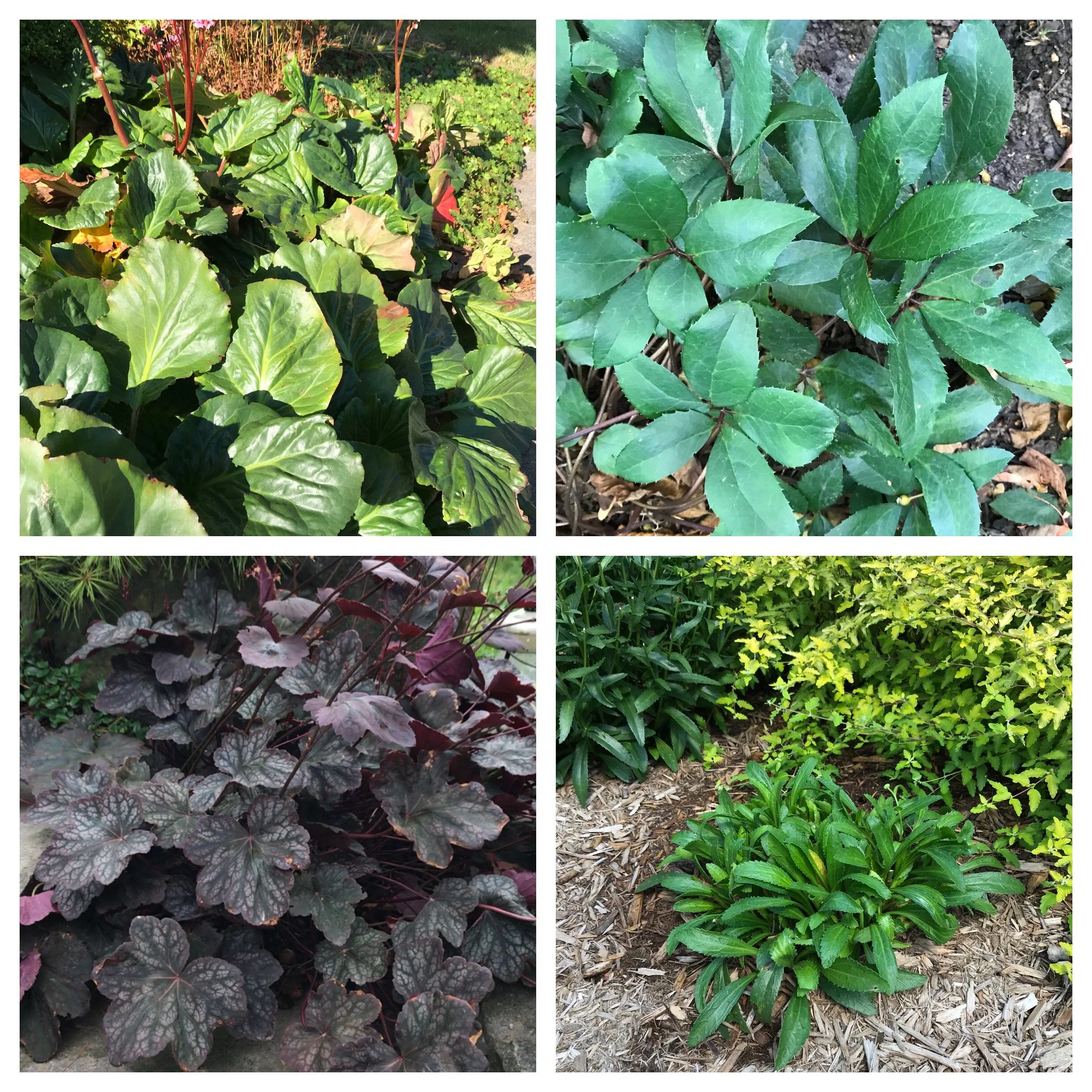
Let’s face it. We don’t always grow perennials for their floral display. Take Heuchera (coral bells) for example, many cultivars of this perennial are not winning any awards for blooms- A+ for effort, but no awards. So what does this plant have going for it? Foliage! Not only do Heuchera come in all sorts of gorgeous foliage colours, the leaves of coral bells persist year-round. They are evergreen (or ever-purple, or ever-chartreuse or ever-pink…). Other examples of perennials in the evergreen category include various species of Helleborus (Lenten rose or Christmas rose), Bergenia, and Yucca. Additionally, there are also some perennials, such as Leucanthemum superbum (shasta daisy) whose flower stems die down while their basal foliage remains evergreen. So as the saying goes ‘if you’ve got it, flaunt it’ and these plants have got it…foliage in the winter, that is! Leave these perennials standing tall! Sure they may look a little ratty come spring (depending on the kind of winter we are served and the growing conditions that the plants are subjected to) but the fact of the matter is that they have the potential to look nice, even during the winter months. In areas with unreliable snow cover (ahem… southern Ontario) this can be a really nice addition to the garden.

Examples of evergreen/semi-evergreen perennials (clockwise from top left): pigsqueak (Bergenia spp.)., lenten rose (Helleborus sp.), the basal foliage of shasta daisies (Leucanthemum spp.) and coral bells (Heuchera spp.),

2) DOES IT RETAIN IT’S STRUCTURE?

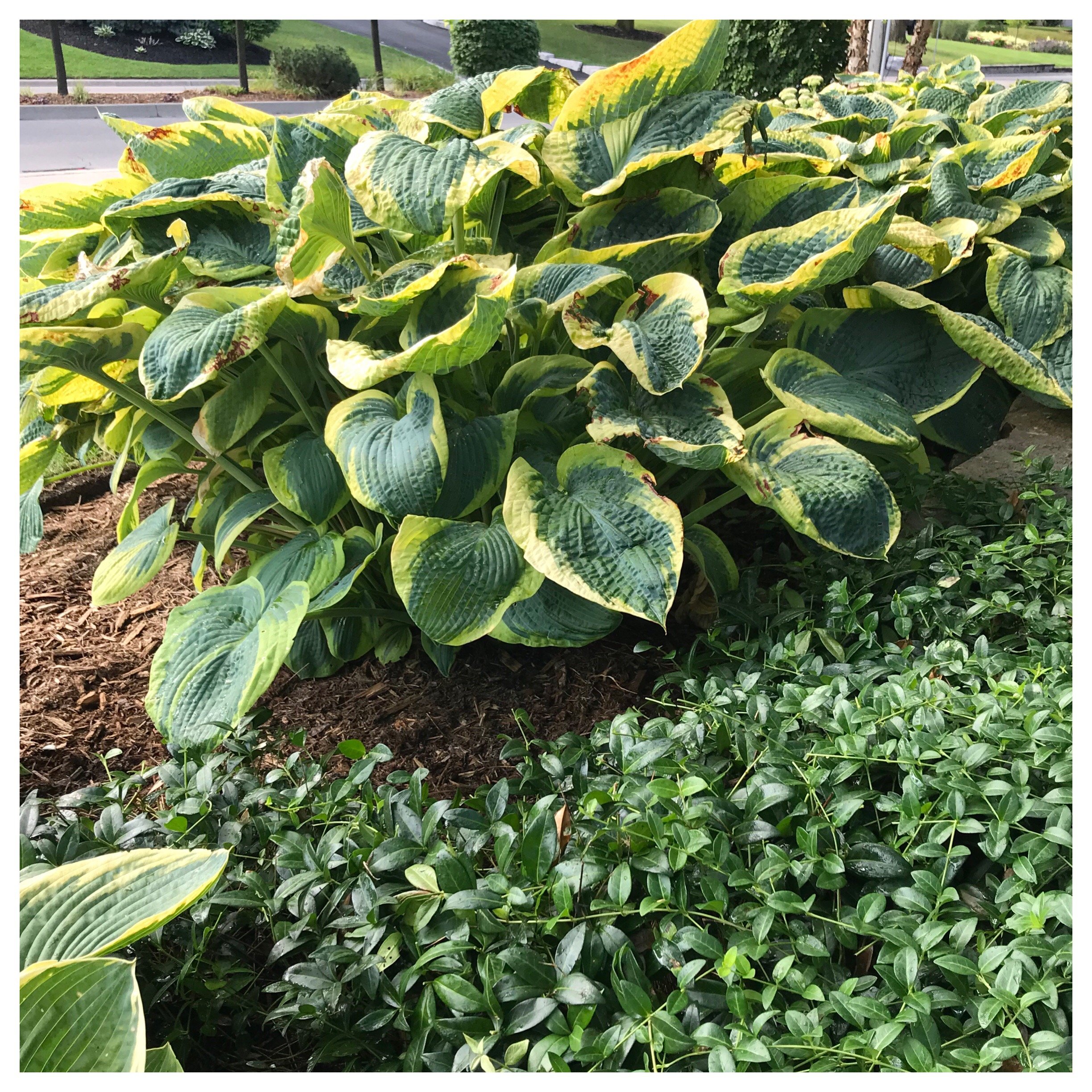
Some perennials, such as many ornamental grasses will retain their structure well into the winter months. These perennials will not only add structure to the garden but some gorgeous texture too (see ‘ornamental features’ below)! Other perennials such as Hosta spp. will essentially turn to mush come the first hard frost, while Polygonatum spp. (Solomon’s seal) will drop it’s leaves and loose it’s graceful form in the process. In any case, I am going to make the assumption that no one finds an indistinguishable mess of mushy leaves to be attractive. If your plants seem to crumble as soon as the cold weather hits, cut them back! It will be one less clean-up job to do in the spring and your winter garden will thank you for improving her aesthetics!

The hosta- a beautiful addition to the shady garden… absolutely useless in a winter garden.

3) IS IT WOODY?

Some perennials develop woody stems such as Perovskia atriplicifolia (Russian sage) or Lavandula (lavender). These are guaranteed to retain some structure in the winter and pruning for these two perennials is best left to the spring anyway. Leave them up and enjoy having some added structure to your garden!

4) DOES IT HAVE ORNAMENTAL FEATURES?

Beautiful texture? Ornamental seed pods? Pretty dried flowers? These are all features that look oh so beautiful when touched by a frost or coated in a light dusting of snow. Remember- winter is a beautiful season, if a plant has something that can help capture this beauty, then let it be!

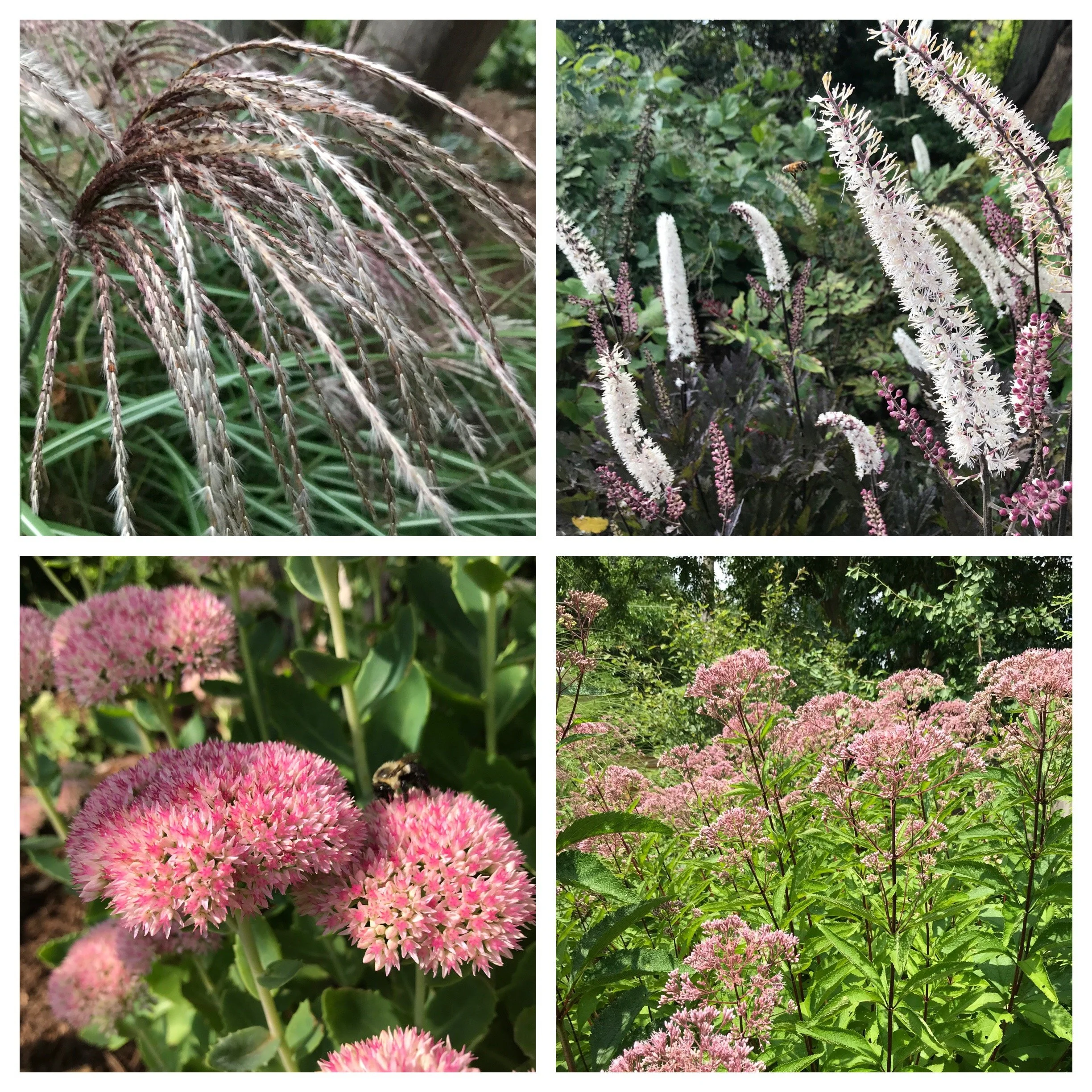
Ornamental grasses and perennials such as bugbane (Cimicifuga spp.), Sedum spp.) and Joe Pye weed (Eupatorium spp.) have seedheads that capture a dusting of snow beautifully. * Remember, if you have a plant that tends to seed itself prolifically, you may want to chop the flowers before they go to seed. *

5) DOES IT HAVE WILDLIFE VALUE?

Many perennials produce seeds valued by wildlife (especially birds); some of the more common ones include species of: Echinacea (coneflower), Rudbeckia (black-eyed Susan/gloriosa daisy), Sedum (stonecrop), Eupatorium (Joe Pye weed and boneset), Helenium (sneezeweed) and Heliopsis (false sunflower). Leave these perennials standing over the fall and winter months and you can feel good about providing a food source for our feathered friends.

Some perennials with wildlife value. Clockwise from top left: black-eyed Susan (Rudbeckia hirta), stonecrop (Sedum spp.), sneezeweed (Helenium autumnale) and coneflowers (Echinacea spp.)

6) IS IT DISEASED?

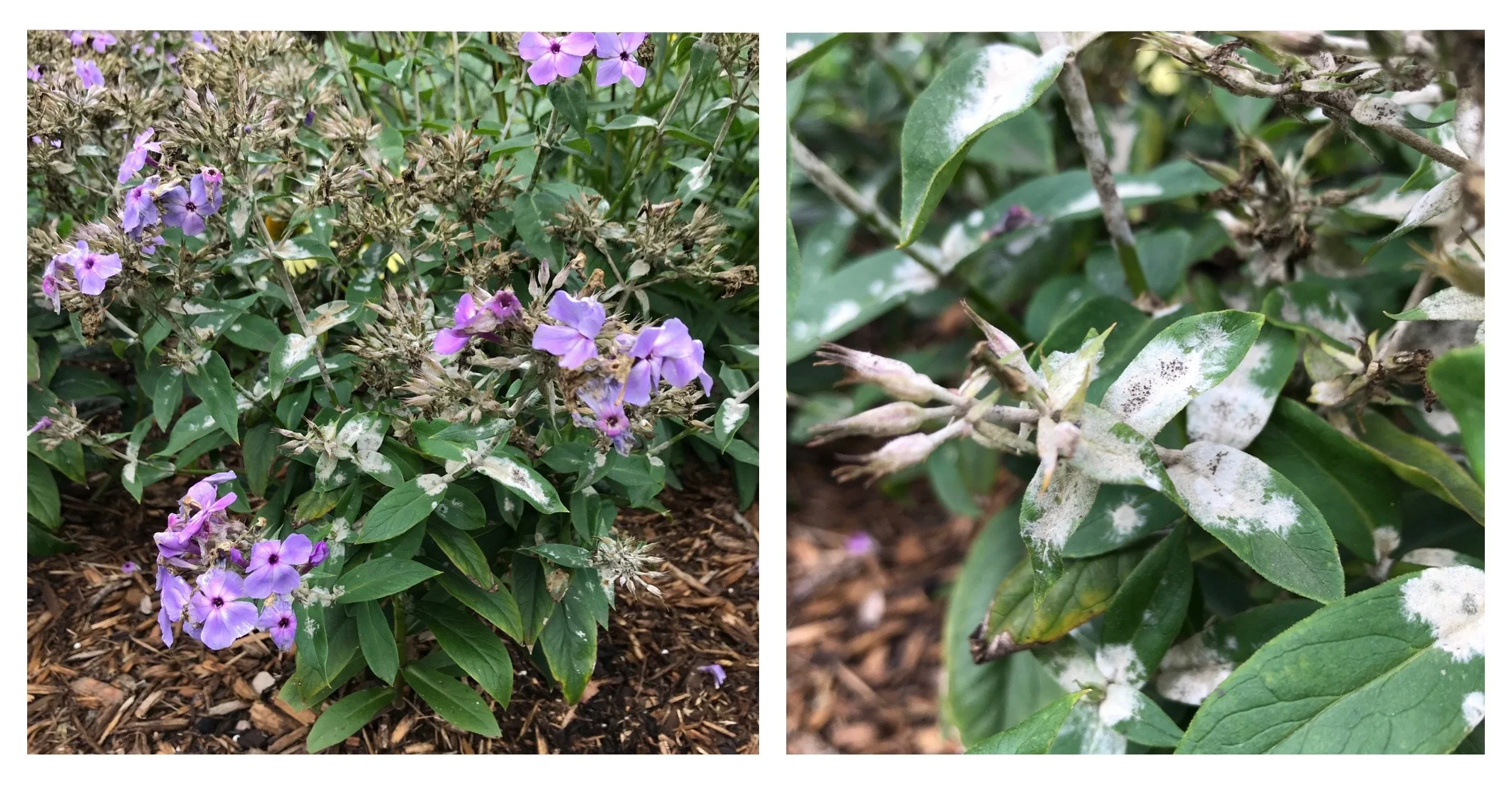
Did you notice anything funny on the leaves of any of your perennials this year? Perhaps a white fuzzy coating or little rusty pustules or unusual blotches? If you suspect that a perennial in your garden was diseased, it is best to cut it down (or even dig it out). Often diseases will overwinter in the garden on diseased plant material; this can become a source of infection for the next season. Cut anything suspicious down and DO NOT compost it. If it is a re-occuring problem, it may indicate that the plant is not growing in its optimum conditions (stressed plants are more prone to diseases) or it is a problem that the perennial is particularly susceptible to. If you have plants that seem to be hit by disease year after year, it may be time to think of some more robust replacements (an excellent task for the winter!).

Even though this Phlox would retain some structure over the winter, it is diseased and should be cut down (and the clippings removed from the garden).

OK OK, so that may not have been overly concise but I hope it helped! Remember- if you are not sure what to do with a certain perennial, you can always leave it alone to see how it fares the winter months. It can often be surprising what plants look attractive in the winter. So don’t be too hasty in chopping down all your perennials- right now you are the designer of your winter garden!

The Sky is Falling!

(Originally posted: June 9, 2019)

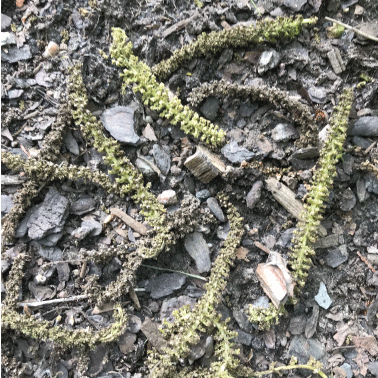
Actually, it’s not… but everything else is. Petals, samaras (such as the ‘helicopters’ that spin down from maple trees; a.k.a ‘maple keys’), spent catkins (flower clusters), fluff, even last years leaves from trees reluctant to release them last fall (young beech trees, hornbeam, English oak to name a few)… everything seems to be raining down on the garden right now and it feels like all that work put into Spring clean-up was for nothing. For someone particular like me, it’s enough to drive you nuts (which, incidentally will be raining down in the months ahead… thanks to all those butternuts, black walnuts, beech, oaks and hickories)!

Spent Betula sp. (birch) catkins and maple samaras

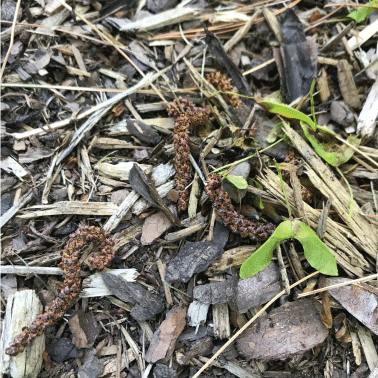
Catkins from a hybrid butternut tree (Juglans sp.). We somewhat-affectionately call this ‘the invasion of the worms’.

So what does this mean? It means another round of cleanup is in order. Afterall, removing all the fallen ‘debris’ will do wonders to clean up the look of your gardens.

It doesn’t take much to clean up the ‘look’ of a garden bed. Just a light rake-through of the surface with the fingers to remove the main culprits!

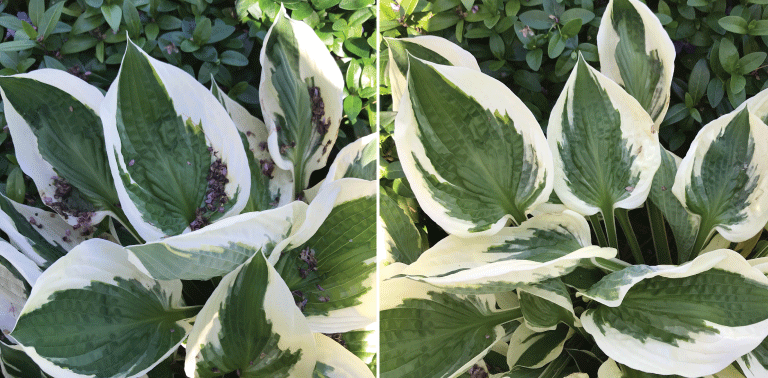
And it is not just the ground that may need a tidy, large-leaved perennials such as Hosta are notorious for capturing debris in their foliage. It not only looks unsightly but the debris holds onto moisture. This is not ideal since prolonged periods of leaf wetness can promote foliar diseases on plants. Additionally, critters such as slugs LOVE eating Hosta leaves (this is bad); they also like moist environments. Don’t lay out the ‘welcome mat’ for these pests by making the environment especially favourable to them!

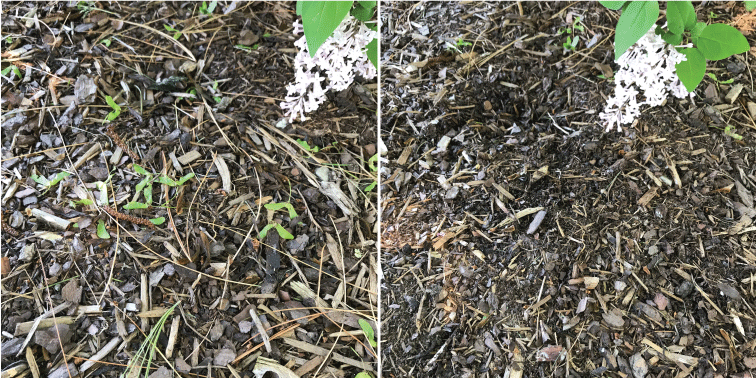
Spent Cercis canadensis (redbud) flowers captured by Hosta leaves; the same plant with the soggy petals removed.

As for seeds raining down- it may seem like a hastle to remove them from the beds (I usually rake through the surface of the beds with my hands to collect them) but your efforts will be well worth it in the long run as it will save you from having to pull lots and lots of seedlings down the road.

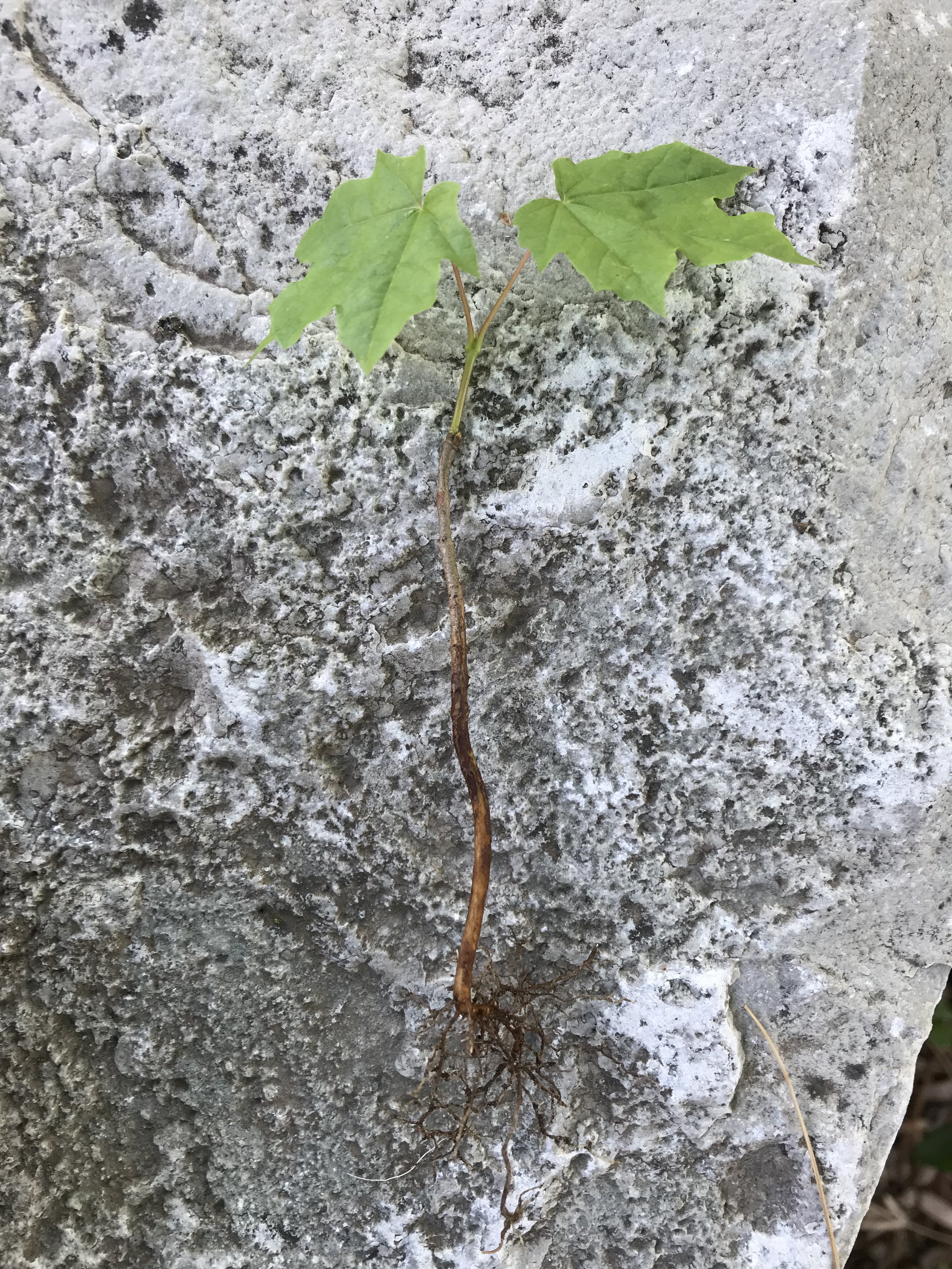
Acer sp. (maple) seedling.

If you have a compost pile, you can put the petals and leaves you collect into it. As for the seeds? You can compost those too- you may have some seedlings cropping up but at least they will be contained; or you can put seeds in the brown yard waste bags and out to the curb for municipal compost (if available in your area) so that you are not pulling trees from the compost heap (or from the garden if you spread the compost prematurely).

Alternative ‘Garden Hack’

By now you are probably wondering if there is a shortcut to this second round of garden clean-up. Well, if you haven’t mulched your garden beds yet and intend to then you are in luck! You can always cover up any ‘non-seed debris’ (such as petals and catkins) with mulch. Just remove any debris that has collected on or within the base of your plants. This will not only look better visually, but it will be better for the health of your plants. If you are dealing with seeds that have rained down on your beds (such as ‘maple keys’), I do not recommend mulching overtop as you will most certainly be pulling out a large number of seedlings from your gardens in the future! (Sorry!)