Amendments

Soil pH- it's quite basic (or acidic), really

(Originally posted: June 1, 2021)

It’s been a flashy time of year in my neck-of-the-woods. For weeks, the floral fireworks ignited by our trees and shrubs have been creating quite the show in a colourful progression... Witchhazels! Maples! Forsythias! Cherries! Magnolias! Serviceberries! Flowering Pears!

…and…

Rhododendrons!
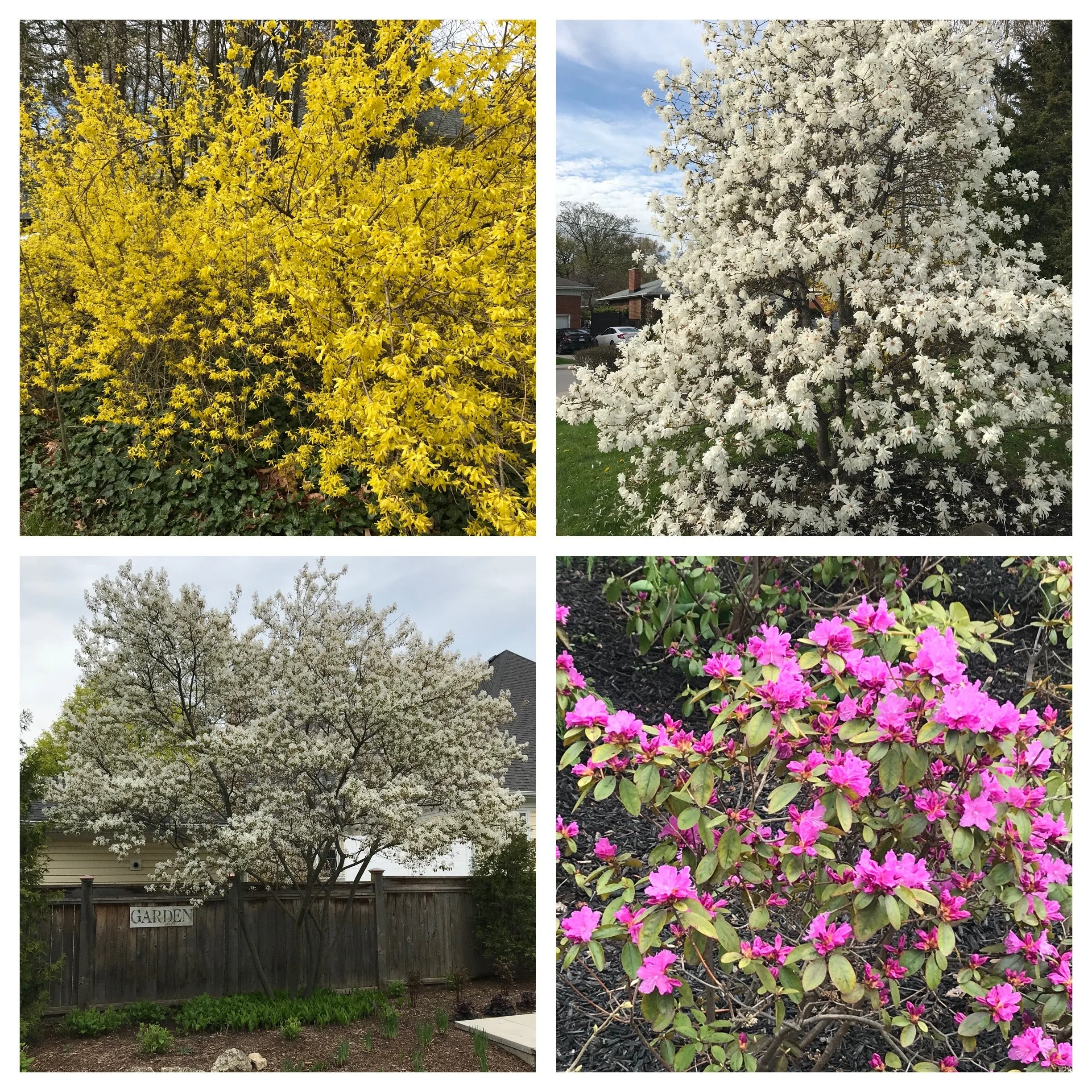
Floral fireworks of spring.

It is this time of year, when I longingly look at the blooms of the Rhodos. My feet then get ichy to ‘put the pedal to the metal’ and zip out to the garden centre to get a few (it’s best to buy in 3s, right!?) of my own.

Now I should say that kids are amazing at distracting one from the task at hand, so impulse purchases such as this have greatly decreased in recent years. This also affords me the time to let common sense prevail and I am then able to remind myself that these plants are simply not the right fit for my yard. Why? For me, the root problem is soil pH.
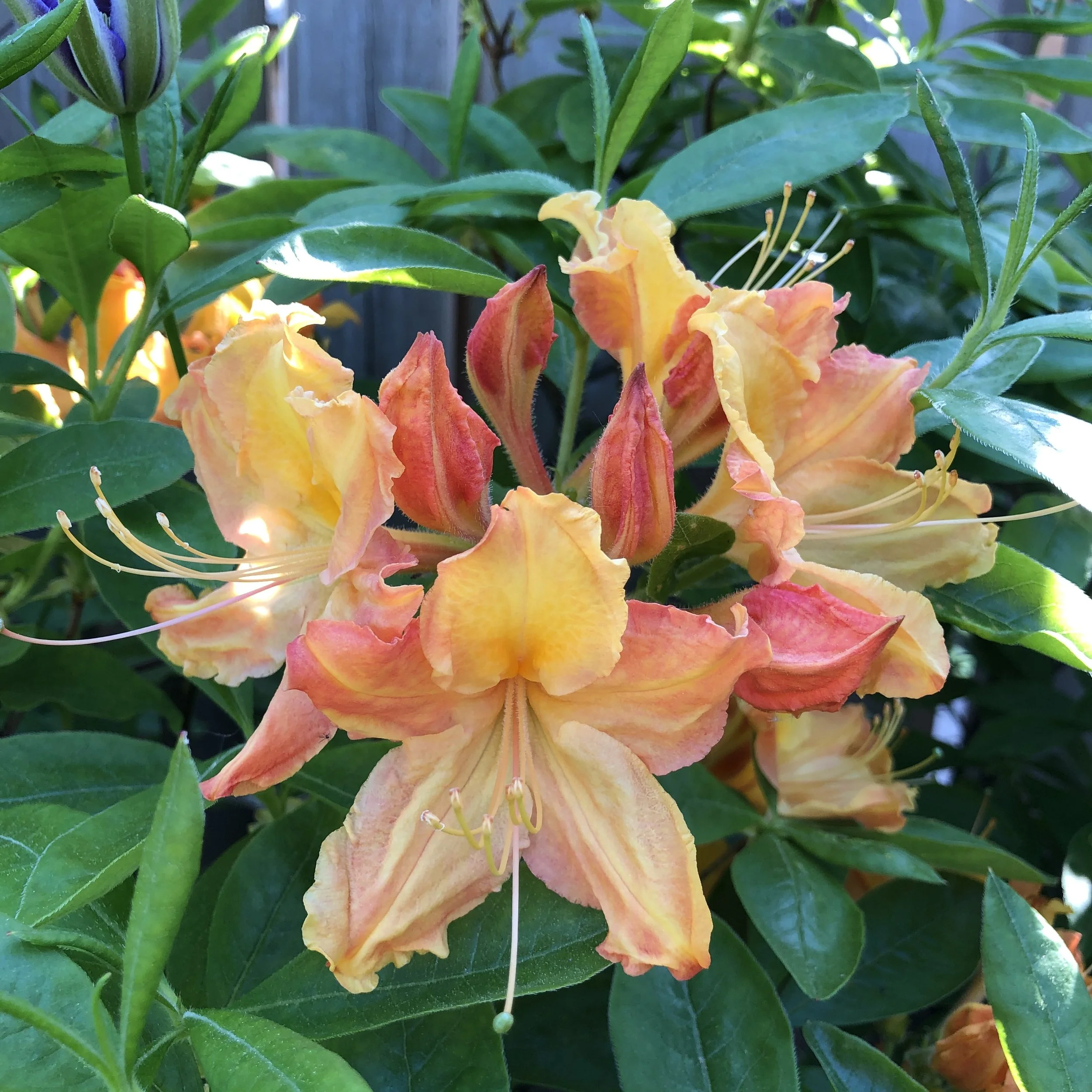
How I long for one of these in my garden! Alas it is not meant to be!

Let’s backtrack.

All plants have their preferences when it comes to growing conditions. Some like sun, some prefer shade; some like ample moisture, while others thrive in dry conditions. There are some plants that prefer humus rich soils while others perform poorly in these conditions. Generally, we factor-in these growing preferences when selecting plants for our gardens. To a certain extent, we can control these conditions- by situating plants in various areas of our yard that have the lighting/moisture conditions suitable to the plant at hand.
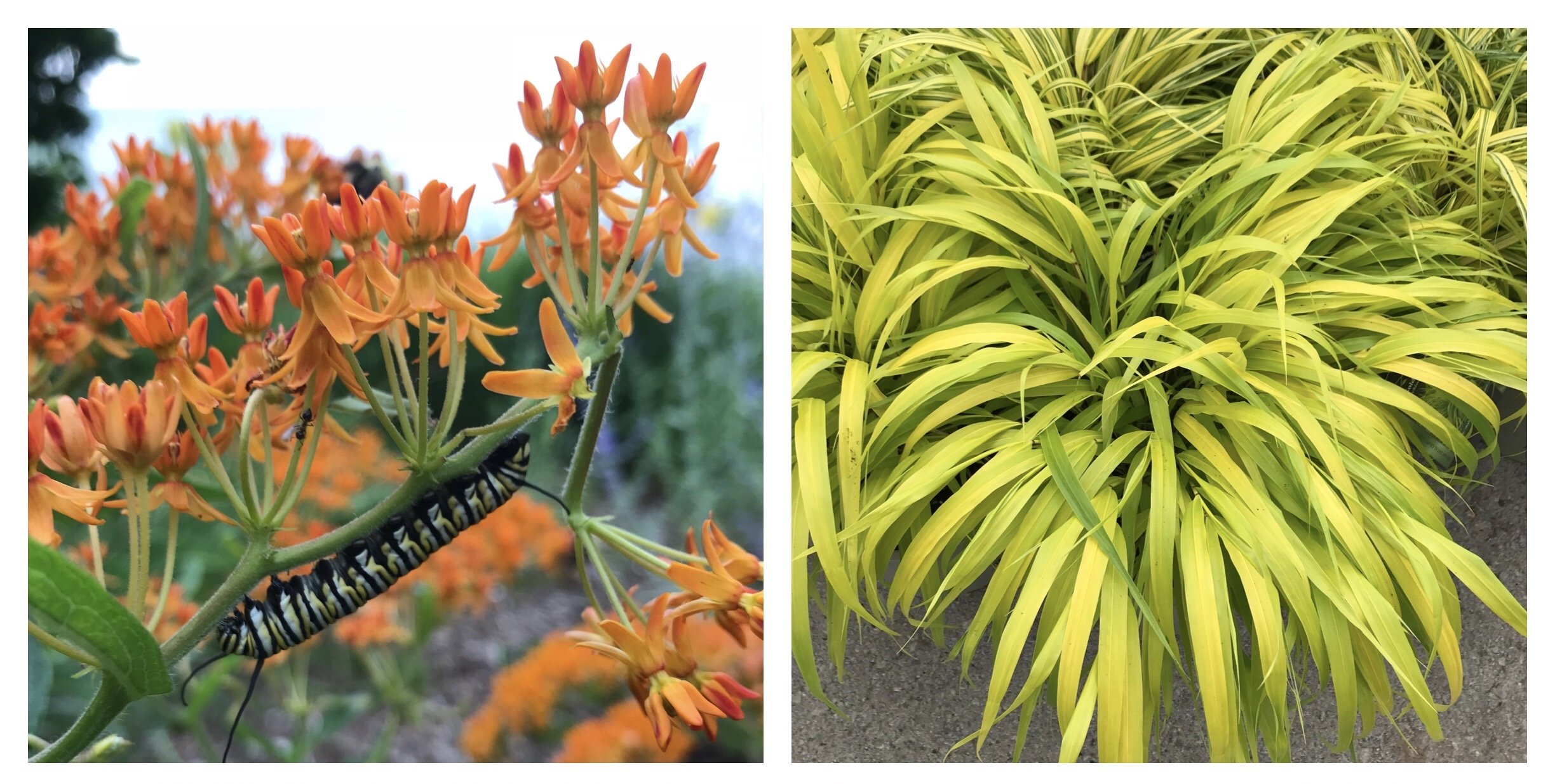
Two plants with very different preferences in growing conditions. Butterfly weed (Asclepias tuberosa) on the left that prefers sunny, dry conditions on sandy soil while ‘All Gold’ Japanese forest grass (Hakonachloa macra ‘All Gold’) shown on the right, prefers partial shade and deep rich soil.

There is one growing preference that is VERY easy to overlook, or even forget about entirely, but it can often be the key to a particular plant’s success or failure in a garden. Furthermore, it is a soil attribute that we have very little control over and essentially no power to permanently change. That attribute is soil pH.

Don’t worry. I am not going to get into any in depth chemistry lessons here. Essentially pH is a measurement (from 0-14) of how acidic or basic a solution is. A pH of 7 is neutral; anything greater than 7 is alkaline/basic (such as baking soda which has a pH of 8); a pH of less than 7 is acidic (such as lemon juice with a pH between 2-3). The optimal soil pH range for most (but not all) plants is between 6-7. Nutrient availability to plants is linked to soil pH and it is in this ‘optimal pH range’ that the nutrients necessary for plant growth can be found in their soluble forms (in ideal amounts) and therefore available for the plants to take in. Outside of this range, various nutrients can become ‘locked up’ in insoluble forms that the plants cannot access and nutrient deficiencies can result. On the flip-side, at certain pH levels, some elements can become ‘too available’ to plants- to the point where they become phytotoxic.

So what does all this mean for ‘us gardeners’? KNOW YOUR pH! A simple test kit can be purchased at your local garden centre. Alternatively, you can send soil samples off for testing at a laboratory. The reports from such tests are really useful as they generally include measurements of soil nutrient and organic matter levels. This can indicate whether or not amendments are required, and what amendments would be needed to optimize your soil for plant growth.

So- let’s go back to my plant lust example: the Rhododendron. These beauties are considered acid-loving plants- a special club whose membership also includes: blueberries (Vaccinium), mountain laurels (Kalmia latifolia), Japanese pieris (Pieris japonica), pin oak (Quercus palustris) and the list goes on. These plants prefer to grow in soils ranging in pH from 4.5 to 6. If soil pH is too high, these plants will exhibit chlorosis (a sign of iron and/or manganese deficiency- two elements that become more ‘locked-up’ at higher pH levels).
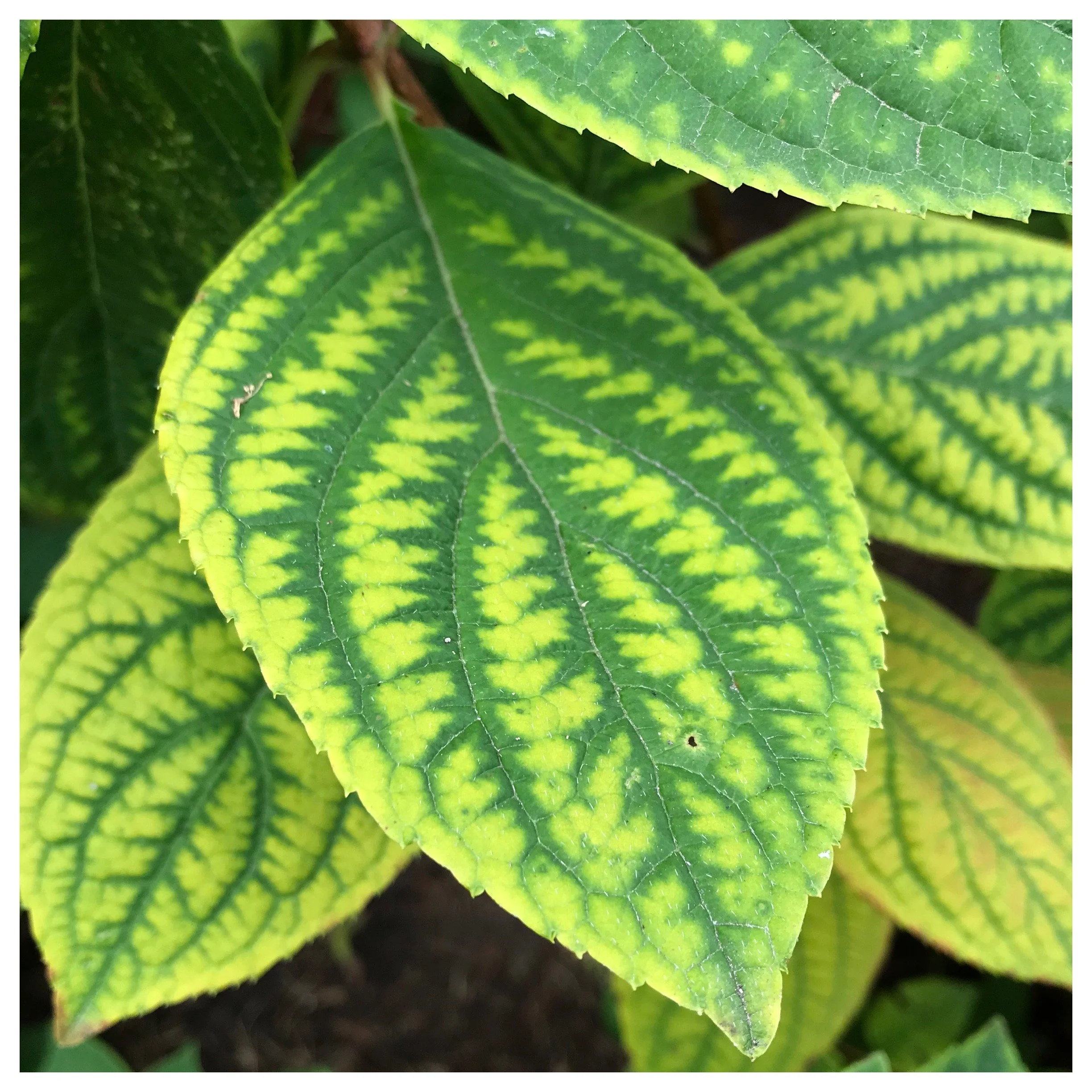
A hydrangea with chlorotic leaves

but I have slightly basic soil. What are my options?

Generally, soil pH is determined by what lies beneath- the parent material. Since pH is essentially guided by the foundation from which the soil was formed, it means that pH is not exactly an attribute that one can permanently change by sprinkling a few pellets or powder on the ground! The overlying pH tendency of the soil will always prevail. Temporary changes to pH can be accomplished through the routine addition of amendments. For example elemental sulfur or aluminum sulfate can be used to acidify the soil while lime can be used to make a soil more alkaline, but this will become a yearly task to add to the gardening ‘to do’ list.

When it comes to soil, I am not really interested in trying to fight my conditions. So in this case I fall back on the mantra that we should all chant as we walk through the temptations that line the aisles of the garden centres:

”Right plant, right place”.
Not all blankets are cozy...

(Originally posted: December 3, 2020)

Hello there! It’s been a while! I hope your fall has been going well; in this area, it has been an absolutely glorious one for working in the garden!

Glorious fall days! No better place to be than in a garden.

With that said, things are now coming to a close and with the snow just starting to fly, it is time to take a good hard look at the garden to ensure that it is in a good state headed into the winter months. Typically, one of my final gardening tasks of the season is to ensure that fallen leaves are not resting on any areas that will cause problems down the road. We have touched on this subject before, but I think it is a good one to revisit.

When it comes to leaf ‘litter’, it is a case of the good, the bad, and the ugly…

The Good

Leaf ‘litter’ is not really litter at all! It is a valuable resource for the soil and garden. When left on beds, leaves will break down over the winter and the nutrients and organic matter from them will return to the soil. This is nature’s way of recycling; giving back to the soil so the soil can continue to support life.

Leaf litter supports life in other ways too as it provides important shelter for overwintering insects and other garden critters- keeping them protected until the earth begins to warm once more. While small, these creatures can play important roles within the web of life that exists in the garden. From pollination to predation on garden pests, or even becoming food for other creatures, there is no doubt that promoting other forms of life within the garden can have huge benefits on how the garden functions as a whole.

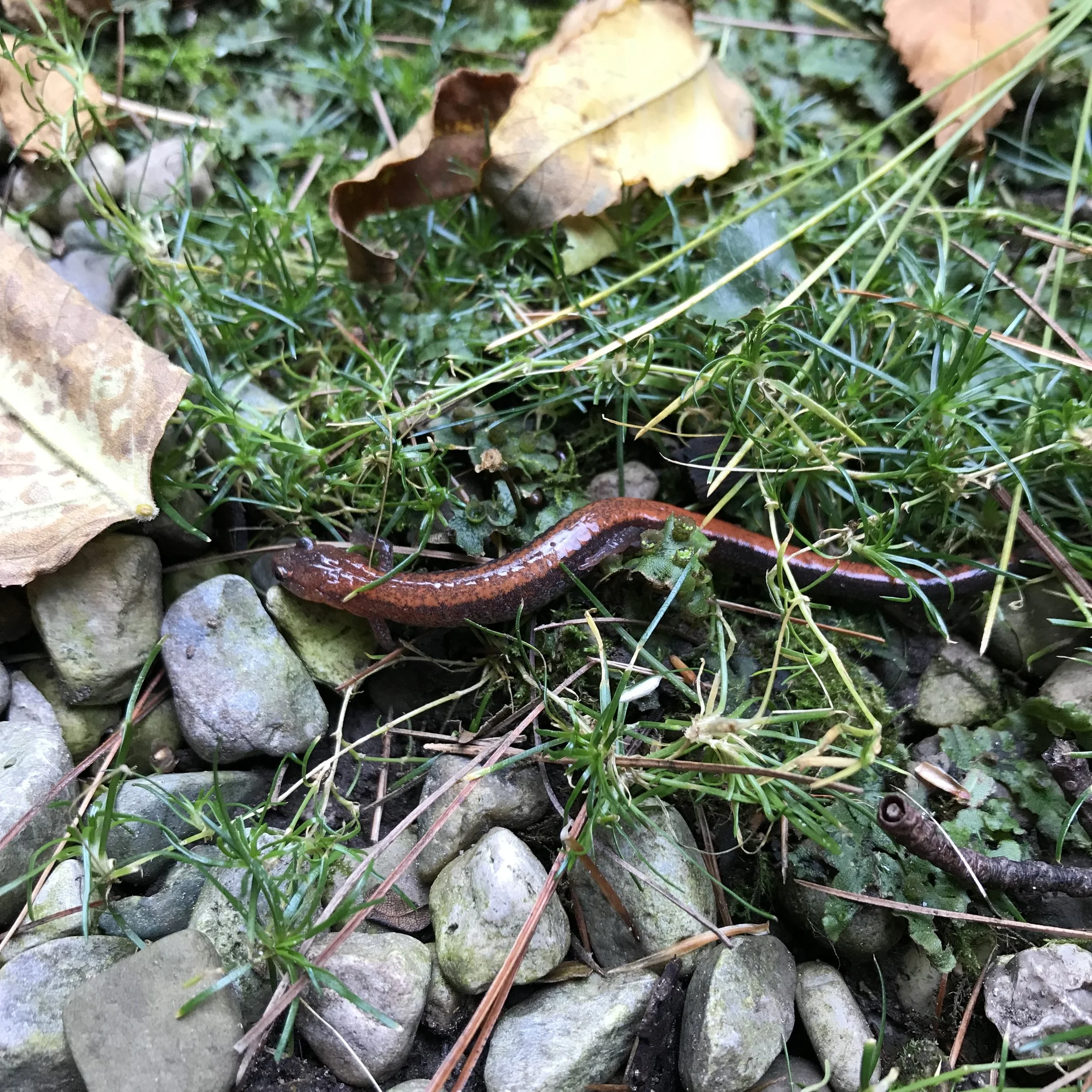
Salamanders- one of the many types of critters that can benefit from the presence of leaf litter in the garden.

The Bad

With all that said, in some instances, leaves can really pile up! (Believe me, I know. With three huge shade trees bordering my urban-sized backyard, I know what it feels like to be waist-deep in leaves!) Add snow and rain to a massive leaf pile, and you end up with leaves that have matted together to form a really REALLY thick blanket…or solid mound. (Been there. Done that.). On bare soil, a blanket of leaves is generally not an issue; where we can run into problems is when this blanket lies on top of evergreen plants for prolonged periods of time… such as over the winter; and that’s when things can ‘get ugly’.

The Ugly

Leaves still need to ‘breathe’ (not really the technical terminology, but for simplicity’s sake, let’s consider it breathing); if a thick blanket of fallen leaves is left on top of foliage that needs to ‘breathe’, the result can be smothered foliage and even the death of some plants… big whoops.

Now before you start cursing your shade trees, it should be noted that not all leaves are considered equal when it comes to the ‘smothering factor’; some leaves break down much faster than others and tend to be a non-issue in the garden. Leaves that are notorious for creating thick mats are the large thick leaves of oak (Quercus spp.), Norway and (to a lesser extent) sugar maples (Acer platanoides and Acer saccharum) and catalpa (Catalpa spp.). In contrast, the smaller, thinner leaves of willow (Salix spp.) littleleaf linden (Tilia cordata), silver maple (Acer saccharinum), and ash (Fraxinus spp.), can still form mats however these leaves break down much quicker and they do not hang around long enough to cause issues. So what is the take-home message here? Know the leaves that fall on your property! If you know what you are up against, you will know how to prevent the issues.

A nice oak leaf mat beginning to form (left) and the thin, non-persistent leaves of silver maple (right). The oak leaves can pose some problems in the garden when left covering certain plants, while the leaves of silver maple are generally not a concern.

The Solution is Simple

As you probably guessed, it is really important to pick leaves off all your evergreen plants (trees, shrubs, perennials, and groundcovers) to prevent foliage from being smothered. If you have evergreen trees and shrubs, don’t forget to look within the branches to make sure there aren’t any unwanted blankets within the plants. You will be amazed by how many leaves you pull out!

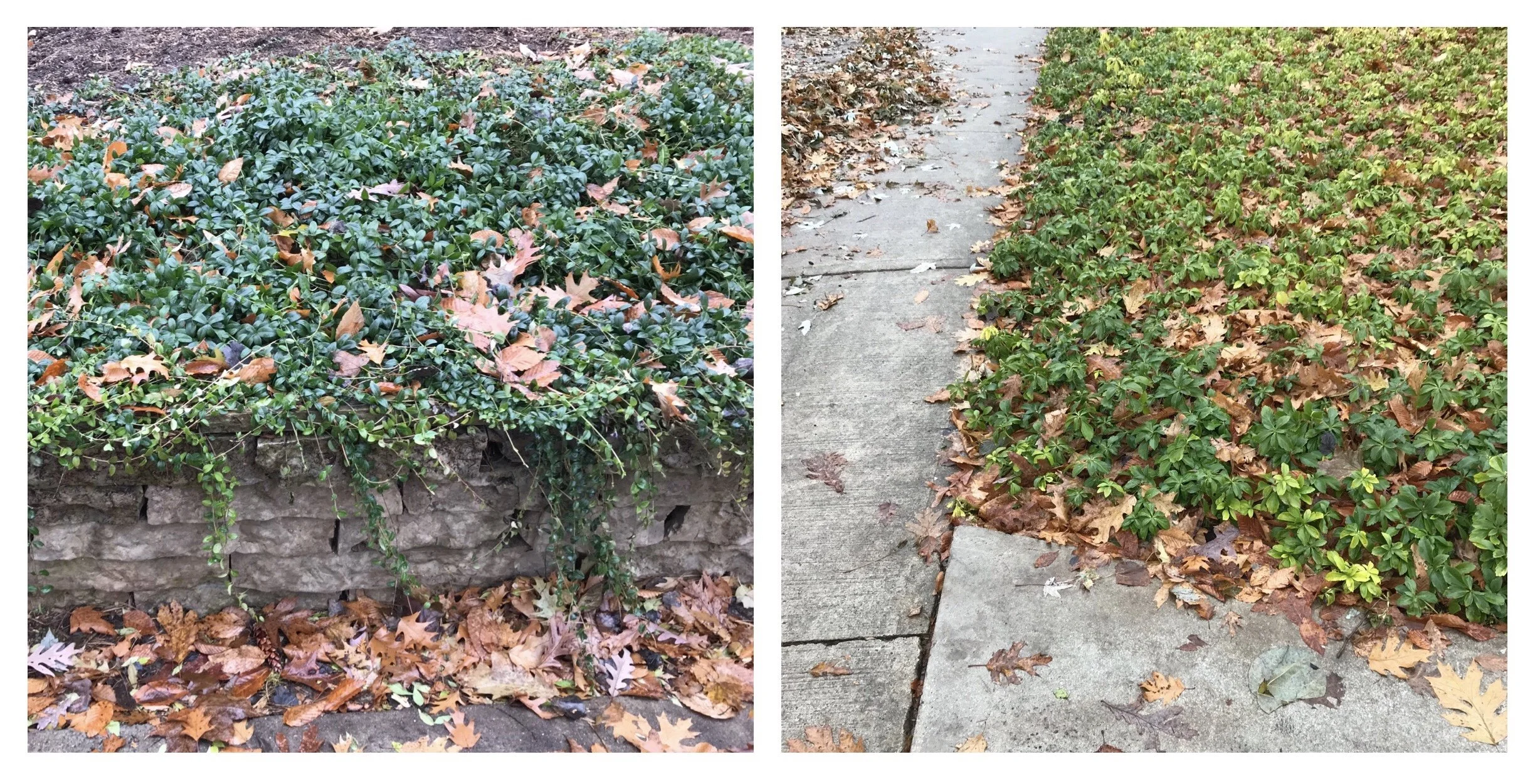
Matted leaves on evergreen groundcovers can cause foliage to die if the leaves are left to remain throughout the winter months and into the spring. Removing the leaves can help prevent issues down the road.

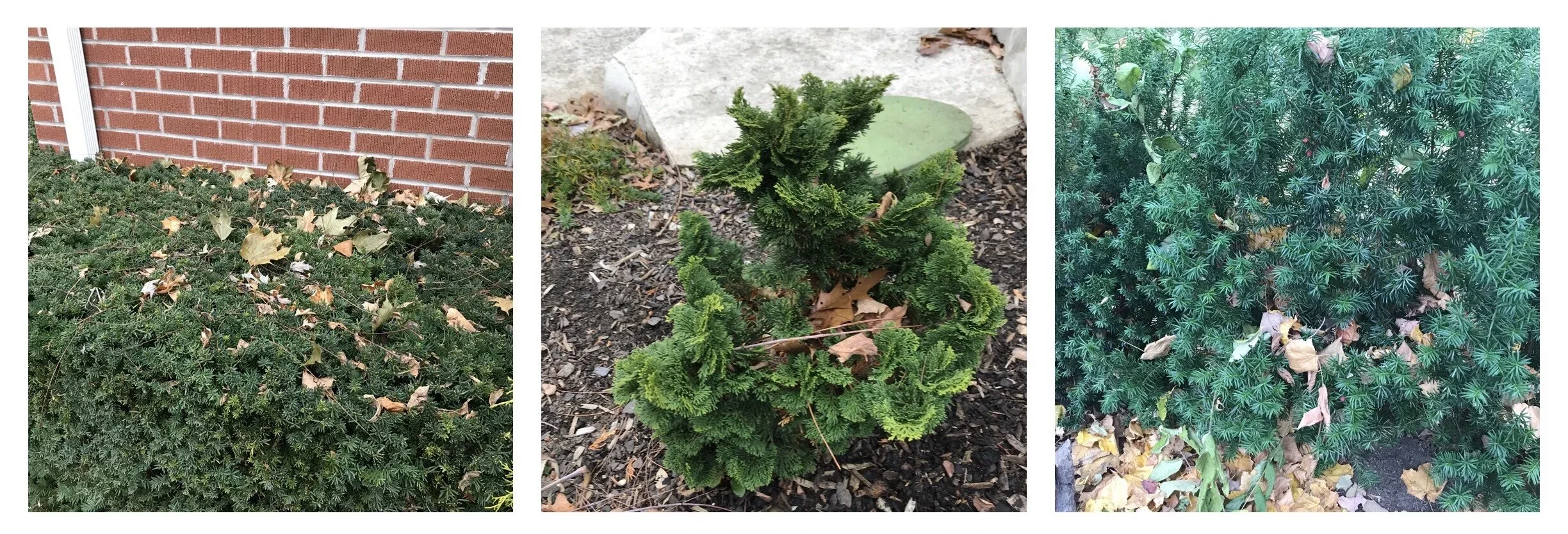
Fallen leaves resting on and within a few evergreen shrubs. I always make sure to remove these leaves to prevent future foliage problems (smothering), not to mention it just looks nicer too!

A couple more tips for managing leaves

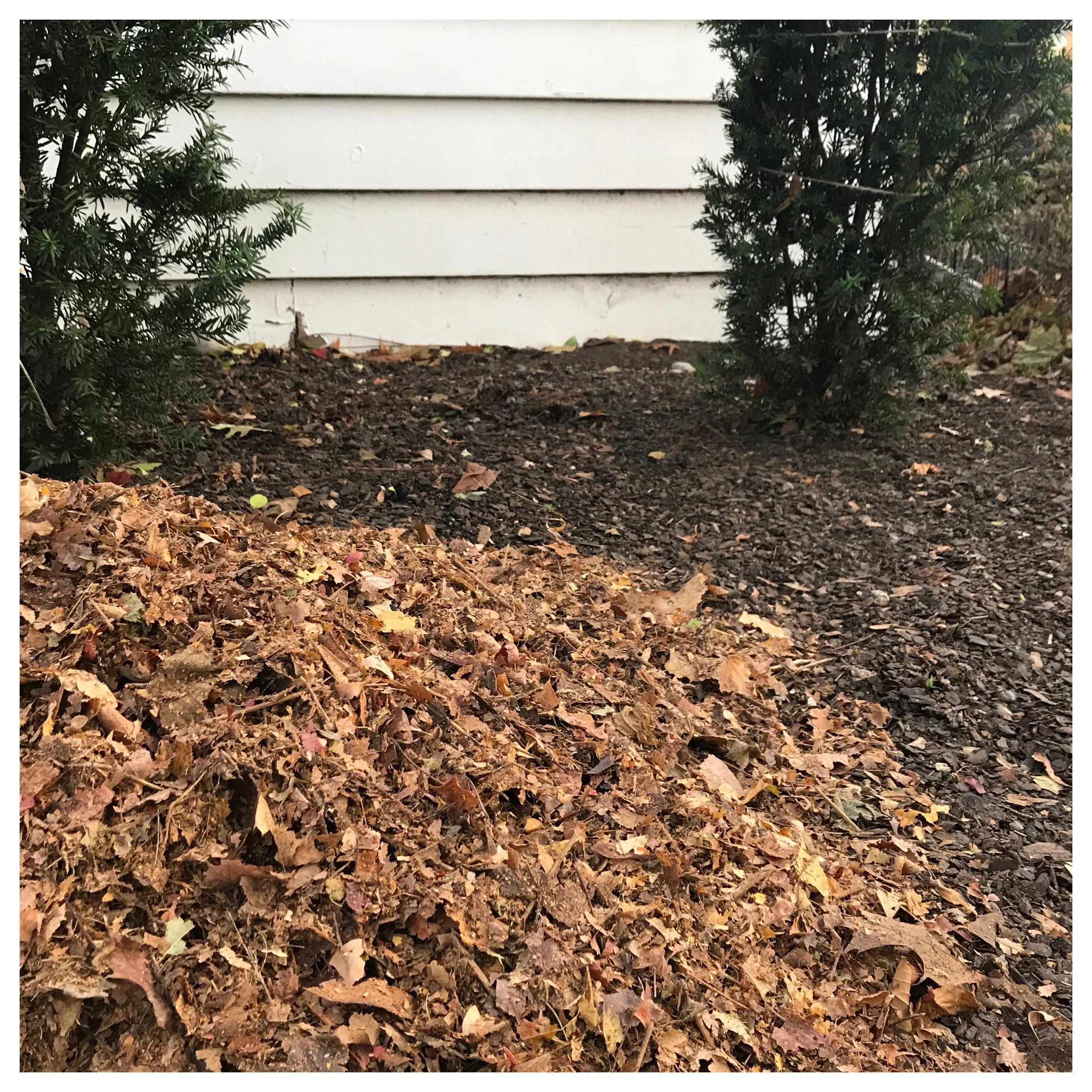
  • If you tend to have large quantities of leaves- where allowing them to lie where they fall is just not practical, or you have leaves with a tendency to become ‘smothering’, you may want to consider buying a leaf mulcher (essentially a glorified ‘whipper snipper’ in a barrel). A mulcher will shred the leaves into a beautiful mulch that you can apply to your garden knowing that it will not cause any thick smothering blankets and that it will be mostly broken down come spring. Additionally, a mulcher helps reduce the volume of leaves, so it becomes possible to allow more leaf ‘litter’ to remain on your garden than if the leaves were to remain whole. All-in-all, a leaf mulcher is a fantastic way to make use of a free soil amendment provided to us every fall, courtesy of Mother Nature.

Ahhhh… it’s so satisfying to see a pile of mulched leaves, ready for distribution throughout the yard! Hmm- what plants should I buy with all the money I save on soil amendments!?!

  • Where leaf quantities are excessive, have a designated space for leaf ‘overflow’ such as a chicken-wire enclosed area. Having an enclosure is handy as it prevents the leaves from blowing around (your neighbours will thank you). It is also a nice contained place where the leaves can slowly break down into leaf mold which can then be used in the garden. Alternatively the excess leaves can be put in a compost pile to speed up decomposition. In general, the leaf mold enclosure and the compost pile are two handy strategies that can be used if you want to keep all your leaves but have too many to allow to sit on the garden over the winter.

And that’s a wrap! Speaking of wraps… stay tuned for my next post which is about another task that I ‘wrap up’ at the end of a gardening season. Any guesses as to what that is???