Aesthetics

Fall Clean-ups: Detailing

(Originally posted: November 29, 2019)

With the majority of the leaves down, fall clean-up is becoming less about ‘just getting leaves to the curb’ (or the compost pile or the leaf mulcher) and more about making the garden look tidy heading into the winter. Whether you prefer to strip your beds of leaves (with the plan to add lots of compost next year) or keep the leaves in place over the winter so that they can break down and add nutrients and organic matter to the soil, there are a few key tips that can ‘up the tidy factor’ in your fall garden (and protect your plants in the process).

Free your Plants!

When leaves from large trees fall, they cover the garden. (Thanks ‘Captain Obvious’!) During fall clean-up, these leaves are usually raked or blown out of the beds. What often gets neglected are all the leaves that have been captured by the branches of smaller trees and shrubs in the garden. Sure these plants look dead at this time of year, but they don’t have to look like debris traps! While it may seem tedious, picking out the leaves that have been trapped within the branches of your specimen trees/shrubs or even perennials, will greatly improve the overall tidiness of your garden.
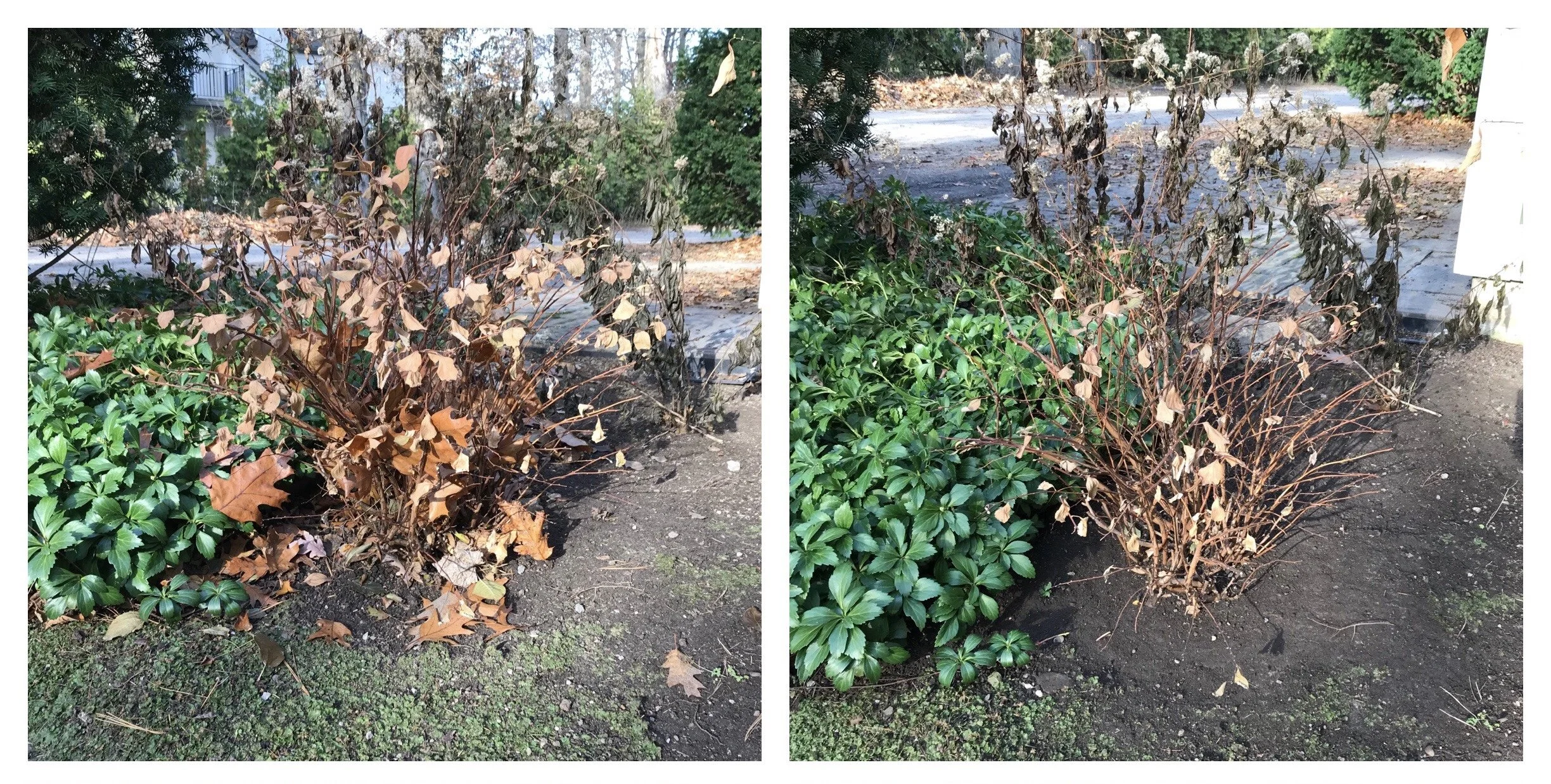
A Spiraea betulifolia (birch leaf spirea) that has been effective at trapping leaves (left) and the same shrub with the oak leaves removed (right).
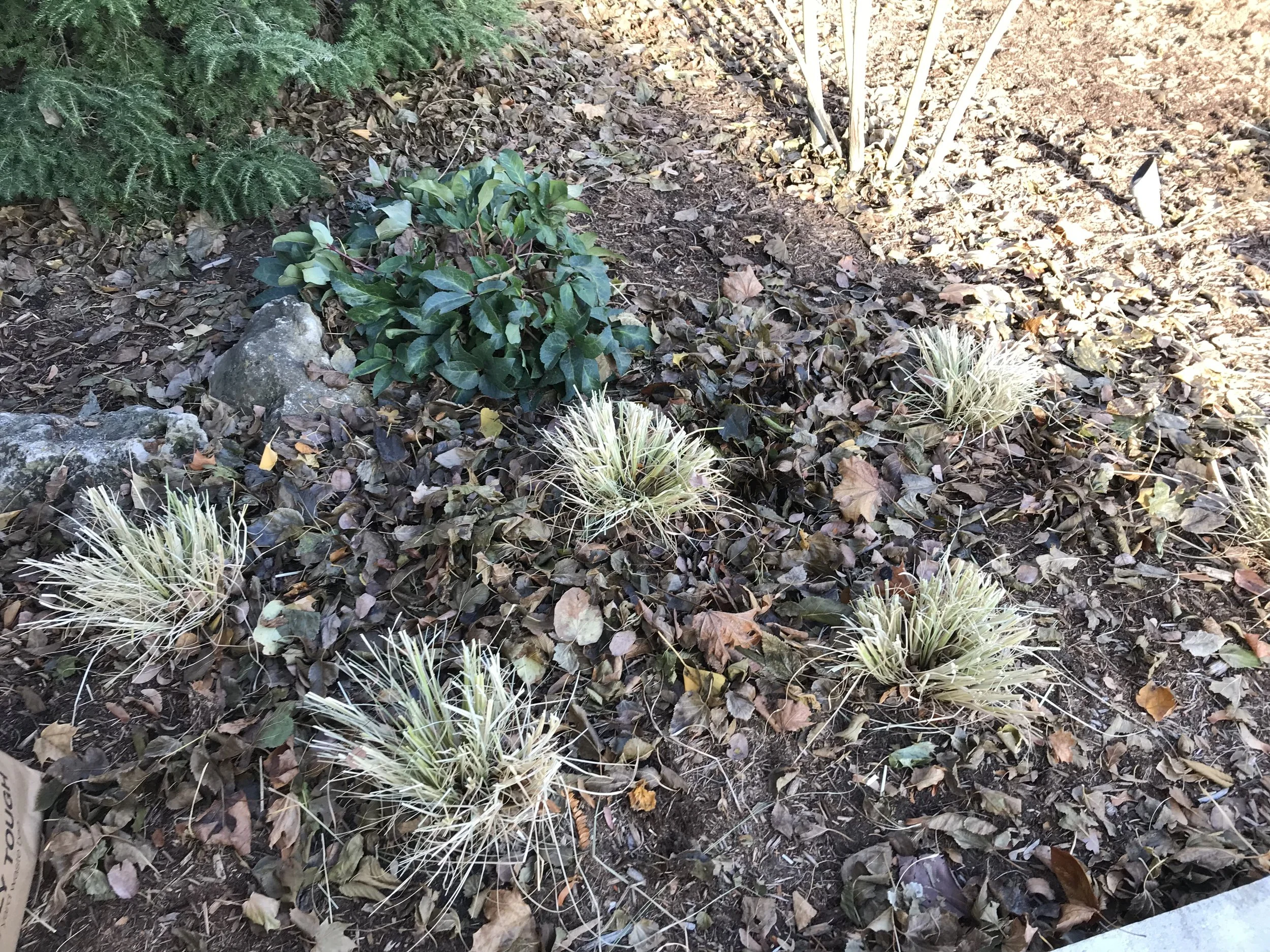
Leaves are left on this garden bed but they have been brushed off the clumps of [cut down] grass- this provides a little definition to the plantings and ‘ups the tidy factor’ despite the leaves remaining on the rest of the garden.

Picking out leaves becomes even more important when dealing with evergreen trees, shrubs, as well as groundcovers and other perennials. While leaves resting on the top of hedges or within the canopy of evergreens is really noticeable and unsightly, a build-up of fallen leaves can form thick mats on the evergreen needles/leaves which can smother/kill them. In the spring you can be left with a patchy-looking shrub or even a dead patch of groundcover. So, in the case of evergreens, it is not only aesthetically important to remove leaf litter (from on top of and within the plants), it is also important in maintaining plant health.
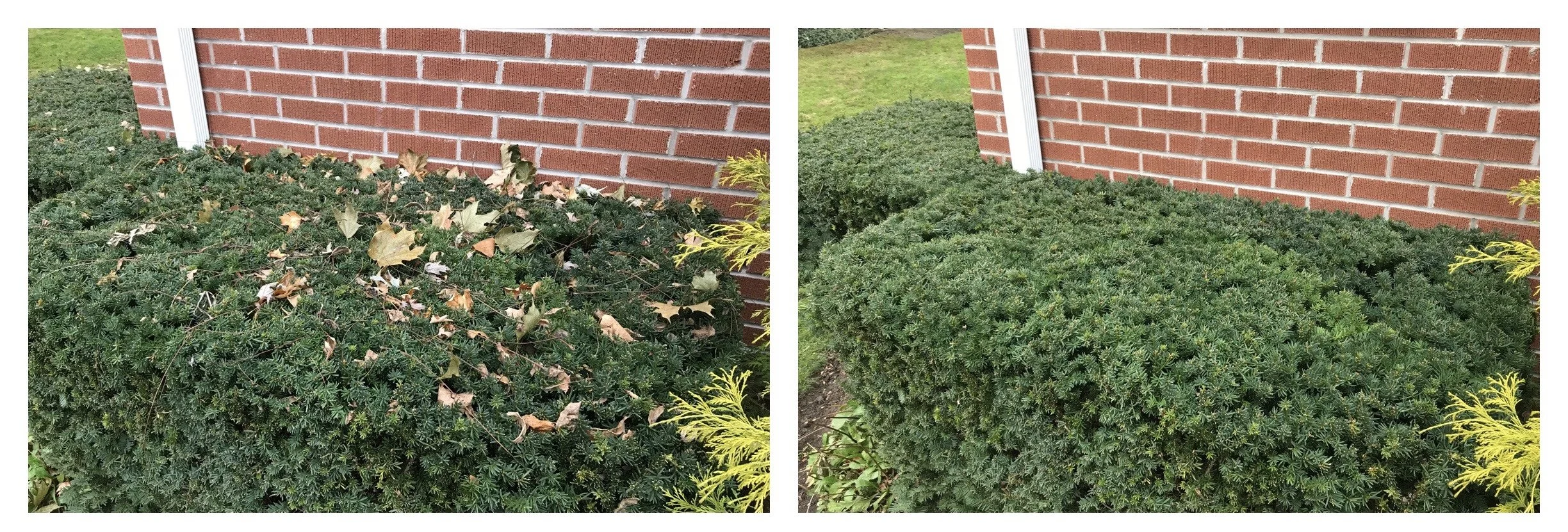
Leaves settled on top of a Taxus (yew) hedge (left) not only looks untidy but the leaves are not good for the yew foliage. Removing the leaves (right) is an easy fix.
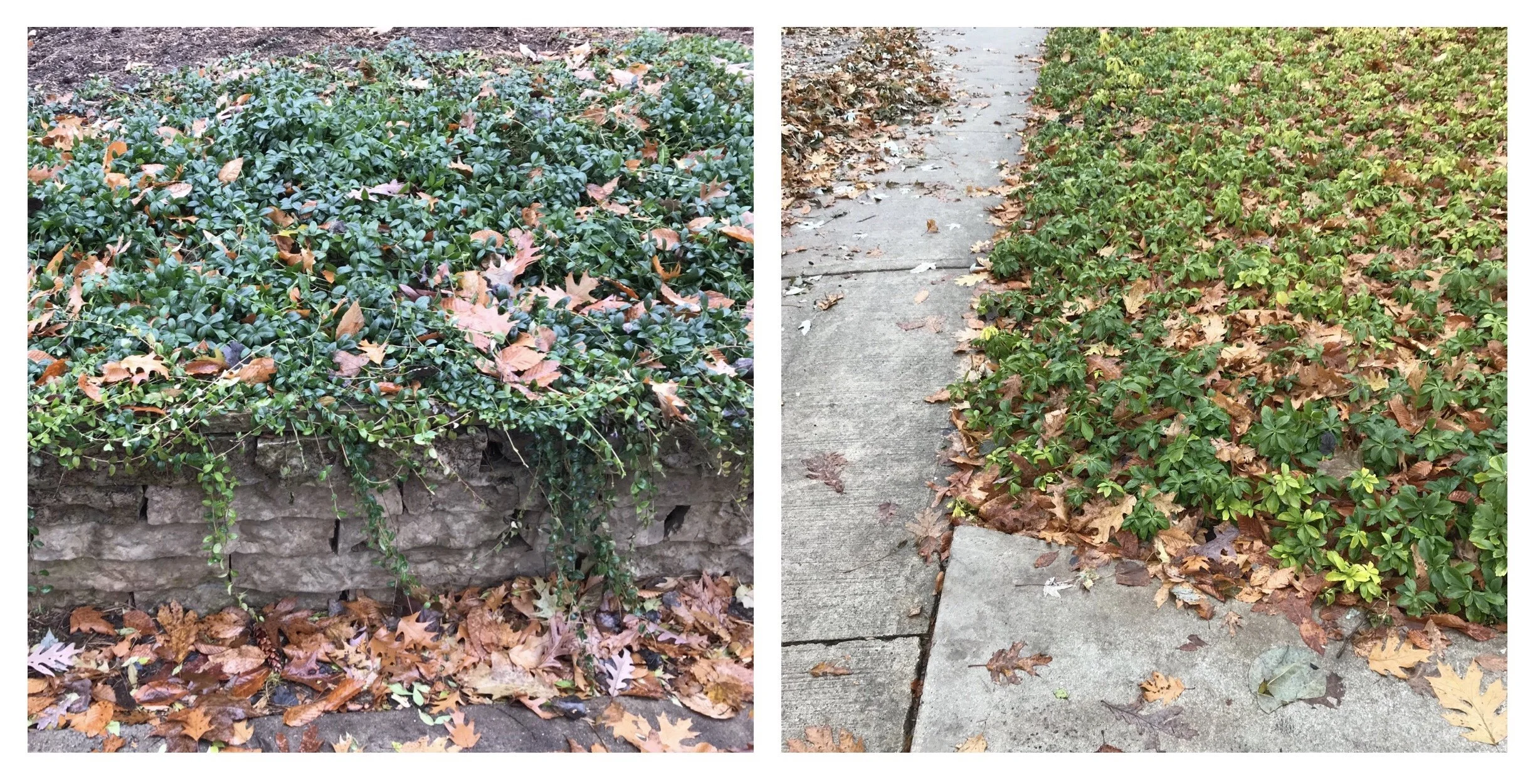
A fair amount of leaf litter resting on top of Vinca minor (periwinkle) on the left and Pachysandra terminalis (Japanese spurge) on the right; leaves should not be allowed to pile up on evergreen groundcovers such as these.

Now that we have dealt with the top portion of our trees and shrubs, we will now shift our gaze and look beneath them. Leaf blowers are notorious for blowing leaves into the base of shrubs and firmly lodging them in place. Yes, the garden bed may look tidy and uniform (with the mulch and top soil completely stripped away… ‘leaf blower rant’ to follow in a future post!) but the shrubs look like they are being swallowed by leaves! Enter another tedious task with big a payback… picking out leaves from the base of your plants. This task is guaranteed to restore some definition to your plantings but it also serves another purpose. A pile-up of leaves at the base of plants can act like a really cozy and inviting home for rodents over the winter months; rodents that can nibble on and therefore damage your plants. In an effort to not lay out the red carpet for rodents, I try to keep the base of my trees, shrubs, and even perennial clumps free of leaf build-up.
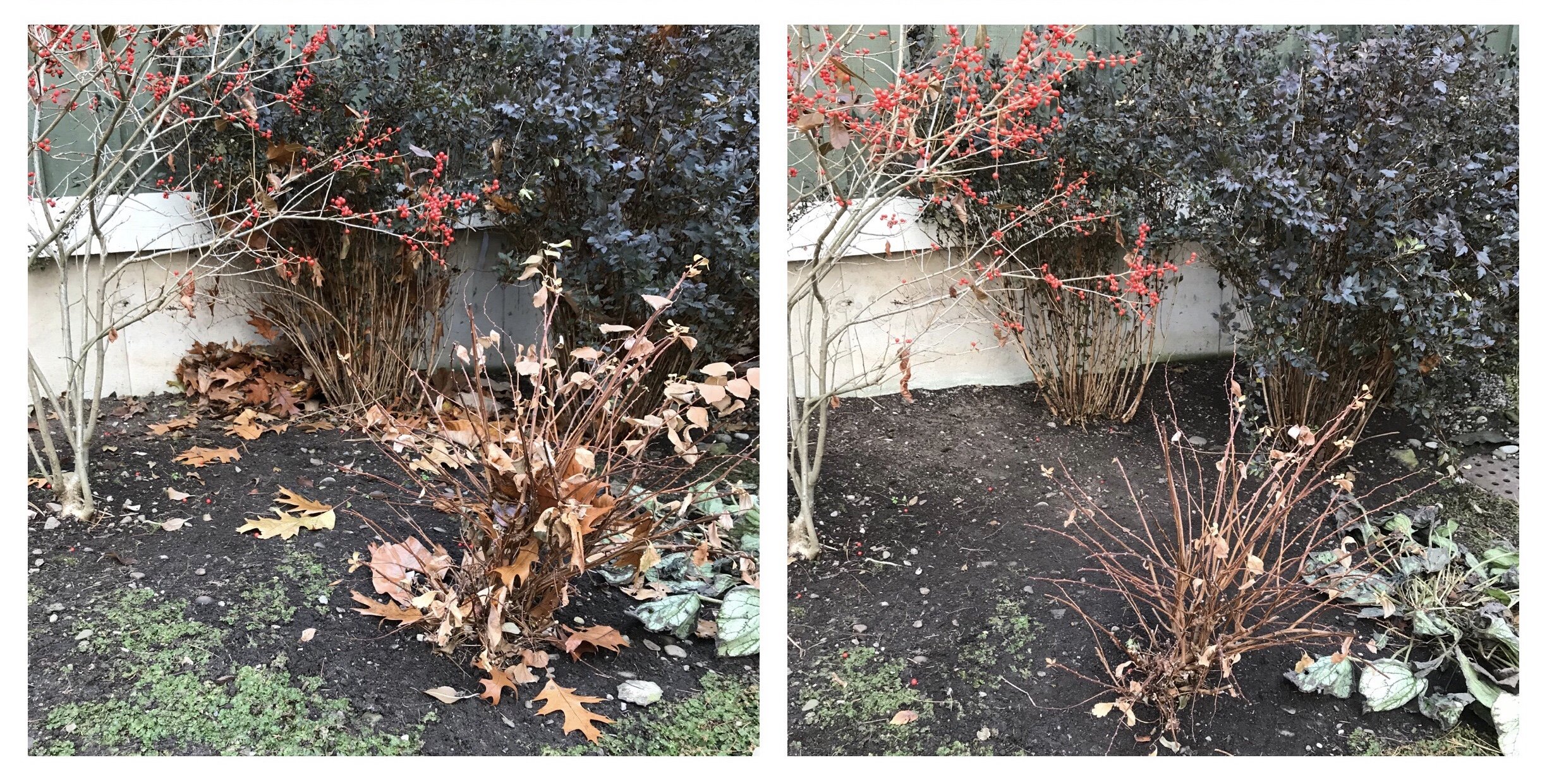
Leaves caught up in branches and around the base of some shrubs (left) and the same shrubs with leaves removed.

A Taxus x media (yew) hedge showing one section with leaves caught in branches and beneath the plants, and another section where the leaves have been ‘picked out’.

Edge

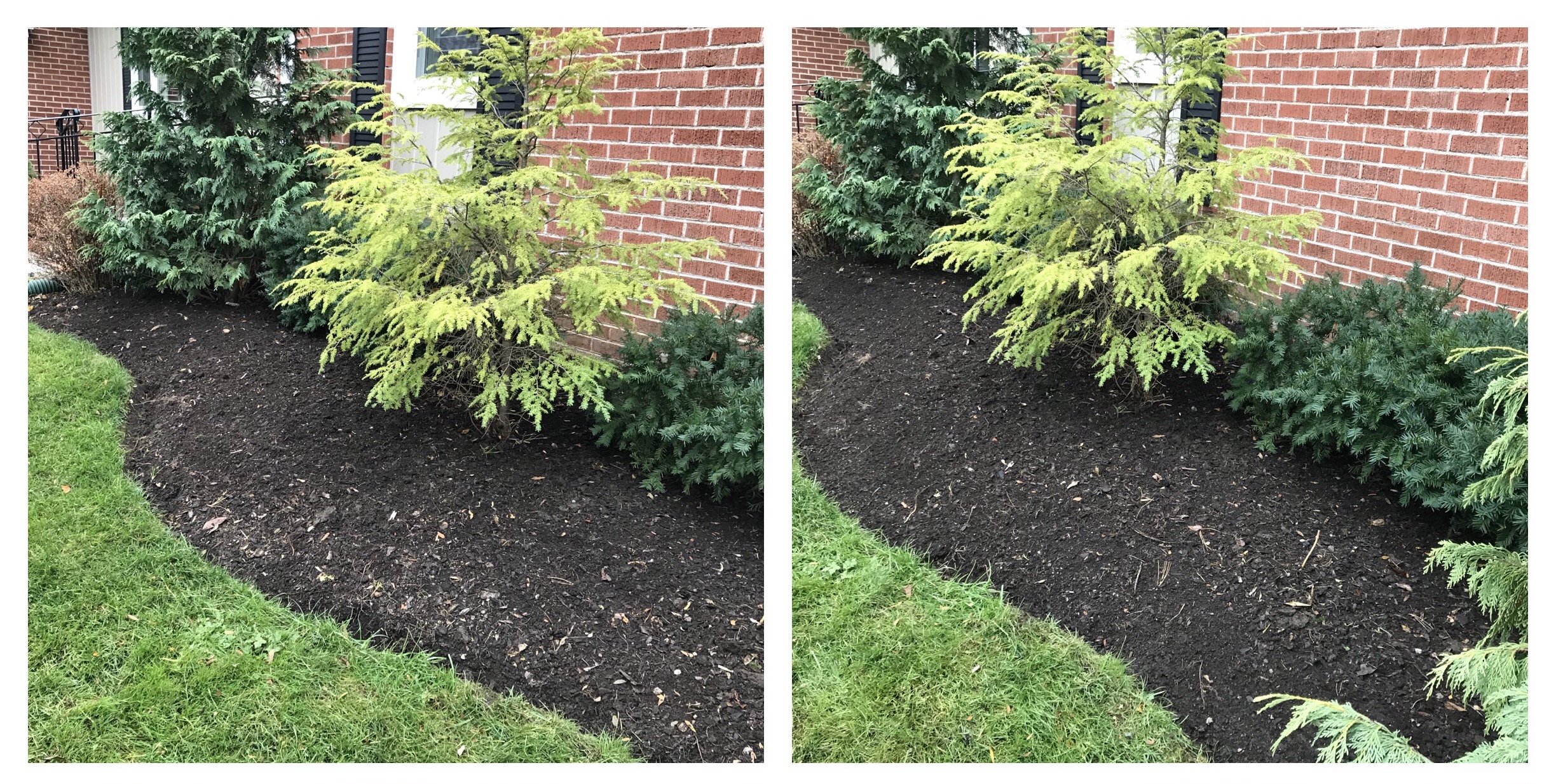
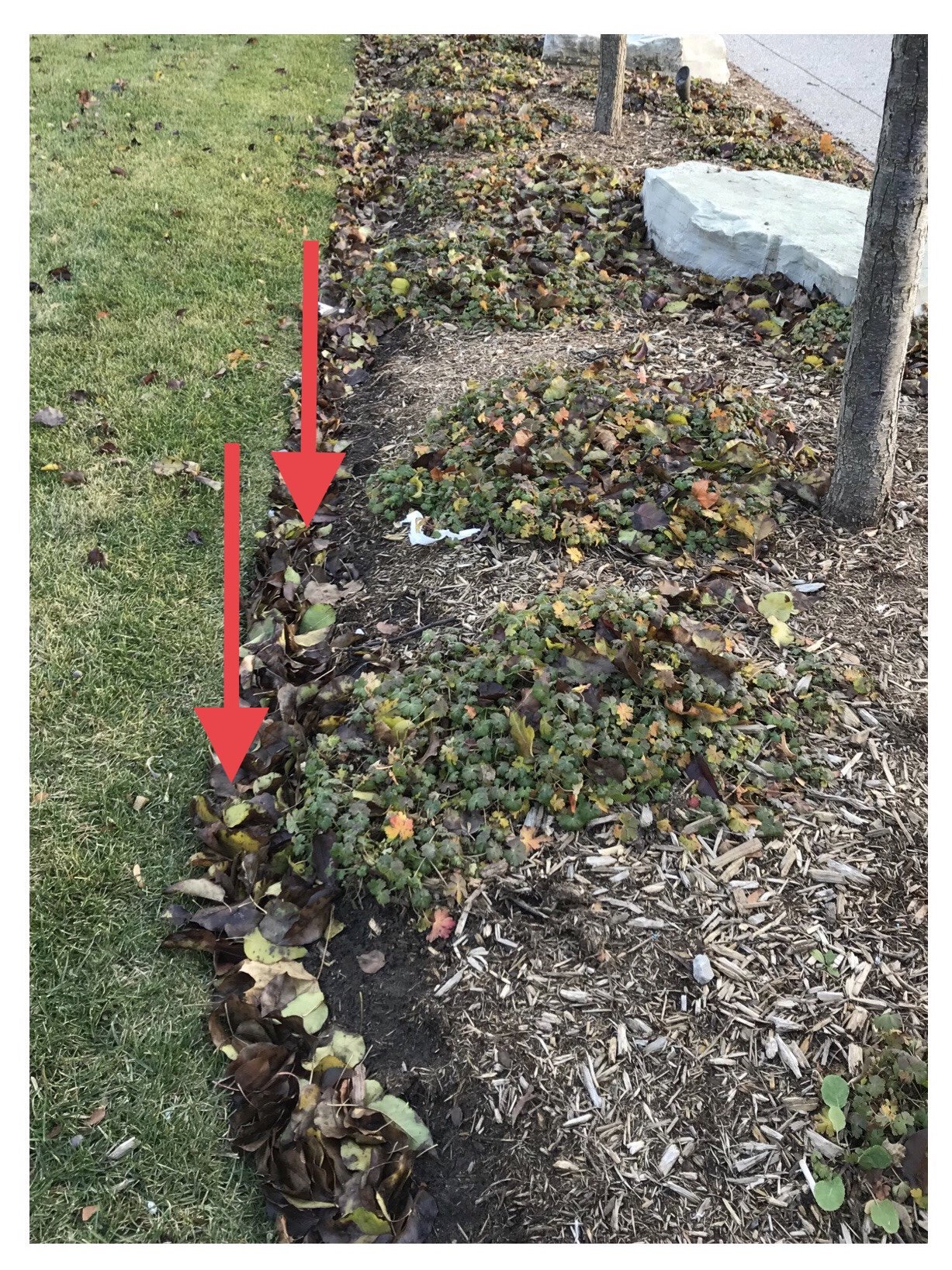
With less plant material in the garden now, the edges of our garden beds become much more prominent- which means bad edges tend to stand out like a sore thumb! A quick pass with the garden edger can ‘crisp-up’ the lines again, and give the garden a tidier look. I will also rake the turf following along the edge of a garden bed to remove any mulch that has decided to take heed of the notion that ‘the grass is greener on the other side’. To further enhance the edge of beds (ones with a surface of bare soil or fine mulch), I will take a rake and do a light pass along the front of the garden bed to give it a nice uniform look. In general, regardless of the amount of debris you leave on the garden bed, if you can keep the edge of the bed tidy, you will improve the overall appearance of the garden.
Fluff the Mulch

If you like cleaning leaves out your beds and you happen to have a layer of mulch on your gardens, now is the perfect time to turn or ‘fluff up’ the mulch- one final refresher before the snow flies!

And there you have it! These tips may seem minor and of low priority given the fact that the gardening season is coming to a close, but if you live in an area that does not receive reliable snowfall, then chances are you could be looking at your garden ‘as is’ for a fairly long time! These are all tasks that are often overlooked during fall clean-ups (by homeowners and professionals alike!) and I find that to complete a fall clean-up that really stands out… the tidiness is in the details.
Colour, colour everywhere!

(Originally posted: October 20, 2019)

In a way, autumn is the season of ‘I should haves’.

“I should have paid more attention to weeds in that section of my garden, now it’s just daunting… can we just take a backhoe to the whole thing?!”

“I should have pruned that shrub after it bloomed because it is looking like an overgrown monster….”

“I should have cut that perennial before it went to seed because I am going to be weeding-out seedlings forever!”

Many of these ‘I should haves’ are now pieces of garden history- lessons [hopefully] learned that will guide us through gardening seasons yet to come, but there is one ‘I should have’ that you can do something about right now and that is ‘I should have planted for fall colour’.

A little gardening exercise

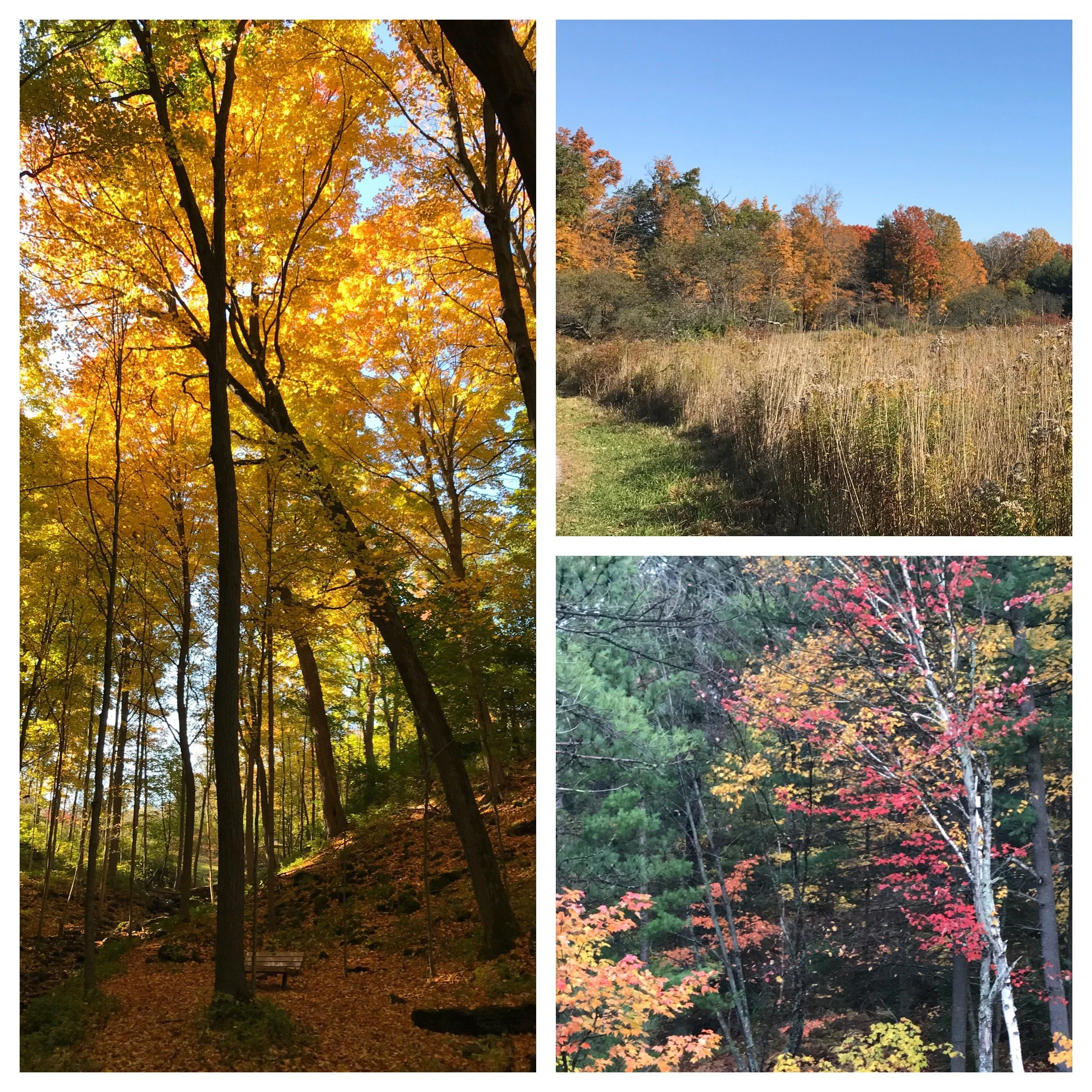
Look around your garden both now, and in the weeks ahead. Is it looking rather ‘blah’? Now take a gaze into your local woodlot or ravine… the forests are ablaze with leaves of fiery red, deep crimson, clear yellow, and spectacular orange. Nature provides an absolutely amazing palete of colours when it comes to autumn… the trick is to capture this beauty in our gardens.

The fall colour palette, courtesy of Mother Nature

Time to take a walk through your neighbourhood. Keep your eyes open for plants that seem to ‘pop’ in other peoples’ gardens. You can also take a walk through the woods and let our native plants speak to you. In any case, this is a great time to scout-out, identify, and research those ‘fall-showstoppers’ and figure out which ones you would want to incorporate into your own garden; and, since autumn is generally a great time for planting (and transplanting), you could even make some space in your garden, take a trip to your local garden centre to pick up some new babies, and put your ideas into action.

Phew. There’s one ‘I should have’ averted.

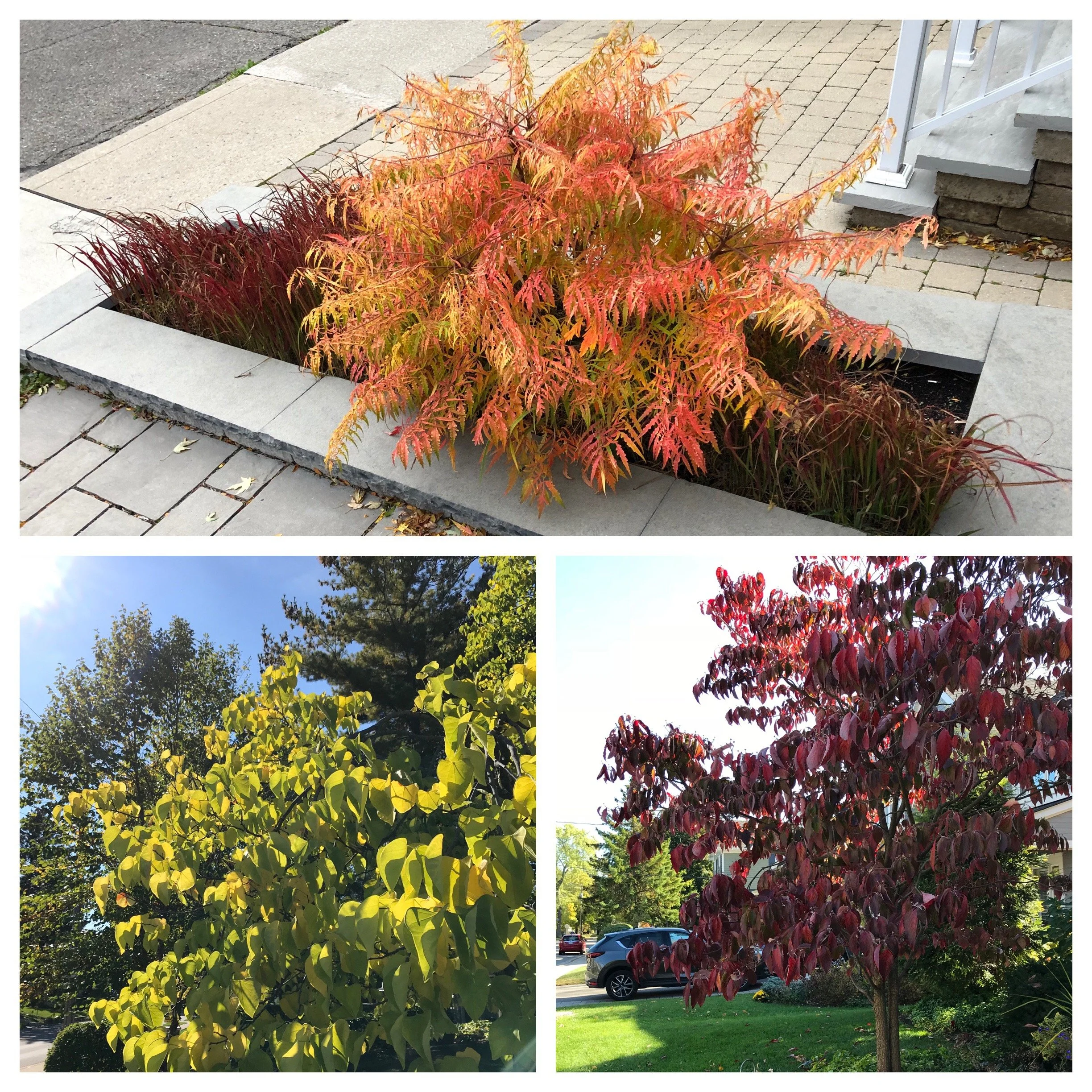
Inspiration from the garden: the gorgeous fall combination of Japanese blood grass (Imperata cylindrica ‘Red Baron’) and Tiger Eyes Staghorn Sumac (Rhus typhina ‘Bailtiger’), the yellow ‘pop’ of redbud (Cercis canadensis) foliage and the deep crimson canopy of Chinese dogwood (Cornus kousa). Top photo courtesy of Alicia K.

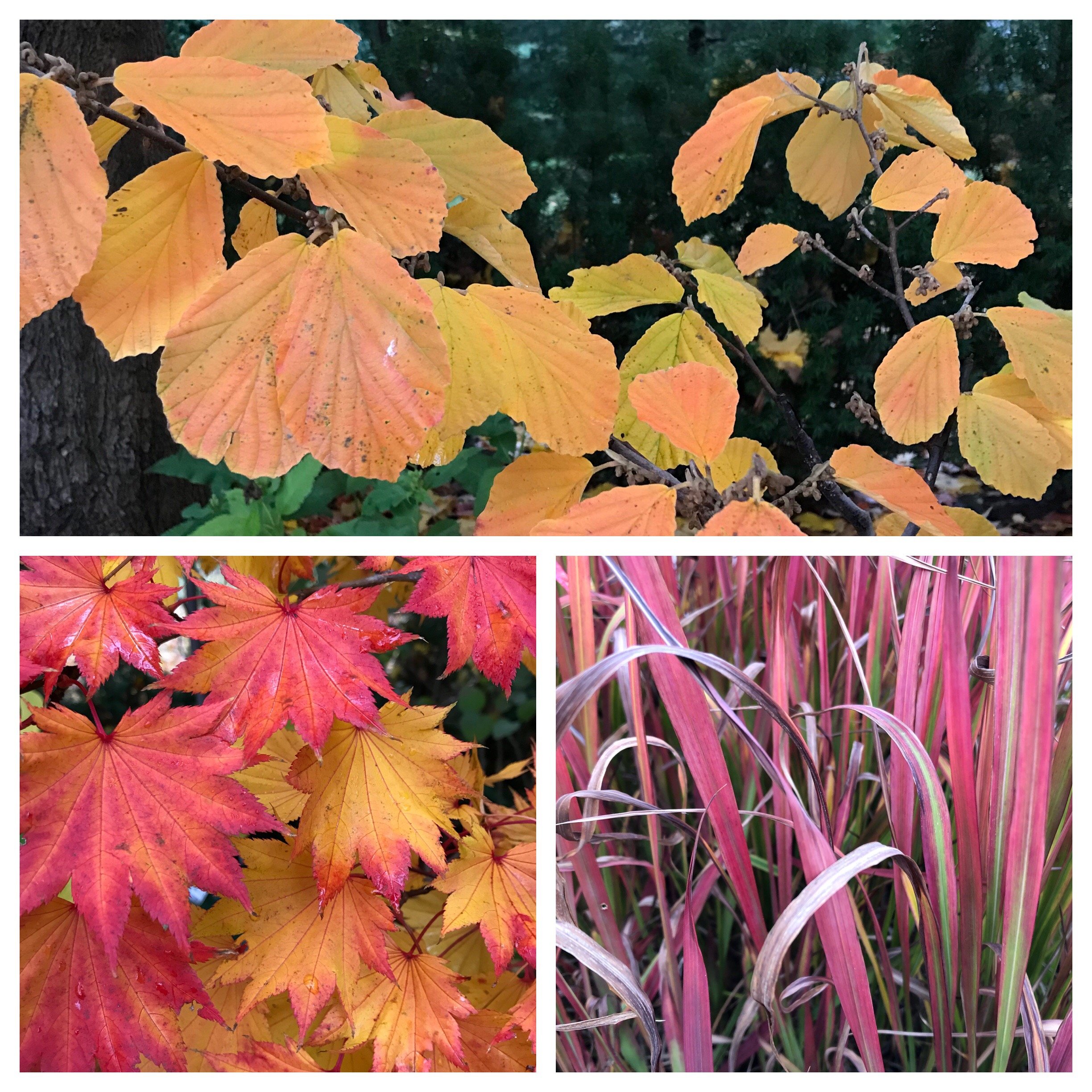
More fall colour inspiration from the garden: a 2018 photo taken In early November of witchhazel (Hamamelis x intermedia), a 2018 photo taken in early November of the spectacular colour show of ‘Full Moon’ Japanese maple (Acer shirasawanum ‘Aureum’) and another picture of Japanese blood grass (Imperata cylindrica ‘Red Baron’) courtesy of Alicia K.

More fall colour inspiration to follow on the GROW Instagram account!

Perennials: to chop or not?

(Originally posted: October 15, 2019)

Well it seems as though the gardening season is progressing at an alarming rate- is it really October??? We are now on to fall gardening tasks, and one of the main tasks is cutting perennials back (not to be confused with pruning trees and shrubs which I addressed in my previous post, Temper your Enthusiasm). At this time of year, I am often asked: “what should I cut back”? I am going to try to answer this question as concisely as possible in this post (no promises).

Before getting into the nitty gritty, however, I should first start with the other question that I am often asked which is “when should I cut back my perennials?”. In general, I wait until things are well on their way to dying back on their own. Right now, plants are gathering up some last rays of sunshine (as are we!) and beefing up their energy reserves in their root systems to help them survive the winter and have the ability to flush out new growth in the spring. Letting perennials go through this natural process allows the plants to properly prepare for winter. Usually when the leaves have turned colour (which is a sign that the plant is no longer photosynthesizing or making energy) is when I start whacking things back; this is usually (but not always) shortly before or shortly after the first frost.

What to Cut Back

Now… the all important question, what should we be cutting back? Using these 6 questions about your perennials can help point your secateurs in the right direction:

1) IS IT EVERGREEN?

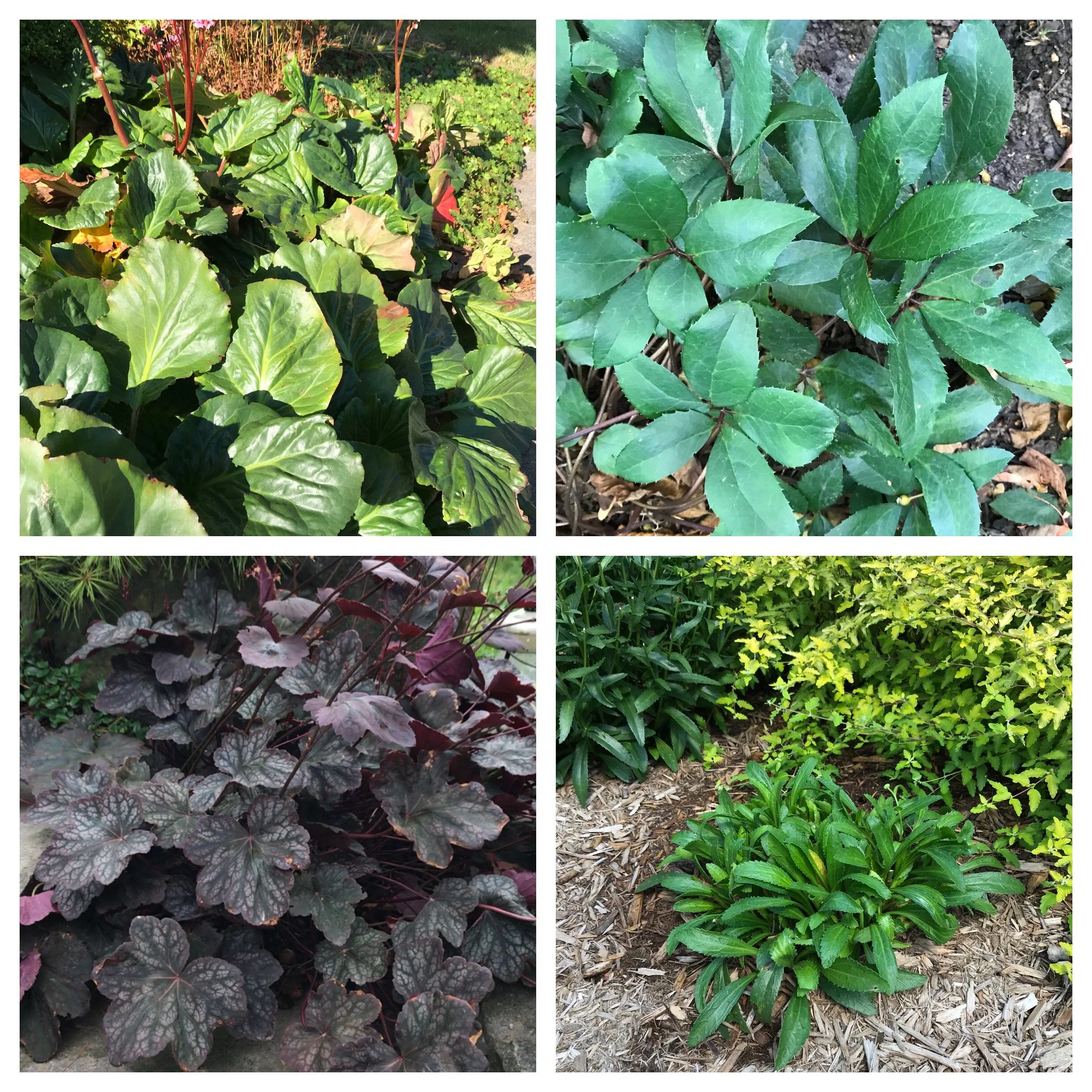
Let’s face it. We don’t always grow perennials for their floral display. Take Heuchera (coral bells) for example, many cultivars of this perennial are not winning any awards for blooms- A+ for effort, but no awards. So what does this plant have going for it? Foliage! Not only do Heuchera come in all sorts of gorgeous foliage colours, the leaves of coral bells persist year-round. They are evergreen (or ever-purple, or ever-chartreuse or ever-pink…). Other examples of perennials in the evergreen category include various species of Helleborus (Lenten rose or Christmas rose), Bergenia, and Yucca. Additionally, there are also some perennials, such as Leucanthemum superbum (shasta daisy) whose flower stems die down while their basal foliage remains evergreen. So as the saying goes ‘if you’ve got it, flaunt it’ and these plants have got it…foliage in the winter, that is! Leave these perennials standing tall! Sure they may look a little ratty come spring (depending on the kind of winter we are served and the growing conditions that the plants are subjected to) but the fact of the matter is that they have the potential to look nice, even during the winter months. In areas with unreliable snow cover (ahem… southern Ontario) this can be a really nice addition to the garden.

Examples of evergreen/semi-evergreen perennials (clockwise from top left): pigsqueak (Bergenia spp.)., lenten rose (Helleborus sp.), the basal foliage of shasta daisies (Leucanthemum spp.) and coral bells (Heuchera spp.),

2) DOES IT RETAIN IT’S STRUCTURE?

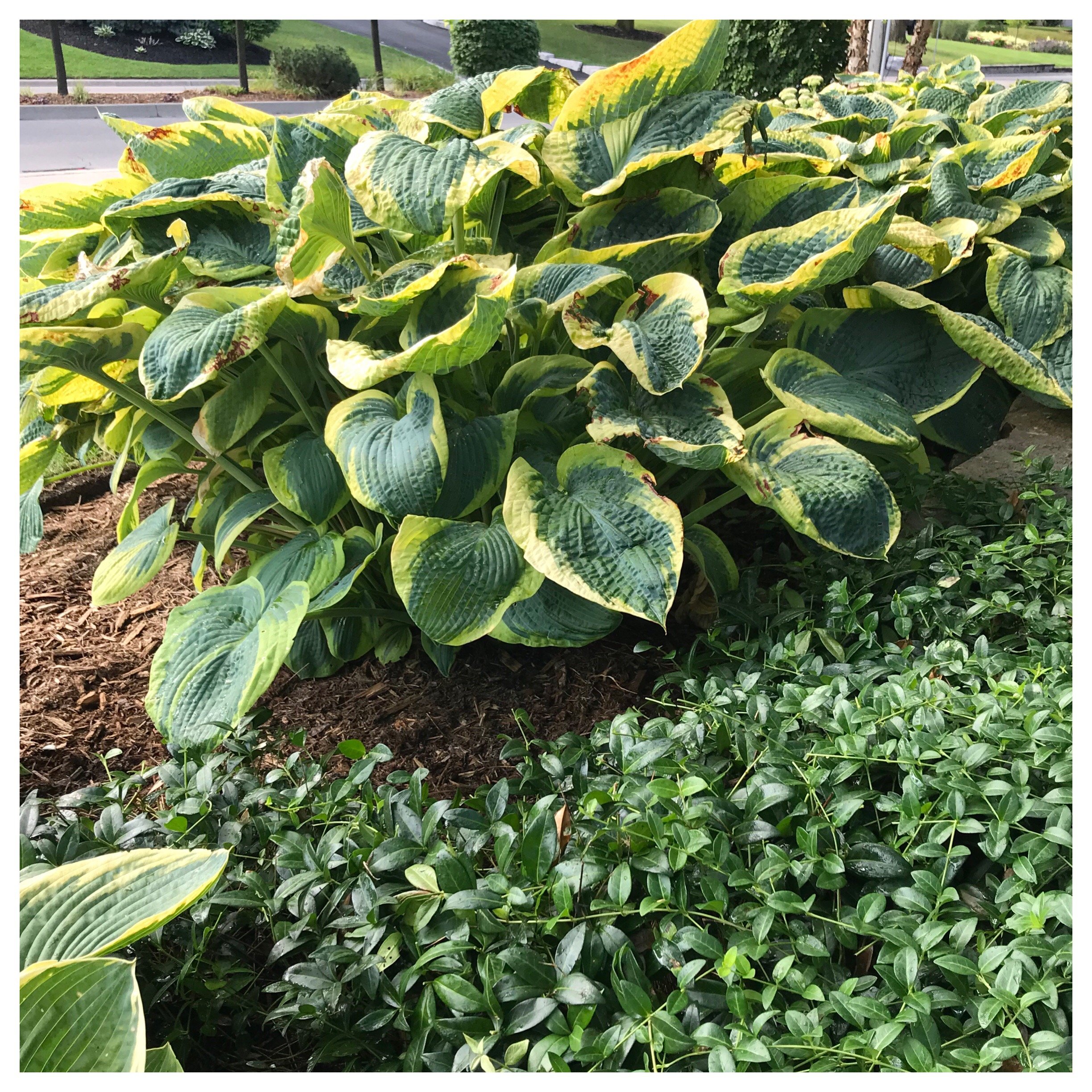
Some perennials, such as many ornamental grasses will retain their structure well into the winter months. These perennials will not only add structure to the garden but some gorgeous texture too (see ‘ornamental features’ below)! Other perennials such as Hosta spp. will essentially turn to mush come the first hard frost, while Polygonatum spp. (Solomon’s seal) will drop it’s leaves and loose it’s graceful form in the process. In any case, I am going to make the assumption that no one finds an indistinguishable mess of mushy leaves to be attractive. If your plants seem to crumble as soon as the cold weather hits, cut them back! It will be one less clean-up job to do in the spring and your winter garden will thank you for improving her aesthetics!

The hosta- a beautiful addition to the shady garden… absolutely useless in a winter garden.

3) IS IT WOODY?

Some perennials develop woody stems such as Perovskia atriplicifolia (Russian sage) or Lavandula (lavender). These are guaranteed to retain some structure in the winter and pruning for these two perennials is best left to the spring anyway. Leave them up and enjoy having some added structure to your garden!

4) DOES IT HAVE ORNAMENTAL FEATURES?

Beautiful texture? Ornamental seed pods? Pretty dried flowers? These are all features that look oh so beautiful when touched by a frost or coated in a light dusting of snow. Remember- winter is a beautiful season, if a plant has something that can help capture this beauty, then let it be!

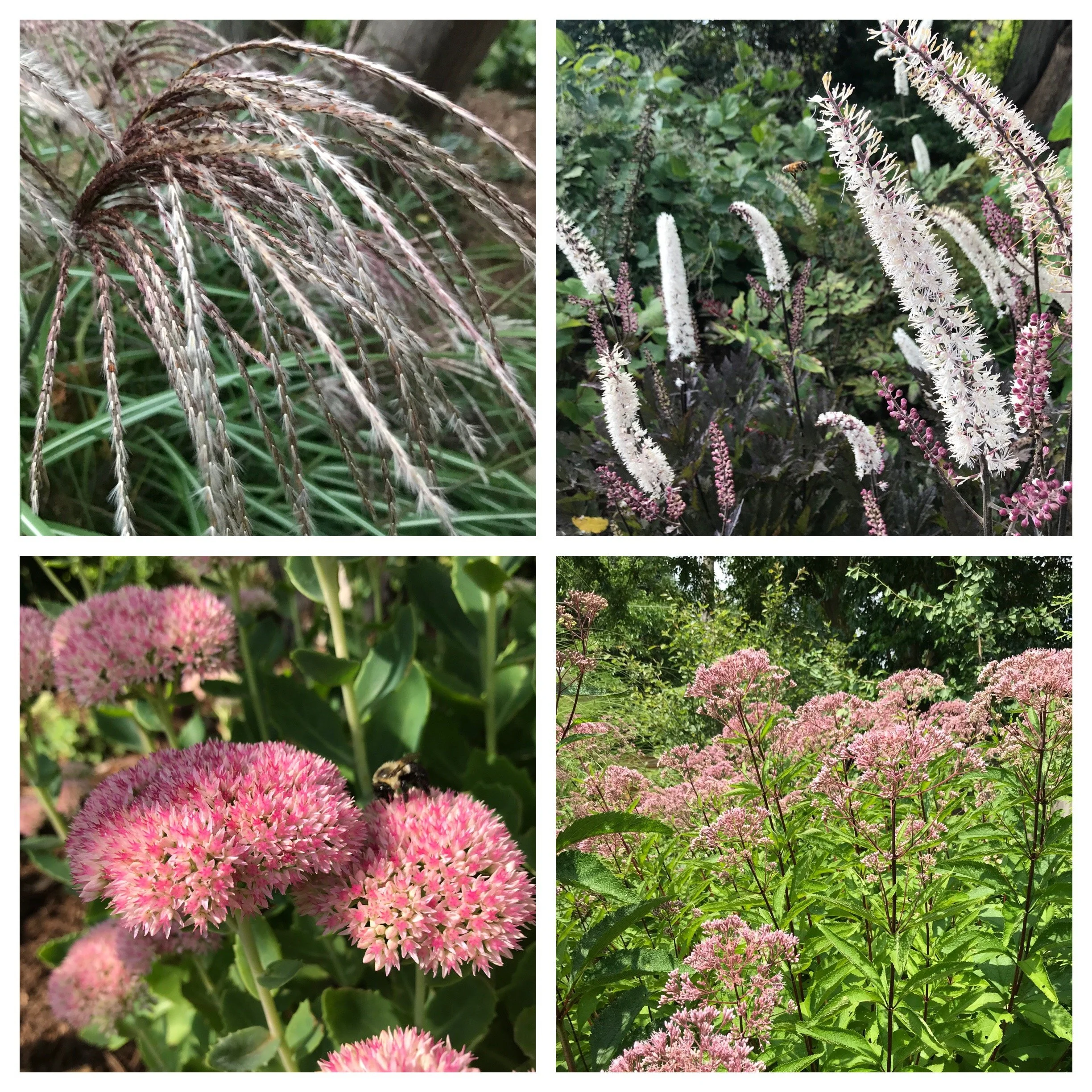
Ornamental grasses and perennials such as bugbane (Cimicifuga spp.), Sedum spp.) and Joe Pye weed (Eupatorium spp.) have seedheads that capture a dusting of snow beautifully. * Remember, if you have a plant that tends to seed itself prolifically, you may want to chop the flowers before they go to seed. *

5) DOES IT HAVE WILDLIFE VALUE?

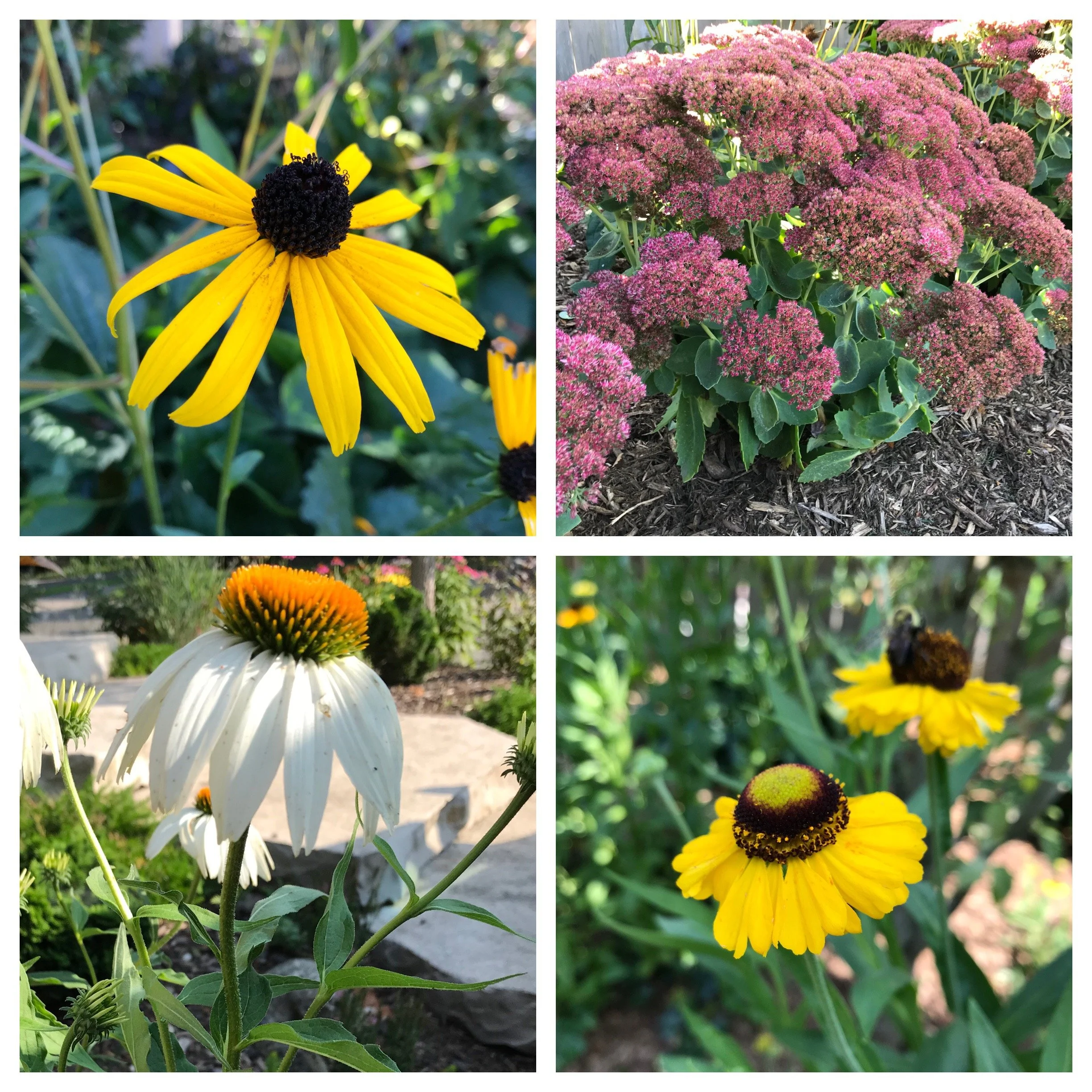
Many perennials produce seeds valued by wildlife (especially birds); some of the more common ones include species of: Echinacea (coneflower), Rudbeckia (black-eyed Susan/gloriosa daisy), Sedum (stonecrop), Eupatorium (Joe Pye weed and boneset), Helenium (sneezeweed) and Heliopsis (false sunflower). Leave these perennials standing over the fall and winter months and you can feel good about providing a food source for our feathered friends.

Some perennials with wildlife value. Clockwise from top left: black-eyed Susan (Rudbeckia hirta), stonecrop (Sedum spp.), sneezeweed (Helenium autumnale) and coneflowers (Echinacea spp.)

6) IS IT DISEASED?

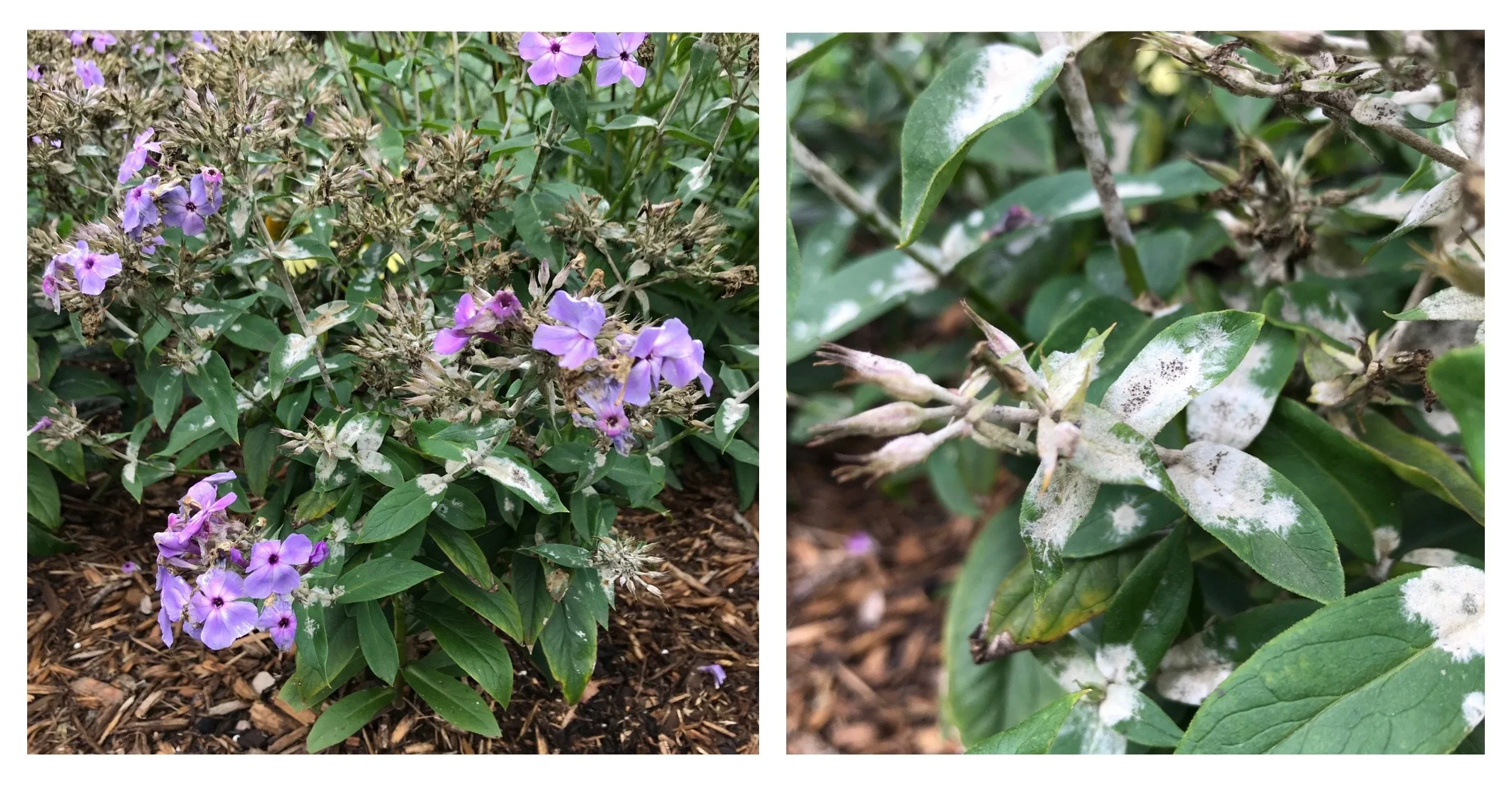
Did you notice anything funny on the leaves of any of your perennials this year? Perhaps a white fuzzy coating or little rusty pustules or unusual blotches? If you suspect that a perennial in your garden was diseased, it is best to cut it down (or even dig it out). Often diseases will overwinter in the garden on diseased plant material; this can become a source of infection for the next season. Cut anything suspicious down and DO NOT compost it. If it is a re-occuring problem, it may indicate that the plant is not growing in its optimum conditions (stressed plants are more prone to diseases) or it is a problem that the perennial is particularly susceptible to. If you have plants that seem to be hit by disease year after year, it may be time to think of some more robust replacements (an excellent task for the winter!).

Even though this Phlox would retain some structure over the winter, it is diseased and should be cut down (and the clippings removed from the garden).

OK OK, so that may not have been overly concise but I hope it helped! Remember- if you are not sure what to do with a certain perennial, you can always leave it alone to see how it fares the winter months. It can often be surprising what plants look attractive in the winter. So don’t be too hasty in chopping down all your perennials- right now you are the designer of your winter garden!