Plant hardiness zones

It's Gardening Season- Dig in!

(Originally posted: April 9, 2021)

Spring is upon us and gardeners everywhere are chomping at the bit to get their hands dirty and turn winter dreams into reality. With all this unbridled enthusiasm in the air during the early days of spring, it is no surprise that the most common question to arise in conversation tends to be: “how soon can I start planting?”.

My answer, to the shock (and sometimes horror) of many people, is “if you can get a shovel in the ground, then you are eligible to plant!”
Now this may seem like a nice concise answer and the end of the blog post, but by now I think you know that I am not exactly a short-winded writer. Like all gardening statements, this one comes with some caveats that we should really take a few moments to discuss.


Soil Workability vs. Suitability

While the lack of frozen soil is an indication that the ground is workable and able to receive some new plant material, the question becomes whether or not it is suitable to be working in the garden. One common condition that makes soil unsuitable for gardening (which can occur during any season but is frequently a problem after snowmelt and spring rains) is that it is too wet. Trampling on wet soil is an easy way to cause soil compaction (bad!), not to mention that planting in waterlogged soil does nothing to start new plants off on the right foot! In fact, it is a good way to essentially drown them.

Not sure if your soil is too wet? Try the ball test! Scoop up a handful of soil with a trowel and squeeze it into a ball. Now ask:

Does the soil leave a mud impression on my hand/does the soil stick to my fingers?

Do I see free water squishing out from the soil when I squeeze it?

Does the ball remain in tact if thrown in the air?

If you answered yes to any of these questions, the soil is too wet to be worked and it should be allowed to dry out to the point that it is able to crumble after being squeezed into a ball, or break apart when thrown into the air. Obviously if you garden in heavy clay soil, the ball test is much less straightforward as clay particles have an uncanny ability to stick together. Therefore, in the case of clay soils, the presence of water/soil staining on fingers becomes a very useful observation when determining soil moisture levels.
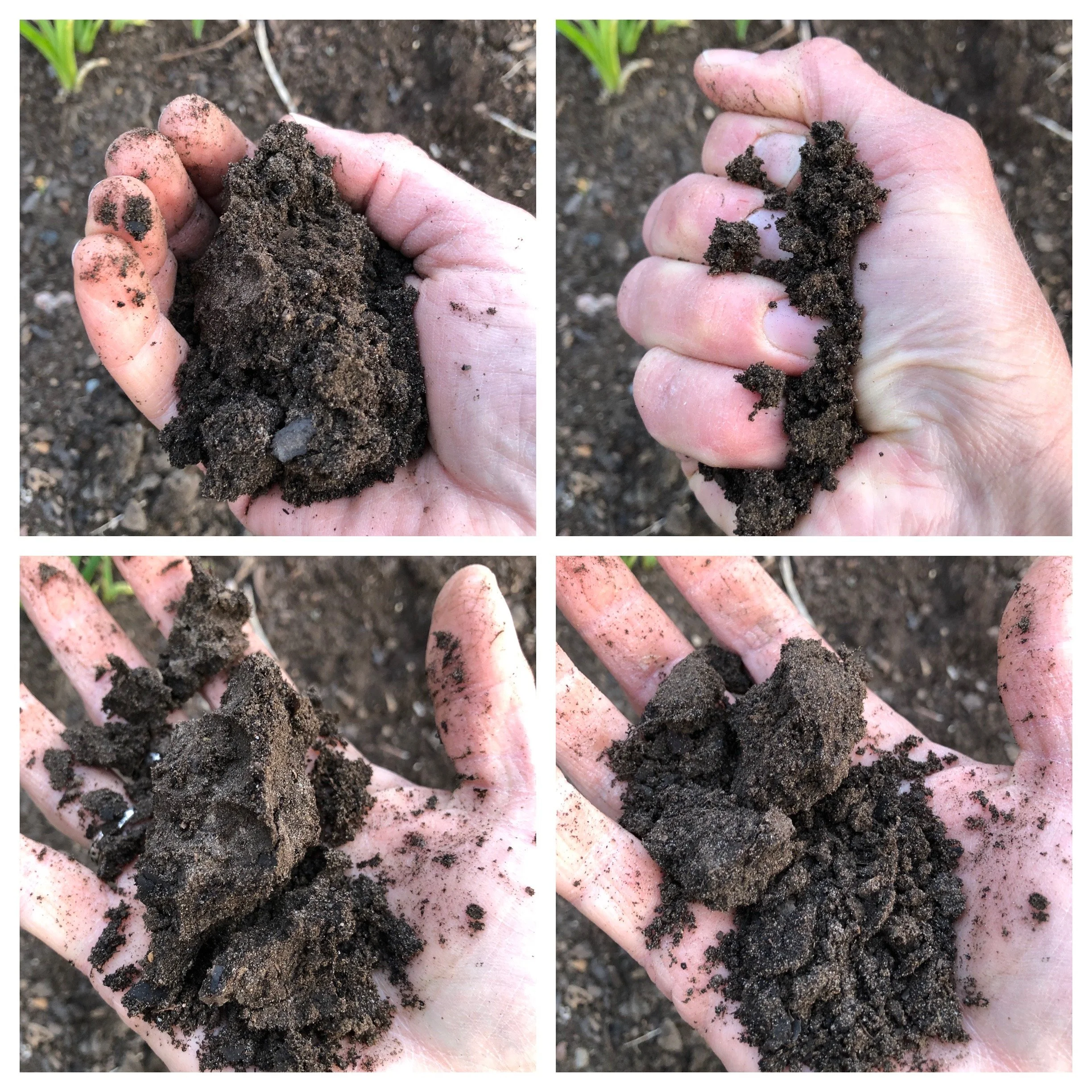
The ‘Ball Test’ (clockwise from top left): a scoop of soil is collected from about 12” down, it is squeezed into a ball, the ball cracks upon the opening of my hand, the ball completely crumbles after tossing it in my hand. Visually the soil is not excessively wet and I have very little staining my fingers. Looks like I’m good to go!

Suitability of Plants

While dormant trees, shrubs, and perennials can be planted at the first opportunity that soil conditions will allow, plants that have leafed out may not be ready for the ‘outside world’ if they have spent the entire winter and early spring being coddled in the highly controlled environment of a greenhouse. They are wimpy and need an adjustment period to acclimate to the harsher conditions (more intense sunlight, presence of wind, and temperature swings) that are found outdoors before they are permanently relocated to a garden home. At this time of year, when purchasing plants, you can ask the garden centre if the plants are ready to be transplanted outside; alternatively you can play it safe and ‘harden off’ the plants on your own by gradually increasing their daily time spent outdoors (bringing them indoors at night), and gradually increasing their exposure to sunlight over the course of about a week. A quick Google search on “hardening off” will provide you with numerous reputable resources if you are not sure how to do it.
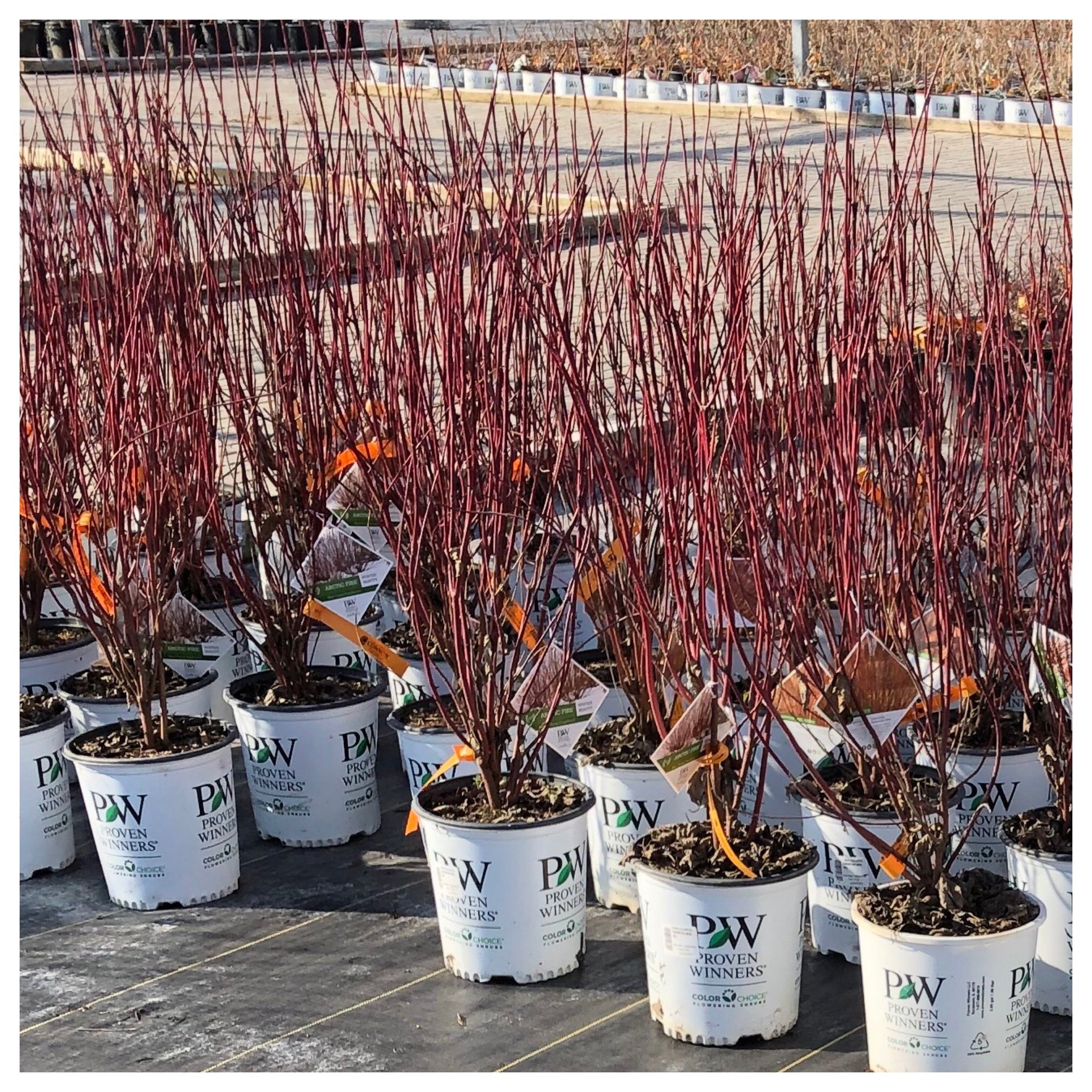
Beautiful in dormancy, Cornusstolonifera ‘Arctic Fire’ awaits relocation to a garden home where they can continue to shine!

As a final note on plant suitability, we must keep in mind that while temperatures are warming up quickly, there is still a risk of frost for weeks, or even months to come. Plants that cannot tolerate hard frosts should not be planted outside until at least the last frost date has been reached. With that said, there is still the probability of frost after this date so it is best to wait longer before installing tender plants. To illustrate this point: the last spring frost date in my area (according to The Old Farmer’s Almanac) is listed as April 20, but it is standard practice to not widely plant tender summer annuals until mid to late May to be ‘on the safe side’. So going back to my blanket statement about planting when the soil is workable… well that comment has absolutely no validity when it comes to tender plants!
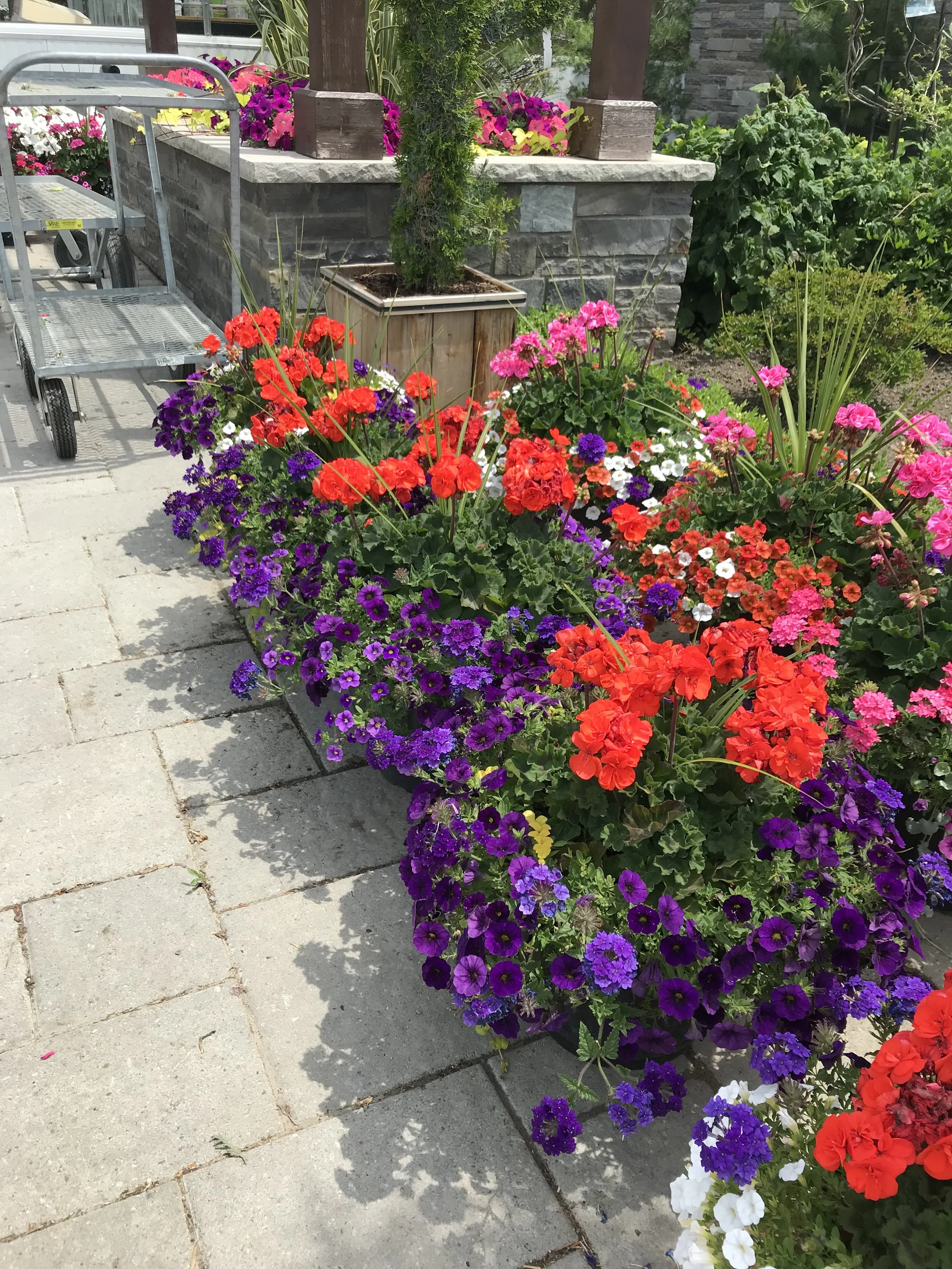
Colourful annuals have no place in the garden for at least another month and a half!

Well, for me, annuals are a distant speck on my radar at the moment, but I just happen to have big plans for adding trees, shrubs, and perennials to the garden this year. With the arrival of the planting season in my neck-of-the-woods, it is now time for me to make my shopping lists, do some stretches, and get ready to work the dirt. (Yeehaw!)

Additional Resource:

United States Department of Agriculture. Natural Resources Conservation Service. No date. Program Aid Number 1619. Estimating Soil Moisture by Feel and Appearance. https://www.cdpr.ca.gov/docs/county/training/inspprcd/handouts/soil_moist_feel_test.pdf (GREAT PHOTOS!)
Time to Lay the Foundation...

(Originally posted April 12, 2019)

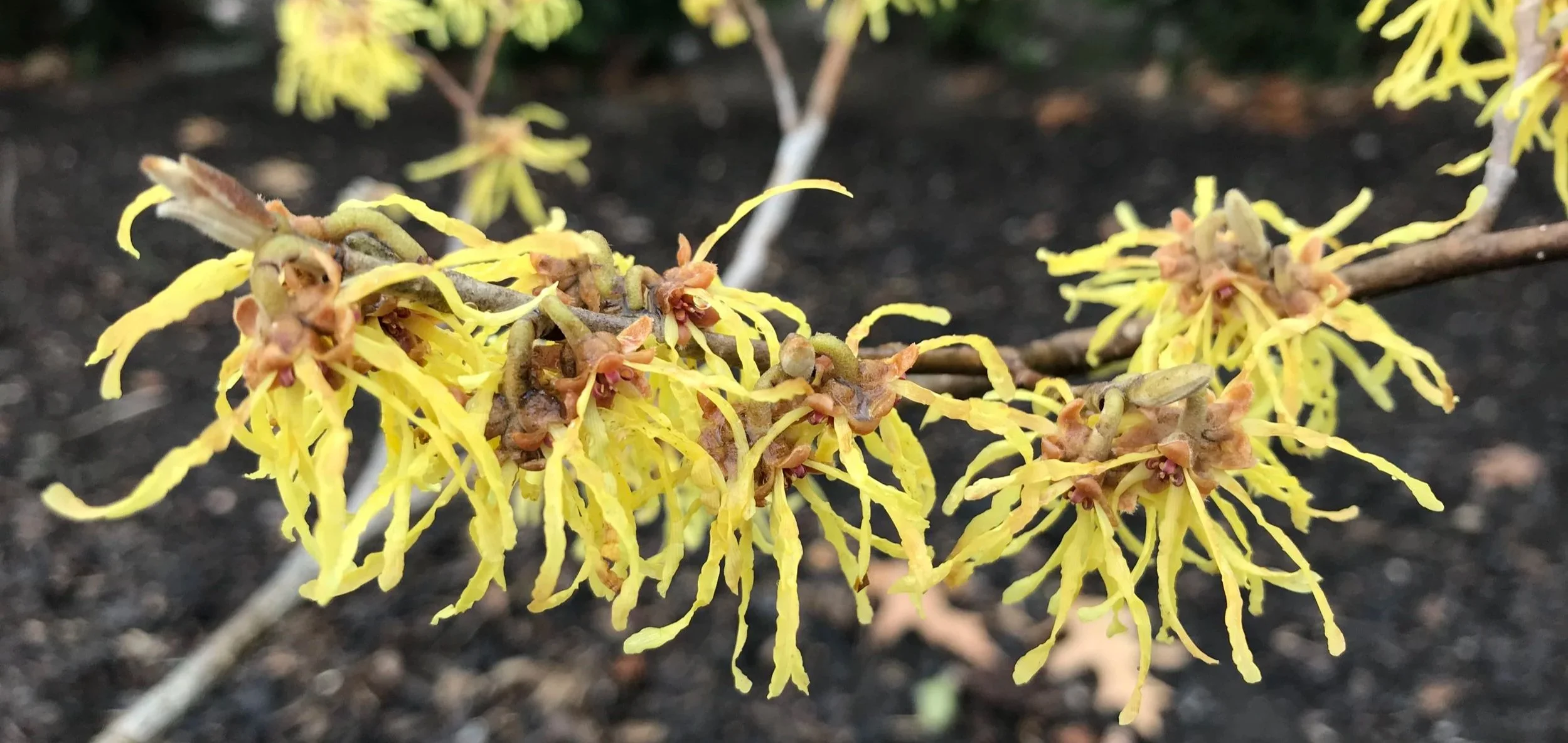
Spring blooming Hepatica

Before jumping headfirst into the gardening season, I feel that I should start by providing a little bit of a framework to my posts. Since not all the content in my blog will be applicable to every gardener at any given time, I think I should at least fill you in on the ‘lens’ that I use when viewing and maintaining gardens. I also feel that I need to outline the climatic conditions of the area in which I garden as well as how I am hoping to make this blog relevant to as many gardeners as possible. Finally, I would like to take a moment at the end of this post to give you a ‘sneak peak’ into what I have in store for you! So hang on tight- this may be a dry post… and exceptionally nerdy [laugh followed by snort]… from here we will get right into the gardening- I PROMISE!

THE LENS

Let me start by saying that I am a landscape gardener by trade (my academic background is a B.Sc. in Environmental Biology and a Masters in Forest Conservation). My role in life is to use ecological principles to keep my gardens (and all the individual plants) healthy, while also striving to keep these spaces looking PERFECT! These are two goals that don’t often mesh perfectly (this presents a really fun challenge). Often, in making ‘picture perfect’ landscapes, some textbook gardening practices get somewhat tossed out the window and vice versa (more of this in future posts… insert ‘impending doom’ sound effects here). My posts will therefore shed light on all sides of the maintenance spectrum: ecological principals, gardening techniques, as well as tips and tricks for making things visually appealing in your garden.

THE ZONE

It doesn’t take a brain surgeon to know that growing conditions across the country are highly variable! It is this reality that is at the root of most cases of ‘garden envy’. So it goes without saying that my blogs are going to reflect my specific location (which is the Oakville/Burlington area in Ontario, Canada). If you are familiar with gardening zones, my area falls within the Plant Hardiness Zone of 6b. If you are not familiar with hardiness zones, here is your ‘super-duper-Cole’s-Notes’ definition: essentially our beautiful country is divided into zones based on plant survival. These zones, originally based on minimum winter temperatures, are now based on climatic conditions. Areas with similar conditions are considered part of the same zone, with the harshest conditions being in zone 0 (such as Pond Inlet in Nunavut). On the other side of the spectrum is Vancouver British Columbia which falls in the 8b Plant Hardiness Zone (garden envy alert! garden envy alert!). For more information on Plant Hardiness Zones, check out the Natural Resources Canada website or the Agriculture and Agri-food Canada website.

Not sure of your zone (and want to know what it is)? You can find that information out here! (Just a little note to any American readers out there: our Canadian Plant Hardiness Zones are not the sames as yours! If you would like to know more about your zone, you can find it at the United States Department of Agriculture website.)

Why all this talk of ‘zones’ you ask? Well if you are in a zone higher than my Oakville/Burlington 6b sites, you have a longer growing season and chances are you are further ahead in your garden maintenance schedule right now. If you are in a lower zone, you will be ‘behind’ (at this point in the year, you may still be under snow!). As the season progresses, lower zones may be further ahead in their maintenance tasks as gardeners in those regions begin to prepare for the start of winter earlier in the year than gardeners who live in milder climates.

GETTING ON THE SAME PAGE WITH INDICATOR PLANTS

So how can I make this blog relevant to as many people as possible?

Throughout the year, and hopefully with every post, I am going to try to give you an idea of where I am in the gardening season through the use of plant phenology indicators. Plant pheno-WHAT?!?! Ok, ok…. so sorry for the all the geeky science stuff (it really is juicy once you sink your teeth into it!). This is a concept that is rooted in the practice of pest monitoring and control. Essentially, it was noticed that the growing stages of certain plants (‘indicator plants’) coincide with various developmental stages of pests (more importantly, the stages that are most vulnerable to control measures). These plants are called “plant phenology indicators”. For more information on this, I highly recommend reading the blog post from Jen Llewellyn at ONNURSERYCROPS. This post also includes the indicator plants typically used in Ontario. Since I already use these plants in my pest management and monitoring strategy, I will use them in my blog posts too. Since many of these indicator plants are not found across the country, I will also use some common plants in the landscape trade in the hopes of being applicable to more gardeners. My hope is to provide at least a general idea of how far along my area is in the current growing season. With that said, it may be the case that some of my indicator plants are not hardy in your area- I realize this is not a perfect solution to uniting gardeners across the Plant Hardiness Zones- but it is my best attempt!

UPCOMING FEATURES

Moving forward, I have many ideas for this blog, but I just wanted to take this time to shed some light on two features that will be reoccurring throughout the growing season:

1) Task Lists- on a weekly basis (usually closer to the end of the week) I will strive to provide a list of all the tasks that I completed during my week in the gardens- think of it as your ‘to do’ list for the weekend ahead! I will also send these lists out in my newsletter- so be sure to sign-up!

2) ‘The Tool, the Technique, the Trick’ feature- maintaining gardens and keeping them looking spectacular requires the right tools and a bit of finesse. This feature will introduce the tools I use, how to use them properly, and the tricks that I use to add that ‘finishing touch’ to the job.

So there you have it! The stage has been set… thanks for reading this long-winded post! It is now time to play in the dirt!