Fall Gardening

Colour, colour everywhere!

(Originally posted: October 20, 2019)

In a way, autumn is the season of ‘I should haves’.

“I should have paid more attention to weeds in that section of my garden, now it’s just daunting… can we just take a backhoe to the whole thing?!”

“I should have pruned that shrub after it bloomed because it is looking like an overgrown monster….”

“I should have cut that perennial before it went to seed because I am going to be weeding-out seedlings forever!”

Many of these ‘I should haves’ are now pieces of garden history- lessons [hopefully] learned that will guide us through gardening seasons yet to come, but there is one ‘I should have’ that you can do something about right now and that is ‘I should have planted for fall colour’.

A little gardening exercise

Look around your garden both now, and in the weeks ahead. Is it looking rather ‘blah’? Now take a gaze into your local woodlot or ravine… the forests are ablaze with leaves of fiery red, deep crimson, clear yellow, and spectacular orange. Nature provides an absolutely amazing palete of colours when it comes to autumn… the trick is to capture this beauty in our gardens.
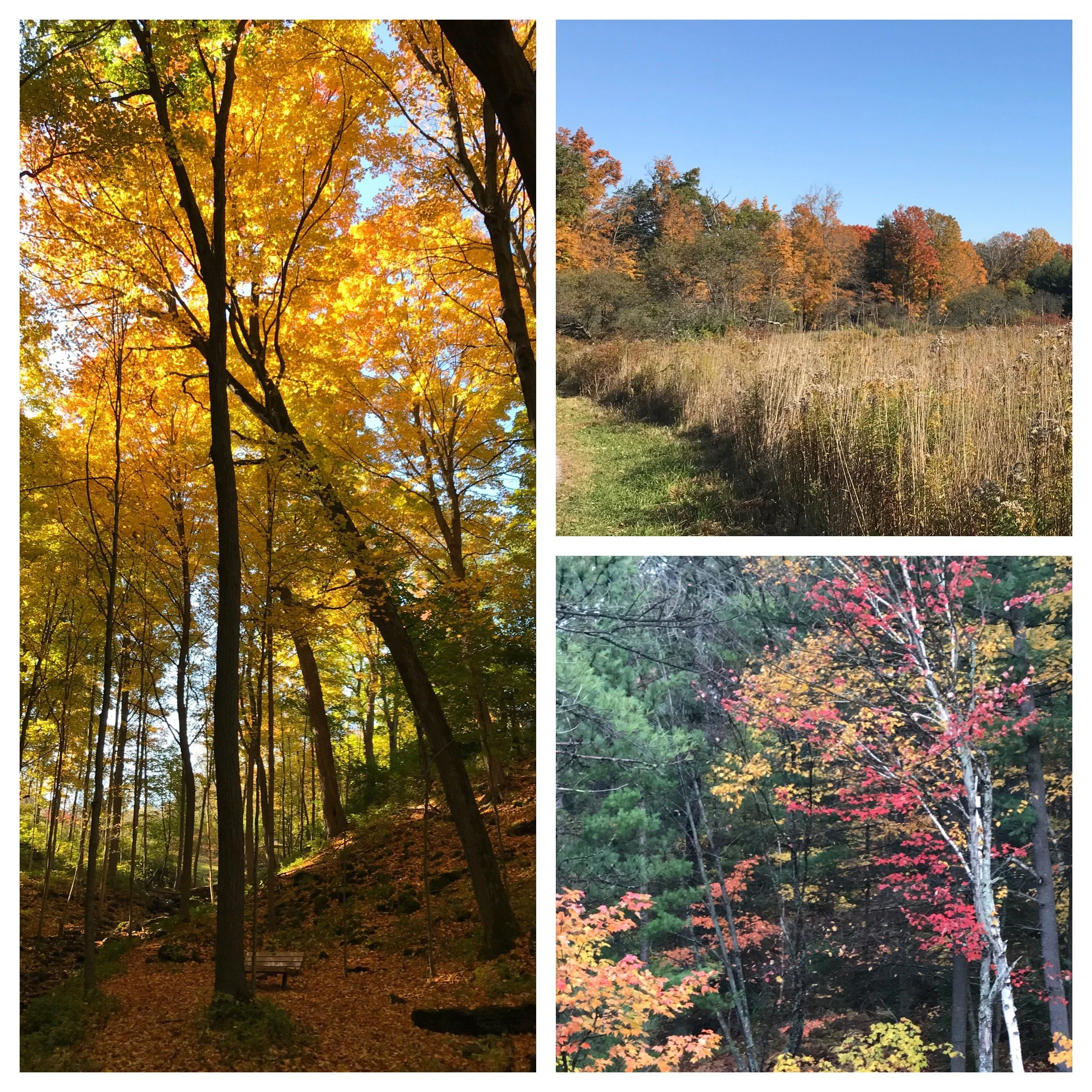
The fall colour palette, courtesy of Mother Nature

Time to take a walk through your neighbourhood. Keep your eyes open for plants that seem to ‘pop’ in other peoples’ gardens. You can also take a walk through the woods and let our native plants speak to you. In any case, this is a great time to scout-out, identify, and research those ‘fall-showstoppers’ and figure out which ones you would want to incorporate into your own garden; and, since autumn is generally a great time for planting (and transplanting), you could even make some space in your garden, take a trip to your local garden centre to pick up some new babies, and put your ideas into action.

Phew. There’s one ‘I should have’ averted.
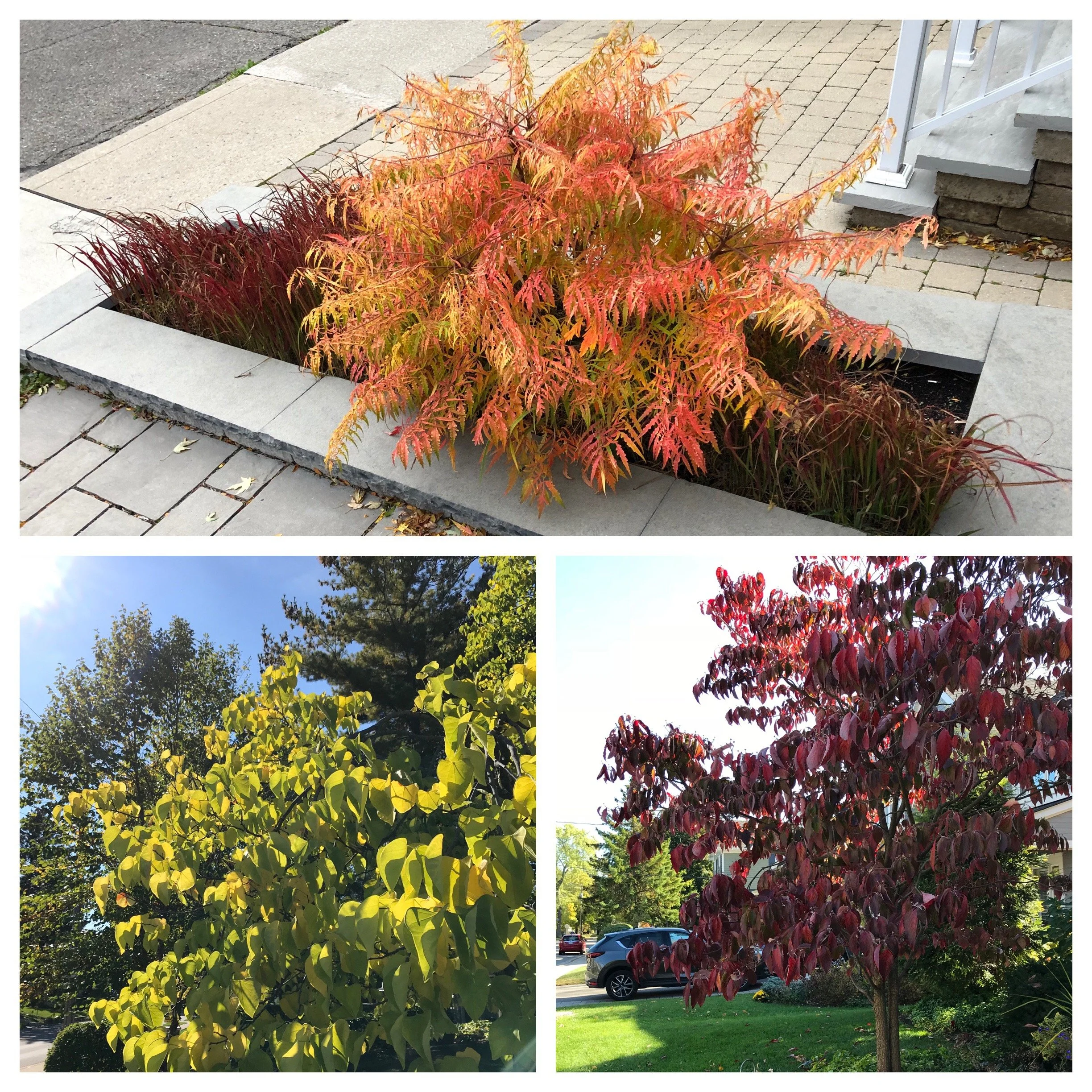
Inspiration from the garden: the gorgeous fall combination of Japanese blood grass (Imperata cylindrica ‘Red Baron’) and Tiger Eyes Staghorn Sumac (Rhus typhina ‘Bailtiger’), the yellow ‘pop’ of redbud (Cercis canadensis) foliage and the deep crimson canopy of Chinese dogwood (Cornus kousa). Top photo courtesy of Alicia K.
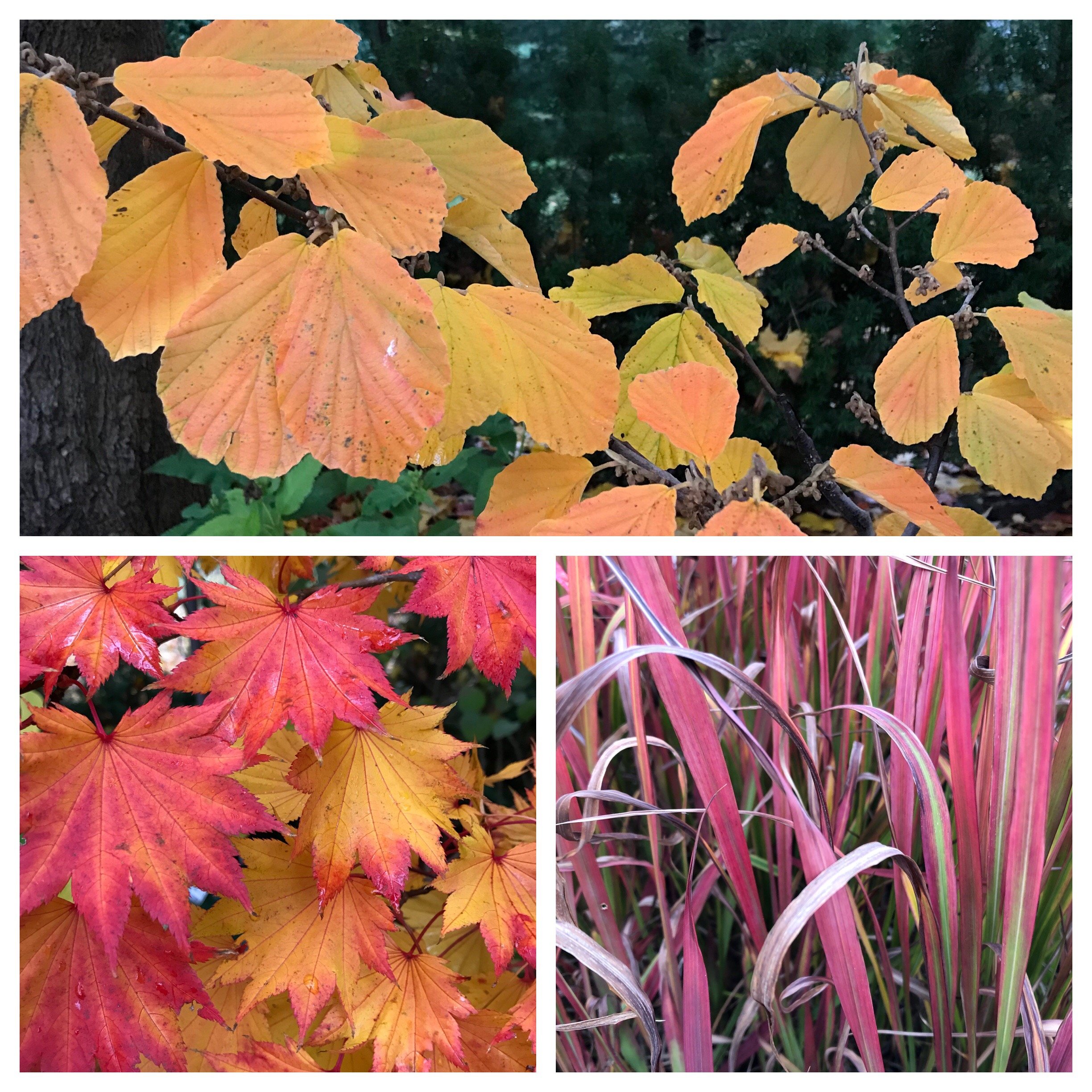
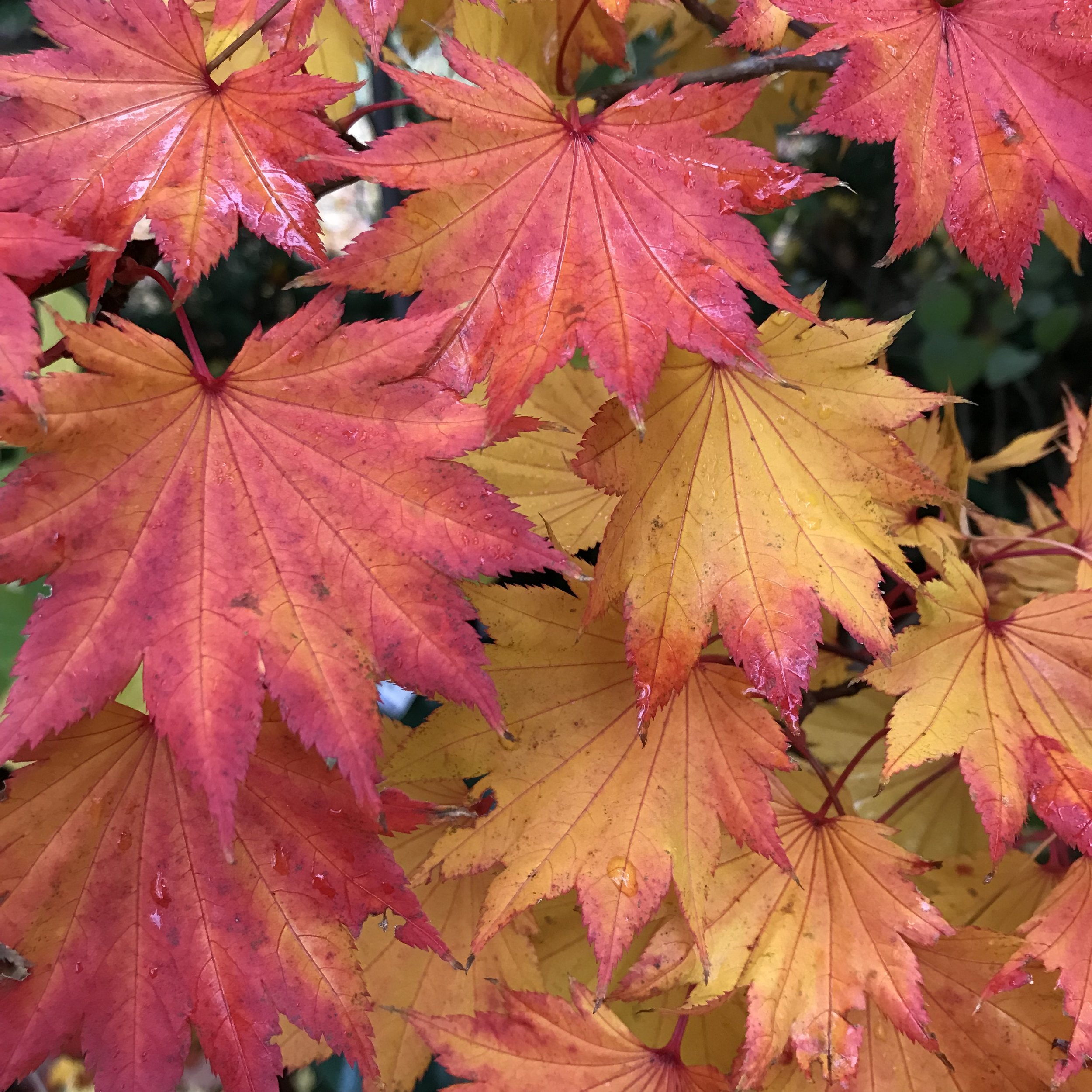
More fall colour inspiration from the garden: a 2018 photo taken In early November of witchhazel (Hamamelis x intermedia), a 2018 photo taken in early November of the spectacular colour show of ‘Full Moon’ Japanese maple (Acer shirasawanum ‘Aureum’) and another picture of Japanese blood grass (Imperata cylindrica ‘Red Baron’) courtesy of Alicia K.

More fall colour inspiration to follow on the GROW Instagram account!
Perennials: to chop or not?

(Originally posted: October 15, 2019)

Well it seems as though the gardening season is progressing at an alarming rate- is it really October??? We are now on to fall gardening tasks, and one of the main tasks is cutting perennials back (not to be confused with pruning trees and shrubs which I addressed in my previous post, Temper your Enthusiasm). At this time of year, I am often asked: “what should I cut back”? I am going to try to answer this question as concisely as possible in this post (no promises).

Before getting into the nitty gritty, however, I should first start with the other question that I am often asked which is “when should I cut back my perennials?”. In general, I wait until things are well on their way to dying back on their own. Right now, plants are gathering up some last rays of sunshine (as are we!) and beefing up their energy reserves in their root systems to help them survive the winter and have the ability to flush out new growth in the spring. Letting perennials go through this natural process allows the plants to properly prepare for winter. Usually when the leaves have turned colour (which is a sign that the plant is no longer photosynthesizing or making energy) is when I start whacking things back; this is usually (but not always) shortly before or shortly after the first frost.

What to Cut Back

Now… the all important question, what should we be cutting back? Using these 6 questions about your perennials can help point your secateurs in the right direction:

1) IS IT EVERGREEN?

Let’s face it. We don’t always grow perennials for their floral display. Take Heuchera (coral bells) for example, many cultivars of this perennial are not winning any awards for blooms- A+ for effort, but no awards. So what does this plant have going for it? Foliage! Not only do Heuchera come in all sorts of gorgeous foliage colours, the leaves of coral bells persist year-round. They are evergreen (or ever-purple, or ever-chartreuse or ever-pink…). Other examples of perennials in the evergreen category include various species of Helleborus (Lenten rose or Christmas rose), Bergenia, and Yucca. Additionally, there are also some perennials, such as Leucanthemum superbum (shasta daisy) whose flower stems die down while their basal foliage remains evergreen. So as the saying goes ‘if you’ve got it, flaunt it’ and these plants have got it…foliage in the winter, that is! Leave these perennials standing tall! Sure they may look a little ratty come spring (depending on the kind of winter we are served and the growing conditions that the plants are subjected to) but the fact of the matter is that they have the potential to look nice, even during the winter months. In areas with unreliable snow cover (ahem… southern Ontario) this can be a really nice addition to the garden.

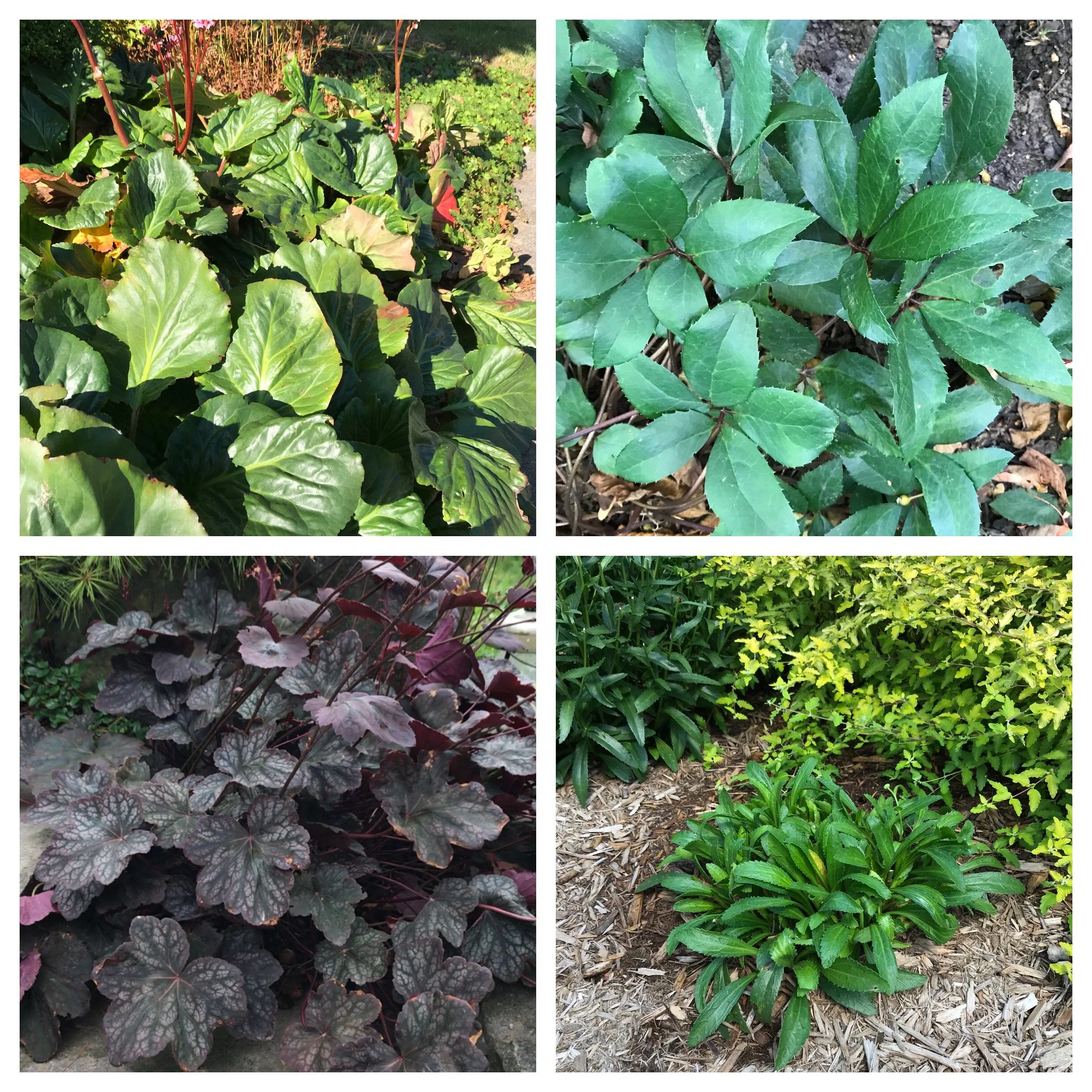
Examples of evergreen/semi-evergreen perennials (clockwise from top left): pigsqueak (Bergenia spp.)., lenten rose (Helleborus sp.), the basal foliage of shasta daisies (Leucanthemum spp.) and coral bells (Heuchera spp.),

2) DOES IT RETAIN IT’S STRUCTURE?

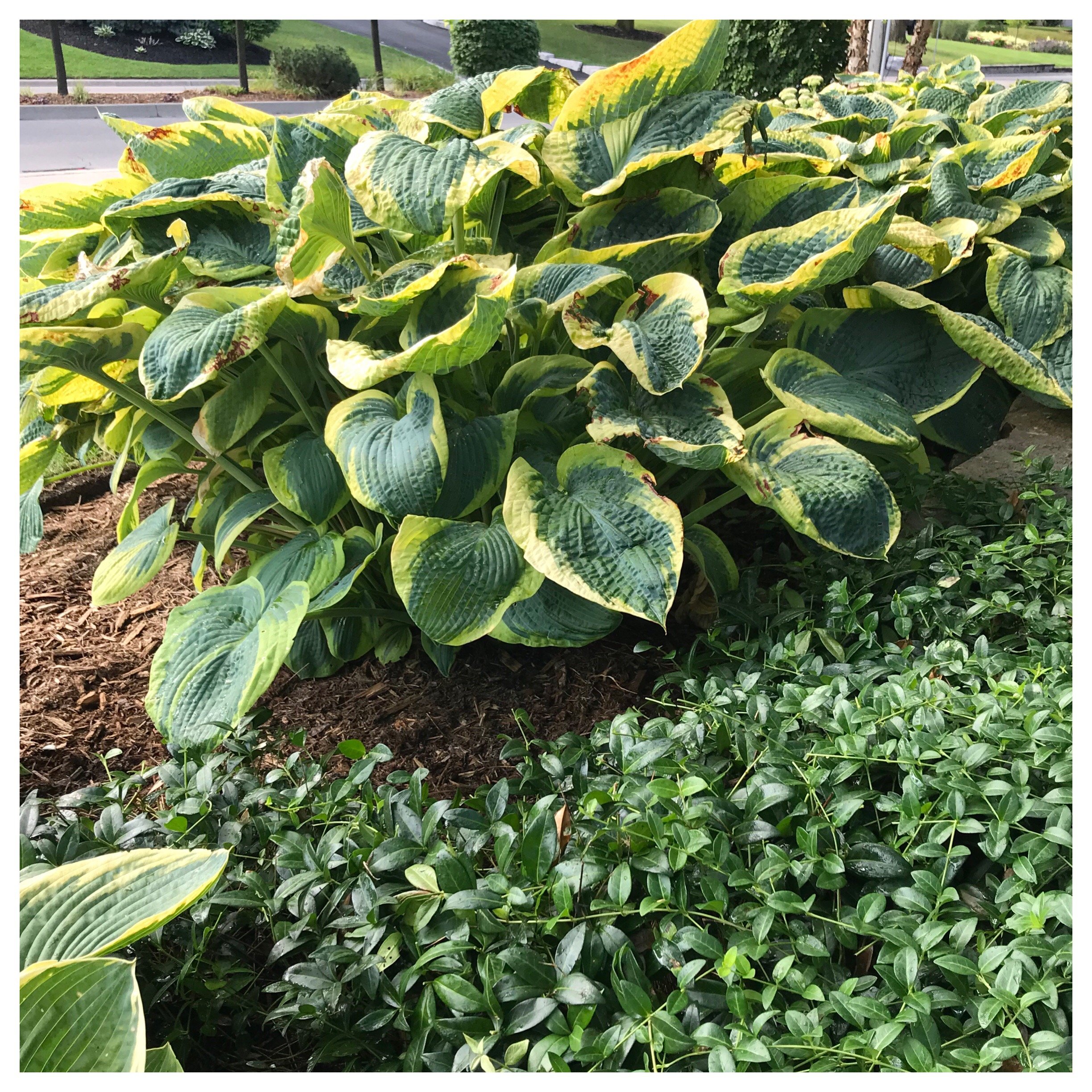
Some perennials, such as many ornamental grasses will retain their structure well into the winter months. These perennials will not only add structure to the garden but some gorgeous texture too (see ‘ornamental features’ below)! Other perennials such as Hosta spp. will essentially turn to mush come the first hard frost, while Polygonatum spp. (Solomon’s seal) will drop it’s leaves and loose it’s graceful form in the process. In any case, I am going to make the assumption that no one finds an indistinguishable mess of mushy leaves to be attractive. If your plants seem to crumble as soon as the cold weather hits, cut them back! It will be one less clean-up job to do in the spring and your winter garden will thank you for improving her aesthetics!

The hosta- a beautiful addition to the shady garden… absolutely useless in a winter garden.

3) IS IT WOODY?

Some perennials develop woody stems such as Perovskia atriplicifolia (Russian sage) or Lavandula (lavender). These are guaranteed to retain some structure in the winter and pruning for these two perennials is best left to the spring anyway. Leave them up and enjoy having some added structure to your garden!

4) DOES IT HAVE ORNAMENTAL FEATURES?

Beautiful texture? Ornamental seed pods? Pretty dried flowers? These are all features that look oh so beautiful when touched by a frost or coated in a light dusting of snow. Remember- winter is a beautiful season, if a plant has something that can help capture this beauty, then let it be!

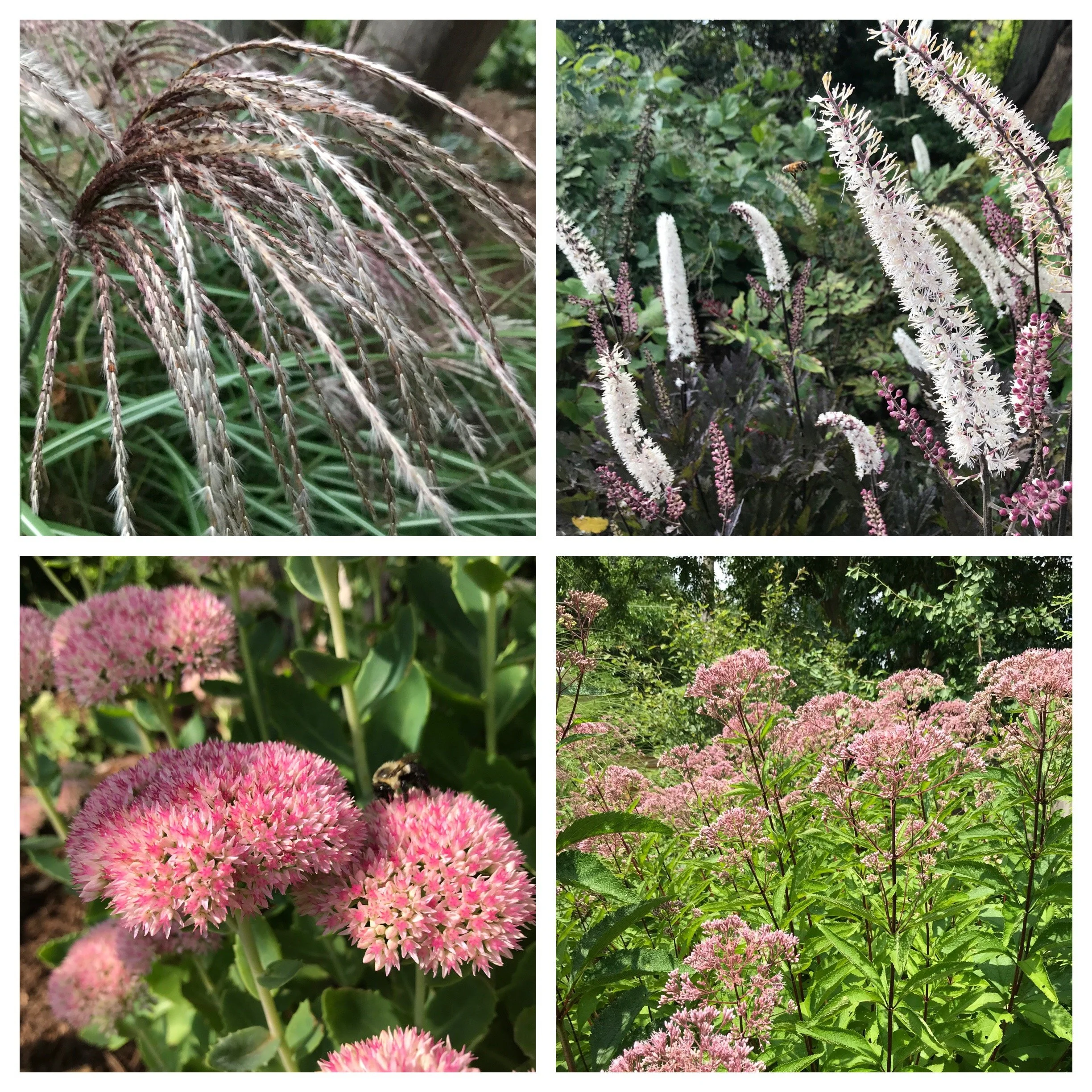
Ornamental grasses and perennials such as bugbane (Cimicifuga spp.), Sedum spp.) and Joe Pye weed (Eupatorium spp.) have seedheads that capture a dusting of snow beautifully. * Remember, if you have a plant that tends to seed itself prolifically, you may want to chop the flowers before they go to seed. *

5) DOES IT HAVE WILDLIFE VALUE?

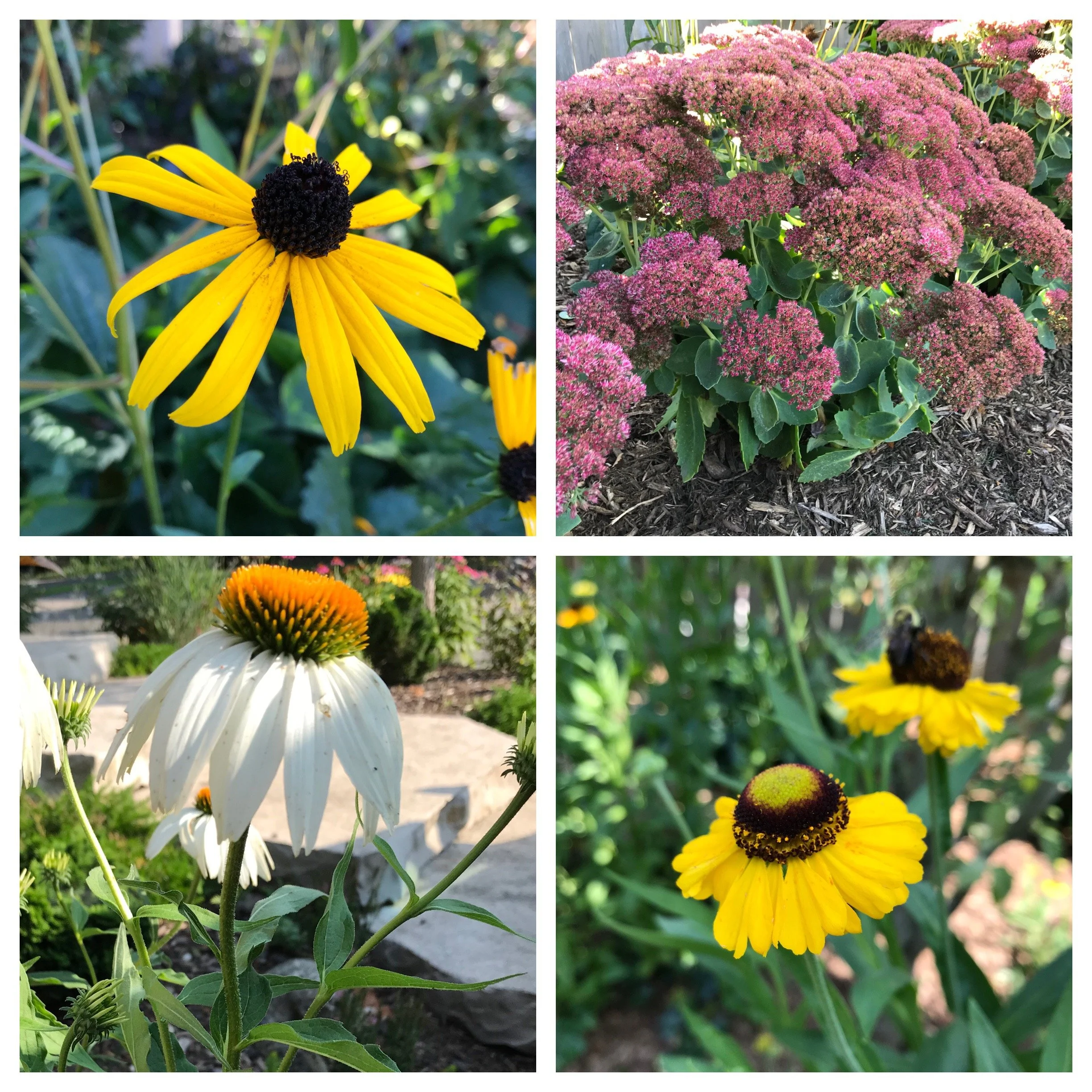
Many perennials produce seeds valued by wildlife (especially birds); some of the more common ones include species of: Echinacea (coneflower), Rudbeckia (black-eyed Susan/gloriosa daisy), Sedum (stonecrop), Eupatorium (Joe Pye weed and boneset), Helenium (sneezeweed) and Heliopsis (false sunflower). Leave these perennials standing over the fall and winter months and you can feel good about providing a food source for our feathered friends.

Some perennials with wildlife value. Clockwise from top left: black-eyed Susan (Rudbeckia hirta), stonecrop (Sedum spp.), sneezeweed (Helenium autumnale) and coneflowers (Echinacea spp.)

6) IS IT DISEASED?

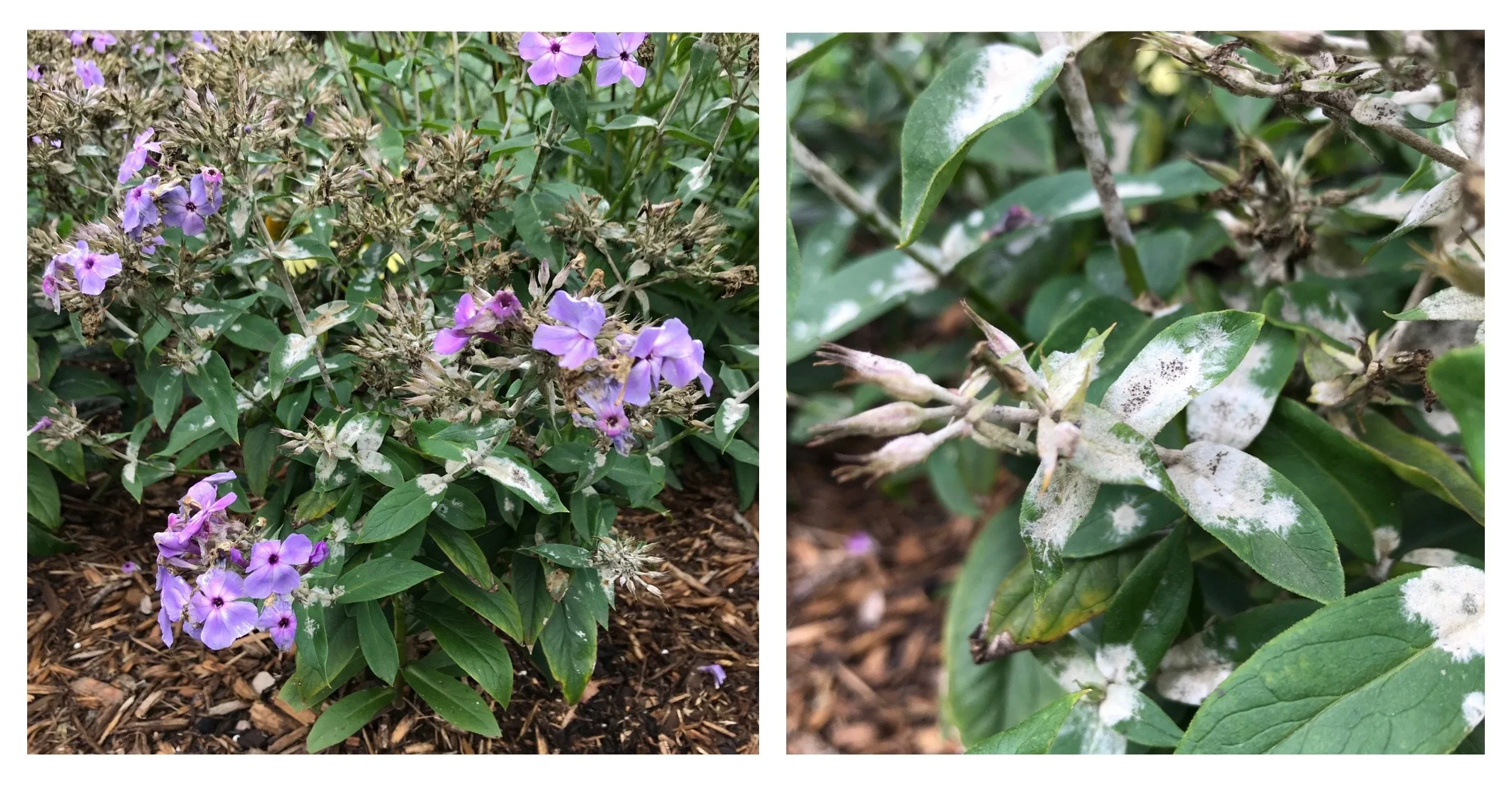
Did you notice anything funny on the leaves of any of your perennials this year? Perhaps a white fuzzy coating or little rusty pustules or unusual blotches? If you suspect that a perennial in your garden was diseased, it is best to cut it down (or even dig it out). Often diseases will overwinter in the garden on diseased plant material; this can become a source of infection for the next season. Cut anything suspicious down and DO NOT compost it. If it is a re-occuring problem, it may indicate that the plant is not growing in its optimum conditions (stressed plants are more prone to diseases) or it is a problem that the perennial is particularly susceptible to. If you have plants that seem to be hit by disease year after year, it may be time to think of some more robust replacements (an excellent task for the winter!).

Even though this Phlox would retain some structure over the winter, it is diseased and should be cut down (and the clippings removed from the garden).

OK OK, so that may not have been overly concise but I hope it helped! Remember- if you are not sure what to do with a certain perennial, you can always leave it alone to see how it fares the winter months. It can often be surprising what plants look attractive in the winter. So don’t be too hasty in chopping down all your perennials- right now you are the designer of your winter garden!

Temper your Enthusiasm

(Originally posted September 15, 2019)

The crisp nights and cooler days have arrived- a sure sign that fall is around the corner. Fall is generally a time of yard work and many people become very enthusiastic to tackle outdoor chores- even people with no interest in their yard whatsoever throughout the rest of the year tend to catch the ‘gardening bug’ during the autumn months. Often this enthusiasm is directed at whacking back various trees and shrubs in their yard. While there is certainly lots to do before the snow flies, pruning is the one task that we want to minimize at this time of year. (Sorry Edward Scissorhands wannabes!)

Let’s start with the effect that pruning has on a tree or shrub… it promotes new growth. New growth is tender and needs time to toughen up to the environmental conditions around it. At this time of year, our frosty mornings are just around the corner. If we prune now, new growth that emerges will not have the time to properly harden off before the cold weather hits, which can ultimately lead to death of the new plant tissue… therefore you will get dieback. On deciduous trees and shrubs (ones that lose their leaves for the winter), this dieback would be apparent in the spring; on evergreens it could become obvious during the fall and winter months. Dead new growth is not the nicest thing to look at on a plant that is supposed to stay green for the winter!

Furthermore, plants are using this time to start shutting themselves down for the winter. They are gathering sugars and carbohydrates from their leaves and storing them in their stems, trunks and root systems; valuable energy to help the plant survive the winter and flush out new growth in the spring. Removing the leaves before they fall doesn’t allow the plant to relocate these sugars to their ‘winter storage facilities’ and therefore the plant is robbed of it’s energy sources for the months ahead. Additionally, the stimulation of new growth through pruning counters what the plant is trying to do. Instead of putting energy towards properly ‘shutting down’ it is putting energy towards new growth; this can weaken the plant going into the winter.

While it is true that plants can rebound from a late season prune, it is not an ideal time for this gardening task.

So… if you feel the call of the pruning saw, hedge shear or lopper- ignore it! Opt to warm up some apple cider, mosey through the garden, and start your ‘to do list’ for next year. Those shrubs and trees that you are just dying to hack back now will still be there in the spring and they can be first on your ‘hit list’ for a dormant season prune come a mild day in March***! Not to mention, with all that energy [properly] saved-up for a spring flush, the plant will be able to quickly rebound from your ‘haircut’.

Can you hear that?

That is the sound of your shrubs and trees breathing a huge sigh of relief.


***While any plant can be pruned in the dormant season, it is important to note that if you prune anything that flowers early in the growing season, you would most likely be removing flower buds. For these plants it means that a hard prune = no flowers for the upcoming growing season. While some people may gasp in horror at the thought of this, sometimes it is a necessary evil in order to renovate an overgrown shrub. More on pruning and timing of pruning in future posts… I promise!

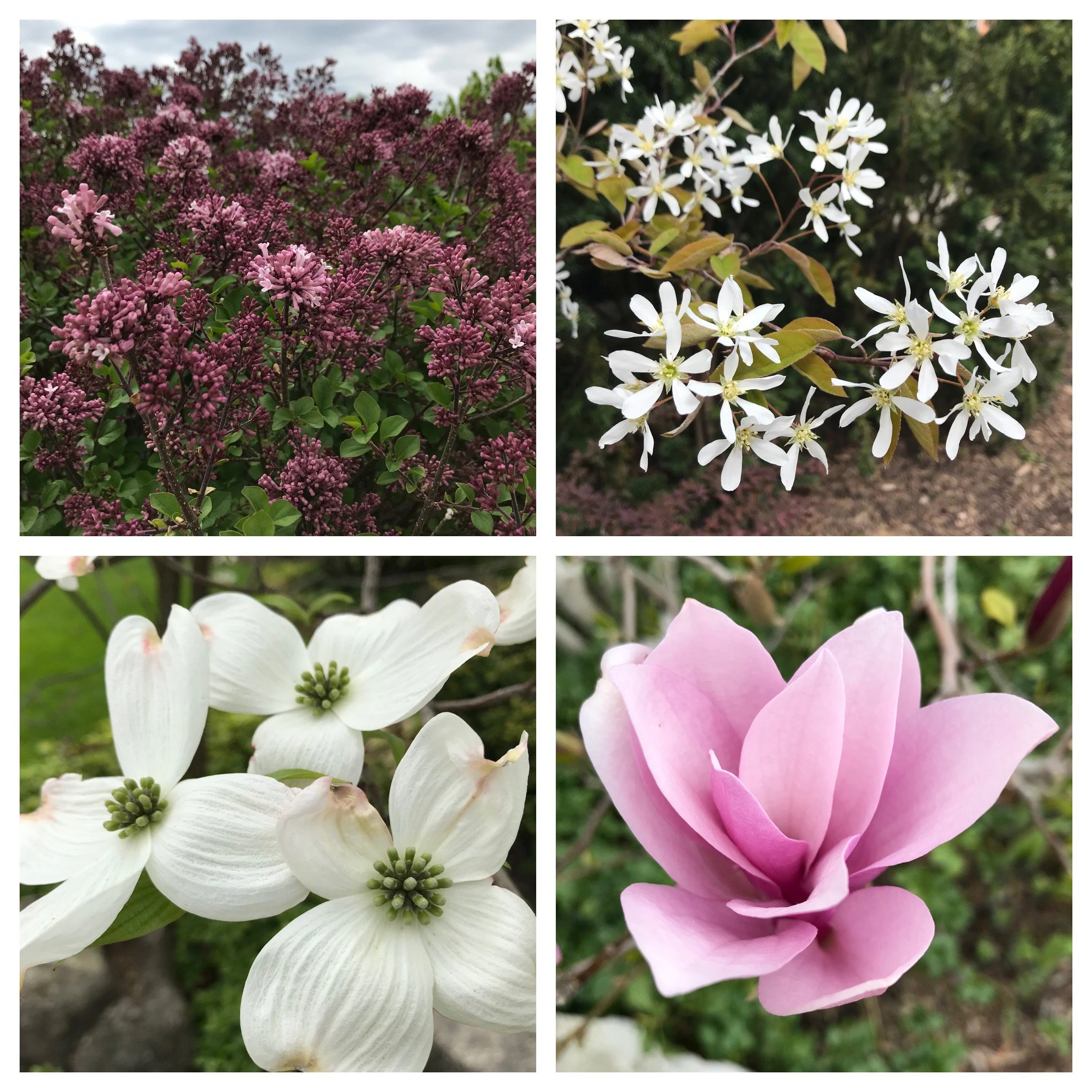
Remember these early season beauties? A prune at this point in the year (or any time leading up to their flowering period) would remove their flower buds. Believe it or not, plants such as these are already prepared for their 2020 show!

Clockwise from top left: lilac (Syringa sp.), serviceberry (Amelanchier sp.) magnolia (Magnolia sp.), Dogwood (Cornus sp.)