Soil and Garden

Rain Dance

(Originally posted: June 23, 2020)

It’s hot. Really hot…and dry too. Unless of course you have been hit with the torrential rains that tend to go hand-in-hand with the pop-up thunderstorms spawned by this weather. In any case, these driving rains are better at washing away a garden rather than watering it! So the issue of dryness remains…

In my garden, the latest heat wave is beginning to take it’s toll on my plants. Thirsty mature trees slurp up the moisture from the lowly ‘riff raff’ below (i.e. my perennials!) and the sun makes short work of baking other areas of the yard. We have reached the point on our property where supplemental irrigation is necessary.

Oh how we could really use some rain right now! (Photo credit: Pete Nowicki on Unsplash)

Now I should start by saying that gardens need water- but it is the quality of the watering that counts as opposed to the number of times the garden is watered on a weekly basis. In general, a mature garden (as opposed to one that has been recently planted) needs about an inch of water a week. Sure, some plants are thirstier than others (and these plants often display their displeasure for the dry conditions with a little wilting tantrum) but this ‘inch a week’ guideline is one to keep in the back of the mind throughout the growing season- even if it is a very general guideline.

So with this in mind, here are some tips to effectively water a garden:

  • Water in the morning. Grab that morning coffee and enjoy the zen that watering a garden can bring. Morning irrigation sessions allow the foliage of the plants to dry out as the day progresses. Many plant diseases require moisture to spread and/or to successfully infect a plant. Reducing the ‘leaf wetness period’ can go a long way in reducing the incidence of disease. Watering in the morning also conserves water- less water will be lost to evaporation (which is a problem when watering midday- the hottest part of the day).

  • Use the ‘shower’ setting on your hand-held sprayer for watering garden plants (the ‘soaker’ setting is great for planters). I find these settings create the least amount of mist (mist just gets lost to the air and is ultimately a waste of precious water). Keep this point in mind when choosing a sprinkler setting too.

  • One deep watering is far better than many shallow waterings. This strategy encourages deep rooting and ensures that ample moisture has been provided to the plants (rather than chronically underwatering them)

  • Water around perennials and small shrubs and don’t forget to water out to the drip line of larger plants (The drip line is the point on the ground to which the farthest reaching branches of the tree/shrub extend. It is out near the drip line where a large proportion of the feeder roots of trees exist and these are the key to taking up moisture.)

  • Water the ground not the leaves- afterall, it is the roots that take up the water. This is not possible with a regular sprinkler but if hand watering, you have control over this- exercise that power!

  • Do not water flowers…unless you like blemishes; water droplets resting on some flowers can magnify the sun and cause brown blemishes on the petals as a result. This is not a given, but it is certainly a consideration.
  • Keep a keen eye on planters. As you’ve likely already noticed- pots dry out fast! The smaller the planter, the quicker it dries out. Additionally, porous planters (such as coco fibre lined baskets, fibre pots or terra cotta) also dry out quicker than non porous ones such as ceramic, fibreglass or plastic. Check on pots throughout the day- they will normally require daily watering, but on really hot days or windy days (when the air essentially sucks the moisture out of the plants and, in turn out of the soil), they could require more than one watering.
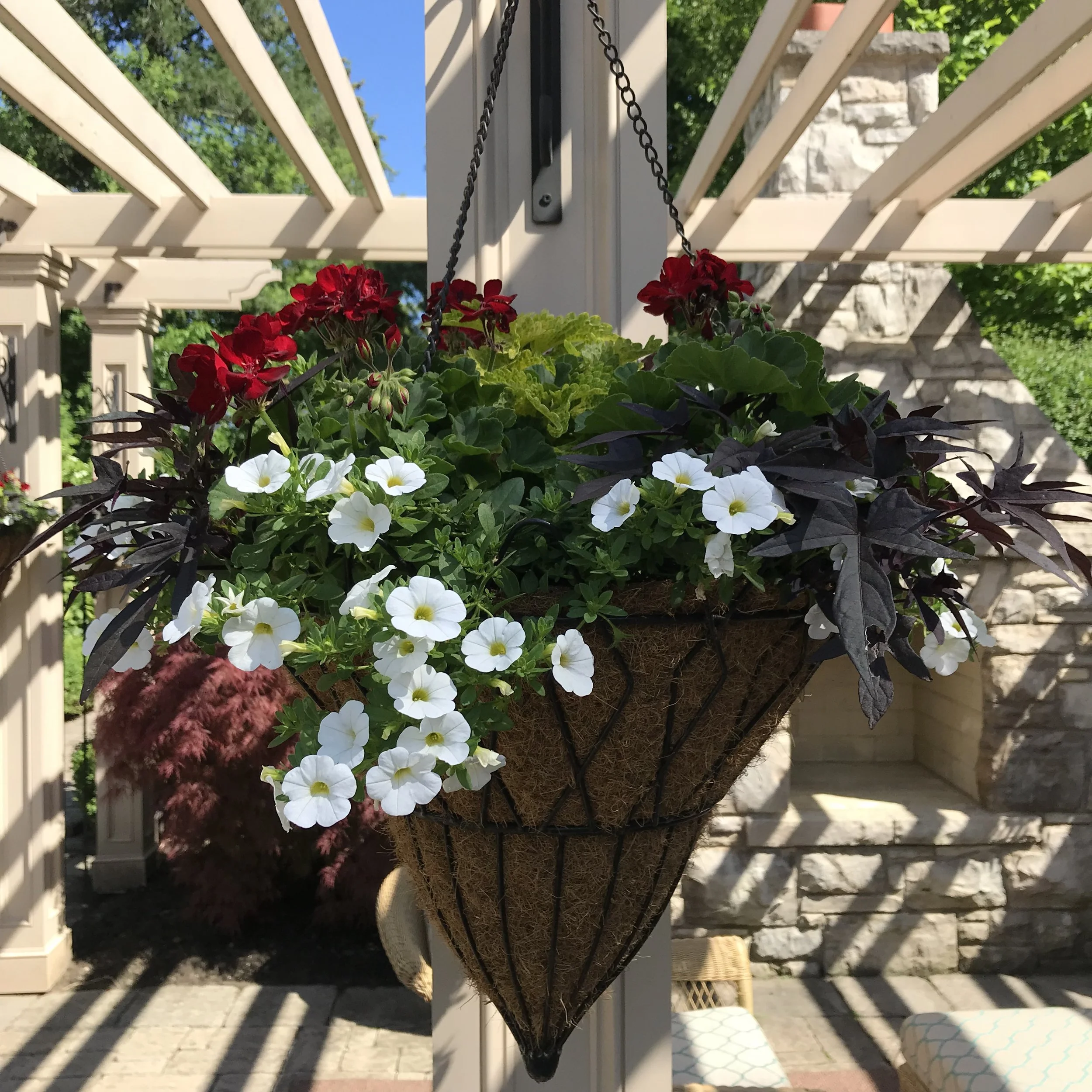
Pots lined with materials such as coco fibre dry out quickly; it is not unusual for them to require two waterings a day!

  • Water in stages, especially if a planter or part of the garden has dried out. If the soil is dry, it takes time to absorb the water (in a garden, you will often see most of the initial water running off extremely dry soil). To avoid wasting water and ensure the soil is actually absorbing the moisture, water an area or pot briefly, move on to another location/pot, followed by another; rotate through your planters or garden until the plants have received a good soaking.

Final note: At the time of writing this, we were in the midst of a dry spell and heat wave. The forecast calls for the heat and humidity to break today with the arrival of a cold front. (Phew!) Looks like I am saved from some watering chores for now. Instead, I will do a rain dance!
No Room for Bad Attitudes

(Originally posted: May 29, 2020)

Well- spring is in full effect. It’s the time of year when we watch excitedly as our ‘garden babies’ emerge and grow with each passing day and we curse under our breath (or aloud) when our weeds do the same.

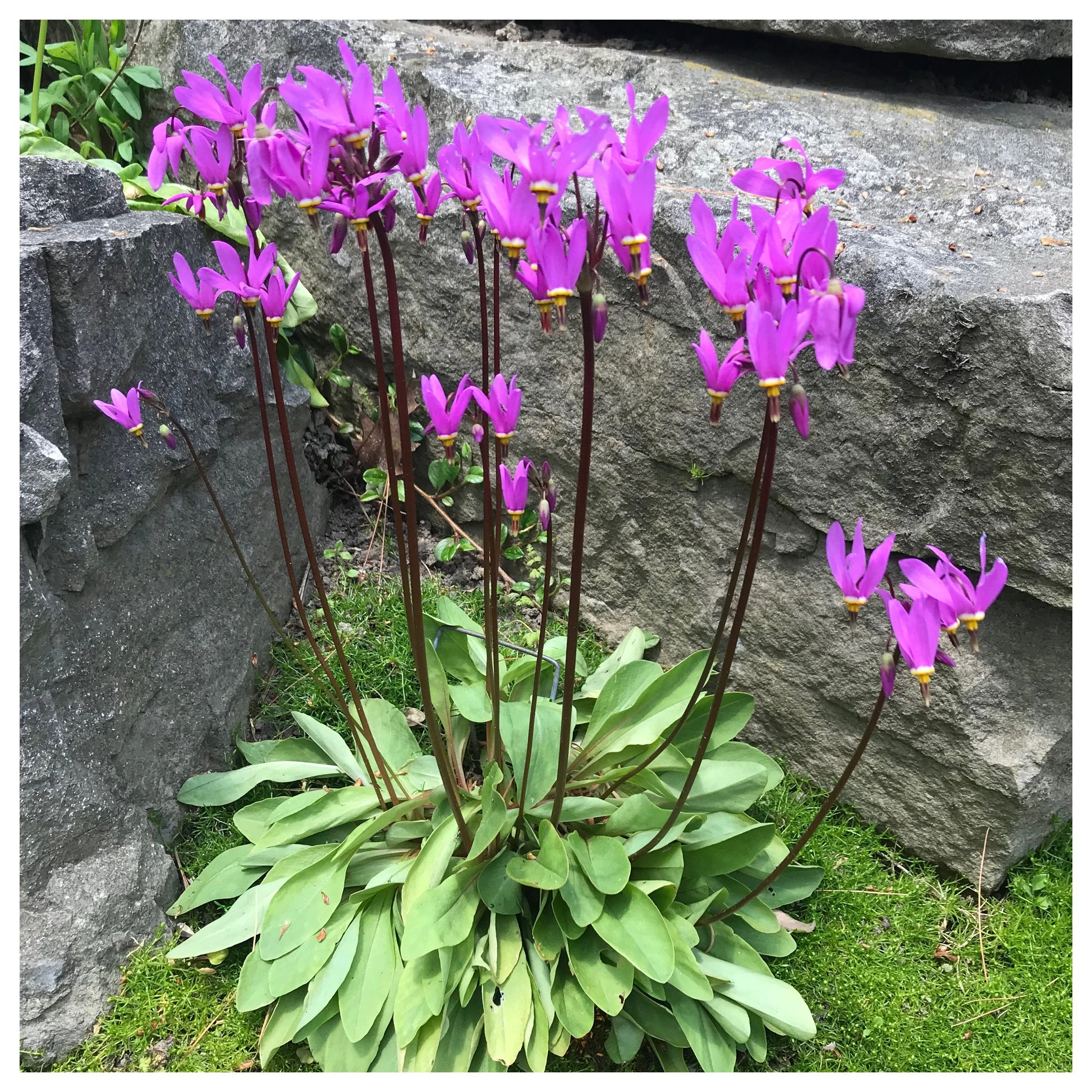
The striking spring flower display brought to you by shooting star (Dodecatheon). Garden baby? Yes I think so! (I just had to show a photo of ‘the good’ before I delve into ‘the ugly’).

Then we spot those plants that fall somewhere in between… our once garden babies who have grown up, and in doing so have decided to flex their botanical muscles to power their way through the garden. Yes, I am talking about those aggressive spreaders.

Perhaps you have a patch of lily-of-the-valley (Convallaria majalis) making a run for your grass or goutweed (Aegopodium podagraria) that thinks it should be the only plant in your flower bed, or periwinkle (Vinca minor) attempting to swallow your perennials. The problem is all the same- one plant expressing it’s desire for garden dominance… otherwise known as a plant with a bad attitude.

This year, I looked out at two problem areas in my yard- both a result of neighbours’ plants thinking that the grass is greener on my side of the fence (it’s not). Couple that incorrect assumption with a few years of neglect and I’ve got myself a nice little afternoon project.

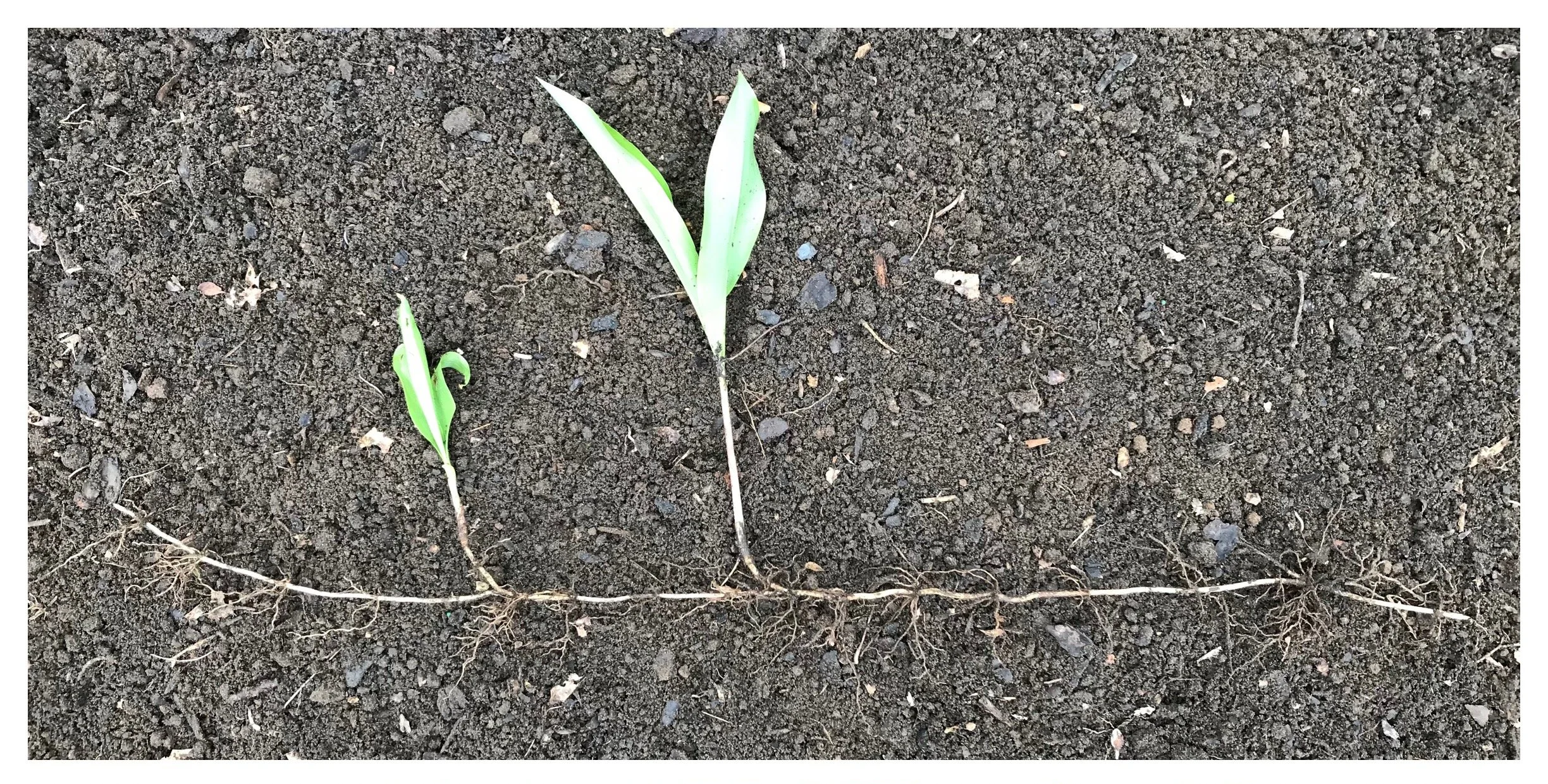
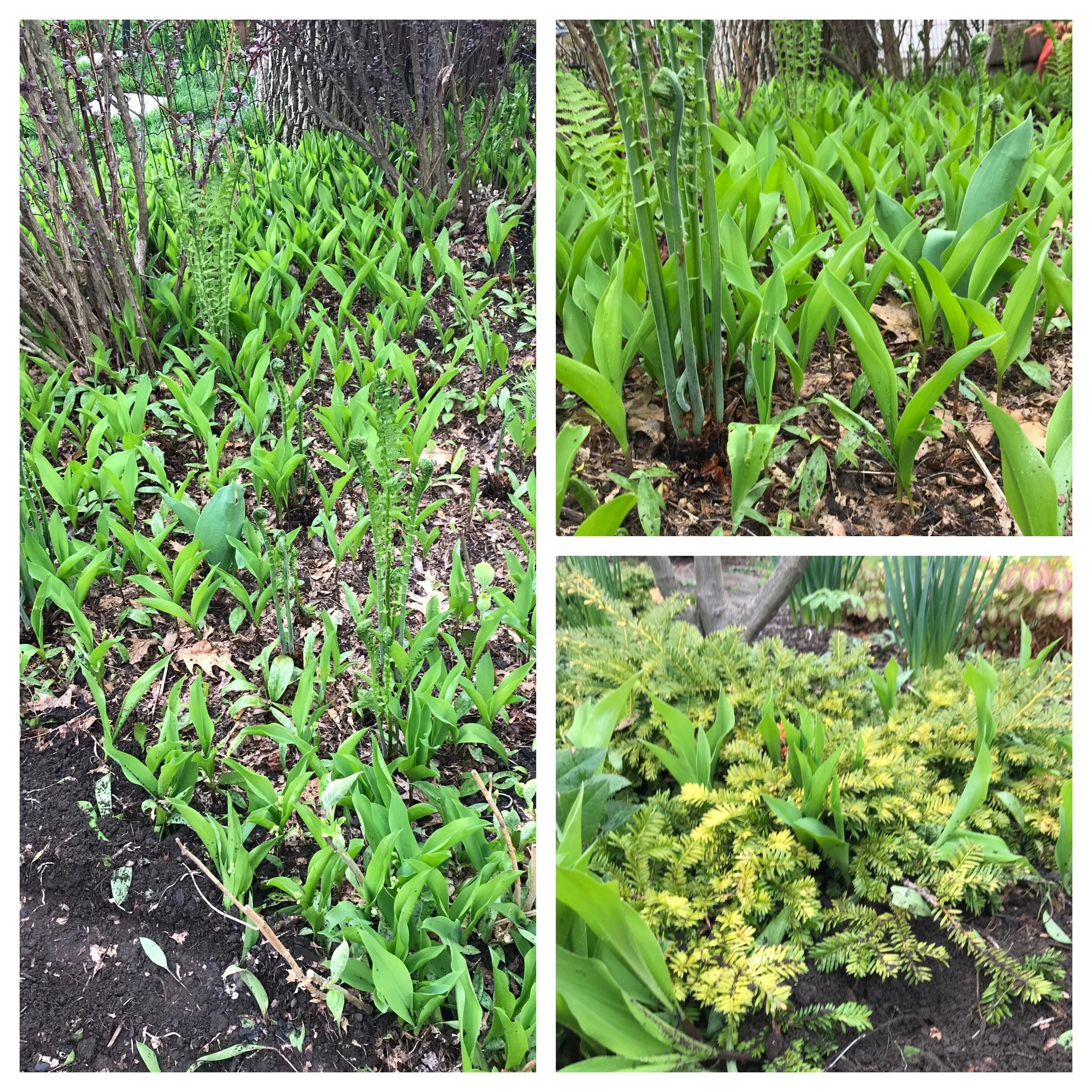
Take this lily of the valley…

How did this happen?? Oh. Right. I had kids. (Free time = nil)

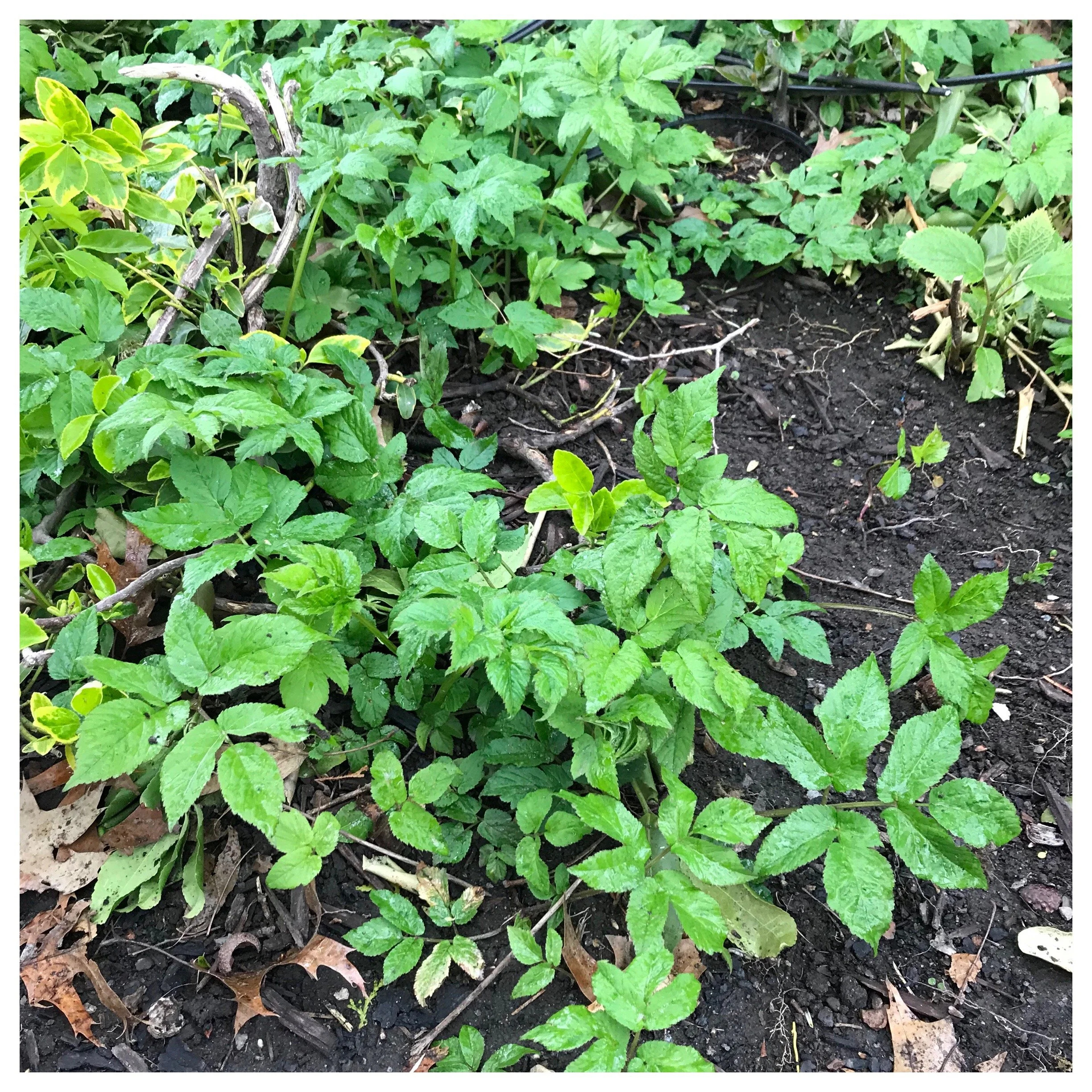
or how about this goutweed…

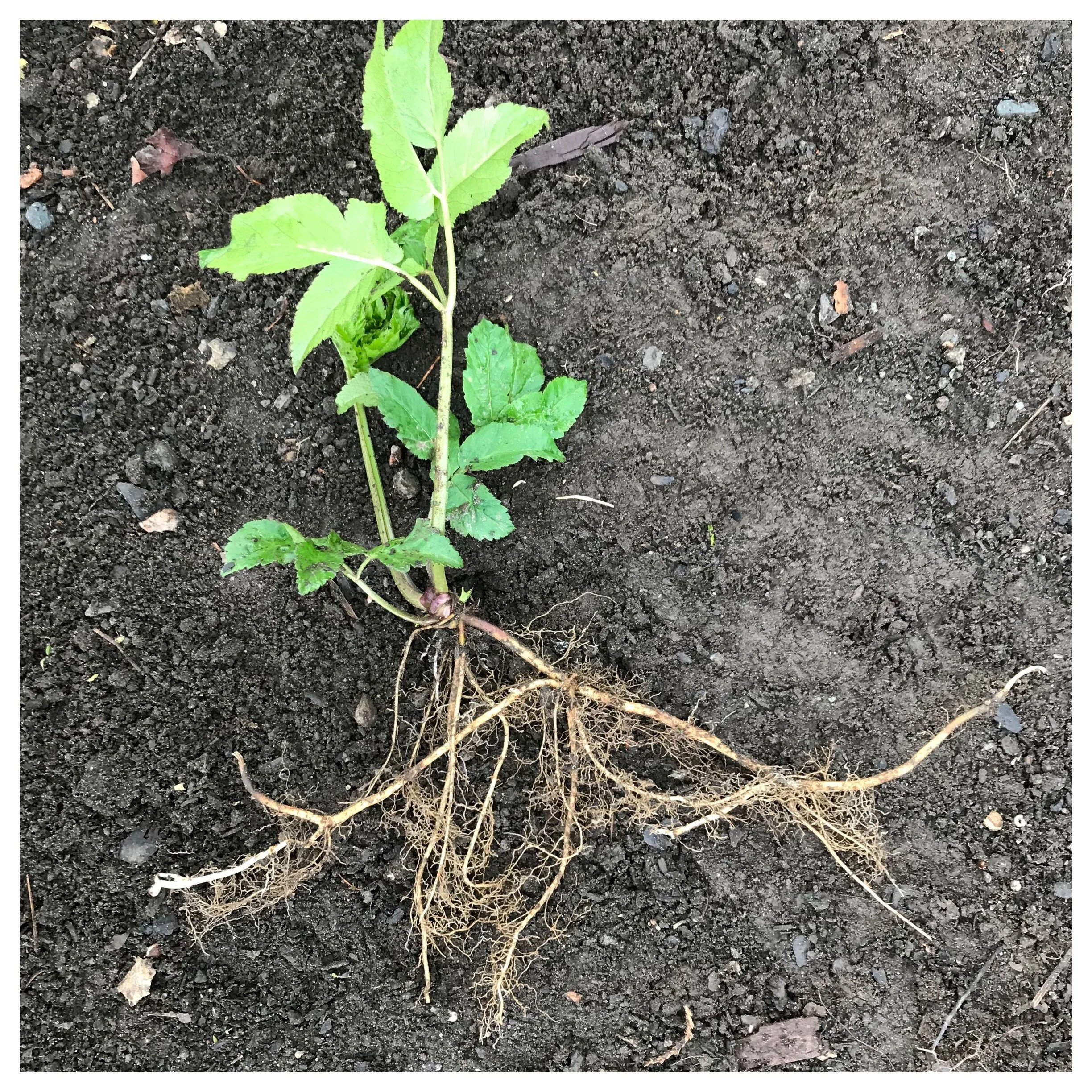
These are two plants that spread aggressively via underground stems called rhizomes. The rhizomes grow out into new territory and sprout new plants at intervals (nodes) along the way. This means that to effectively remove plants that spread in this manner, all the underground portions need to be removed- otherwise new plants can grow and emerge from the left-over fragments. Some other plants that grow aggressively in this way include:

  • Chameleon plant (Houttuynia cordata ‘Chameleon’)

  • Japanese spurge (Pachysandra terminalis)

  • Various mint species (Mentha spp.)

  • Obedient plant (Physostegia virginiana)

  • Gooseneck loosestrife (Lysimachia clethroides)

Lily of the valley and a good glimpse of it’s underground growth. Note the roots growing at intervals along the rhizome indicating the location of nodes.

So I set to work with a spade, and some elbow grease. Starting at the periphery of the problem area, I dig down, get the spade deep beneath the plants and lift them; then I gently loosen the plants from the soil by hand. Luckily my garden soil is quite sandy which makes root systems fairly easy to work out of the ground. It almost becomes a game- how long of a ‘root’ can I pull out and how many plants will be attached to it?

Goutweed and it’s underground network of roots and rhizomes.

If you garden on clay soil, or your ‘bad attitude plant’ has worked it’s way into an area containing dense fibrous root systems of other plants (such cedars or Norway maples)… I feel for you. I truly do. Your removal job becomes much much harder… sometimes even impossible. In this situation, smothering the whole patch may be your only option. This is done in three easy steps:

  1. Chop the plant down to ground level

  2. Lay down good quality landscape fabric over the area ensuring a sufficient overlap of adjoining pieces (at least 4 inches/10 centimeters of overlap where two fabric pieces join)

  3. Cover the landscape fabric with a thick layer of mulch (3-4 inches or 7-10 centimeters)- the idea is to completely block out the sun so that the plant doesn’t even think about growing

Unfortunately the area becomes off-limits to planting until you are sure the offending plant won’t come back. The fabric and mulch should be left in place for at least a year (I would leave it for 2) at which point the landscape fabric can be removed and you can reclaim your garden territory! (It is important to note that landscape fabric is not intended to be a permanent fixture in a garden, and it’s removal is an important step! More on that in a future post.)

Take home points

If you have something that appears to be taking over your garden- first determine how it is spreading so you will know how to control it. The plant could be seeding prolifically, spreading by above-ground runners that root into the soil at intervals, or through below-ground structures such as rhizomes (the focus of this post).

At the very least, make it a yearly task to keep ‘bully plants’ in check. If you are not prepared to make the commitment to yearly maintenance, remove the plant from your garden entirely. Your ‘future self’ will thank you.

Dig deep- literally and figuratively. You will need patience to remove aggressive spreaders so harness your inner yogi and think of the process as meditative. When dealing with underground spreaders, you will also need to dig deep to see exactly what you are dealing with below the soil surface and to remove the plants effectively.

Know when to throw in the towel. As the saying goes: ‘you win some, you lose some’. Sometimes it is just easier to accept defeat and opt to smother the plants as opposed to pull them.

Avoid making the same mistake in the future. Unless you are actually looking for a plant to cover a large area, run from any plant that boasts ‘quick coverage’ or ‘fast spreading’, two terms that should be interpreted as ‘aggressive’. Oh- and if a neighbour or friend is giving away plants ‘because they have way too much’ in their garden- just smile and say ‘thanks but no thanks’.

Mulching: Tips and Tricks

(Originally posted: July 12, 2019)

Time for part two of my ‘mulching series’…some tips for applying mulch.

I usually mulch after I have finished planting annuals. Annuals need to be planted in soil and not mulch, so the process of pushing aside mulch, planting flowers, and then replacing the mulch is a little too time-consuming for my liking. Once all my spring planting/transplanting is complete, and the soil is not saturated I begin mulching my gardens.

Now, it is one thing to just throw mulch on a bed but it is another to apply it with finesse. This is your finishing touch, after all! Attention to detail during this step goes a long way! Here are a few pointers on how to make your mulching job look top notch…

Leave no Trace

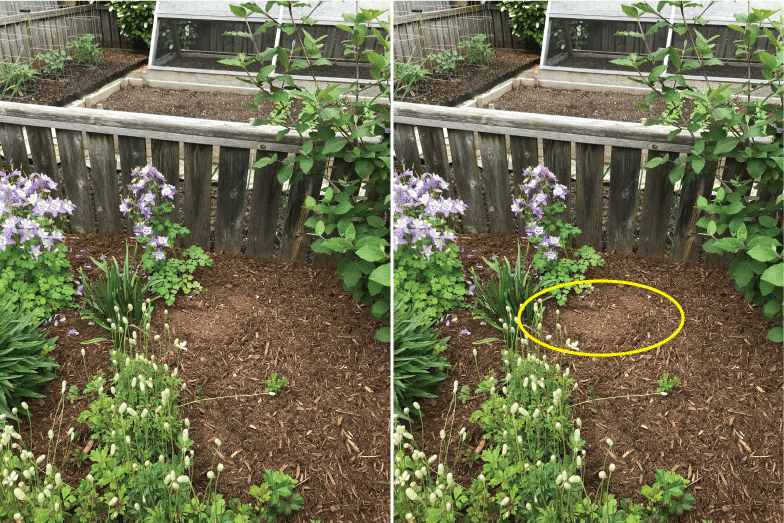
Start at the back of the bed and work forward so that you don’t have to trample on freshly applied fluffy mulch… footprints never look nice in a garden bed! If you must walk on your newly applied mulch- fluff out your footprints! It’s really all about keeping a nice uniform look to the bed.

I feel a bit like a crime detective by circling footprints on the ground! Be a sneaky gardener- don’t leave your footprints behind! They really do look awful in a garden bed!

Mulch the Beds NOT the Plants!

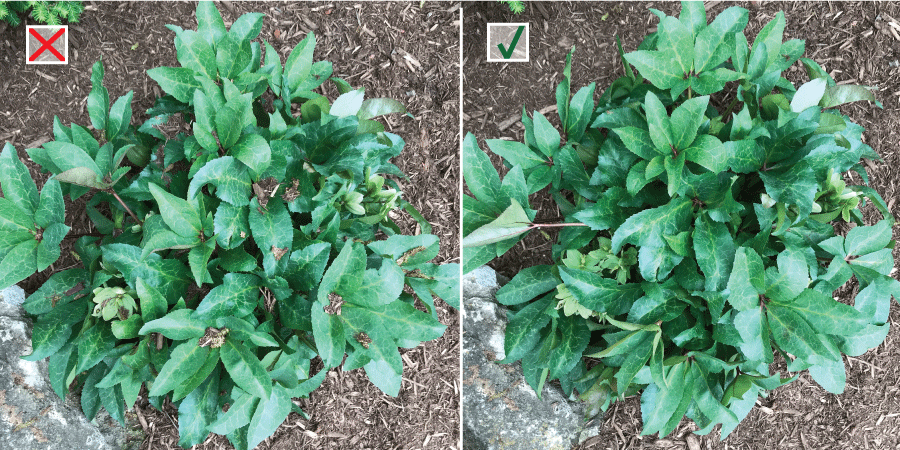
I know it is easy to just toss mulch into a bed and call it a day. Usually the plants get in the way. Take the time to brush the mulch off the greenery; the mulching job will look much tidier.

Show off your Curves (or Straight Lines…)

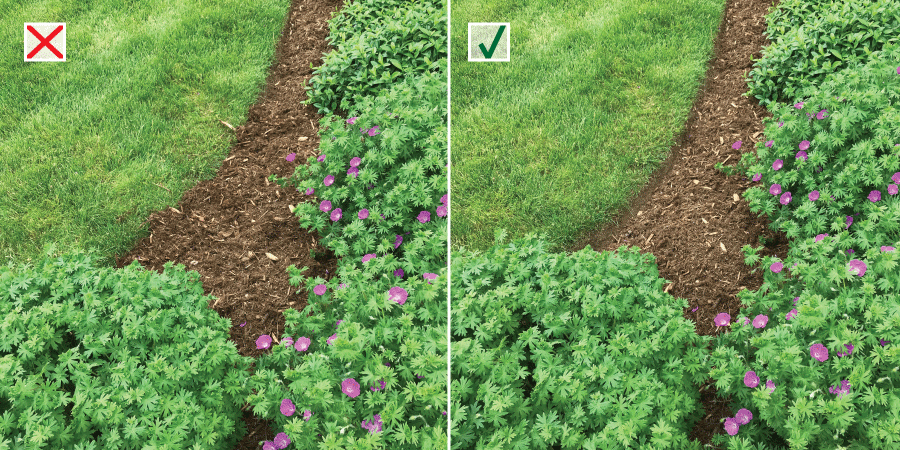
With all the work done to create nice definition to your garden beds through the use of edging, don’t throw all that work away by filling the edges in with mulch (or, even worse, allowing the mulch to overflow onto the grass!). Avoid this problem by tapering out the mulch as you approach the edge of the bed. This technique will keep the garden edge visible and clearly defined.

By thinning the mulch out as you approach the edge of your garden bed, you can retain a nice crisp edge!

Don’t be smothering…

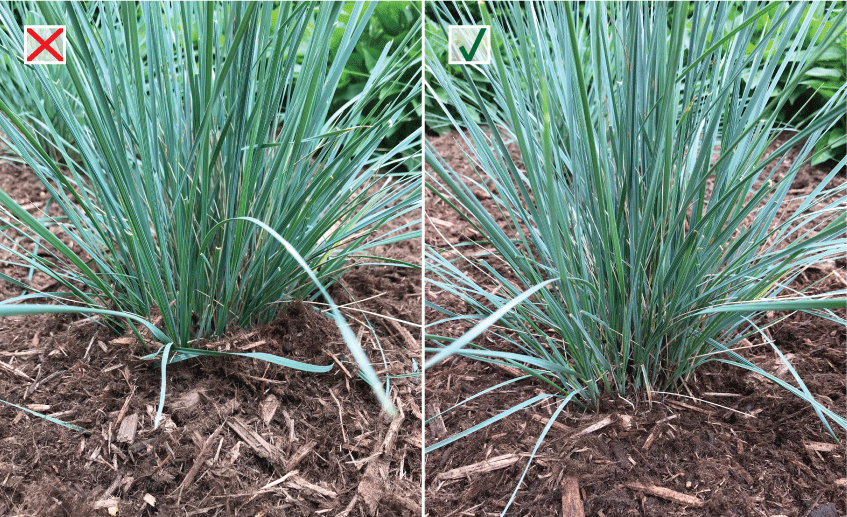
…give your plants some space by not piling up mulch around the base of them. This is an important tip from a plant health perspective. Piling up mulch against the base of perennials, shrubs and trees provides a nice cozy environment in which critters (such as insects, and microorganisms) can live. Many of these critters can negatively impact your plants through feeding or causing disease. I realize that not having mulch right up to the plants interrupts the uniformity of the mulching job. I work around this by applying a ‘sprinkling’ of mulch around the plants just to give the appearance that the area has been mulched when in fact it hasn’t been. Think of it like a dusting of icing sugar on a cake.

If this blue oat grass (Helictotrichon sempervirens) on the left could speak, it is saying”I love you, but I need my space…” Ouch. Don’t get smothering! Taper out the mulch around your plants. A ‘dusting’ around your plants can give the illusion that the mulch layer is continuous.

And there you have it! A couple long-winded posts about mulch. Much more can be written about this topic, but I will save background information for the winter :) Right now it’s time to get out there and garden!