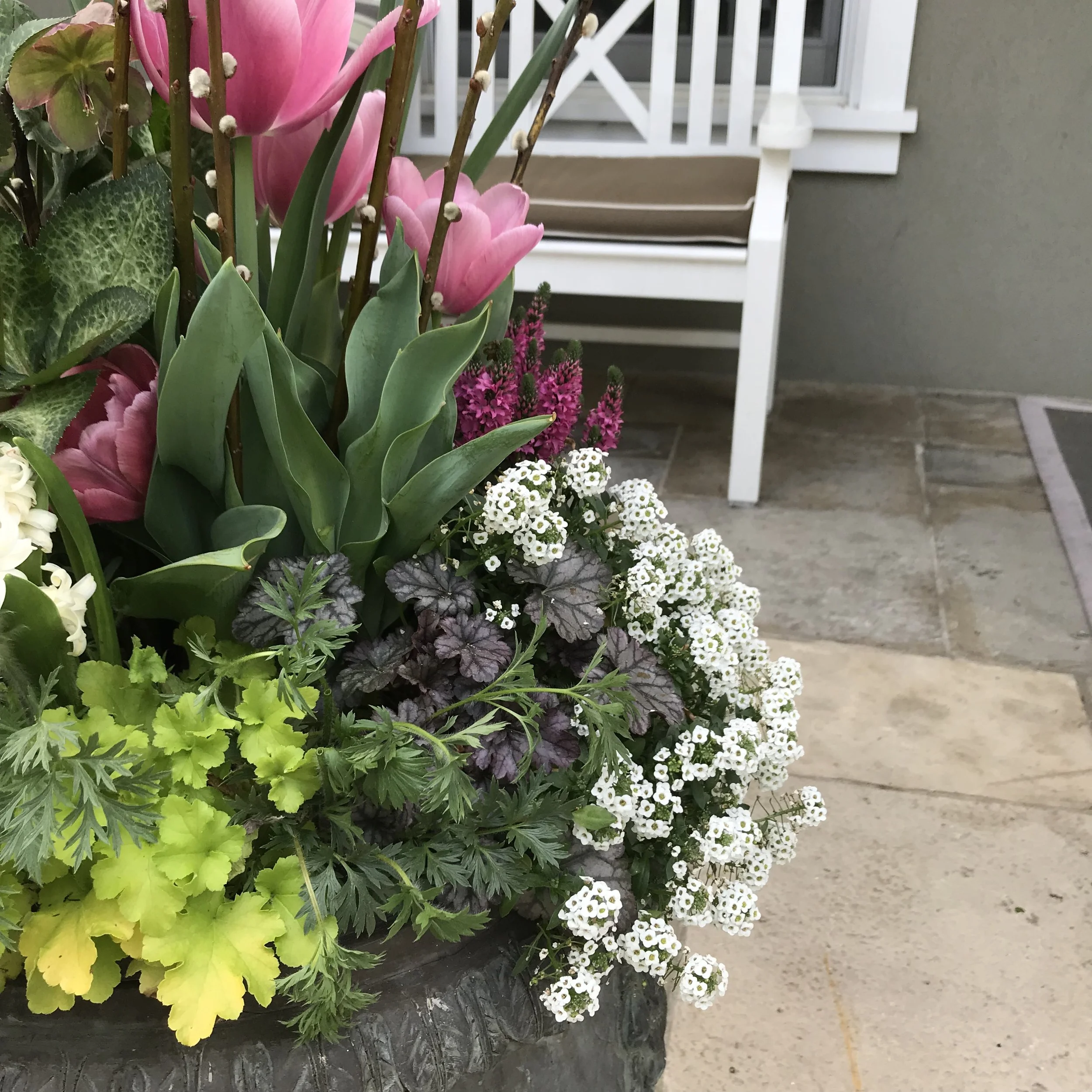
The Sky is Falling!

(Originally posted: June 9, 2019)

Actually, it’s not… but everything else is. Petals, samaras (such as the ‘helicopters’ that spin down from maple trees; a.k.a ‘maple keys’), spent catkins (flower clusters), fluff, even last years leaves from trees reluctant to release them last fall (young beech trees, hornbeam, English oak to name a few)… everything seems to be raining down on the garden right now and it feels like all that work put into Spring clean-up was for nothing. For someone particular like me, it’s enough to drive you nuts (which, incidentally will be raining down in the months ahead… thanks to all those butternuts, black walnuts, beech, oaks and hickories)!
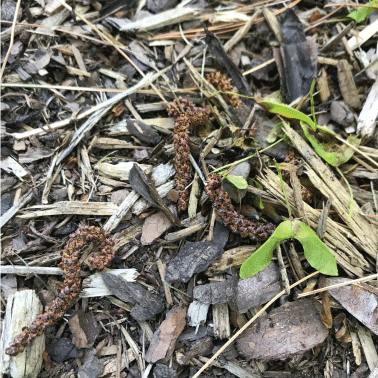
Spent Betula sp. (birch) catkins and maple samaras
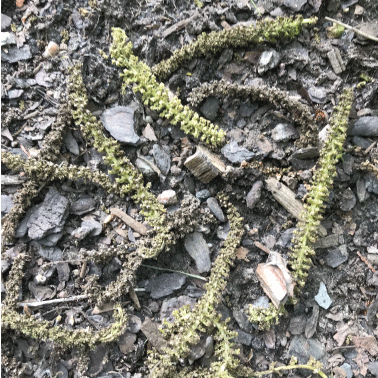
Catkins from a hybrid butternut tree (Juglans sp.). We somewhat-affectionately call this ‘the invasion of the worms’.

So what does this mean? It means another round of cleanup is in order. Afterall, removing all the fallen ‘debris’ will do wonders to clean up the look of your gardens.
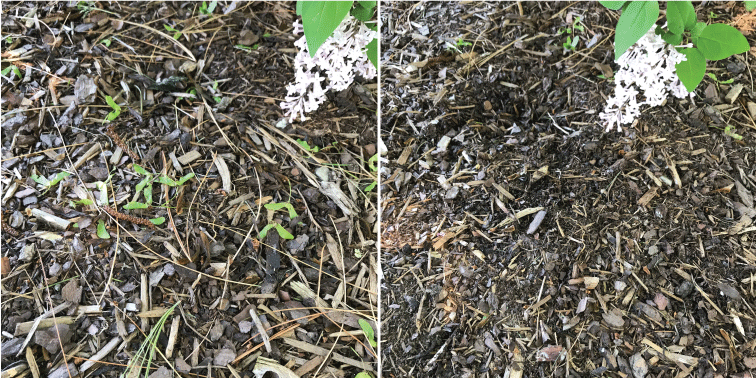
It doesn’t take much to clean up the ‘look’ of a garden bed. Just a light rake-through of the surface with the fingers to remove the main culprits!

And it is not just the ground that may need a tidy, large-leaved perennials such as Hosta are notorious for capturing debris in their foliage. It not only looks unsightly but the debris holds onto moisture. This is not ideal since prolonged periods of leaf wetness can promote foliar diseases on plants. Additionally, critters such as slugs LOVE eating Hosta leaves (this is bad); they also like moist environments. Don’t lay out the ‘welcome mat’ for these pests by making the environment especially favourable to them!
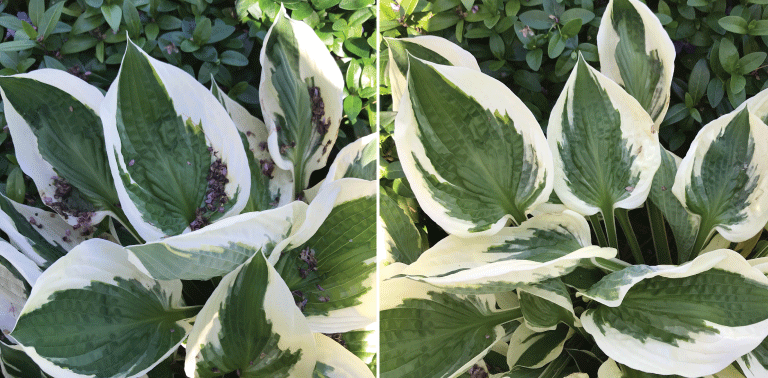
Spent Cercis canadensis (redbud) flowers captured by Hosta leaves; the same plant with the soggy petals removed.

As for seeds raining down- it may seem like a hastle to remove them from the beds (I usually rake through the surface of the beds with my hands to collect them) but your efforts will be well worth it in the long run as it will save you from having to pull lots and lots of seedlings down the road.
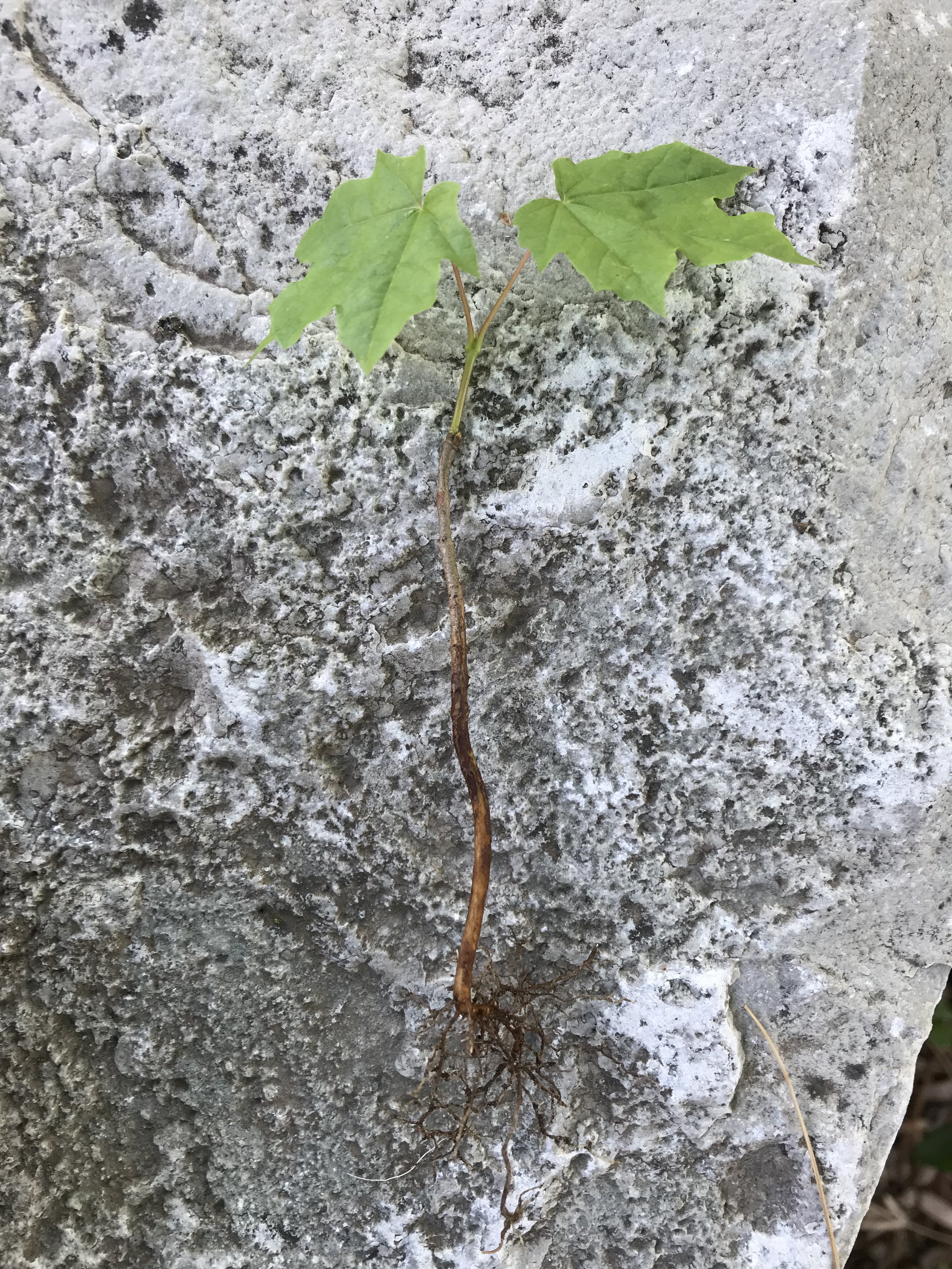
Acer sp. (maple) seedling.

If you have a compost pile, you can put the petals and leaves you collect into it. As for the seeds? You can compost those too- you may have some seedlings cropping up but at least they will be contained; or you can put seeds in the brown yard waste bags and out to the curb for municipal compost (if available in your area) so that you are not pulling trees from the compost heap (or from the garden if you spread the compost prematurely).

Alternative ‘Garden Hack’

By now you are probably wondering if there is a shortcut to this second round of garden clean-up. Well, if you haven’t mulched your garden beds yet and intend to then you are in luck! You can always cover up any ‘non-seed debris’ (such as petals and catkins) with mulch. Just remove any debris that has collected on or within the base of your plants. This will not only look better visually, but it will be better for the health of your plants. If you are dealing with seeds that have rained down on your beds (such as ‘maple keys’), I do not recommend mulching overtop as you will most certainly be pulling out a large number of seedlings from your gardens in the future! (Sorry!)
A Little off the Top

(Originally posted: June 6 2019)

Growing season is well underway and it is time for some plants to get a little haircut!

Think back to last season… seems like a long way away now, but if you flip through the files in your memory banks, perhaps you remember some floppy perennials in your garden? Ones that grew nicely at the start of the season and then upon flowering, or after a driving rain the plants decided to split open in the middle and lie down on the ground in all directions?

Perhaps this is ringing a bell and you are now thinking “ah, yes… those plants drove me CRAZY!”

Aside from staking up floppy plants (something that we will do later in the summer), there IS a solution for some plants to prevent ‘the flop’. It is a little technique called ‘cutting back’ (or ‘pinching’ if only the tips of the plant are removed).

The Technique

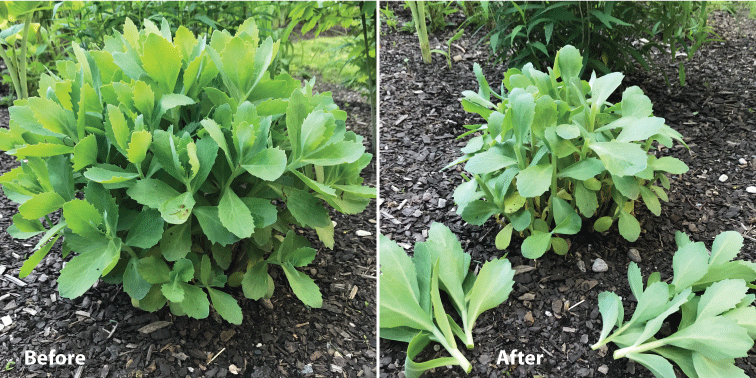
Essentially, ‘cutting back’ is exactly that- cutting back the stems of a perennial. Not all perennials can tolerate a prune like this but there are some common ‘floppy’ perennials that can, such as Sedum

A clump of Sedum before and after being cut back (along with the clippings to illustrate how much of a ‘haircut’ the plant got!)

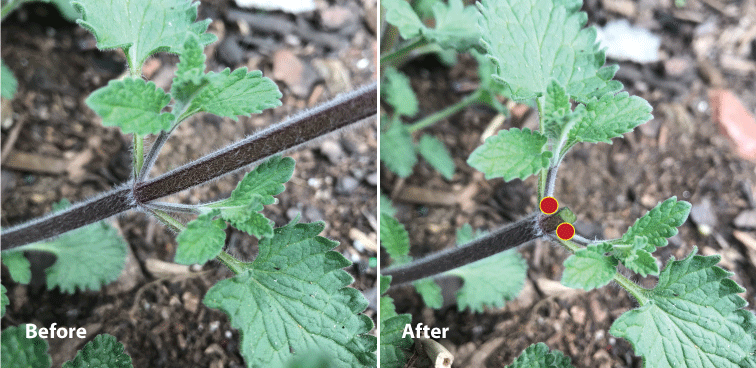
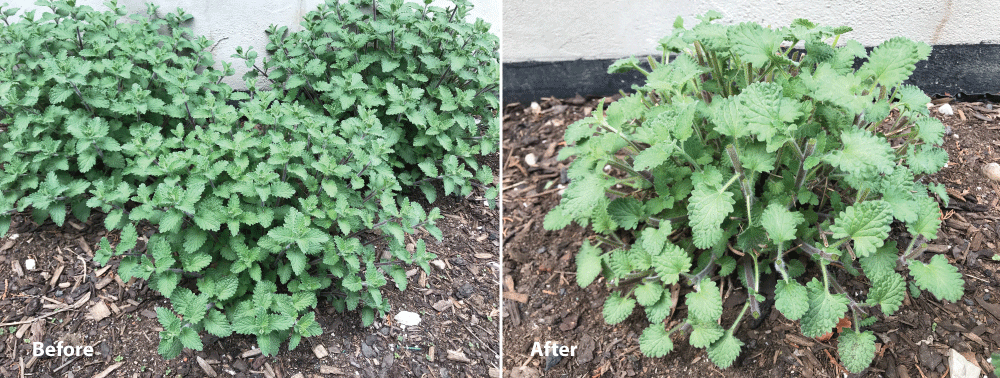
I also used this technique on some catmint (Nepeta racemosa ‘Walker’s Low’)…

Nepeta x faassenii (catmint) before and after being cut back.

So how does ‘cutting back’ combat ‘the flop’?

By cutting down the stems of a perennial, the plant is forced to direct it’s growth elsewhere- which would be the next remaining buds on the stem (shown in the photo of the catmint below). When these buds begin to grow, the plant ‘branches out’ from these new growing points, ultimately leading to a fuller/bushier plant. The denser plant allows for the stems to rely on each other for some support to stay upright. [Now sing with me… “Lean on me… when you’re not strong…”}

A catmint stem before and after being cut back. The red dots show the new growing points for that stem. The cutting back of the stem ultimately forces one stem to branch into two.

Cutting back a perennial also leads to a shorter overall stem height. By forcing the plant to branch, the plant’s energy must be used to grow a greater number of stems. I like to think of it as each stem vying for the same resources. With more stems trying to grow, there is less energy available for each stem- which ultimately leads to a shorter stem height (as well as smaller flowers).

It is the combination of a shorter height and fuller plant that translates to a sturdier perennial that can resist flopping over!

An Added Benefit

Cutting back perennials has another consequence and that is a delay in flowering. Cutting back can be considered a ‘set-back’ to the plant, so it should be no surprise that it will take time for the plant to rebound from the prune and begin growing again from new buds. It must do this before it can actually attempt to flower! The time it takes the plant to rebound from the prune is responsible for the delay in flowering.

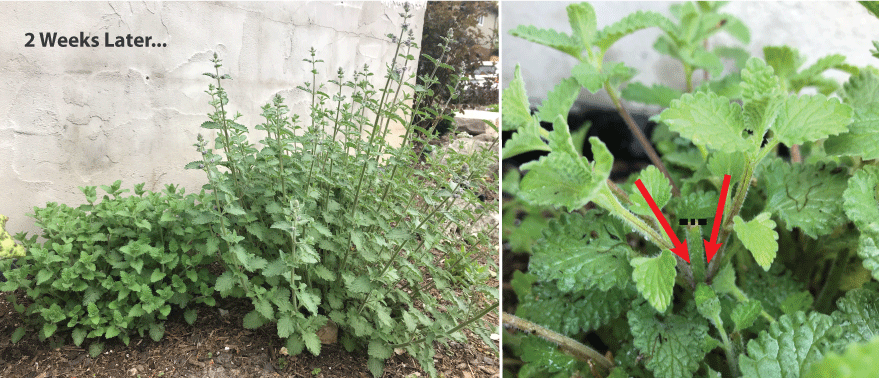
On the surface, this delay of flowering could be seen as a negative consequence but it can actually be used to your advantage! First of all, in the case of both the Sedum and the Nepeta, I have not pruned all the plants in my garden. That way some of the clumps will flower at their usual time and the pruned ones will flower later. (For example, two weeks after the initial prune of the catmint, the unpruned clump is ready to flower, the pruned clumps are still rebounding from being cut back.) The result? A longer overall flowering period for these perennials! This doesn’t just translate to a longer floral display for my appreciation. These plants happen to be located in a pollinator-friendly garden which means the longer bloom time presents a longer period of time when the ‘floral buffet’ is open for these important creatures. Dig in!

Catmint in a pollinator garden. The unpruned clump is on the verge of flowering, the other two clumps have branched out and begun growing from their new growing points (shown by the arrows). These two pruned plants will be delayed in their flowering. This forced staggering of flowering periods can help prolong bloom times for pollinators.

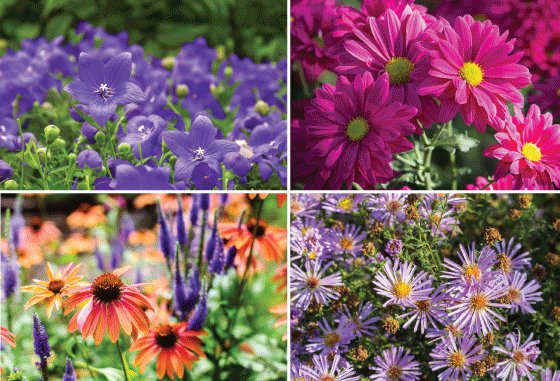
So far, I have only cut back Sedum spp. and Nepeta this year. Some of the more common perennials ‘on deck’ for a haircut include:

  • Balloonflower (Platycodon spp.)

  • Aster

  • Chrysathemum

  • Beebalm (Monarda spp.)

  • Russian Sage (Pervoskia atriplicifolia)

Some other perennials that can be cut back to prevent ‘the flop’ (clockwise from top left): Platycodon spp. (balloon flower), Chrysanthemum spp. Aster spp., Veronica spp. (speedwell) and Echinacea spp. (coneflower)

For more information on this topic, check out the amazing book by Tracy DiSabato-Aust called The Well-Tended Perennial Garden. (2006, Timber Press Inc.). In this book you will find a LOT more detail with respect to pruning perennials, as well useful lists that outline what perennials can tolerate pruning and at what time. Some all around good bedtime reading :)

More posts on perennial pruning in the weeks ahead!

Game on!

(Originally posted: May 25, 2019)

This week in the garden… more like this week in the garden centres. Last weekend marked the official kick-off to ‘annual planting season’. The time when a landscape gardener must put his or her entire life on hold in order frantically buy the plants she or he needs before someone else gets them. It’s kind of like Walmart on Black Friday… only not as aggressive. Gardeners are more the passive aggressive type, which arguably could be worse.

It may have happened to you- you spot the perfect plants; they sit there glowing in their own beam of sunlight. You glance up and notice someone else eying the same plants. You casually look away hoping that your disinterest will convince the other party that the plants are not desirable. You both slowly circle in; like turkey vultures to roadkill. Then one person gets the edge, gets a shoulder in front of the other person and poof! The plants are gone.

I have done it to many a shopper.

I am TOTALLY kidding but what I have done is observe shoppers’ habits and what I have noticed is that people love their flowers. Duh! Right now you are giving me the virtual eye-roll but hear me out…

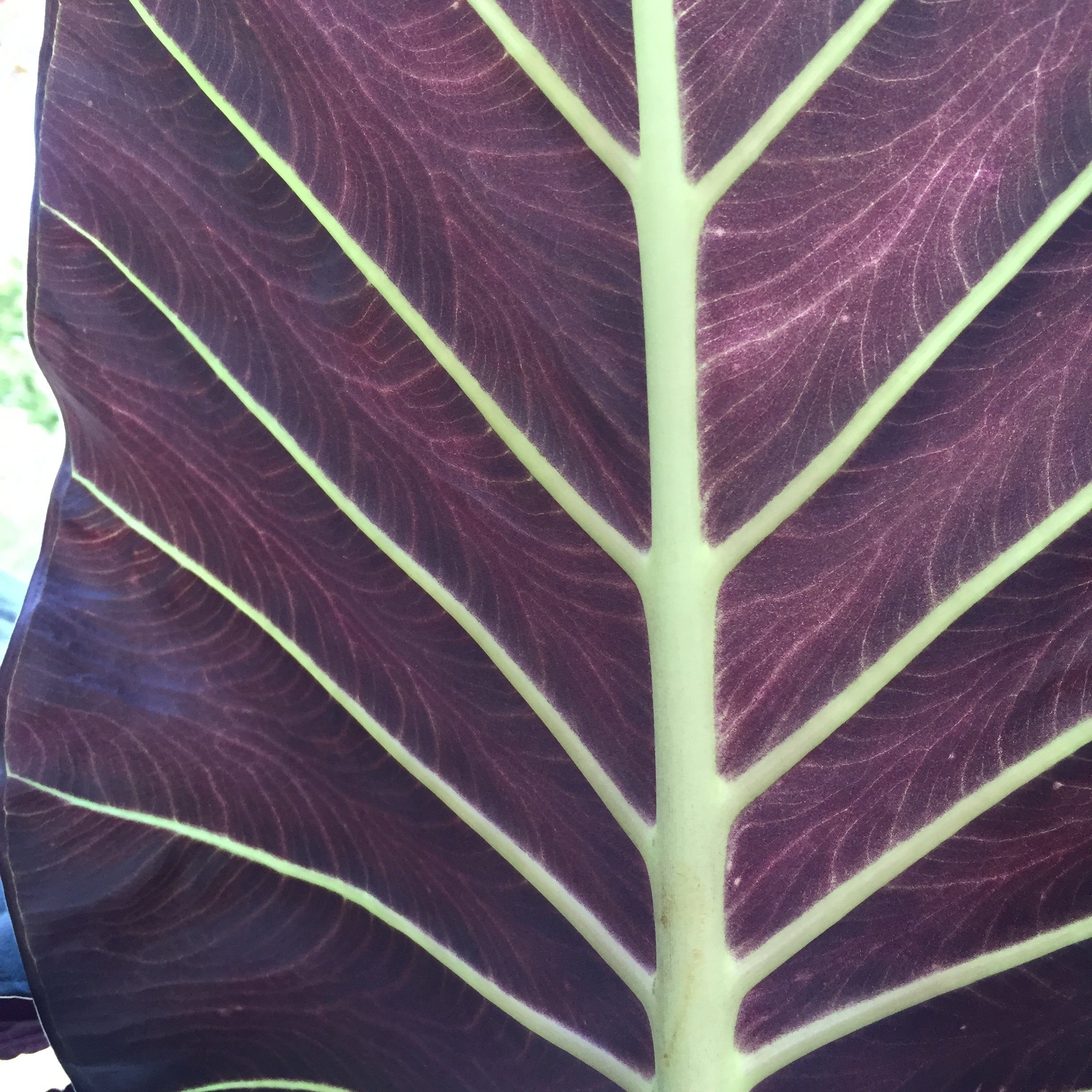
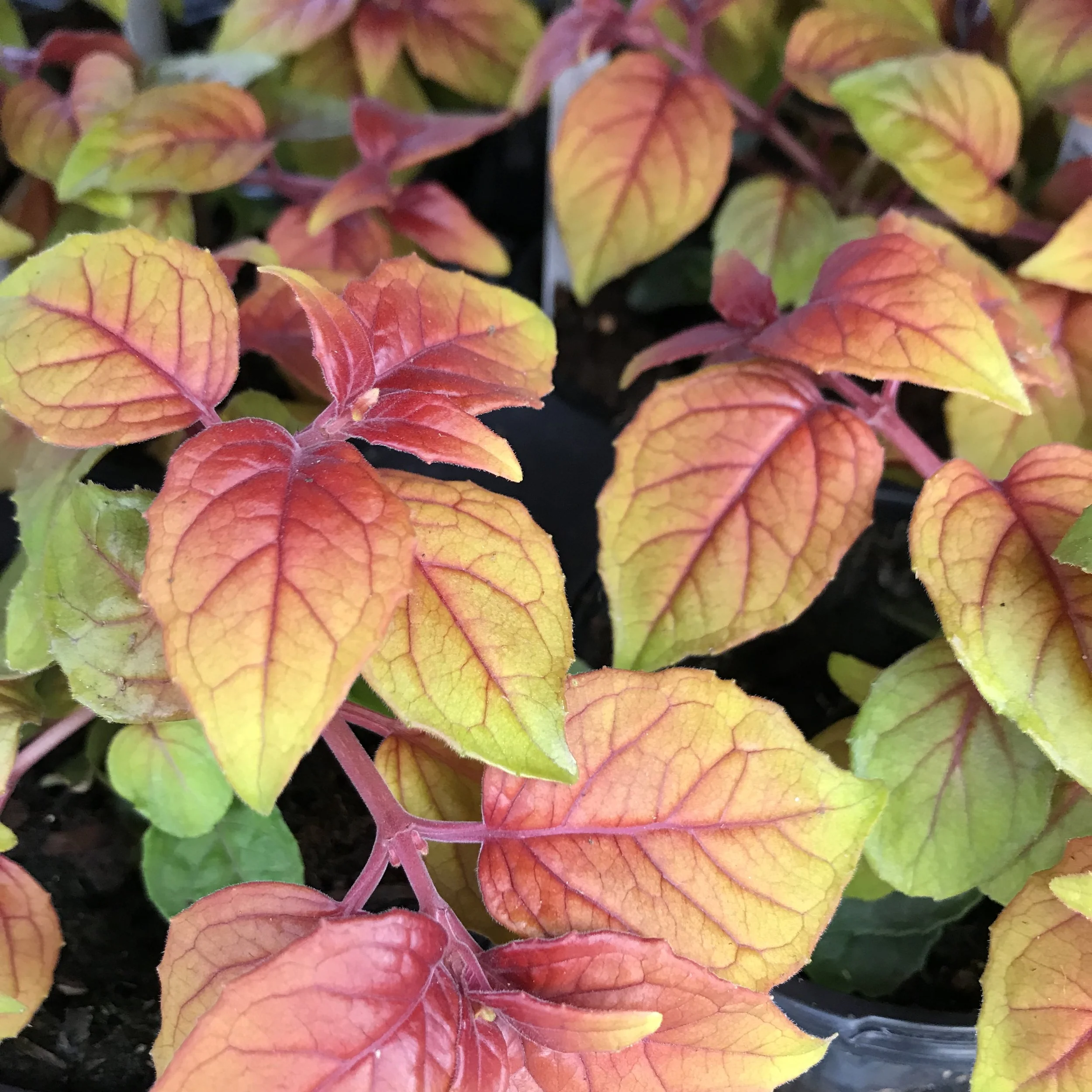
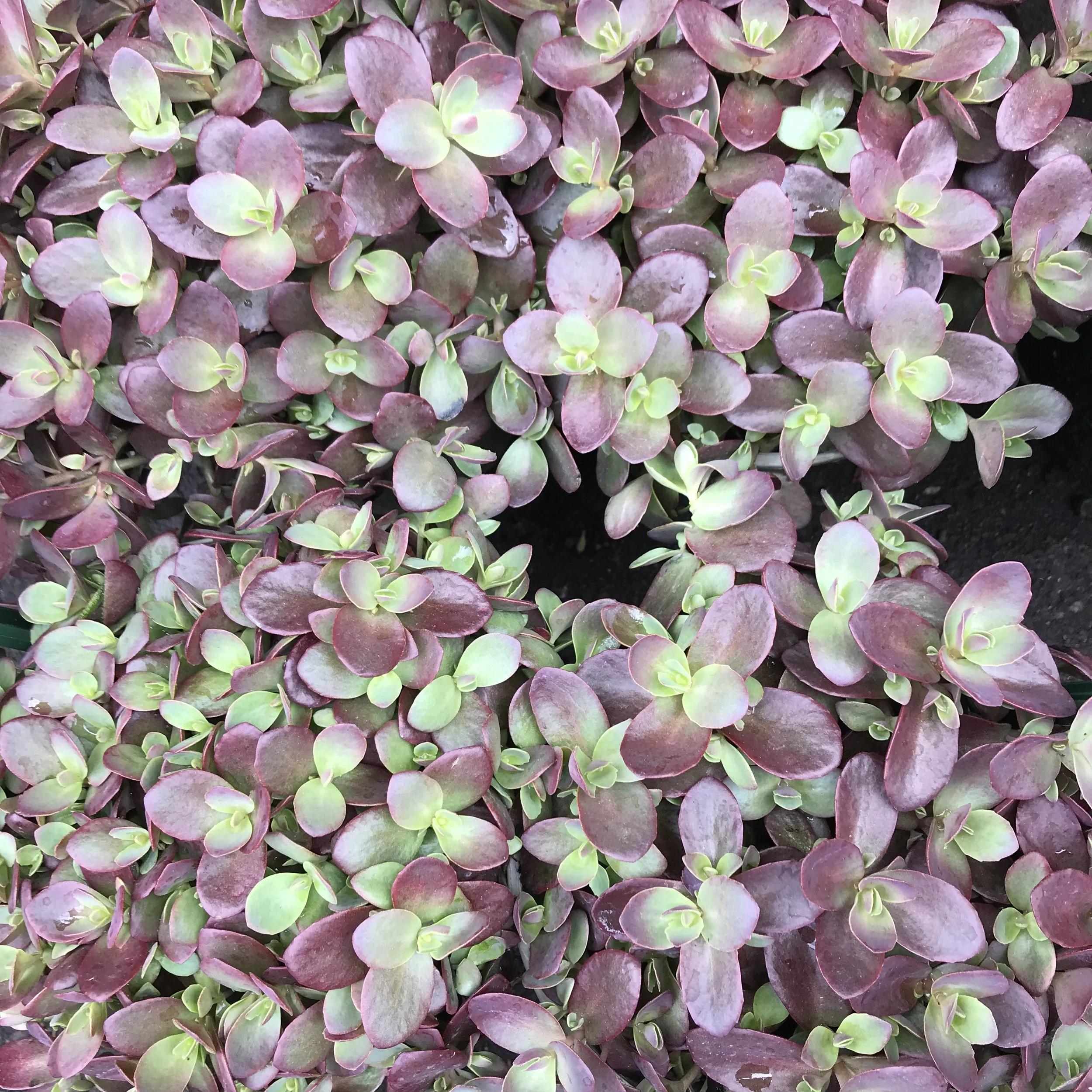
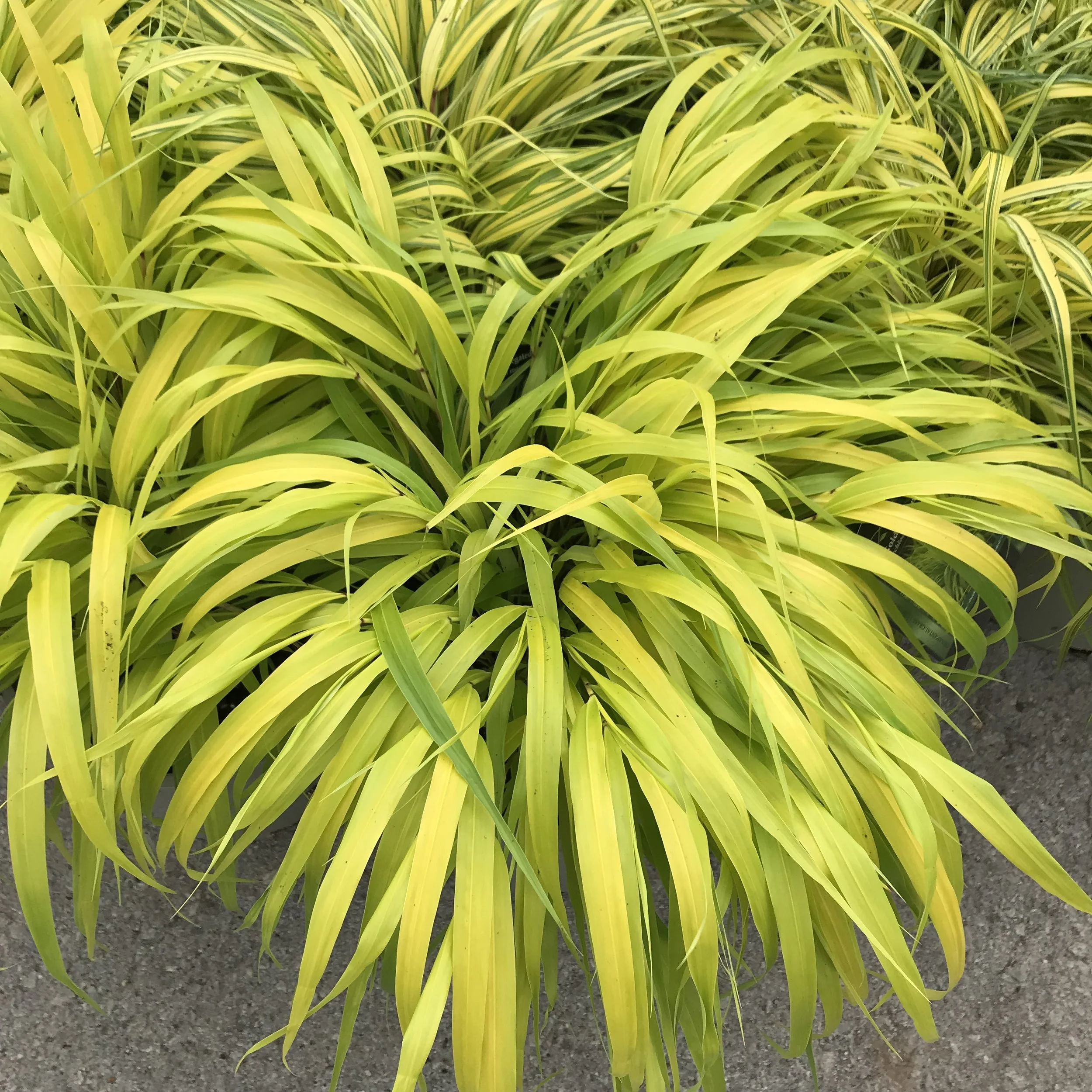
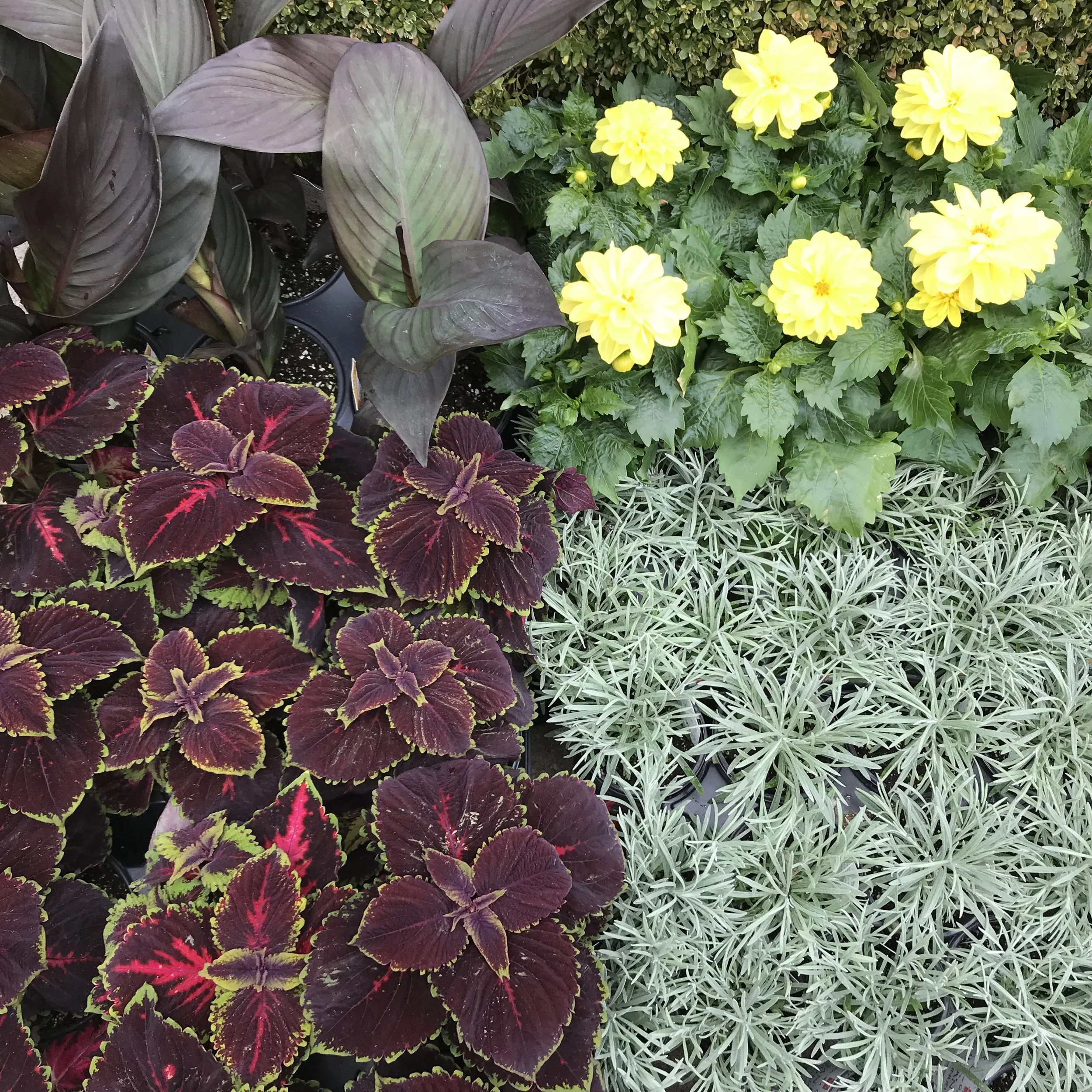
People are attracted to blooms. They pick their plants based on the blossom- the colour, the shape, the scent. But there is SO much more to plants than flowers. Hello! Plants have leaves too and the leaves can be AMAZING! I must admit I am a sucker for ‘sexy foliage’- I mean, check this out:

or this…

Autumnal trailing Fushia

Or even this….

Sedum ‘Firecracker’

And how about this…

Hakonechloa macra ‘All Gold’ (All Gold Japanese forest grass)

So many colours and textures! The examples above are just the tip if the iceberg too. Amazing don’t you think?

Now the important thing to remember about leaves is that they can really help make the blooms of your favourite flowers ‘pop’.

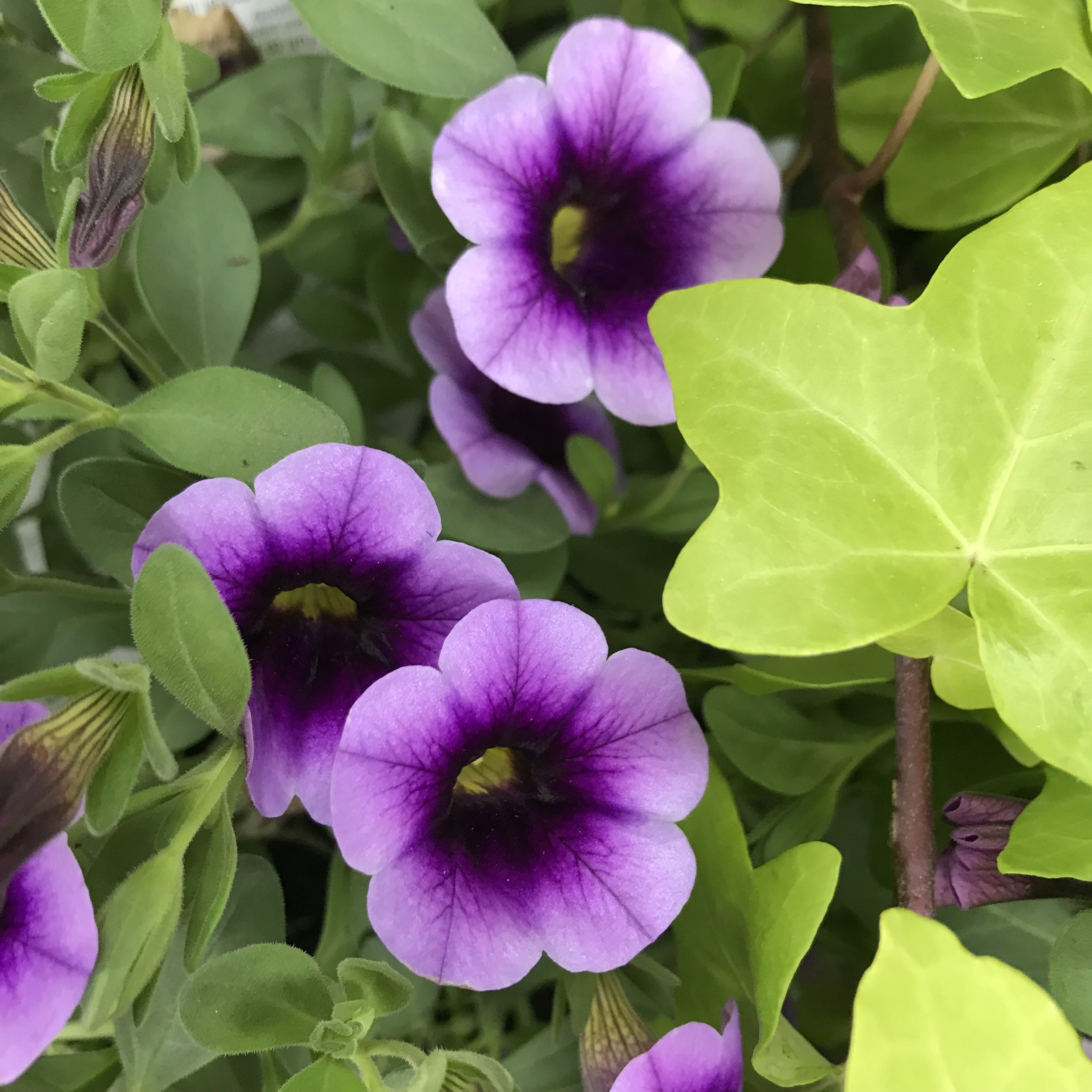
Just look at how the purple flowers of this Calibrachoa spp. and the yellow-green of the ivy really play off each other…

BAM! Now that’s a gorgeous purple!

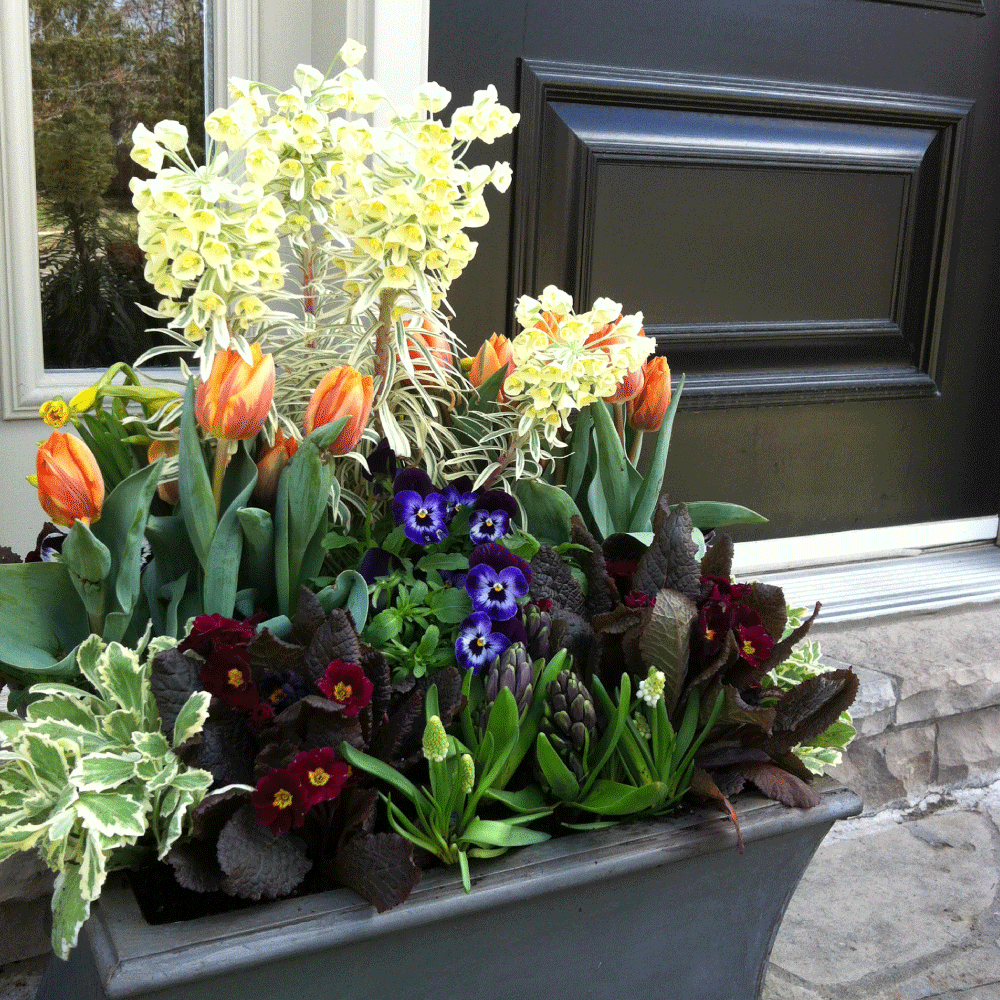
Moving on to another combination, in this planter, variegated spurge and wall cress (Euphorbia and Arabis) and dark leaved Primulas are used to add contrast and colour to the arrangement…

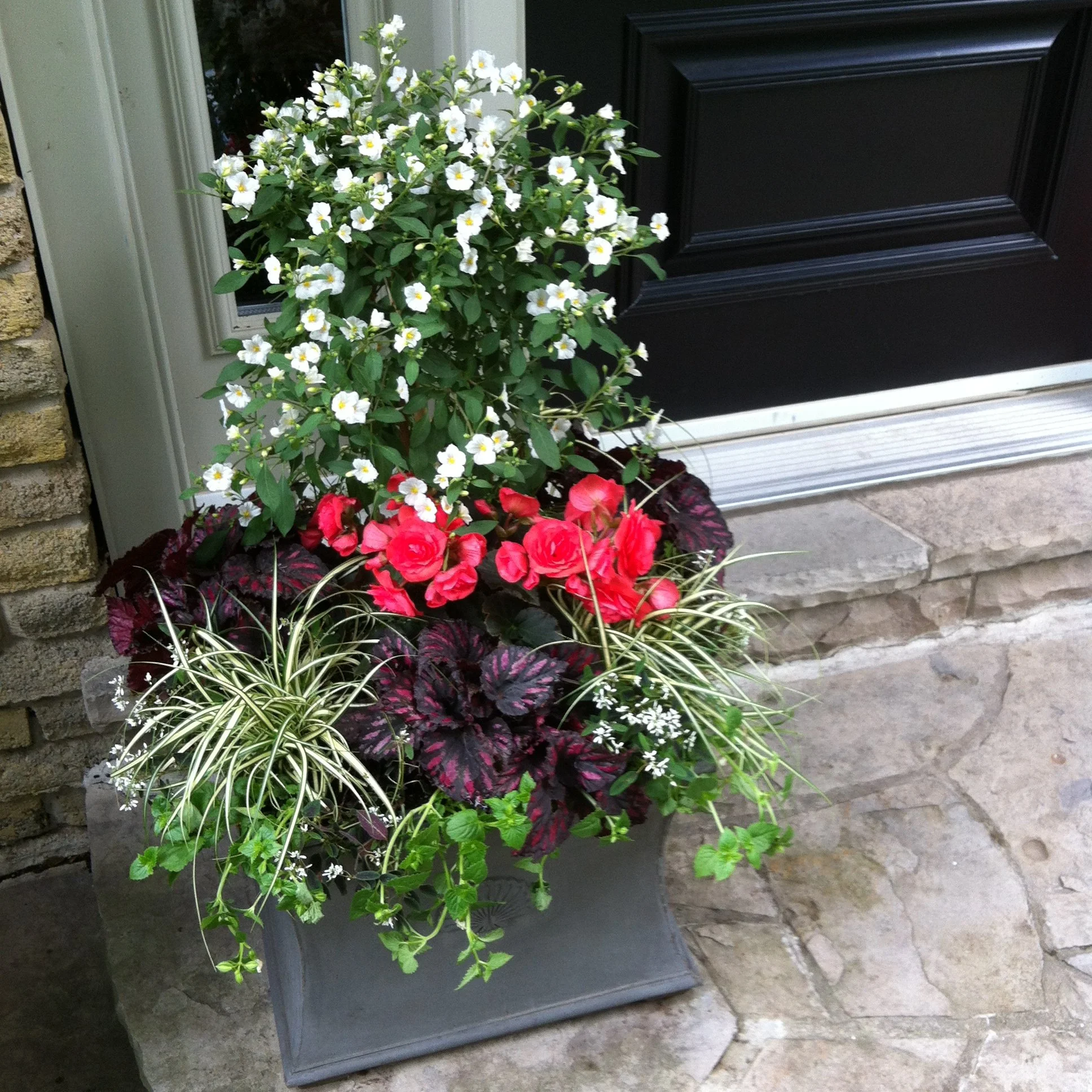
While in this Summer planter, burgundy and black Begonia sp. are used for colour (plus the leaves are incredibly stunning) and the variegated Carex oshimensis ‘Evergold’ (Japanese Sedge) adds both contrast and amazing texture.

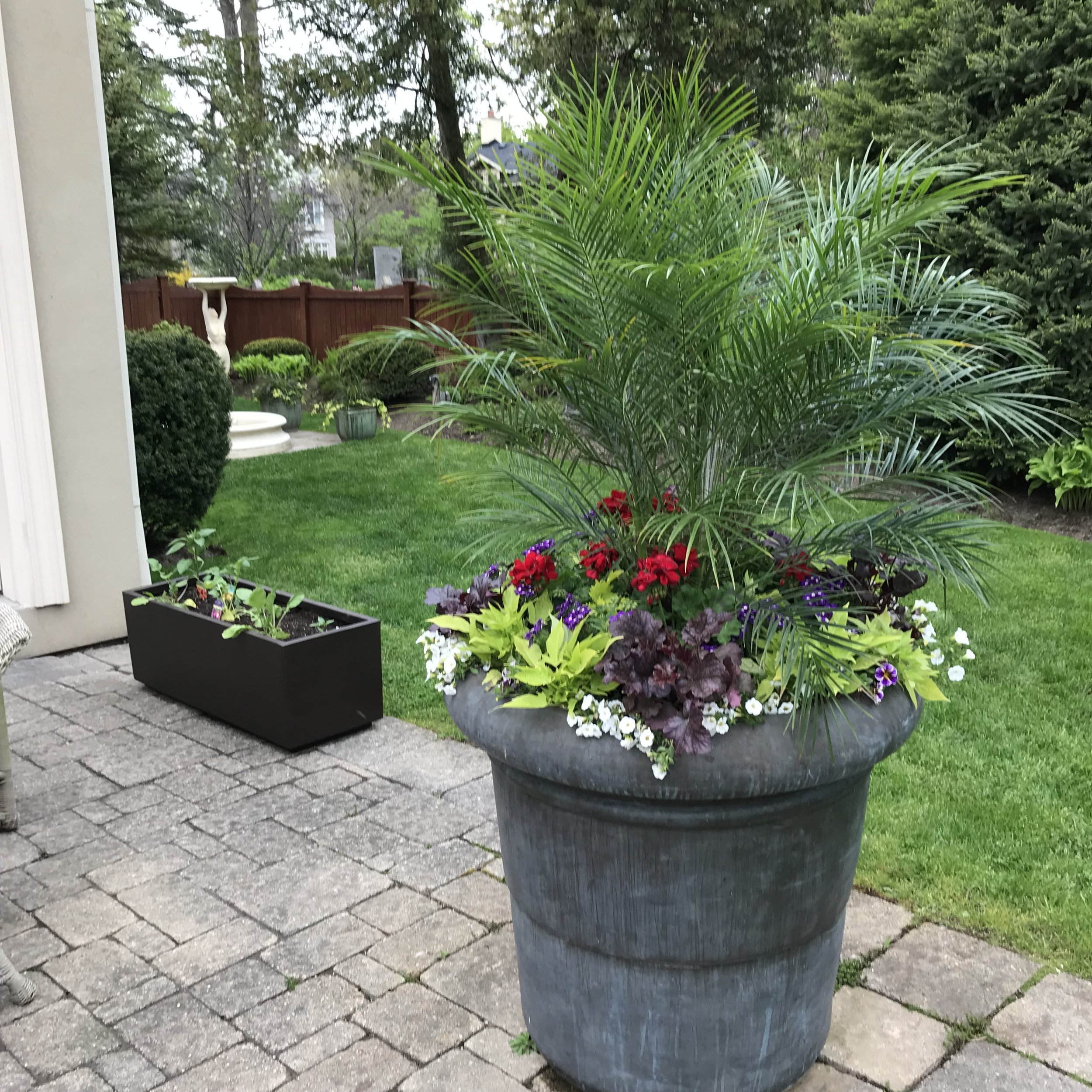
In this combination, the chartreuse potato vine (Ipomoea batatas ‘Sweet Caroline Light Green’) has been used to breathe some extra life into this newly planted container.

Finally, in this Spring planter, the tulips may be fading, but the purple and chartreuse colours of the Heuchea spp. (Coral bells) will continue to add colour long after the blooms are gone. This brings me to a serious ‘plus’ for adding nifty foliage to your planters or gardens- you won’t need to rely solely on blooms for colour!

Ok. Ok. I’ll stop! As you can probably tell, I can go on and on about foliage until the cows come home. Hopefully I’ve proven that plants don’t need to have showy flowers to have a place in your planters or garden!

So, are you feeling ready to hit a garden centre? Here are a couple more helpful tips when it comes to selecting plants…

TIP #1: No one is telling you that you need to stick to the ‘annuals’ section when buying plants for your summer containers/ garden beds. Many perennials have amazing foliage too! In fact, many of my examples shown above are perennials. (For simplicity’s sake, annuals are the plants we toss out at the end of the growing season. Perennials are plants that come back year after year. These terms have much more involved definitions but I will leave that to a winter blog post!)

TIP #2: Read the plant tags! All plants have tags that list their eventual height, width, and growing requirements. If you are pairing plants, you want to: make sure that you ‘layer’ them properly in a bed (with the taller ones toward the back). Sometimes the largest of plants can be purchased in the smallest of pots- read the tag to see what you are getting yourself into! Plus, you also want to make sure you pair plants that have the same growing needs (especially light requirements).

Now… get your elbows out to your side in ‘ready position’, look for that beam of sunlight, and go get your plants!