A little serving of creepy…

(Originally posted: July 25, 2019)

So I was going to make my next post about deadheading but I stumbled upon something today that really up’d the cool factor (in an incredibly geeky sort of way).

Garden pests. It is a love hate relationship for most gardeners. OK, mostly hate but I love them for how cool they can be! Take fall webworm (Hyphantria cunea) for example…
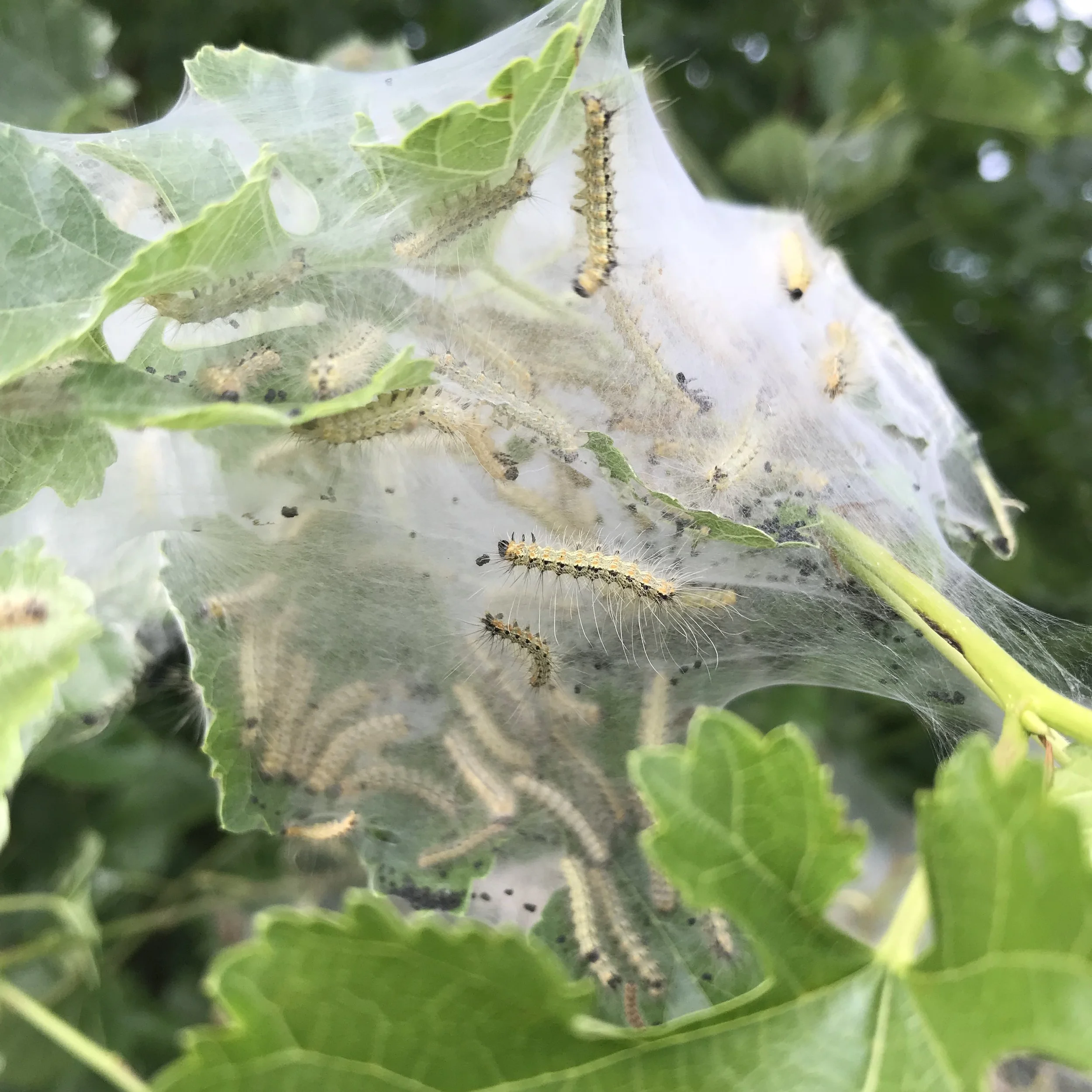
A fall webworm nest.

Now that’s a party of creepy crawlies. With that said, I don’t think the photo does them much justice. How about this…

A tent of fall webworm (Hyphantria cunea) with some caterpillars twitching (a mechanism used to deter attacks from predators).

EEEEEWWWW! Now do you have the heebie jeebies?! These posessed looking caterpillars are actually twitching as a defense response to help deter predators. At first I thought that I was the culprit of this convulsive show but then I took a closer look, pressed ‘record’ on the phone’s camera, and watched the drama unfold…

Parasitoid wasp flying around Fall Webworm tent.

Parasitoid wasps must have been the inspiration behind the well-known Alien movies. Afterall, many species will pierce their prey with a long ovipositor (the bum end that you could see stabbing at the nest) to lay an egg inside their prey. This egg hatches and the larva then proceeds to feed on the prey from the inside. As wasp larva will often leave the organs for dessert, it is possible that the prey can live right up until the wasp larva emerges from it’s body. 100% Alien style. Yuck….and cool…mostly yuck (I think?).

As for this specific wasp? I am sending out the video to have it identified and will update this post when I know exactly what it is and it’s specific life cycle.

So…how does all this relate to your garden? Well clearly fall webworm is active in the landscape right now, feeding on trees. While fall webworm is not usually detrimental to the health of your trees, if you look up and see tents among the branches (that are within reach), you can prune them out and destroy them to control webworm populations. (Tent caterpillars are another pest that can be found earlier in the growing season. These critters will also make nests within the branches of your trees and shrubs and they can be quite destructive, so pruning out or removing nests is generally a good habit to adopt.)

What if you can’t reach the nests? You can rest assured that there are some natural control mechanisms at play… with the parasitoid wasps certainly taking up your cause.

Welcome to the wacky world of garden pests (and beneficials).
Deadheading Technique #1: Leave no Evidence!

(Originally posted: July 19, 2019)

Well the time has come for daylilies (Hemerocallis spp.) to shine…blooms of all sorts of colours rising above their grassy foliage. Then, just as quickly as they begin to shine, they start to ‘un-shine’ (if this is not a word, I would like to propose it as a new one). Afterall, Hemerocallis translates to ‘beautiful for a day’. These perennials look SO MUCH better when they are deadheaded to the point that, when I walk by a property with daylilies that haven’t been deadheaded, it takes everything in me to not pull out some pruners and get to work. I’ve even gone through the conversation in my head:

Hey! What are you doing?!’

Your daylilies don’t look very pretty and they are begging to be tidied up. Plus this is free labour!

I don’t really care. Get off my property and please don’t come back.

OK. Sorry.’ (Said while thinking: ‘you really should care because they really don’t look very good’)

…as the inner dialogue never ends up with a positive outcome, I decide not to trespass.

Now that we established that your daylilies will likely NOT be miraculously tidied by a crazy gardener, it means you should learn the techniques so you can do the work yourself!

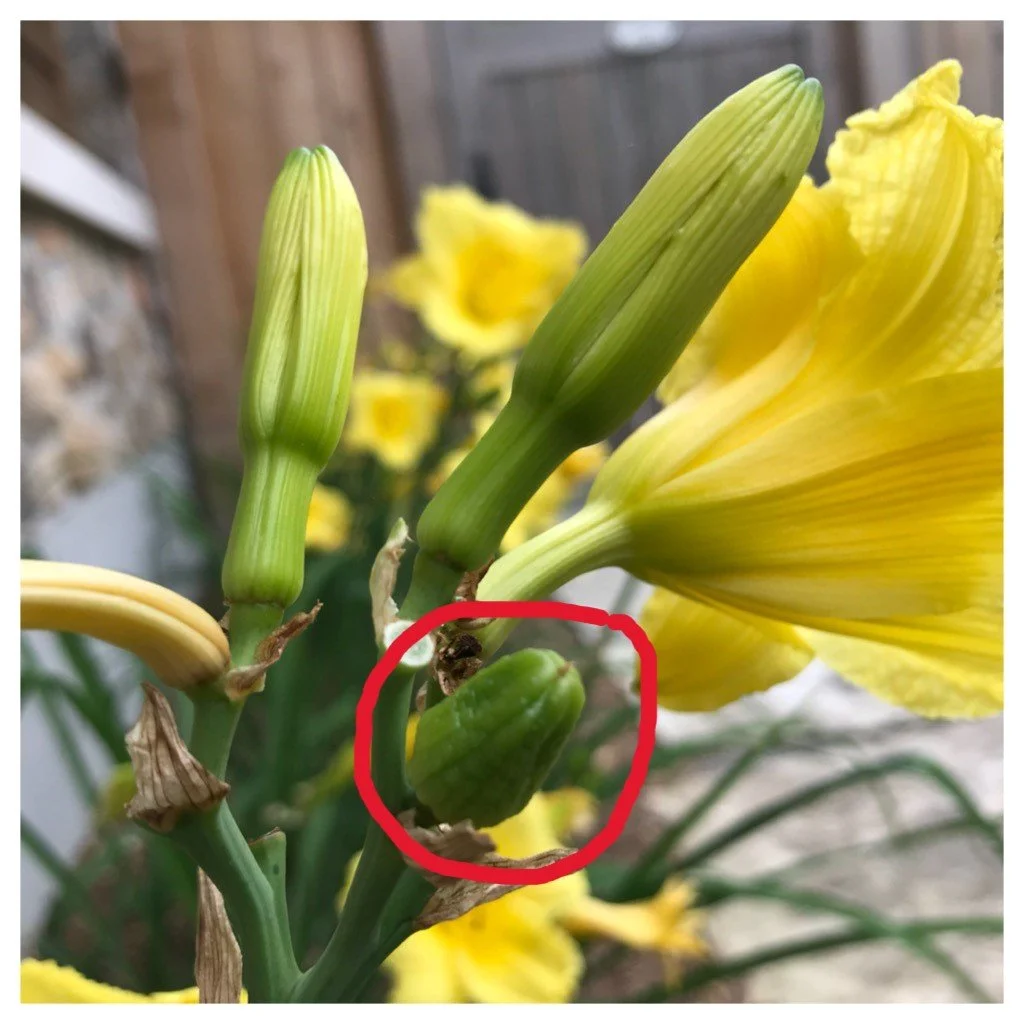
There are a few steps to tidying daylilies. The first step is done during the bloom period. Old withered flowers are removed, as are the seed capsules. Be careful not to confuse the seed pods with flower buds. In general, seed pods are more roundish and flower buds are elongated. Once you have identified the parts to be removed, tidying the plant is easy! The withered flowers and seed pods simply snap off by hand.

A daylily with lots of flower buds and a seed pod (circled in red).

Once the last flower has faded from a particular flower stalk we move on to the next step of tidying up the plant. This is perhaps the easiest deadheading technique which I term the ‘leave no evidence’ approach, otherwise known as cutting back the whole flower stem. Essentially you are removing the entire stem to a point below the foliage- removing all evidence that the plant ever had flowers. It is a technique used for daylilies, hosta, iris, coral bells, scabiosa among others.

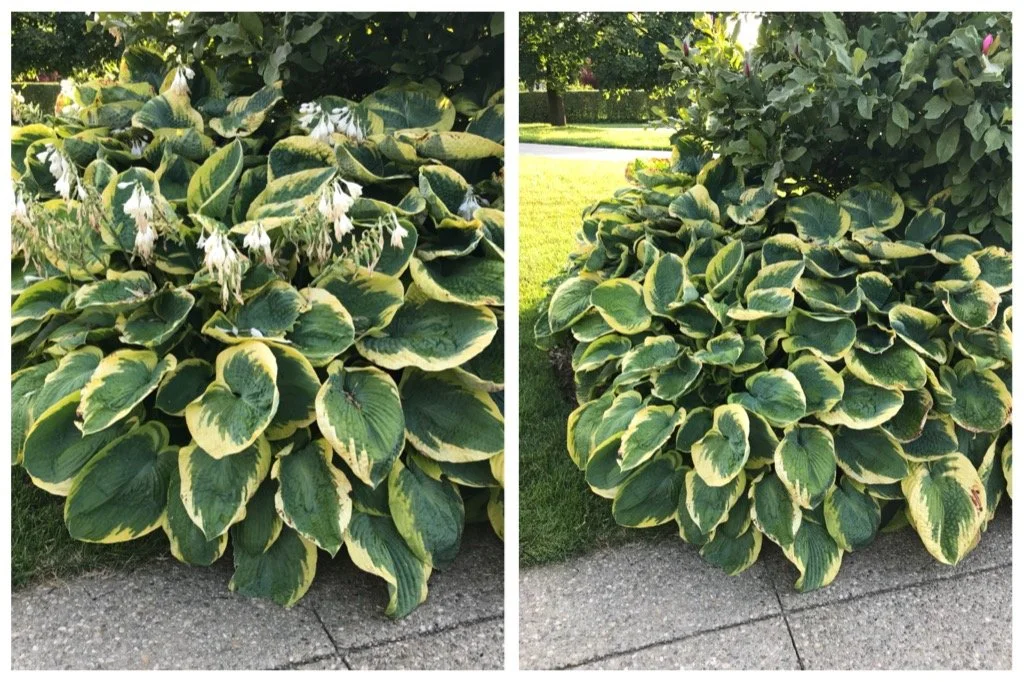
A before and after look at a hosta in need of deadheading. The photo on the right is of a hosta breathing a sigh of relief that it’s unsightly spent flowers have been removed… or maybe that was my sigh of relief.

So have a look at your garden- if you see any of these common landscape plants with spent flowers still clinging to them, do your plants a favour and give them a little facelift… with some simple deadheading!

It’s not as morbid as you think…

(Originally posted: July 16, 2019)

Deadheading. It sounds more like a Halloween post than a gardening one but this is one of the most common tasks that a landscape gardener will undertake during the growing season. It is meditative, fun, and really forces you to get to know how your plants grow!

So what is a deadhead? Essentially it is a dead flowerhead. Deadheading is the process of removing spent flowers. This is done for a few reasons:

  • it tidies up the plant

  • it can prevent a plant from seeding in the garden (if seeding is undesirable)

  • it conserves the plant’s energy; setting seed uses valuable energy that could otherwise be put toward

    • maintaining nice foliage

    • producing more blooms (so the bloom period is extended)

    • sending out a second flush of blooms later in the season if the plant is a rebloomer- not all plants are!

Deadheads, deadheads everywhere… snip them off without a care! Cheesy? I think so. Sorry

Over the course of the next few weeks, I will feature different types of deadheading. I will also try to include some videos to help illustrate the techniques.

So get ready to have some fun with the secateurs, and start thinking like the queen of hearts… just be sure to use your ‘inner voice’ if you feel like shrieking ‘off with their heads!’