(Originally posted: June 25, 2019)
Well the growing season is well underway and chances are you have not only been keeping your gardens tidy but you have also been doing the odd makeover as well. Perhaps you’ve swapped out some undesirable, struggling or dead plants with some ‘gotta-have’ ones or perhaps you have needed to create some room for said plants and you’ve decided to expand your beds.
(New gardeners be warned: lack of space is a common problem among gardeners- as a result, the proportion of one’s property devoted to garden beds generally increases steadily over time… it’s a little known not-so-scientific fact!)
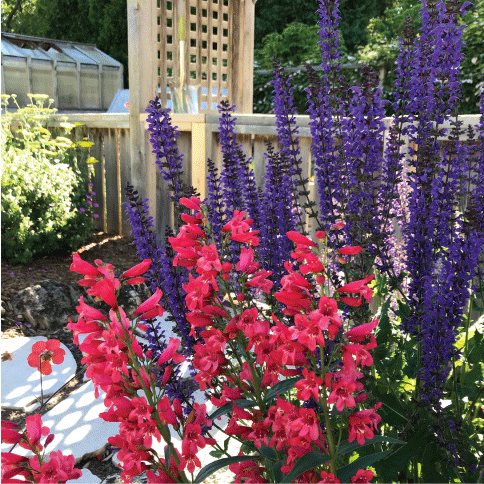
Hmmm… where to fit this combination into the garden???
This time of year makes me think back a couple years when I was helping my sister with her garden. She was a little overwhelmed with the amount of work to be done as she had recently purchased a house and, as a result, inherited a garden with every aggressive spreader known to man. Let’s put it this way- I didn’t envy her! She tackled one project after another to bring some definition back to her plantings and, being a non-gardener going into the season, she emerged a month later with me wanting to hire her.
After my sister established her ‘alpha-female’ dominance over Mother Nature (which is a total farce… but I wasn’t about to burst her bubble!) she was ready to mulch her beds. WAIT!!! There is one VERY important step that comes before mulching! It is one thing to gain a certain level of ‘control’ within the garden beds but it is another to gain control of the garden beds themselves. After putting in SO much effort within the gardens, it was time to set-off all her hard work by setting her gardens apart from the rest of her yard. It was time to create a clear definition between garden and turf through the use of edging. I pulled out ‘that half-moon tool’ and set to work.
Steps for Edging a Bed
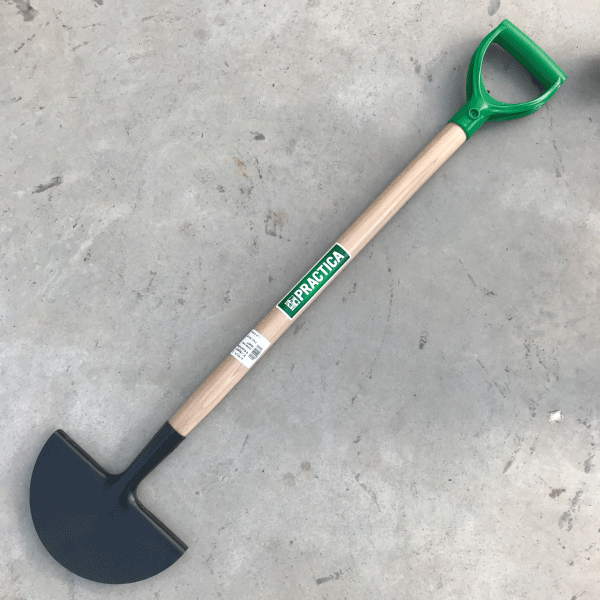
‘The half-moon tool’ otherwise known as an edger.
STEP 1: Facing your garden, place the curved edge of the edger down where you would like your garden bed to start, step on it to vertically slice into the turf, pull the handle toward your body to slightly lift and loosen the turf. Do not pull the edger out of the ground!
STEP 2: Bring the handle back to vertical and move the edger sideways a few inches; step down on it to slice the turf again; once again pull the handle toward your body. Repeat this for the length of your garden bed. By keeping the edger in the ground and inching along, you will get a much smoother/continuous line than if you were to remove the edger between cuts. (There are also electric edgers that you can use that can help make gorgeous lines.)
STEP 3: Pull up the grass that you cut and loosened with the edger, shake out the dirt from the roots and dispose of the grass.
STEP 4: Edge again- this time using the edger to flick the excess dirt into the bed.
STEP 5: Break apart any clumps of dirt and remove any grass that was tossed into the bed. Finish the task by smoothing out the surface of the bed. I do this by hand.
The end result should be a close to vertical edge where the grass meets the garden bed.
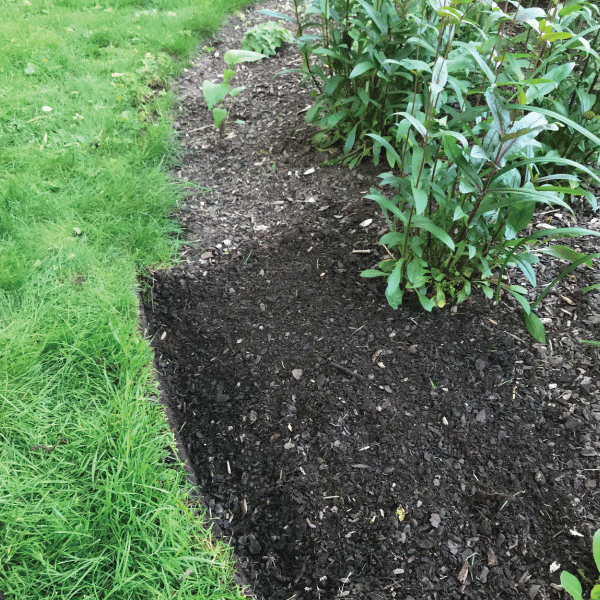
Before and after: adding an edge to a garden really helps give a garden definition. Even if the garden isn’t much to look at, the visual tidiness of a nice clean line makes a world of difference!
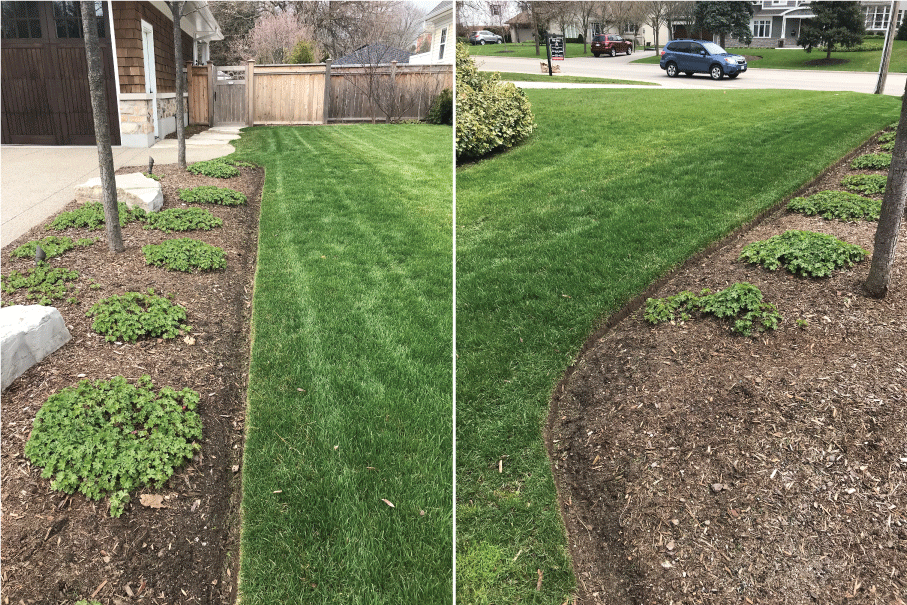
Some picture-perfect early season edging courtesy of Appleby Landscapes.
Looking back on that day, my sister reflects that the edger was her biggest ‘ah-ha’ moment. It was a very easy-to-use technique that could really set off her hard work and make her garden ‘pop’ from the rest of the yard. A nice clean line was the perfect finishing touch (aside from mulching… that, I will leave for my next post).
***SIDE NOTE: I have had this post written for a couple weeks now and cannot seem to get a half-decent video of the edging technique. I figured I would post it and, in the meantime work on my technological ineptness when it comes to video recording and editing. I will add to this post as soon as I create something worth viewing! My apologies to all you visual learners out there. I feel your pain. I am of your tribe. (2026 Update: Still no video. I think I’ll stick to writing.)