Aesthetics

Game on!

(Originally posted: May 25, 2019)

This week in the garden… more like this week in the garden centres. Last weekend marked the official kick-off to ‘annual planting season’. The time when a landscape gardener must put his or her entire life on hold in order frantically buy the plants she or he needs before someone else gets them. It’s kind of like Walmart on Black Friday… only not as aggressive. Gardeners are more the passive aggressive type, which arguably could be worse.

It may have happened to you- you spot the perfect plants; they sit there glowing in their own beam of sunlight. You glance up and notice someone else eying the same plants. You casually look away hoping that your disinterest will convince the other party that the plants are not desirable. You both slowly circle in; like turkey vultures to roadkill. Then one person gets the edge, gets a shoulder in front of the other person and poof! The plants are gone.

I have done it to many a shopper.

I am TOTALLY kidding but what I have done is observe shoppers’ habits and what I have noticed is that people love their flowers. Duh! Right now you are giving me the virtual eye-roll but hear me out…

People are attracted to blooms. They pick their plants based on the blossom- the colour, the shape, the scent. But there is SO much more to plants than flowers. Hello! Plants have leaves too and the leaves can be AMAZING! I must admit I am a sucker for ‘sexy foliage’- I mean, check this out:
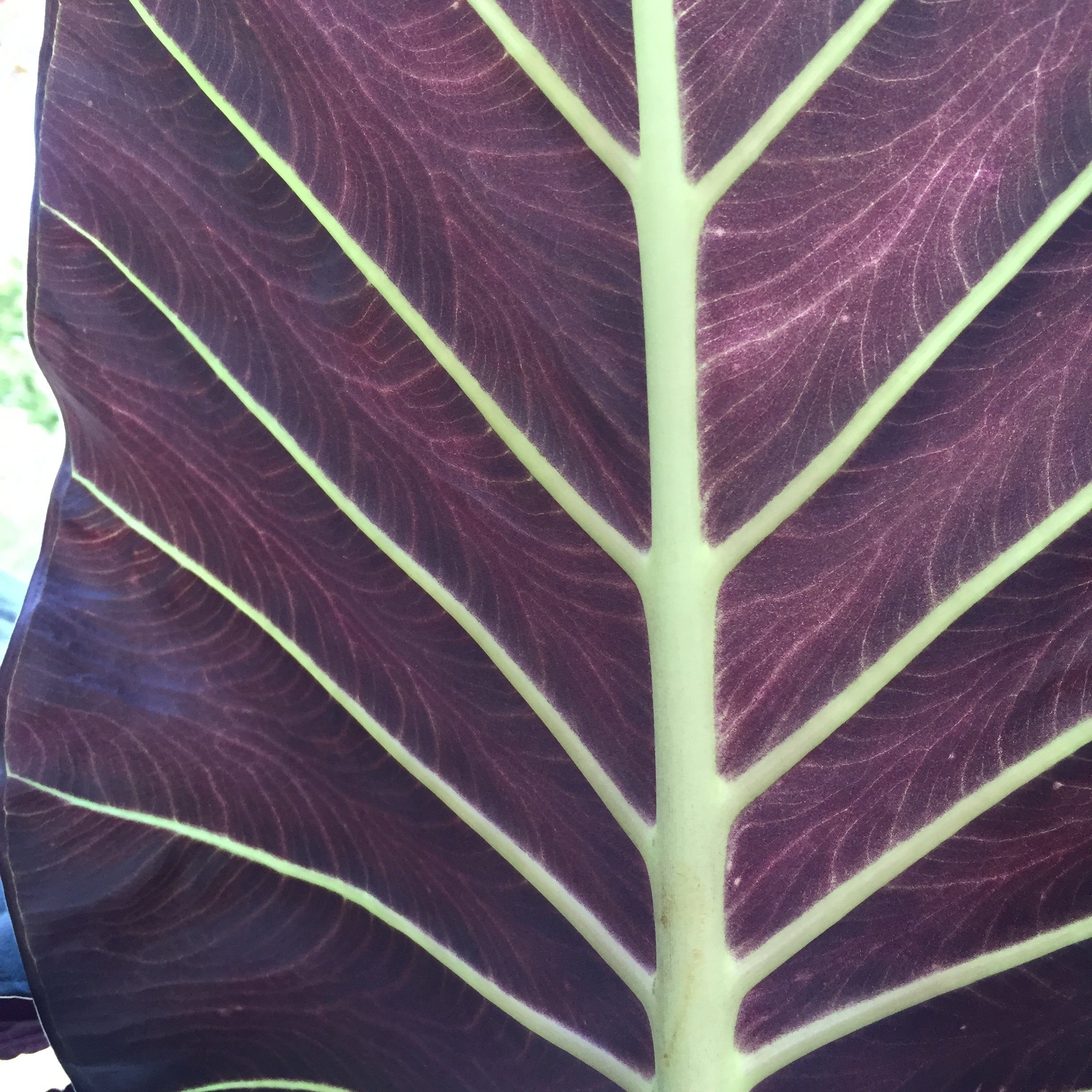
or this…
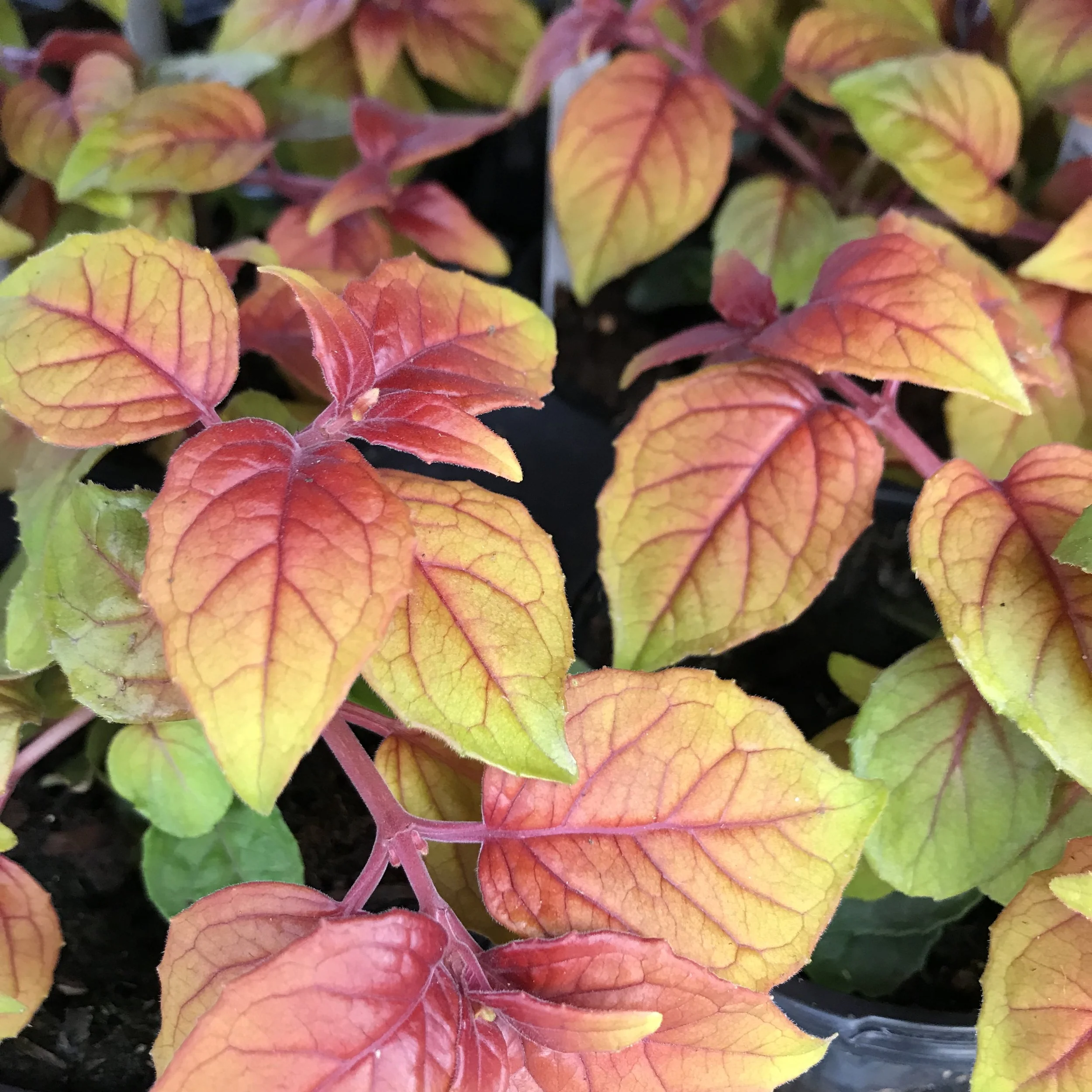
Autumnal trailing Fushia

Or even this….
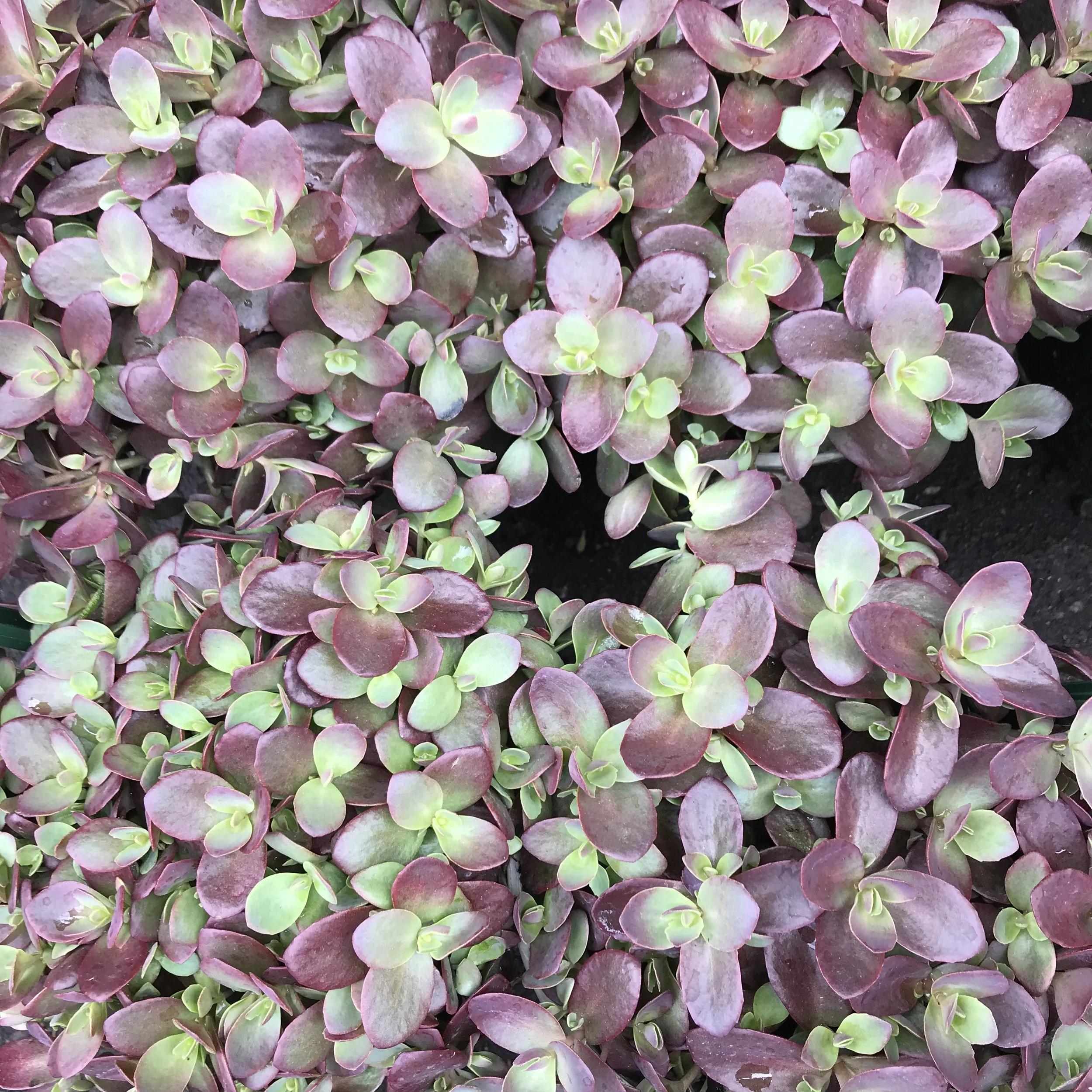
Sedum ‘Firecracker’

And how about this…
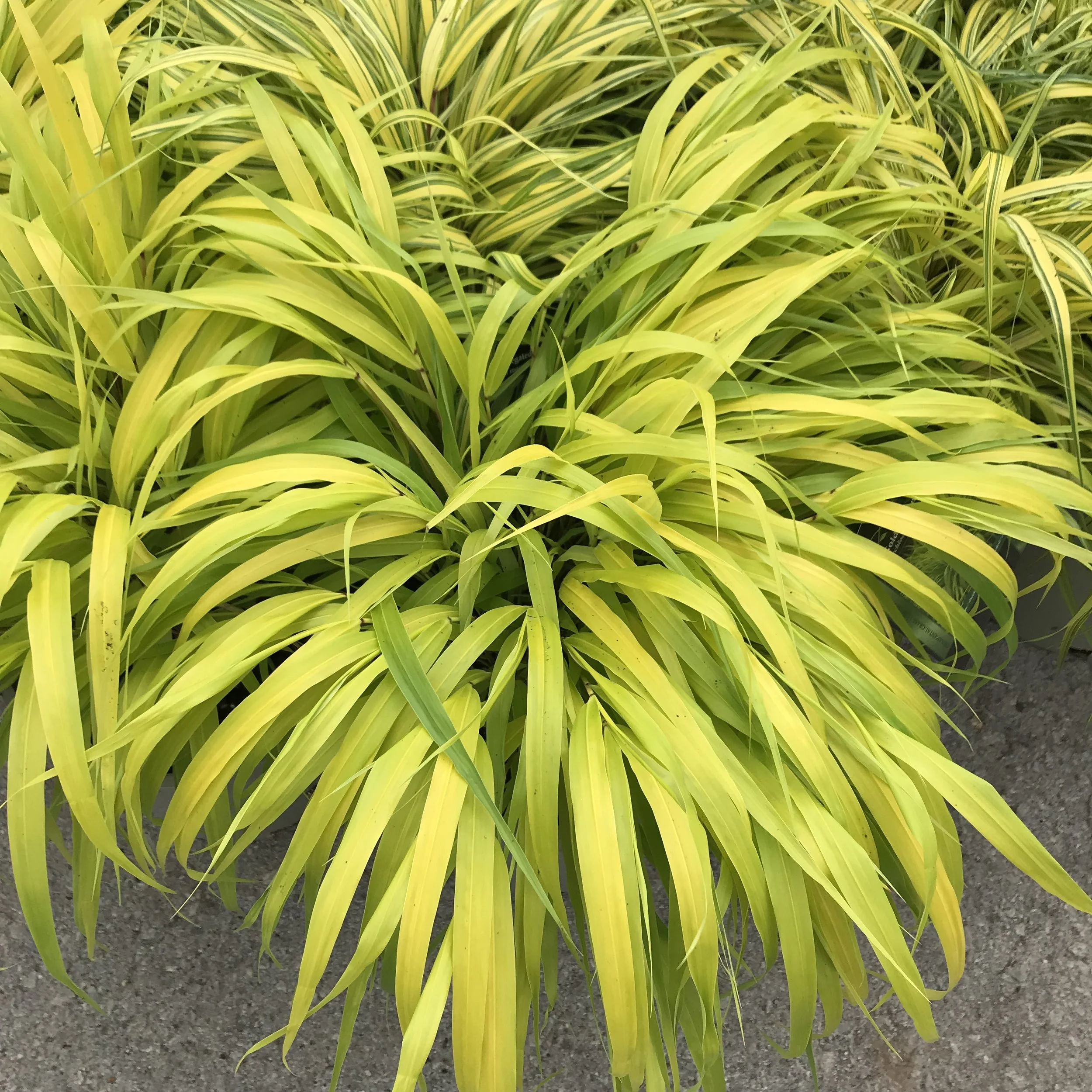
Hakonechloa macra ‘All Gold’ (All Gold Japanese forest grass)
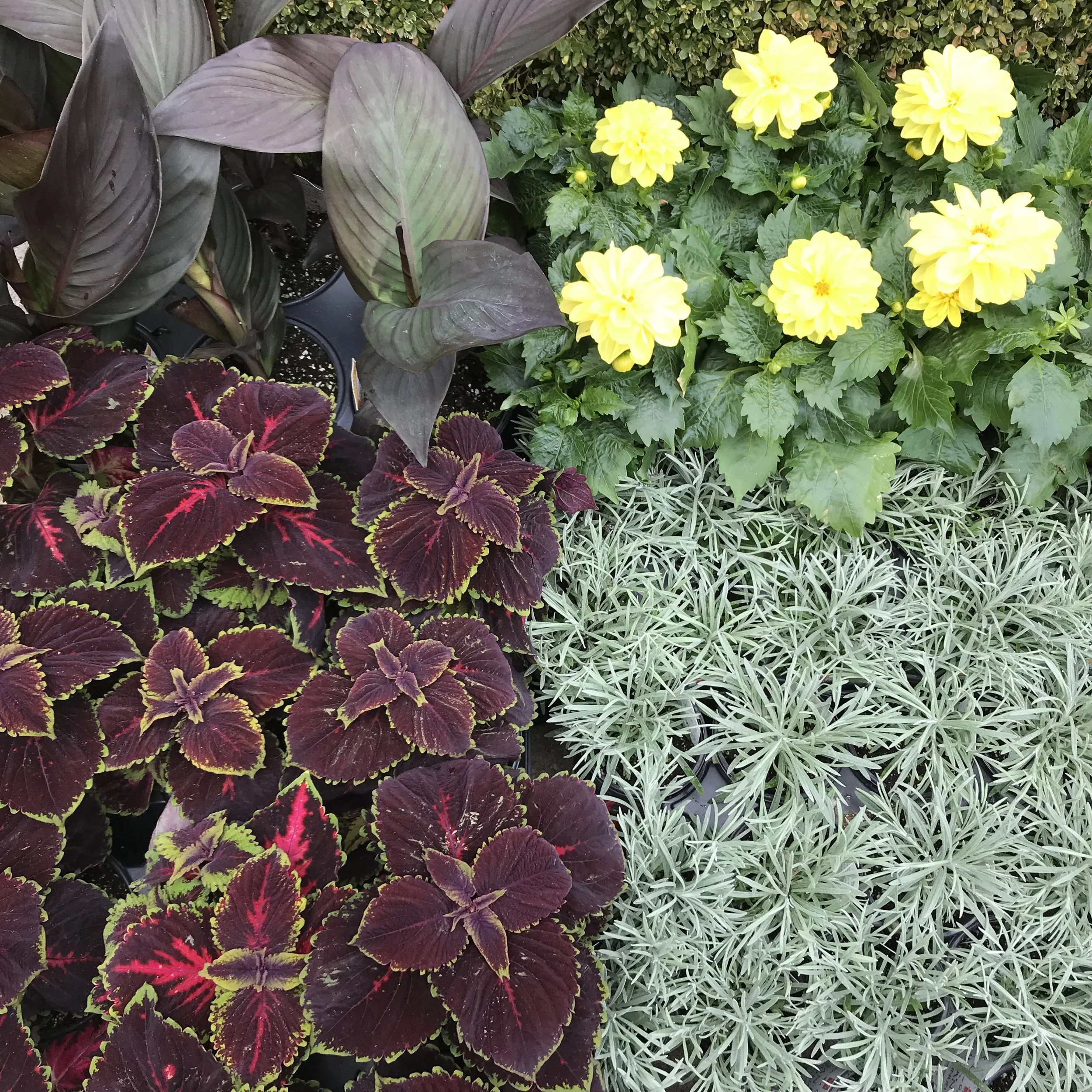
So many colours and textures! The examples above are just the tip if the iceberg too. Amazing don’t you think?

Now the important thing to remember about leaves is that they can really help make the blooms of your favourite flowers ‘pop’.

Just look at how the purple flowers of this Calibrachoa spp. and the yellow-green of the ivy really play off each other…
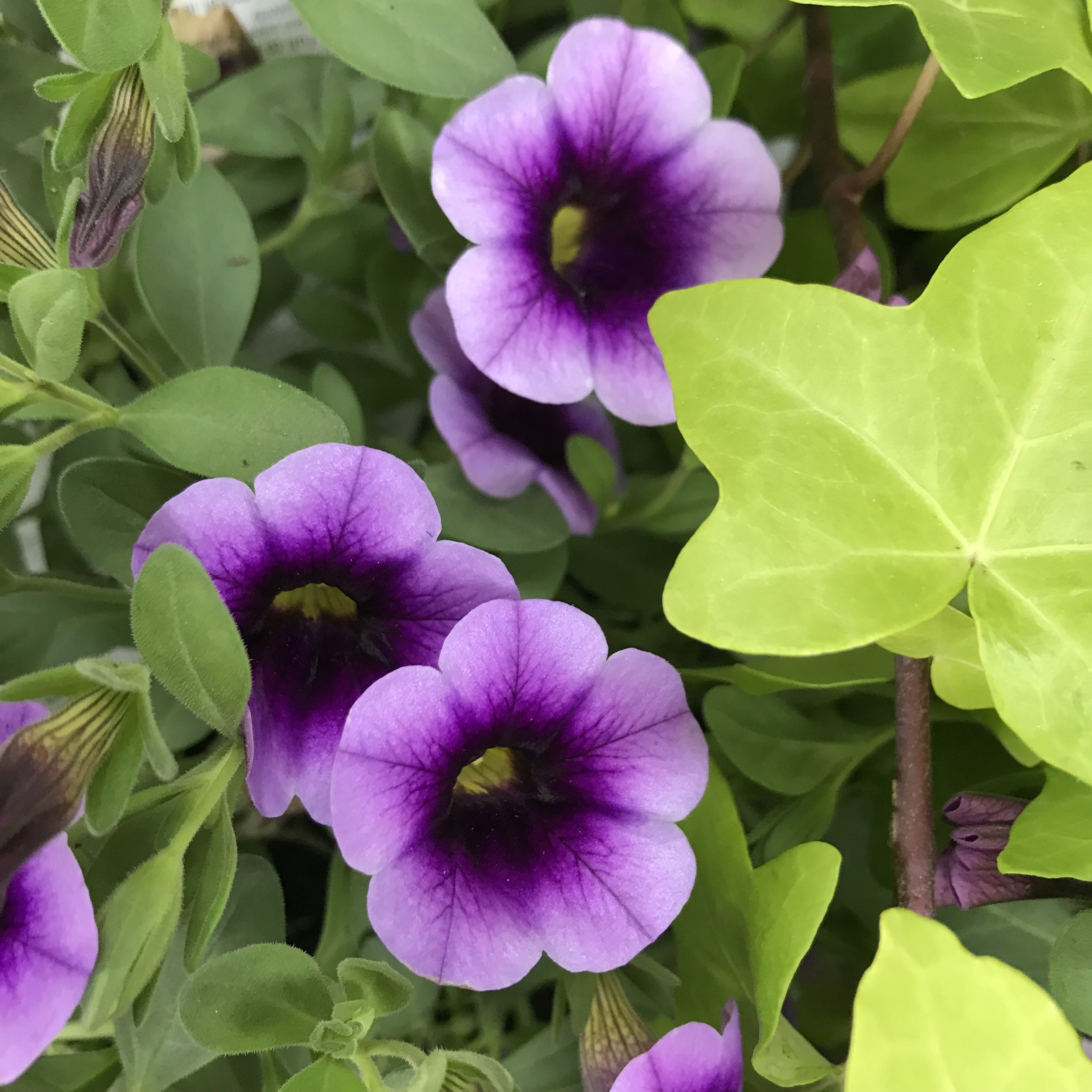
BAM! Now that’s a gorgeous purple!

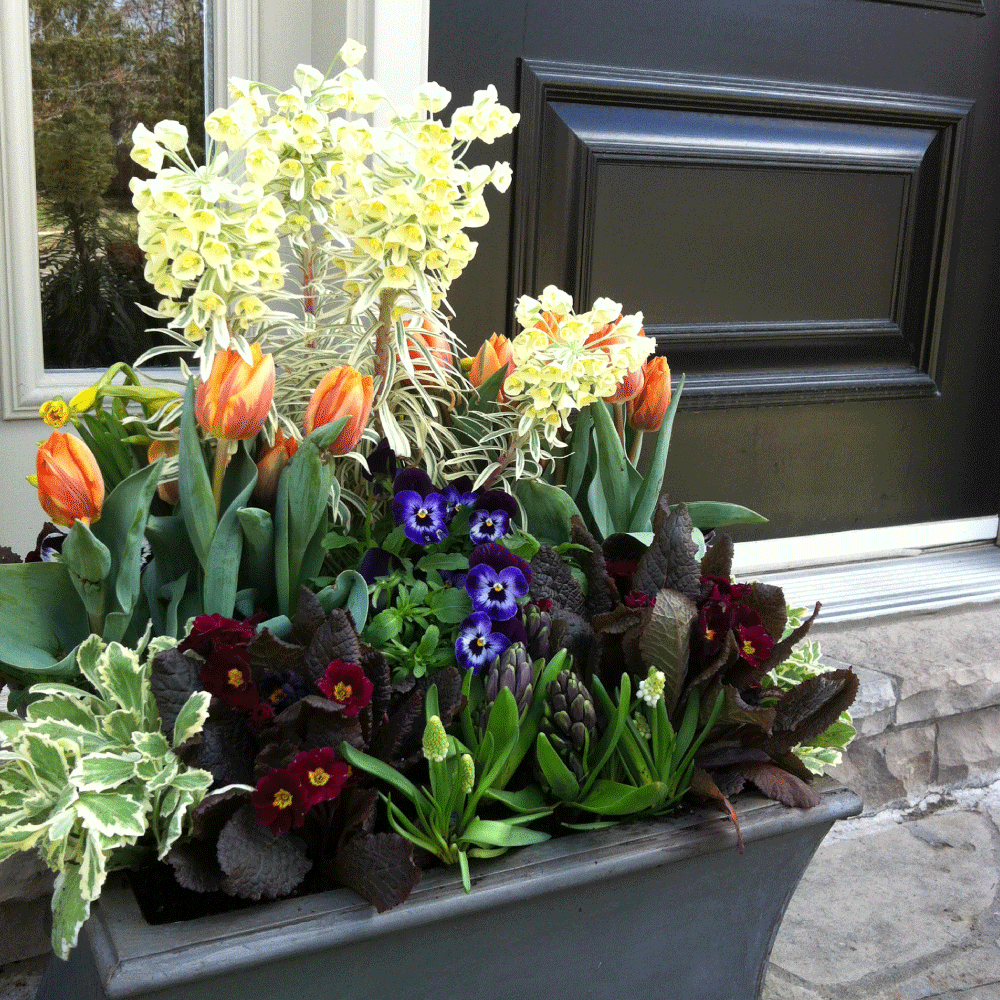
Moving on to another combination, in this planter, variegated spurge and wall cress (Euphorbia and Arabis) and dark leaved Primulas are used to add contrast and colour to the arrangement…
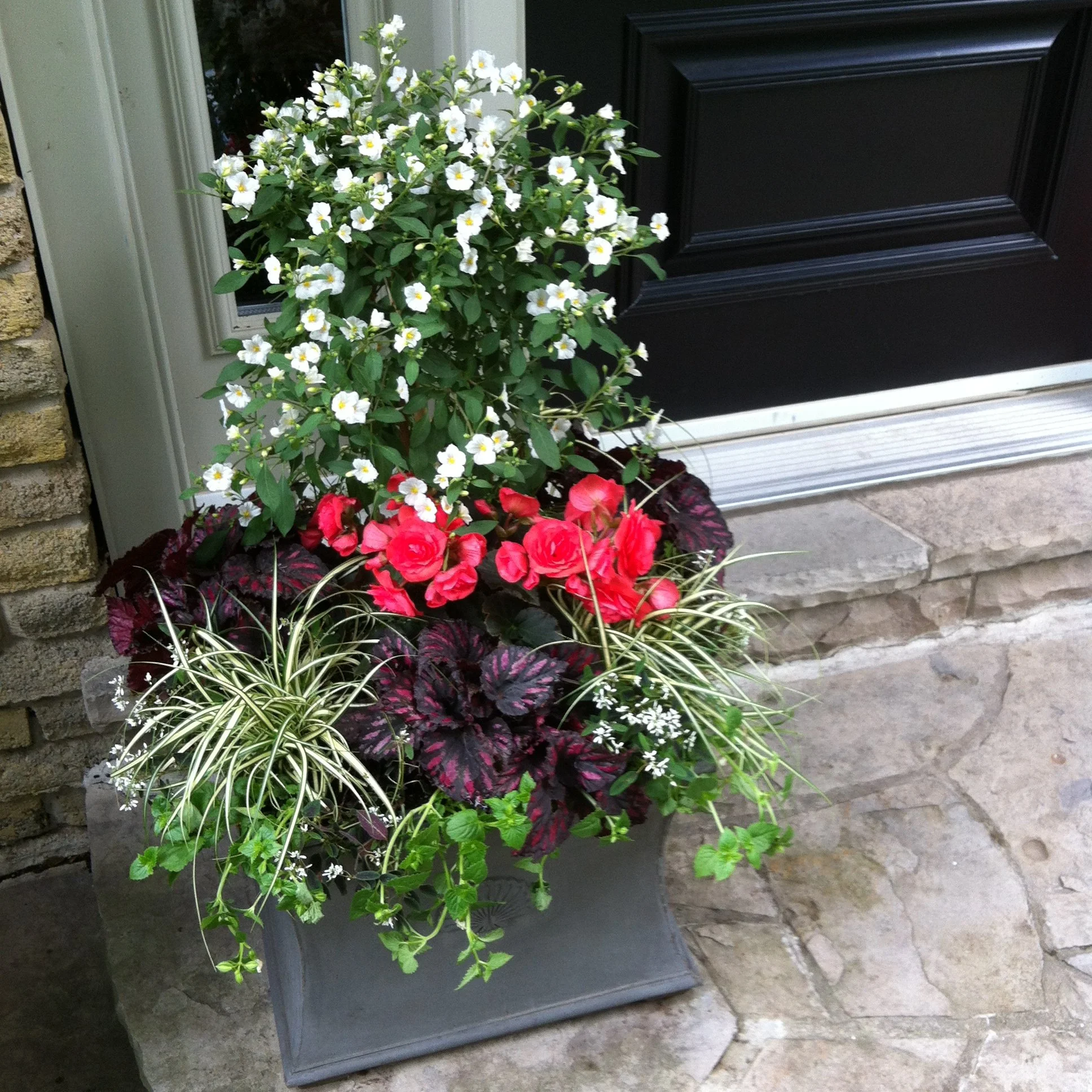
While in this Summer planter, burgundy and black Begonia sp. are used for colour (plus the leaves are incredibly stunning) and the variegated Carex oshimensis ‘Evergold’ (Japanese Sedge) adds both contrast and amazing texture.
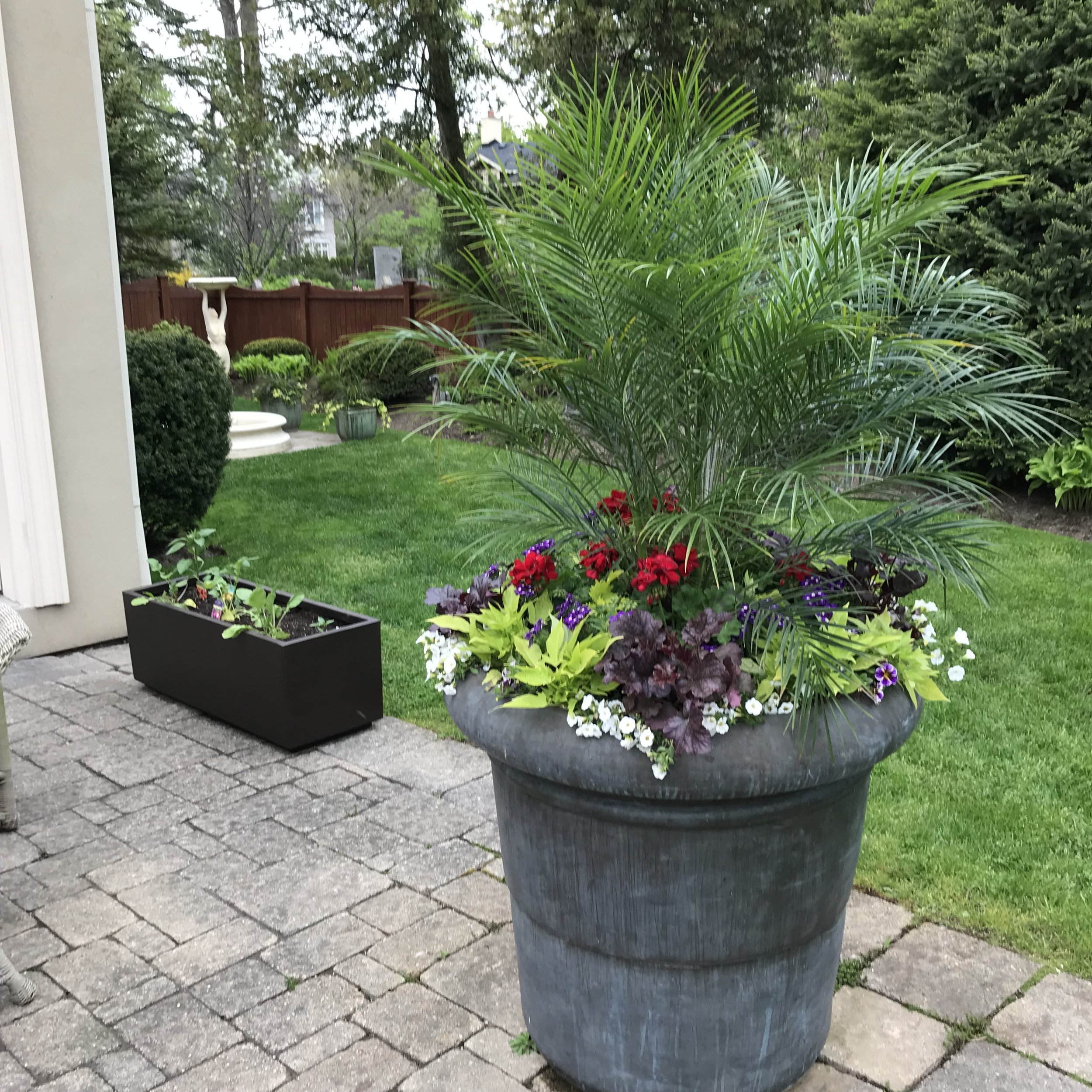
In this combination, the chartreuse potato vine (Ipomoea batatas ‘Sweet Caroline Light Green’) has been used to breathe some extra life into this newly planted container.
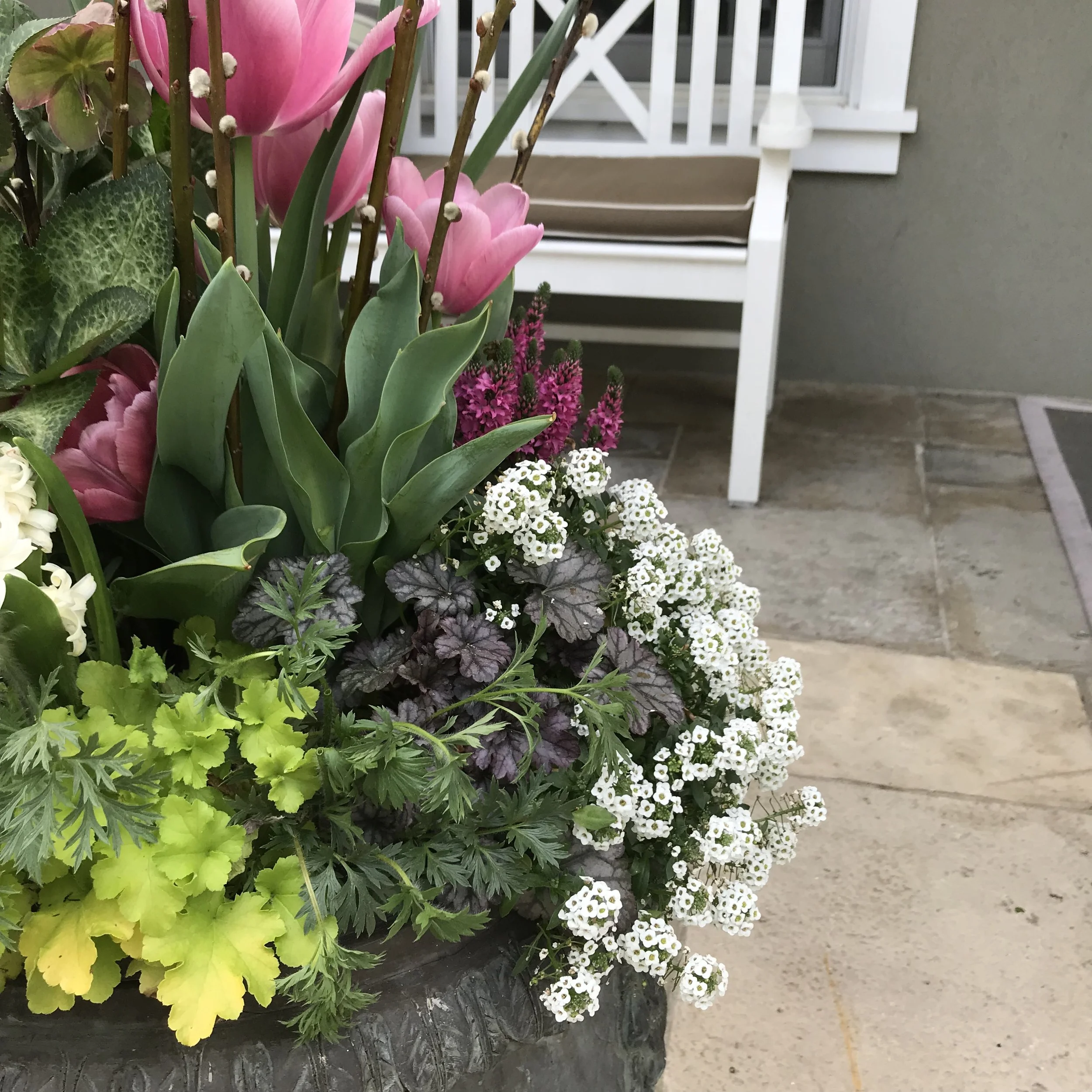
Finally, in this Spring planter, the tulips may be fading, but the purple and chartreuse colours of the Heuchea spp. (Coral bells) will continue to add colour long after the blooms are gone. This brings me to a serious ‘plus’ for adding nifty foliage to your planters or gardens- you won’t need to rely solely on blooms for colour!
Ok. Ok. I’ll stop! As you can probably tell, I can go on and on about foliage until the cows come home. Hopefully I’ve proven that plants don’t need to have showy flowers to have a place in your planters or garden!

So, are you feeling ready to hit a garden centre? Here are a couple more helpful tips when it comes to selecting plants…

TIP #1: No one is telling you that you need to stick to the ‘annuals’ section when buying plants for your summer containers/ garden beds. Many perennials have amazing foliage too! In fact, many of my examples shown above are perennials. (For simplicity’s sake, annuals are the plants we toss out at the end of the growing season. Perennials are plants that come back year after year. These terms have much more involved definitions but I will leave that to a winter blog post!)

TIP #2: Read the plant tags! All plants have tags that list their eventual height, width, and growing requirements. If you are pairing plants, you want to: make sure that you ‘layer’ them properly in a bed (with the taller ones toward the back). Sometimes the largest of plants can be purchased in the smallest of pots- read the tag to see what you are getting yourself into! Plus, you also want to make sure you pair plants that have the same growing needs (especially light requirements).

Now… get your elbows out to your side in ‘ready position’, look for that beam of sunlight, and go get your plants!
SPRING CLEANING: The Finishing Touch

(Originally posted: May 9, 2019)

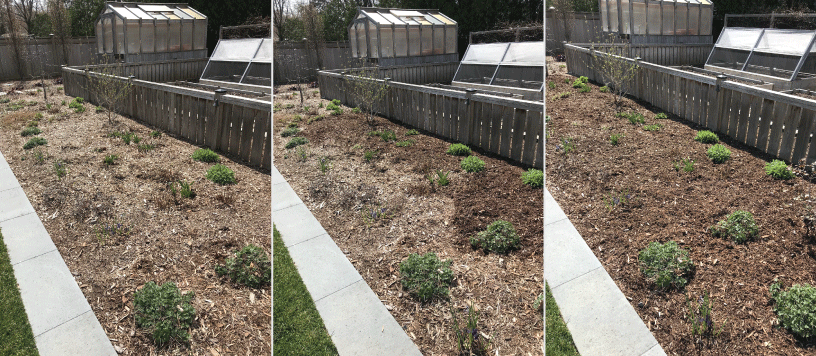
I wrapped up my Spring clean-ups just over a week ago (yippee!) but I just wanted to dedicate one more post to the final step of my clean-ups which I term the ‘flip and fluff’. This ‘finishing touch’ step will not only make your garden look amazing but it is a step that can come in handy at other points throughout the growing season to ‘refresh’ the look of your garden.

The ‘flip and fluff’ is pretty simple: it involves flipping the existing mulch on the beds and fluffing it up. (If you do not have mulch, cultivating the soil would be the equivalent task for you.) This process, which is often overlooked, serves three main purposes for me:

1) It gives me a chance to see how much mulch is remaining on the beds; with this information, I can gauge how much I will need to add for the season

2) It refreshes the look of the beds… a lot! It turns ‘old and tired’ into ‘new and fresh’ (even though it isn’t new… or fresh… which makes this an extremely useful ‘garden hack’.)

3) Shredded mulches tend to weave together in a layer that can repel water; every now and then, this layer needs to be broken up so that moisture can easily penetrate the mulch and reach the soil.

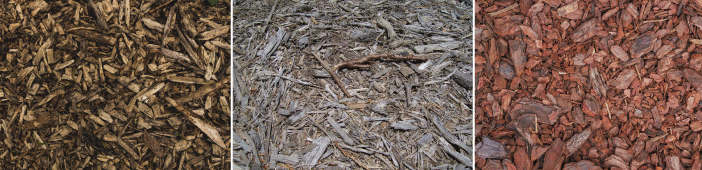
Mulches of different colours and textures. The fibers of shredded mulches (such as the mulch in the centre photo) tend to weave together to form a somewhat water-repelling layer. This mulch needs to be broken up not only to refresh it’s ‘look’ but to also allow water to get through the mulch to reach the soil below.

‘Flip and Fluff’ is super-easy! The only tools required are a cultivator and your hands and you can achieve awesome results in three main steps:

1) Use the cultivator to lift the existing layer of mulch and flip it over

2) Break up the mulch (I use my hands to ‘crumble’ it and loosen it up)

3) Disperse the mulch over the bed so that it is nice and level and looks uniform (no lumps allowed!). Once again, I do this task by hand as it gives me the most control over the finished look of the bed. Some people are incredibly skilled with a cultivator and can get an amazingly smooth and uniform bed using one. I am not one of those people, so I invest in good knee pads and have become really used to seeing mulch up close!

A visual progression of flipping and fluffing the mulch in a garden bed.

If you are cultivating your beds, just a few things to note:

  • Be careful of plant roots: if you are working around trees and shrubs and having a hard time getting the cultivator through the soil because of root systems, then back off! Your plants will thank you for not disturbing their roots!

  • Be careful near perennials: don’t cultivate deeply around perennials- you can easily disturb their roots without even knowing it.

  • If you are allowing something to seed in an area- do not cultivate

  • If you have any perennial weeds (more about this in a future post)- do not cultivate. Breaking up many of these weeds can worsen your problem.

There you have it! The ‘flip and fluff’- a task that requires trial and error and a dash of finesse. Once you get into your groove and put it to work in your beds, I promise you that your efforts will be worthwhile.

SPRING CLEANING: Debris Clean-up

(Originally posted April 26, 2019)

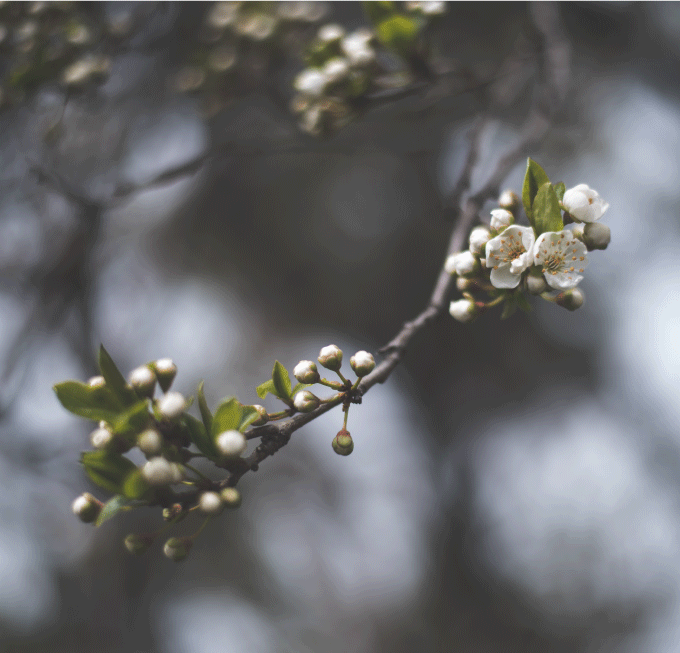
Buds bursting into bloom- a sure sign of spring! (Photo Credit: Mohammad Ali Jafarian; Unsplash)

As the snow disappears and a brown world emerges, most gardeners anxiously await the burst of green that is ushered in by warmer temperatures and Spring rains. In our area, I know many people feel that the ‘brown season’ (that period between snow melt and Spring green-up) lasts for an eternity; for me it is fleeting- mainly because there is so much to do to prepare the gardens for the growing season ahead!

As soon as the ground is not too soggy, and the threat of extreme cold has passed, I begin my clean-ups -usually the middle of April. Although I spend the later half of March and beginning of April doing my dormant season pruning, it is during my Spring clean-ups that I get myself reaquainted with my gardens, greet them after a long winter, see what has changed, as well as jog my memory on consistent issues that need to be addressed in the months ahead. During this time, I cover every square meter of the garden to not only make it look great, but also to complete a thorough assessment of it and come up with my game plan for the growing season.

Clean-up is pretty basic and meditative (to be read ‘tedious’ if you do not like repetitive tasks!). Essentially I am uncovering the garden from the debris (mainly leaves) that swirled around and deposited in the garden late in the fall, or dropped on it over the course of the winter. I am also cutting back perennials that I left up over the winter for the purpose of ‘winter interest’... more on this in my next post! Now back to ‘debris’…

Debris: Friend or Foe?

Ah. The great debate.

In nature, nutrients are recycled. In simple terms, plants take up nutrients from the soil and use them to grow biomass such as wood, leaves, flowers, seeds, etc. When things such as leaves drop in the fall, they eventually break down and the nutrients go back into the soil to be used by plants once again. Unfortunately in urban environments, we make it an annual ritual to strip away everything that our plants drop onto our properties. That’s a whole lot of nutrients being carted away to municipal compost sites. We cut off the nutrient cycle and as a result, in the long term, our gardens suffer.

So how much ‘organic matter’ should gardeners leave on their garden beds? Although some leaves left to decompose on beds are good (they add nutrients and organic matter to the soil- definitely a good thing), too many can pose a problem in an ornamental garden. Piles of leaves (especially really thick ones) can easily smother plants, especially when left on groundcovers or the foliage of evergreens.

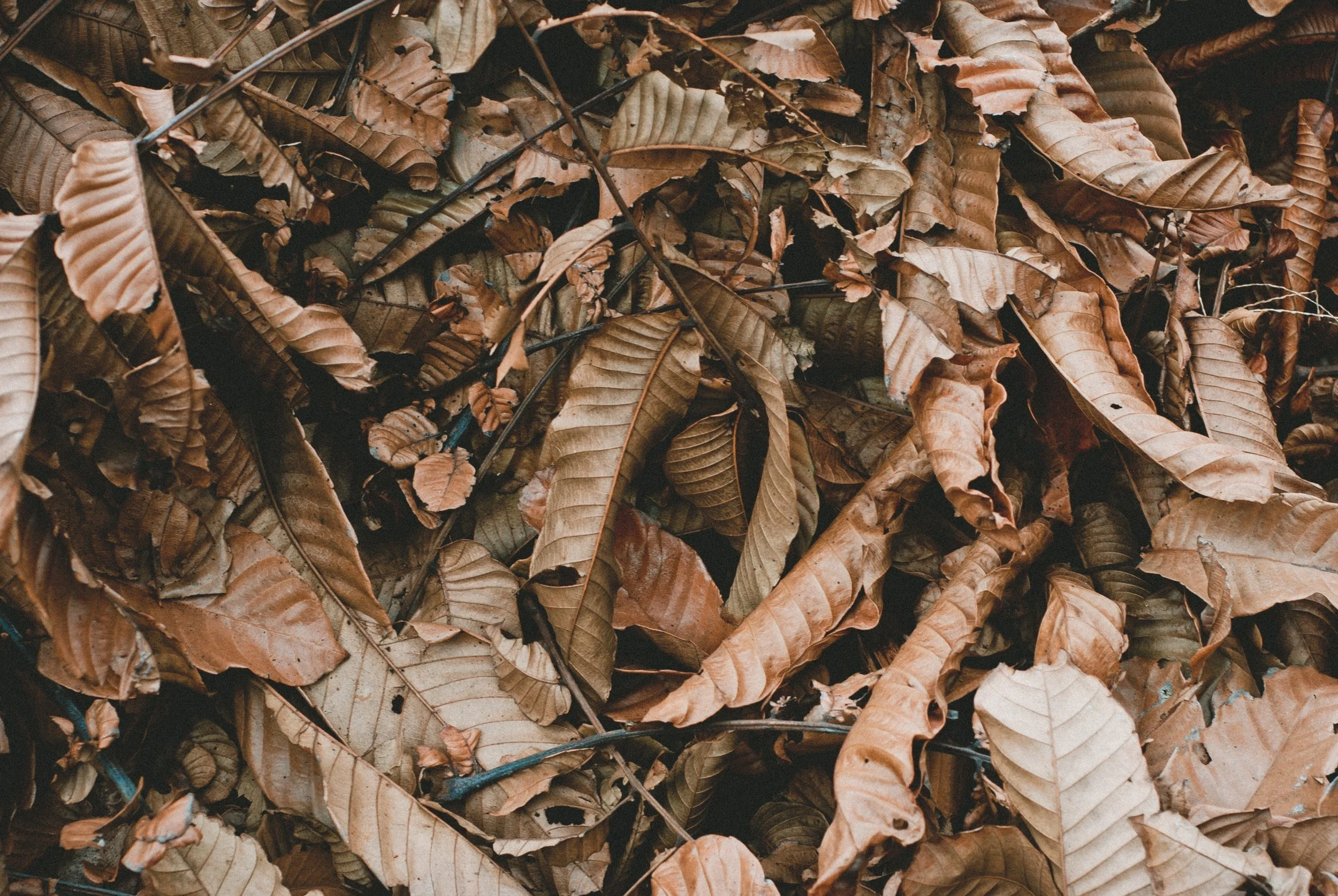
Leaf litter (Photo credit: Hq Lightroom; Unsplash)

Ultimately, the amount of ‘debris’ left on a garden is the personal preference of the gardener (many gardeners can turn a blind eye to some leaf litter on the beds, reassured by the fact that they are ‘feeding’ their soil and therefore their plants). I am in the business of trying to make gardens look immaculate. While not ideal from an ‘ecological perspective’, I generally remove all debris from the beds (except for old mulch, which I keep on the beds) so that they look tidy. With that said, it is always at the forefront of my mind that what I remove, I must replace in the form of amendments (manures, compost, mulch) at a later date. So, if you are like me and constantly removing organic matter from your garden, then please join me in this really important pledge…

I, [insert your name here], promise you, my garden, that what I take away from you in the form of ‘debris’, I will give back to you, in the form of amendments later in the growing season. I will monitor your health through soil testing and let the results guide my actions.

Regardless of your overall debris tolerance, there is always clean-up to do in the Spring. I have found that there are three key areas to keep in mind when cleaning out leaves. If you focus on these areas, you can maximize the well-being of your plants… as well as the tidiness level of your garden.

1) LEAF MATS ON GROUNDCOVERS AND EVERGREENS

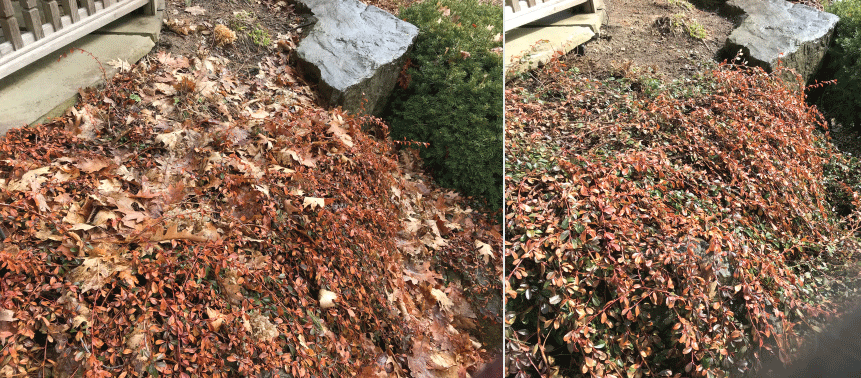
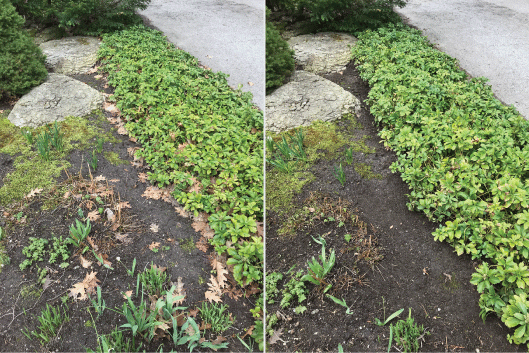
Beware!!! Mats of leaves, especially thick ones such as those from oak trees (Quercus spp.), left on groundcovers, evergreens, and emerging perennials can easily smother foliage or emerging growth! Do your plants a favour and remove these leaves- your garden will look a million times better too!

From left to right: Cotoneaster sp. covered with leaf litter from the winter; Cotoneaster sp. with leaf litter picked out.

From left to right: Leaves in and around a patch of Pachysandra terminalis (Japanese spurge); a much tidier Pachysandra patch with leaves removed

2) THE BASES OF SHRUBS

So I have a confession- leaves stuck within the bases of shrubs drive me absolutely CRAZY! (Ak! So messy!) So it goes without saying that I spend time picking these leaves out. My eyes not only breathe a sigh of relief, but the shrubs do too. A pile-up of rotting leaves can act the same as a pile of mulch against the base of shrubs- a trap for moisture which can in turn lead to rot and diseases. A build-up of leaves can also create a cozy little home for insect pests too. So you may not be bothered by the look of leaves trapped within your shrubs, and you may curse me as you are picking them out, but your shrubs will thank you. Listen carefully… they speak quietly :)

From left to right: Leaves trapped within Spirea branches don’t seem to look too bad… until you pick them out and you are left with a much tidier bed. Ah. Satisfaction.

3) LEAVES HUNG-UP IN THE FOLIAGE OF PLANTS

Leaves and fallen branches hung up within small trees and shrubs is another easy ‘issue’ to address that can make a big difference in how tidy a garden looks. It’s an easy thing to overlook (especially when you have your head down in the dirt) but it’s an excuse to look up and enjoy the springtime garden.

Breathe in. Breathe out. Sigh. It’s good to be back in the dirt.

HAPPY SPRING CLEANING!