Planting

The Big Experiment

(Originally posted: June 7, 2020)

As gardeners, we are no strangers to experimentation. I put the blame squarely on the plant world for this. With all the amazing flora available to fill our gardens, we are exposed to constant temptation each time we set foot in a garden centre.

How can one possibly resist a new plant, when staring at gorgeous foliage or stunning flowers? It’s hard to block out that instant to-the-core feeling that makes you want to jump up and down like a kid in a candy store and scream ‘I need that!’

We all know how this all-too-common scenario unfolds…

You spot ‘the plant’. You stop dead in your tracks and stare at this new found beauty. (Is that a single beam of sunlight shining down only on that plant? You can almost hear a voice whispering from above, saying “buy the plant!!”. It must be a sign…) You look at the plant tag to get a sense of how big this ‘potted beauty’ will grow, as well as the conditions required for it to flourish…

“Hmm…requires full sun (6+ hours of direct sun)…deep rich soil, moderate moisture… OK. I have dry shade…”

It seems painfully obvious that you just need to put the plant down and back away. But the internal dialogue continues….

”…but I get a bit of sun in the back corner, I can put it there… I’ll amend the soil… I promise to water religiously…”

The plant ends up in your garden (so much for the information on that plant tag!) and guess what happens next?

🎸Dum, dum, dum… another one bites the dust…🎸” You know that voice you heard? Turns out Freddie Mercury wanted the plant too.
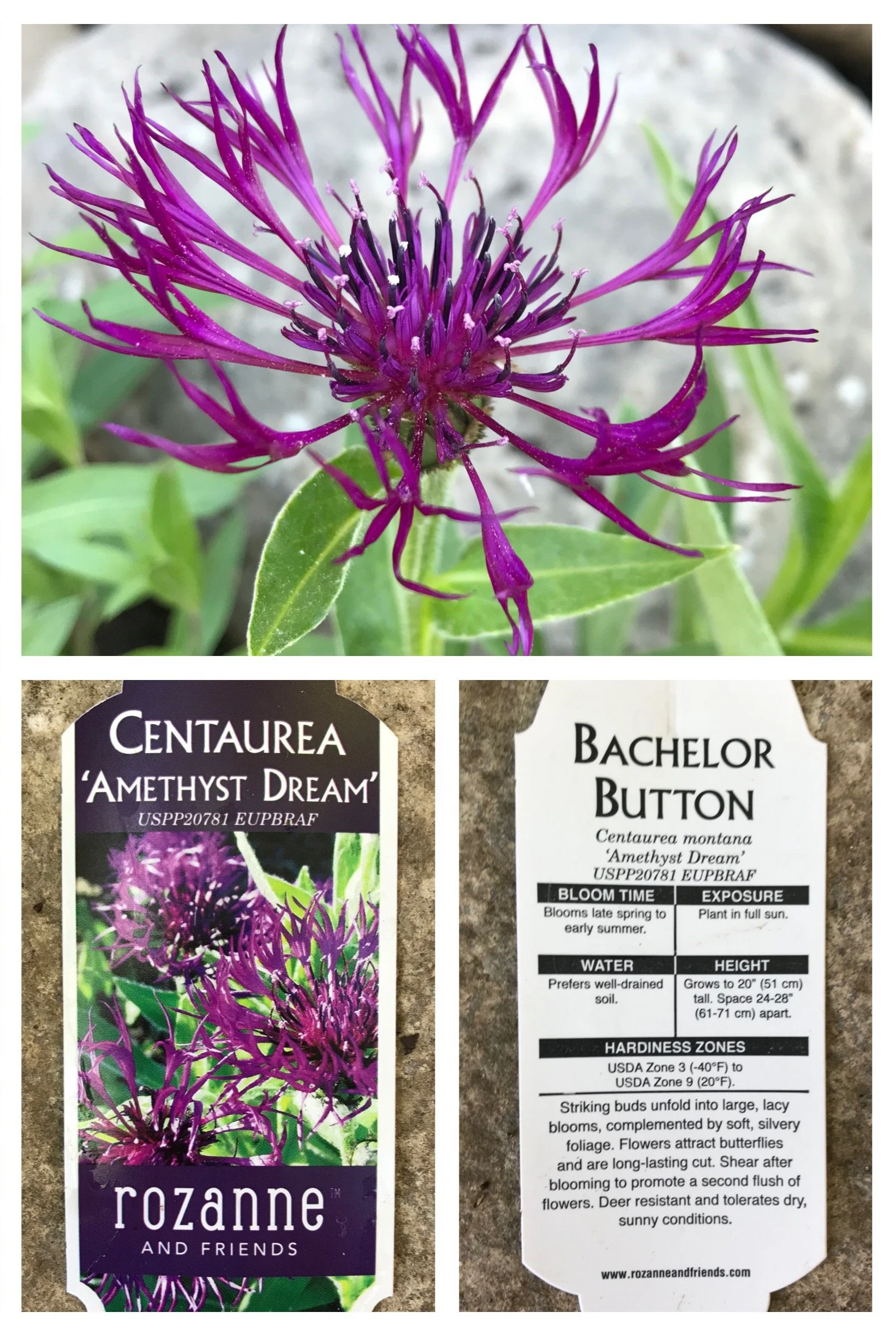
My ‘OMG must have moment’ of the week. Full sun? Well…. the front yard receives almost 6 hours.

With all that said, not all garden experiments end with an earworm; experimenting in the garden can be rewarding too. Pushing the rules and boundaries can help a gardener learn just how much they can get away with, when it comes to the care of certain plants- which is really valuable information!

So this is why I have kicked off my own experiment this year: a food garden. This might seem like an outrageous statement coming from a landscape gardener but there are a few factors at play that make this a not-so-straightforward gardening project and one that falls more into the ‘experimental’ range.

  1. First of all, I am predominantly an ornamental gardener- my food gardening experience is limited and, while the principals of growing food and growing ornamentals are the same, I am not schooled in the nuances of the ‘edible plant’ palette .

  2. My yard is shady- technically part shade (3-6 hours of sun) where the raised bed is located. While some ‘crops’ can tolerate these light conditions, many do not, so I need to make my plant selections carefully.

  3. The newly founded ‘farm’ is within the dripline of a butternut tree (the point on the ground to which the branches extend overhead). This tree (along with other Juglans and Carya species) produces a chemical called juglone which inhibits the growth of other plants beneath it. Different plants have varying sensitivities to juglone, so I must choose crop plants that can not only tolerate shade, but also have some tolerance to this chemical. Fortunately, butternut trees do not produce the same concentrations of juglone as black walnut trees (Juglans nigra)- good news for my edibles!
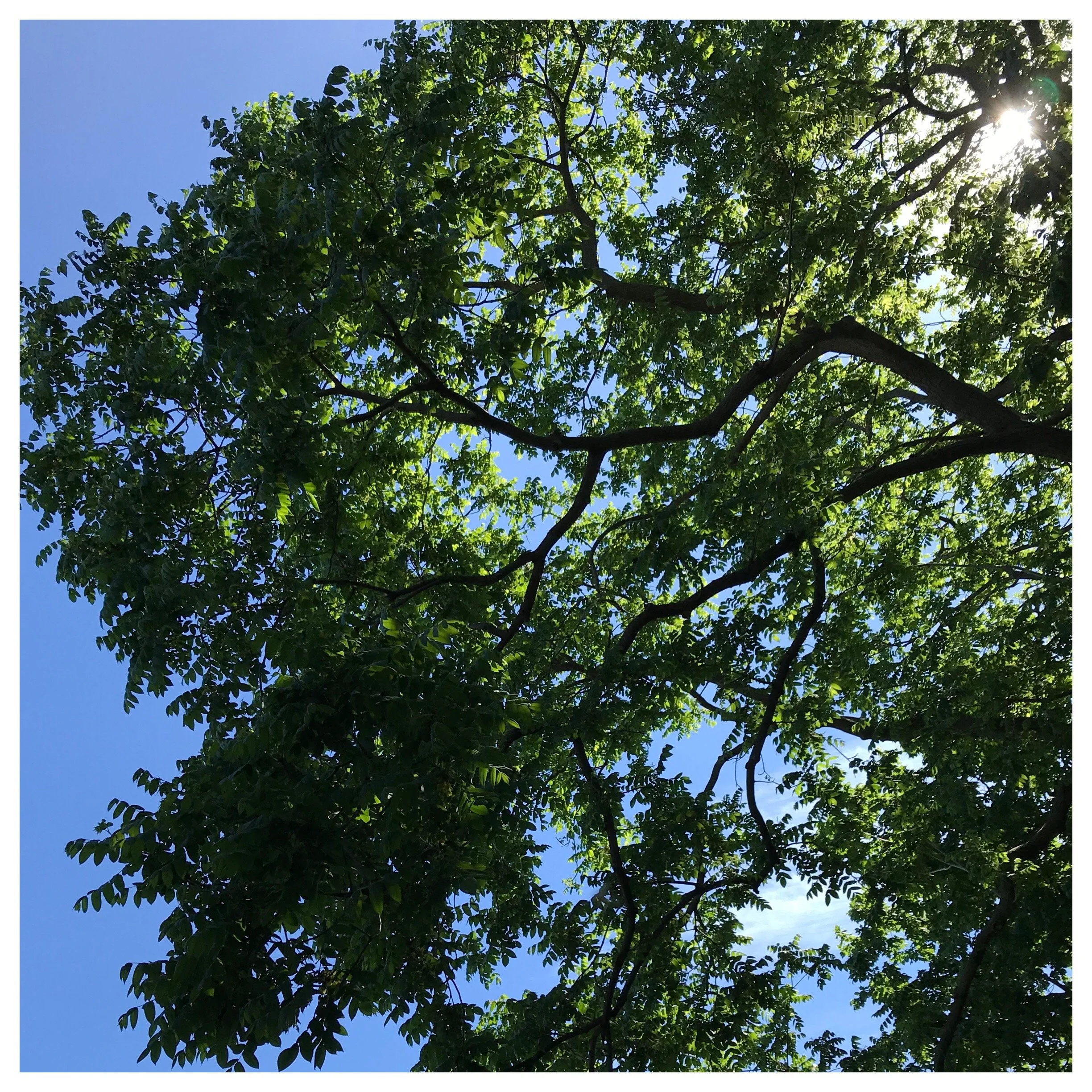
Gazing up at the butternut (Juglans cinerea) canopy. Is that the afternoon sun trying to peek through?

Despite these three factors, I am always up for a challenge and I have decided that the theme in my garden this year is “partial shade food gardening beneath a butternut”.

Wish me luck! It should be a good little experiment; and it has already become a true experiment. After being unsatisfied with the limited selection of plants tolerant to both shade and juglone (beets, beans, parsnip and squash), I decided to add cucumber, lettuce, spinach, carrots, broccoli, cauliflower and eggplant to the mix… just to see what happens. If the results are good, you will read about them in future posts; if they are bad, we will forget this post ever happened (just kidding- I’ll post the failures too, after all we can learn a lot from them)!

Happy experimenting!
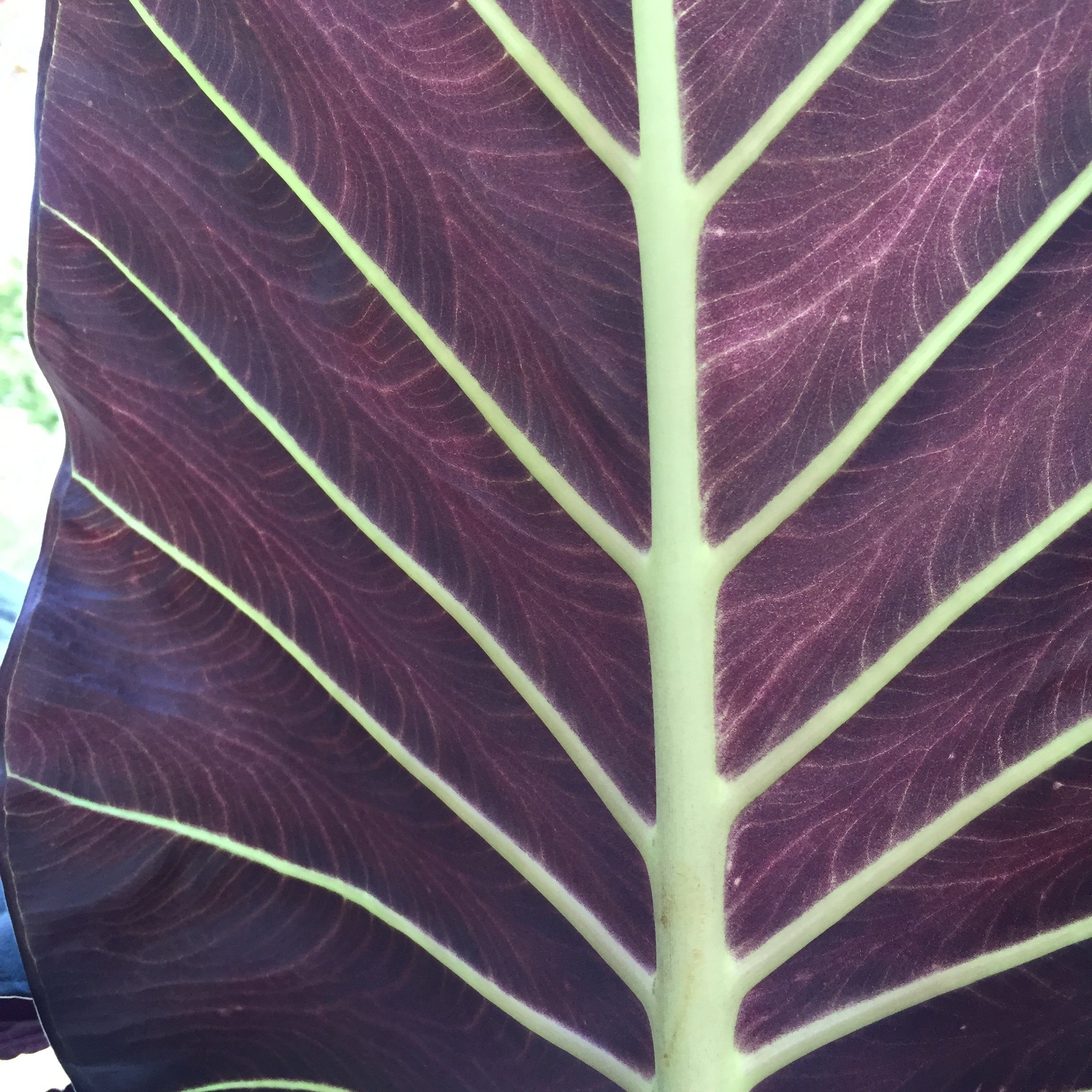
Game on!

(Originally posted: May 25, 2019)

This week in the garden… more like this week in the garden centres. Last weekend marked the official kick-off to ‘annual planting season’. The time when a landscape gardener must put his or her entire life on hold in order frantically buy the plants she or he needs before someone else gets them. It’s kind of like Walmart on Black Friday… only not as aggressive. Gardeners are more the passive aggressive type, which arguably could be worse.

It may have happened to you- you spot the perfect plants; they sit there glowing in their own beam of sunlight. You glance up and notice someone else eying the same plants. You casually look away hoping that your disinterest will convince the other party that the plants are not desirable. You both slowly circle in; like turkey vultures to roadkill. Then one person gets the edge, gets a shoulder in front of the other person and poof! The plants are gone.

I have done it to many a shopper.

I am TOTALLY kidding but what I have done is observe shoppers’ habits and what I have noticed is that people love their flowers. Duh! Right now you are giving me the virtual eye-roll but hear me out…

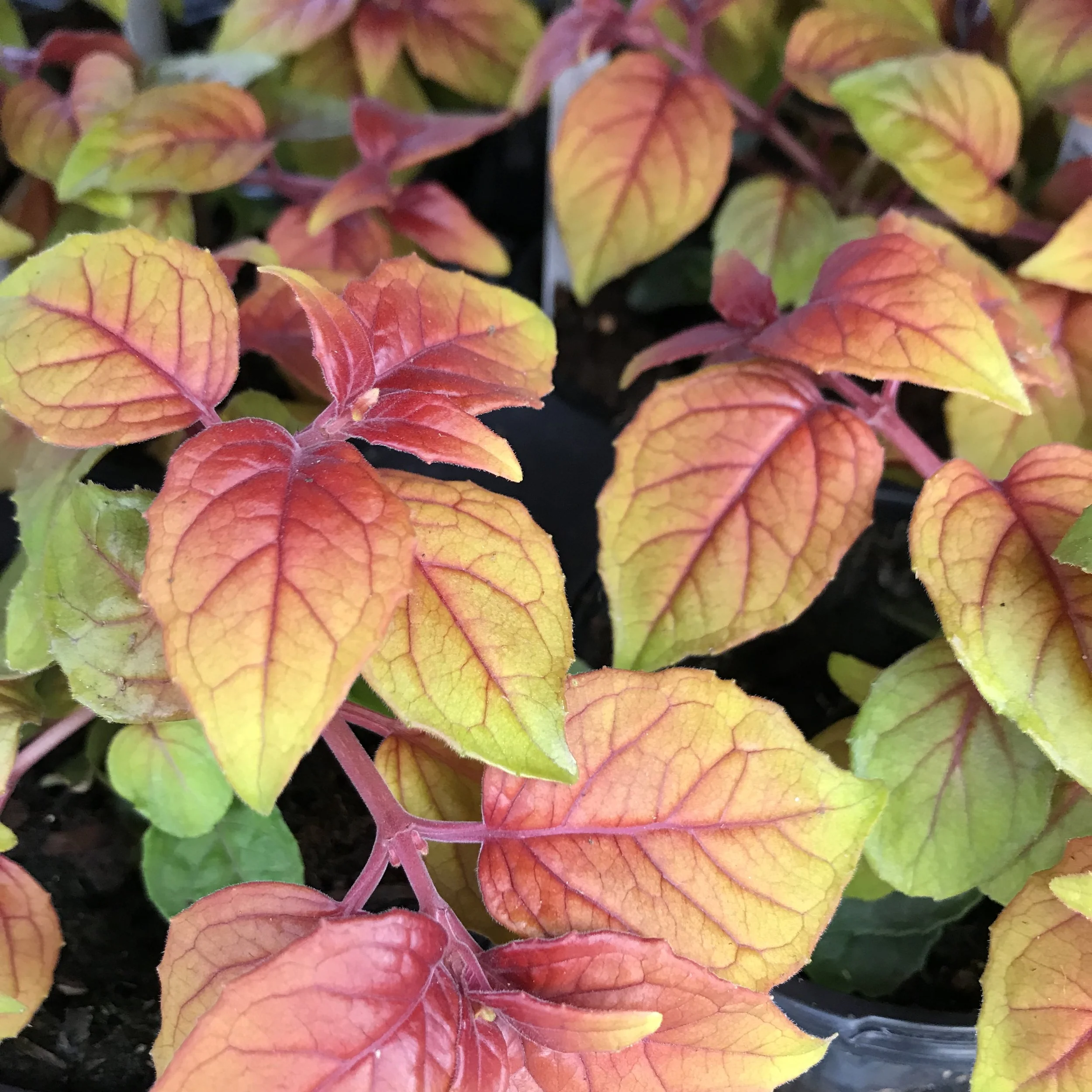
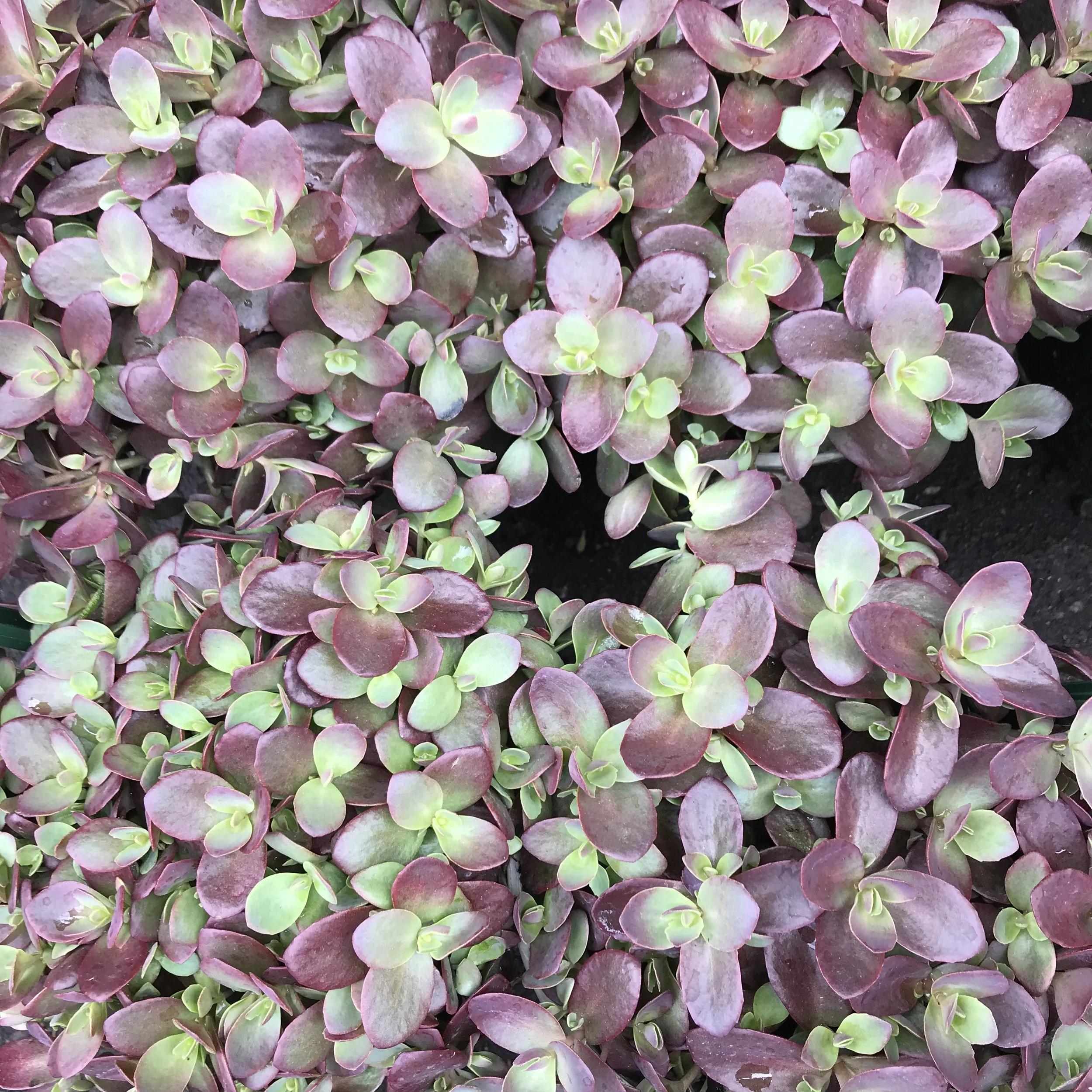
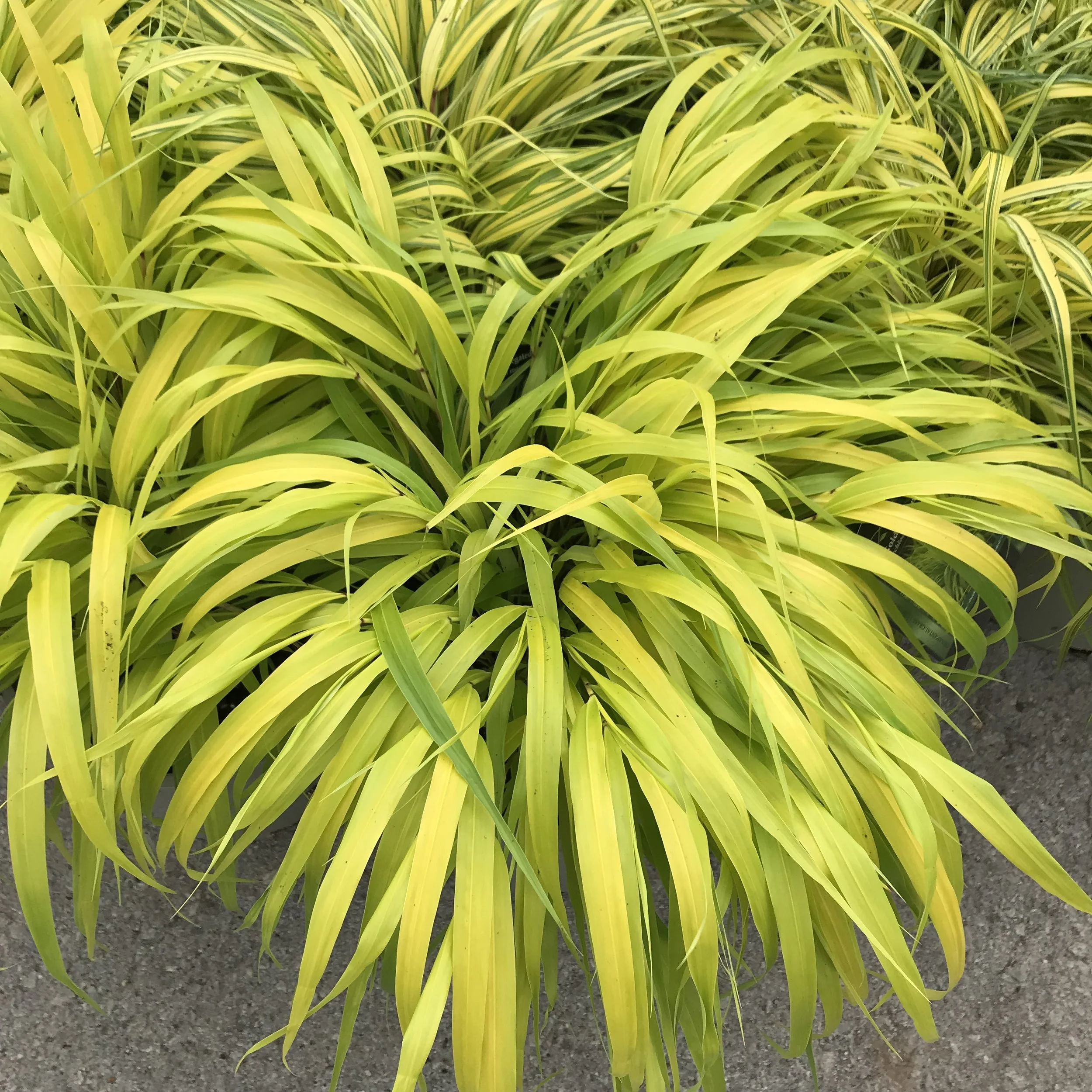
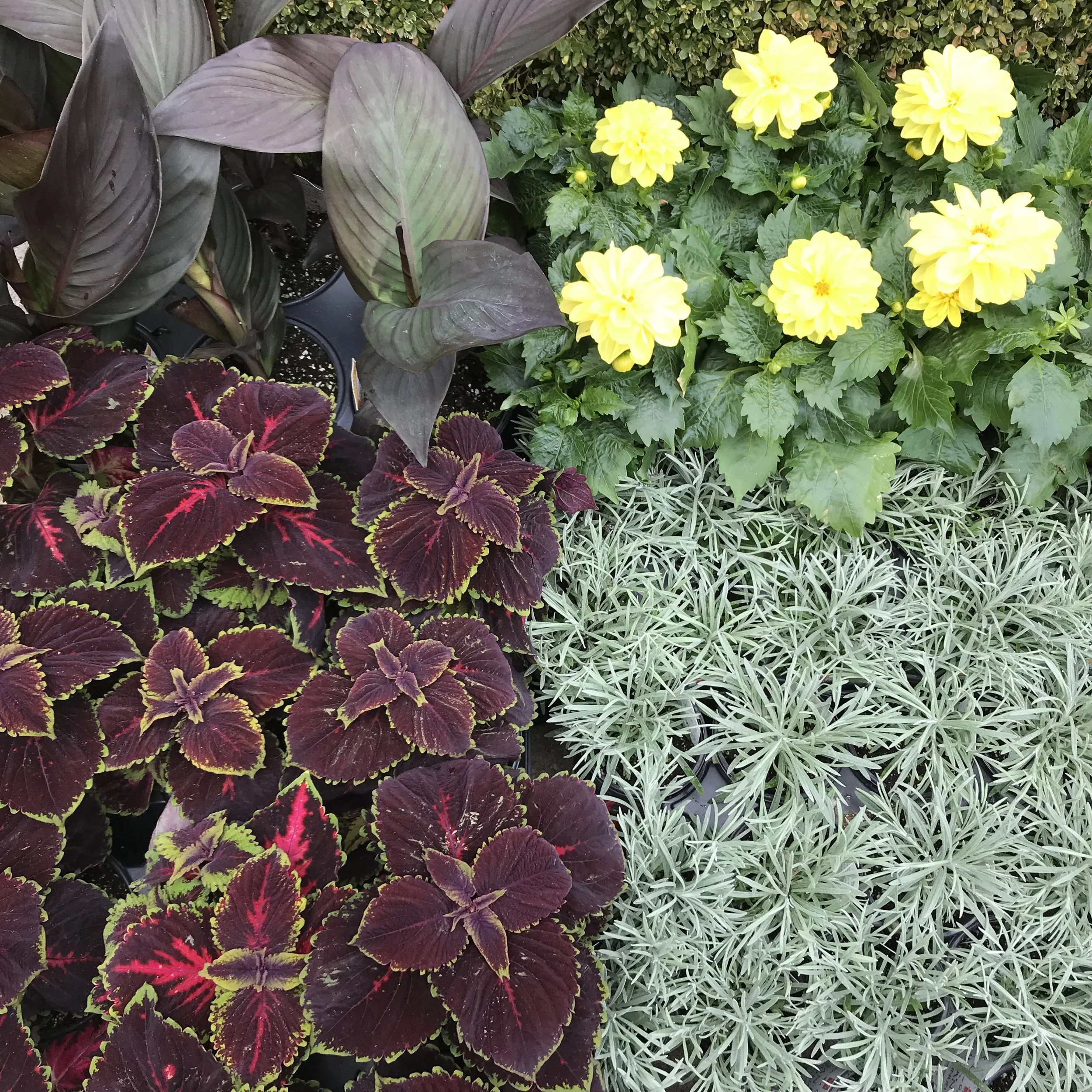
People are attracted to blooms. They pick their plants based on the blossom- the colour, the shape, the scent. But there is SO much more to plants than flowers. Hello! Plants have leaves too and the leaves can be AMAZING! I must admit I am a sucker for ‘sexy foliage’- I mean, check this out:

or this…

Autumnal trailing Fushia

Or even this….

Sedum ‘Firecracker’

And how about this…

Hakonechloa macra ‘All Gold’ (All Gold Japanese forest grass)

So many colours and textures! The examples above are just the tip if the iceberg too. Amazing don’t you think?

Now the important thing to remember about leaves is that they can really help make the blooms of your favourite flowers ‘pop’.

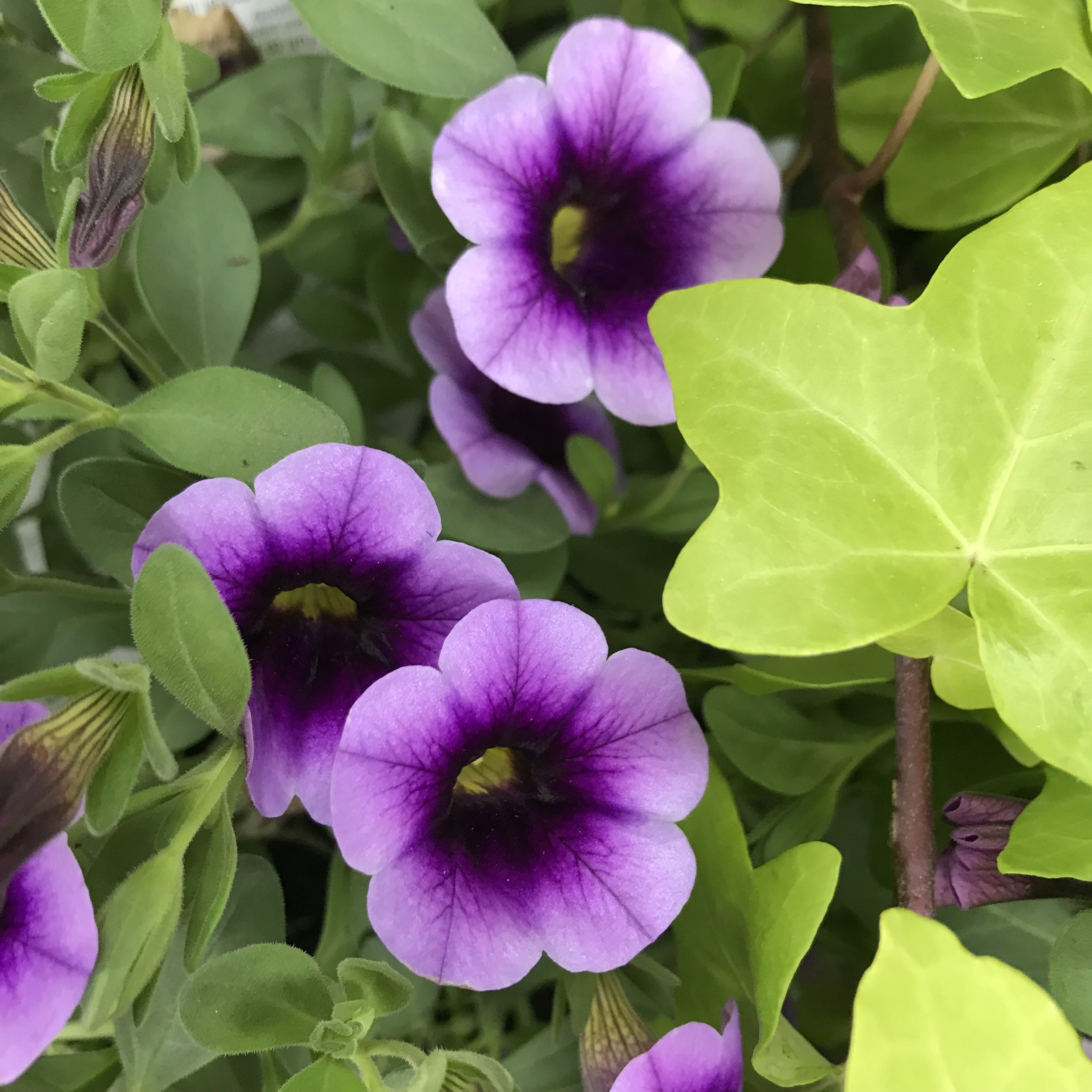
Just look at how the purple flowers of this Calibrachoa spp. and the yellow-green of the ivy really play off each other…

BAM! Now that’s a gorgeous purple!

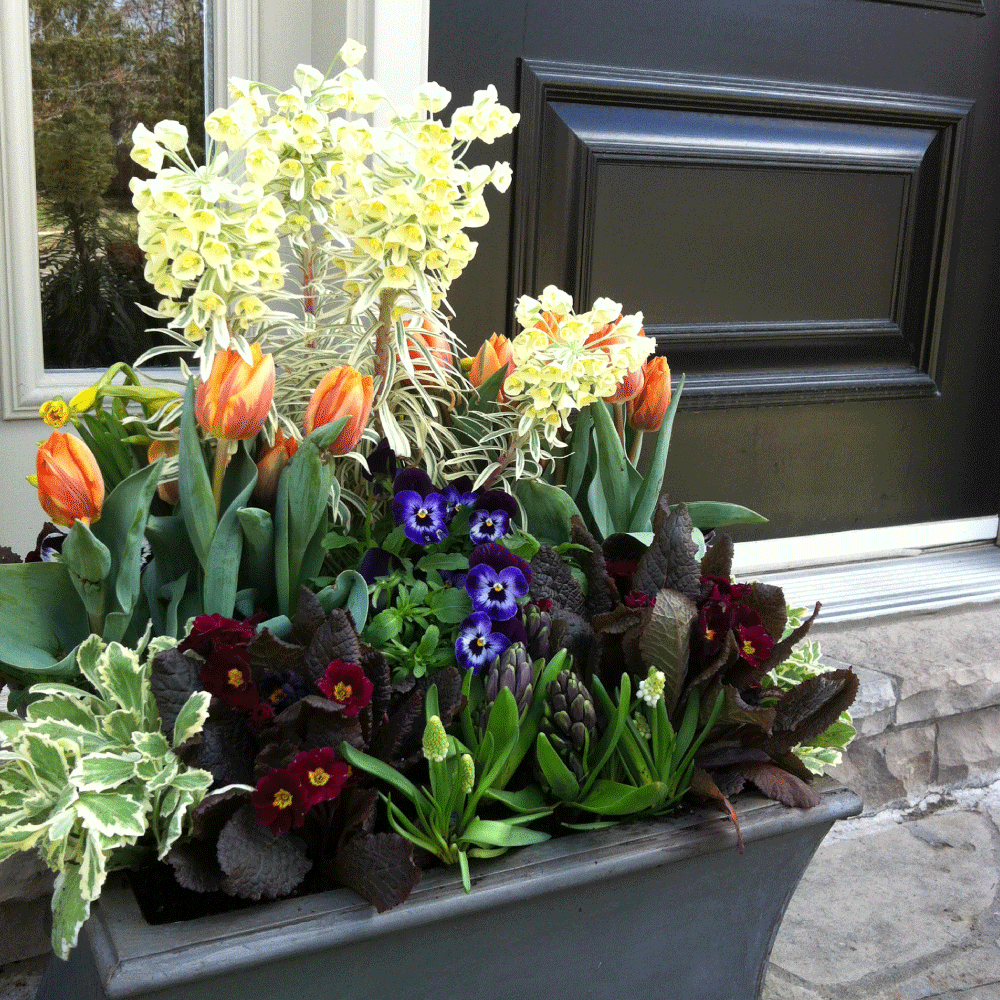
Moving on to another combination, in this planter, variegated spurge and wall cress (Euphorbia and Arabis) and dark leaved Primulas are used to add contrast and colour to the arrangement…

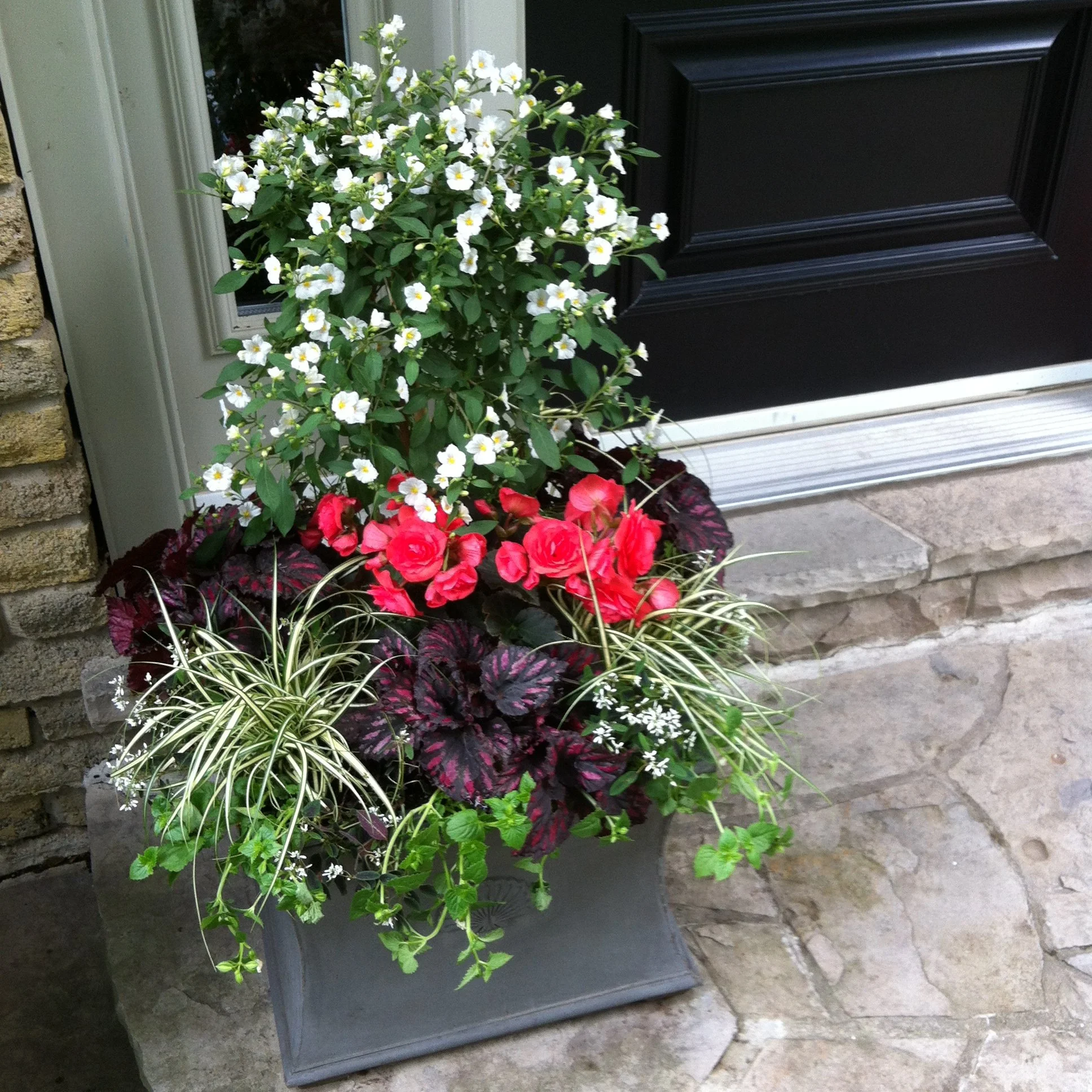
While in this Summer planter, burgundy and black Begonia sp. are used for colour (plus the leaves are incredibly stunning) and the variegated Carex oshimensis ‘Evergold’ (Japanese Sedge) adds both contrast and amazing texture.

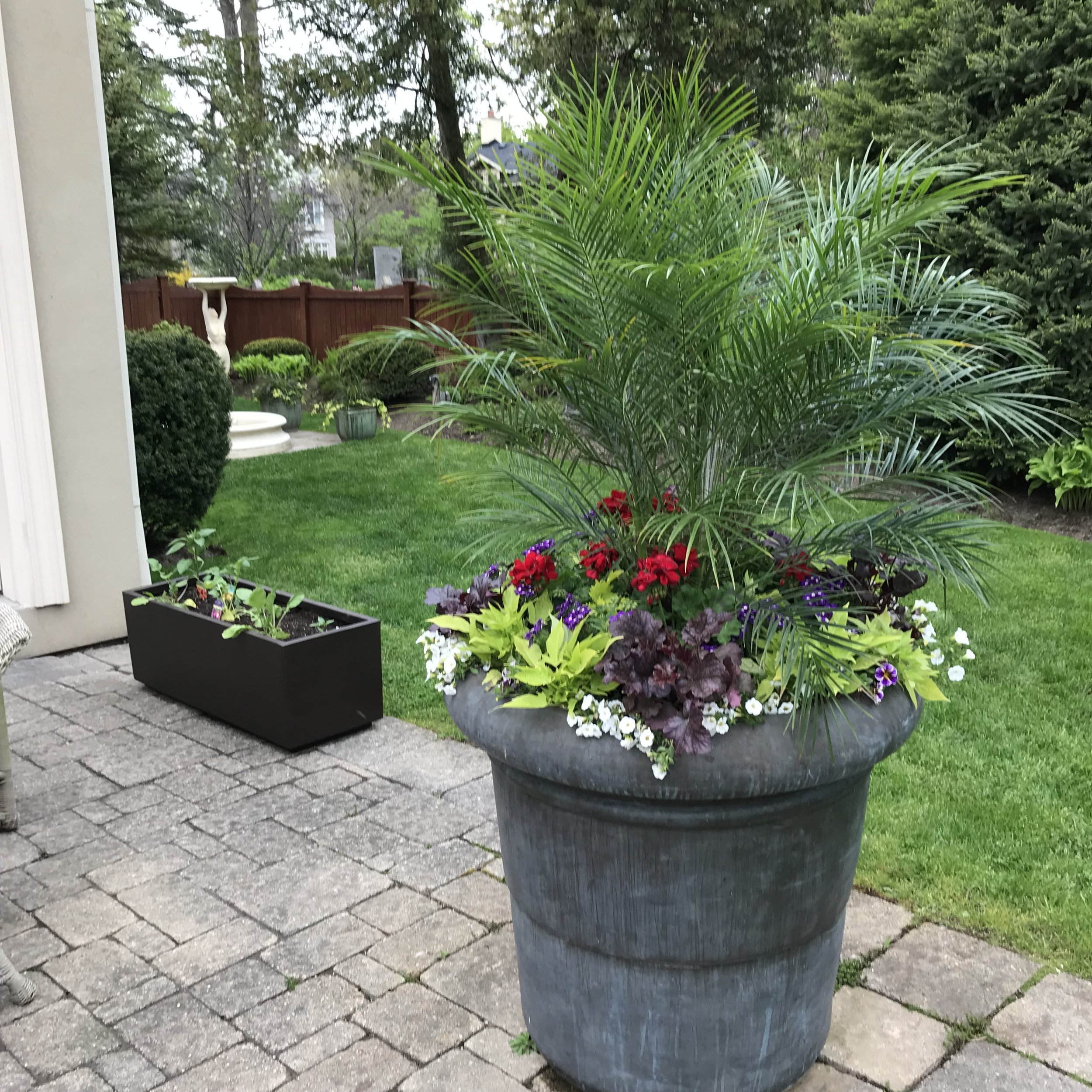
In this combination, the chartreuse potato vine (Ipomoea batatas ‘Sweet Caroline Light Green’) has been used to breathe some extra life into this newly planted container.

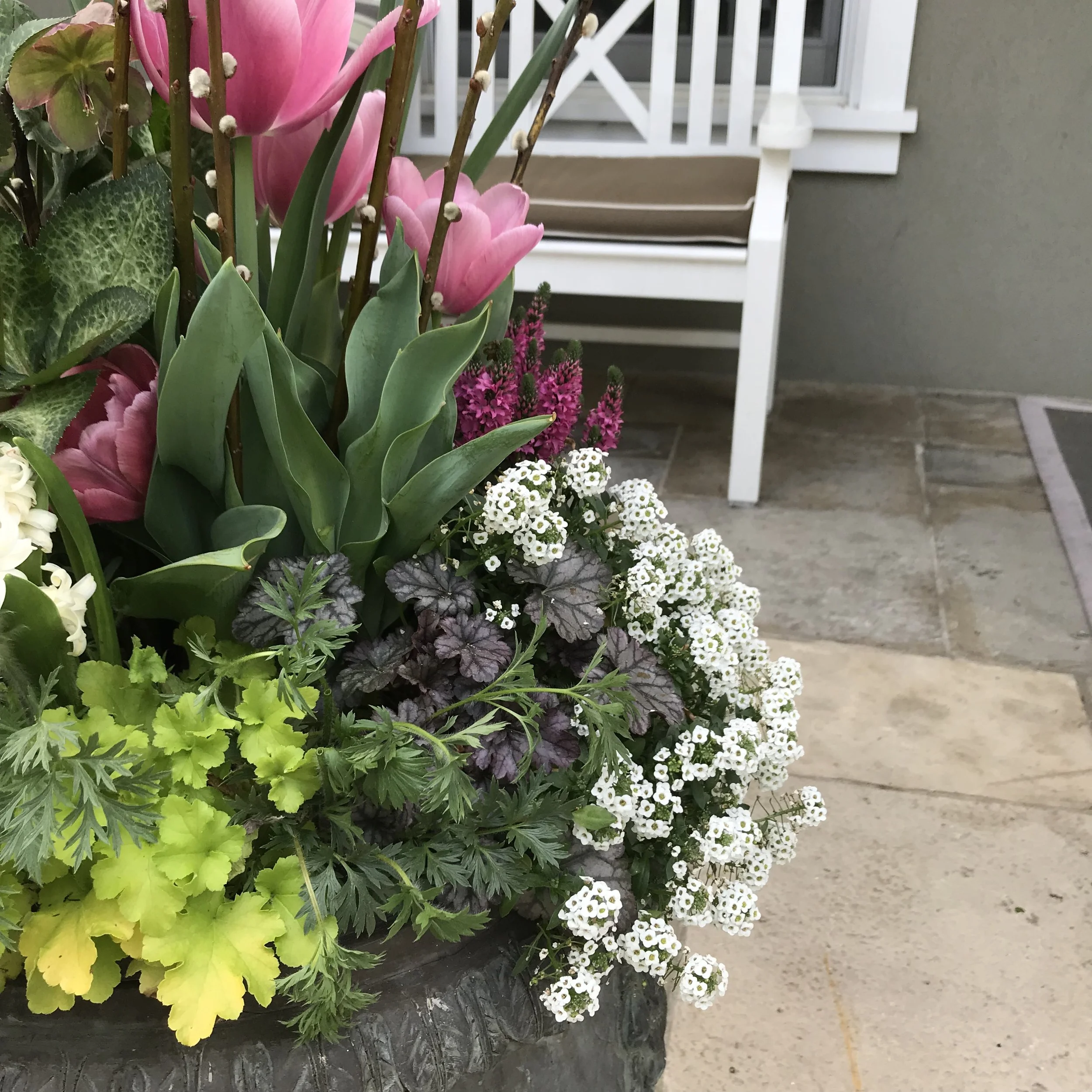
Finally, in this Spring planter, the tulips may be fading, but the purple and chartreuse colours of the Heuchea spp. (Coral bells) will continue to add colour long after the blooms are gone. This brings me to a serious ‘plus’ for adding nifty foliage to your planters or gardens- you won’t need to rely solely on blooms for colour!

Ok. Ok. I’ll stop! As you can probably tell, I can go on and on about foliage until the cows come home. Hopefully I’ve proven that plants don’t need to have showy flowers to have a place in your planters or garden!

So, are you feeling ready to hit a garden centre? Here are a couple more helpful tips when it comes to selecting plants…

TIP #1: No one is telling you that you need to stick to the ‘annuals’ section when buying plants for your summer containers/ garden beds. Many perennials have amazing foliage too! In fact, many of my examples shown above are perennials. (For simplicity’s sake, annuals are the plants we toss out at the end of the growing season. Perennials are plants that come back year after year. These terms have much more involved definitions but I will leave that to a winter blog post!)

TIP #2: Read the plant tags! All plants have tags that list their eventual height, width, and growing requirements. If you are pairing plants, you want to: make sure that you ‘layer’ them properly in a bed (with the taller ones toward the back). Sometimes the largest of plants can be purchased in the smallest of pots- read the tag to see what you are getting yourself into! Plus, you also want to make sure you pair plants that have the same growing needs (especially light requirements).

Now… get your elbows out to your side in ‘ready position’, look for that beam of sunlight, and go get your plants!